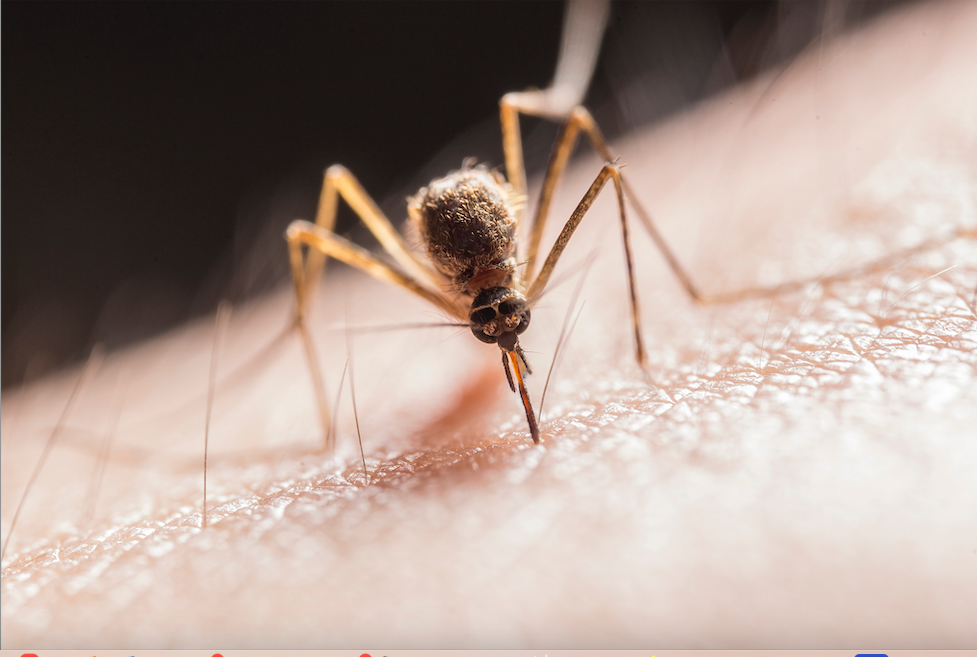
This strain of mosquito is so sanctimonious because it claims its droning is indeed harmonious. According to their drone master, they drone in harmony depending on their sting site: ear or arm or knee!
They’re trying to get a copyright on harmonies they’ve written according to locations simultaneously bitten, but alas they don’t write music so they cannot win the rights to music just recorded by the pattern of their bites!
Now that the sun has vanished and the desert air turned cold, some of the insects vanish, but others have turned bold. Small winged gnats bask under the lamplight’s surrogate sun. Motionless, they seem to sleep, their daylight flitters done. They colonize the body of the terrace table lamp, sunning in the bulb’s bright glow, absorbing every amp. A single different visitor ascends my sister’s back, as though he seeks the warmth and light the night air seems to lack.
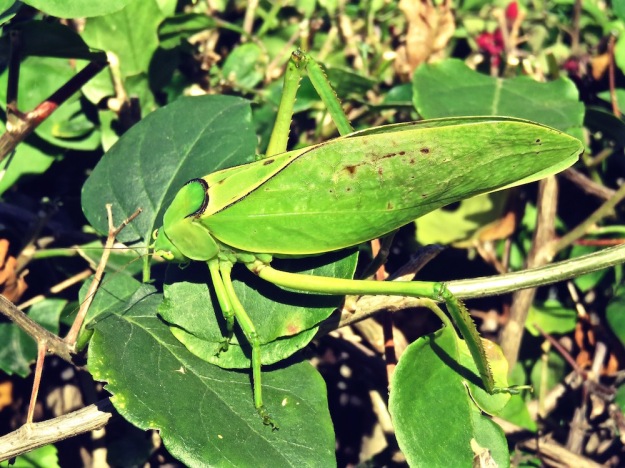
She does not feel his presence. So far, he’s brought no harm. He spreads out on the blanket of her light-warmed arm. More stick-with-arms than insect, he seems inclined to stay. Secure in his establishment, it seems as though he may settle there for good, but then he chooses to decamp by making an impromptu leap onto the terrace lamp. Motionless, as though caught up in silent meditation, nothing seems to interrupt his profound cogitation.
But then he leaps up higher, closer to the light, the globe’s gleam growing warmer at this greater height. The smaller denizens of light seem calm and unperturbed. They continue slumbers largely undisturbed, but suddenly I notice their numbers have diminished, the mantis washing off his arms as though he has just finished. He draws one and then another arm through his lethal jaws, as though they’re violin bows moving without pause.
His music has no volume. The sawing of his bows creates no funeral music. No sins do they expose. For awhile he stands unmoving, the heat and light ideal for aiding his digestion of his midnight meal.
The moon cuts through the darkness, dividing it in layers
as the unmoving mantis seems to say his prayers.
Then, when he leaps into the dark, I turn out the light and trundle off to bed as well, bidding you good night.
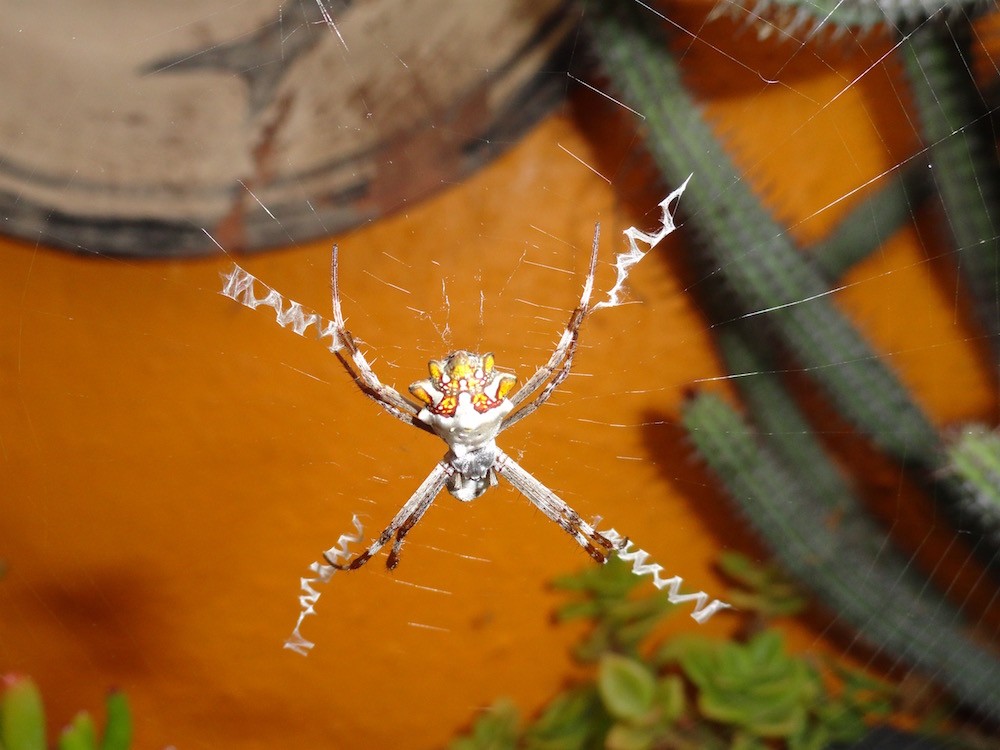
Insatiable monster, you spin your fine strands, creating your trap with abdominal glands. You then cast your nets out into the breeze that carries them off to the bushes and trees. With anticipation, you wait in the center for mosquitos or flies—whatever may enter your gossamer trap. Then, their prospects are dire, for one tremor of contact is all you require to be off in a flash to put them to bed with a cocoon of silk wrapped from bottom to head.
To the Mosquito
“I am” says the spider, as she sips out your sap, “going to have a light lunch, and then take a nap!”
The spider pulls the silk created from liquid in its body through its spinnnerets – silk-secreting organs on its abdomen. Once the thread is started, the spider lifts its spinnerets into the breeze. It’s the breeze that is the secret to the spider’s ability to spin a web from one tree to another.
A cricket and a katydid in need of some excitement when the cold winds started, and with no other incitement, set out on upon a sea journey, their ship an old guitar. (It wasn’t very roomy. Oh, but it was yar!)
They christened her as Lulabelle after an old amor. They thought they’d sail the whole wide world from shore to shore to shore. Setting off from Mexico, they drifted with the breeze, their water and provisions stacked up around their knees.
The cricket sang such lullabies. The katydid chimed in, a catfish as a tagalong stroked rhythms on its fin. Guileless in their motives, they sought no fame nor riches. From port to port they drifted, with only minor glitches.
On Isla Mujeres, they met a small land crab that had been used in research in an oceanic lab. It lit up in the darkness with a thousand little lights. And so they offered it a ride to light up starless nights.
They drifted off to Cuba atop an ocean swell, telling all the stories that they had to tell. Traitorous loves and conquests, flight through the summer night. The sand crab told of capture after a valiant fight.
The cricket had such stories of houses he’d been in. The katydid could mime a leaf: long and green and thin. When they made their music, the crab just clacked its claws. All night they chirred and clattered—sometimes without a pause.
By the time they got to Cuba, they had a stirring act. They drew the gulls and pelicans to listen—it’s a fact! They got a gig in Havana, playing in a bar, drawing folks to hear them from both near and far.
The cricket’s name is Chirrup and and Katydid is Slim. The Crab’s name is Oblongus—based on the shape of him. Their act can be heard nightly in the ocean dunes,
where they will serenade you with their blended tunes.
I have mercy on spiders and crickets and snakes. I swerve on the highway for animals’ sakes, but I swat at mosquitoes and execute flies when they land on my food or dive bomb my eyes. I do not like insects to invade my bod like noseeums that dive in a suicide squad.
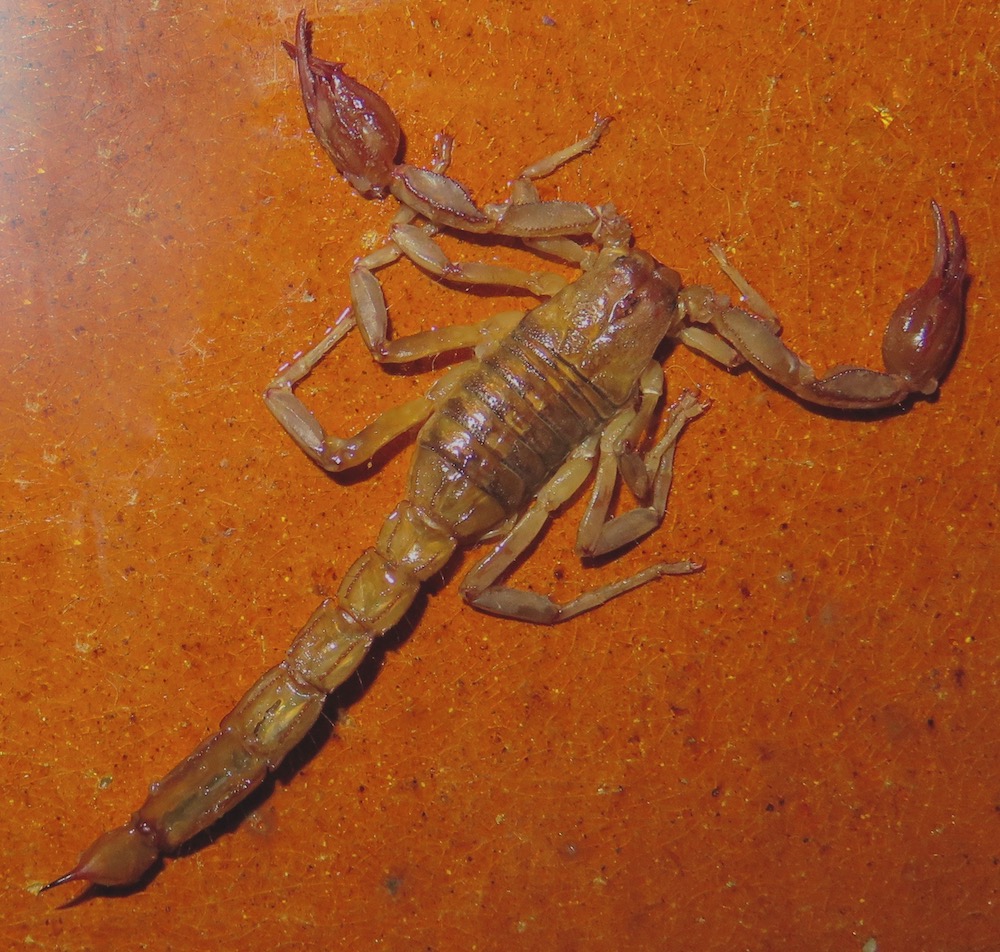
I poison leaf cutters and stomp on each roach and execute scorpions that dare to encroach on my personal space. There’s a place here for all, but not on my floor or pillow or wall. Though I don’t wish to be overly cruel, each thing in its place is the usual rule.
Ladybugs, dragonflies, butterflies and hoppers and roly-bugs are simply grand. I’ll rescue bees when they fall in my pool. Wasp nests I’ll leave as a usual rule if they are no danger to human or cats., and my tejas are havens for dozens of bats.
Possums in my bushes and nests in each tree are not a problem. They don’t bother me. We’re all placed in this world to subsist with each other which means we must learn to exist with each other. So I here take a vow to hurt no living thing that doesn’t eat plants or bite, pinch or sting.
 Mosquito Bump Blues


 lifelessons - a blog by Judy Dykstra-Brown