For Flashback Friday we are asked to rerun an earlier blog published on this day. I’m reblogging one from Feb 21 of 2017. Click on link below to see the blog and then on each photo to enlarge the photos:
Sadly, Andrea is suspending her WP blog but may still be found at her blog on Medium. Since she has done two wonderful interviews with me in a addition to a book review of my book The China Bulldog, I want to preserve those blogs here. For Part I of this interview, Go HERE
An Interview with Judy Dykstra-Brown, Teacher, Artist, Poet, Part II
I’ve been following Judy Dykstra-Brown’s lifelessons blog for more than five years, and I have found her to be incredibly creative and funny and intellectually stimulating. I’m so pleased that she agreed to be interviewed for ARHtistic License.
ARHtistic License: In 2001 you made the decision to move from California to Mexico. Why there?
Judy Dykstra-Brown: Many years before, I had met a man in China who told me that I should be living in San Miguel, Mexico. He had been there and knew lots about it and we had talked many times as we were travelling together. I kept this in the back of my mind as a place it would be good to retire to once I’d traveled to more far-flung places. My husband was 16 years older than me and we operated on a frantic pace, driving all over the U.S. to do shows and putting in long days at home creating. His sculptures got bigger and bigger—some of them weighing over a ton, and our setup for our shows was 12 hours long, our teardown 4 hours. We were always the first ones at shows for setup and the last ones there for teardown. I could tell Bob was wearing out and had tried for a few years to convince him to retire, but he was convinced we would starve if we didn’t do shows. I, on the other hand, knew that every penny we made ended up being spent on new tools, supplies and art studios. (We had 7 on our property, with Bob building a new one every two years, not to mention buying or building new tools for the new mediums he ventured into, pulling me along after him. So, I finally said I was moving to Mexico for a year and he could move down to the first level of the house where my jewelry studio was and rent out the top story and send me half the money. In the end, he came with me, protesting all the way. The first week, driving down and driving around San Miguel, he hated it. By the eighth day, he was proposing we buy a house there! This was after he was offered a job teaching sculpture at a new art center in a hacienda outside the town. So, that was our plan until after 8 weeks in San Miguel, we took a little side trip to Ajijic and Bob fell in love with it.
Retablo by Judy Dykstra-Brown
AL: Unfortunately, Bob was unable to move to Mexico with you, because he passed away suddenly. Your book Lessons from a Grief Diary, which you co-wrote with Dr. Anthony Moriarity, details your journey through your husband’s cancer diagnosis, death, and its aftermath. It draws from your journaling during that time, with additional insights from Moriarity, a clinical psychologist. What made you decide to share your pain? What was it like to have a co-author?
JD-B: After 8 years mourning my husband, I ventured out into the world via Match.com but after a number of months, realized I was not going to find a match there, so switched to OkCupid. It was a very different site back then and drew many creative people. It has since been purchased by Match.Com and so has dropped all the features I loved, but the real point is that this marked a change in me and I actually met a number of very interesting men, some of whom ended up coming down to Mexico so we could meet in person. It was at this point that I gave a talk for a local lecture series that talked about my process of grief recovery. Tony, who was in the states at the time, did not hear the speech, but he heard about it and asked me if I could send him a transcript. I did, and it was he who convinced me I needed to write a book about it and asked if he could write alternating chapters.
The co-authoring worked out very well. I handed chapters over to Tony as I wrote them, he wrote his replies and I edited them. He had about every book on the grieving process ever written and so we compiled an annotated reading list at the end of the book that in itself is a valuable resource.
Bob Brown, Judy’s husband of fifteen years, in front of a gallery showing his work
Lamp by Bob Brown. Judy describes the lamp: “I looked everywhere for a photo of my favorite lamp, but I don’t think one exists, so I shot one of it in my house. It’s not well-staged, but I just wanted you to see this lamp. Bob went through many phases, as did I. I liked this one best. They got weirder and weirder. This lamp was all Bob’s baby. The only thing I did was to make the paper and use it to create a cocoon for the spiral element. The ball on the spiral cord and the palm leaf bird are not part of the lamp. Someone hung the ball on the lamp for fun last Xmas and I never took it down. The bird is hanging from the curtain rod. The horsehair is part of the lamp, however. When they trim the tails of the horses in Bali, they keep the hair and weave it into strings. We brought some home with us. A string of it forms a necklace on the lamp as well. The huge head is one Bob carved in Bali, which is a story of its own.”
AL: When you started your blogin 2013, your initial intention was to help people through grief, but your focus soon changed to sharing your life, and encouraging people through your life lessons. There’s a lot of positivity and humor on your blog, especially in some of your poems. You have over 6,000 followers. What do you hope readers will take away from your blog?
JD-B: I hope it makes them laugh and think and take risks and realize that even if the way we experience life changes as we age, an excitement with life need not wane. Even limited to your own house and yard, nature and just the fact we exist with all our complicated inner workings is such a miracle that even the observing of it can be enough. Having a way in which to express this amazement is a huge help as well, be it art, writing, music, dance, or even volunteering, interacting with animals or thinking about your long incredible life.
Retablo by Judy Dykstra-Brown
AL: You are one of my very favorite poets. I can’t tell you how many times I’ve been delighted by a turn of phrase or an unexpected twist in your poems. Your meter and rhymes are impeccable, and the words flow like music. Where did you learn to write poetry like that? When did you start? Who are your influences, your favorite poets?
JD-B: When she was young, my mother kept a rhymed journal. We absolutely loved having her read it to us. Everything was perfectly rhymed and metered and hilarious. When my mom passed away, I asked my sister, who lived in the same town where my mom had lived, to send it to me and she told me that my mother had decided it was silly and burned it years ago. I was so disappointed. She also wrote humorous plays for her women’s club to perform at state conventions. My friends and I performed one of them for a talent show once.
Well, long story short, whenever someone in my family deserved teasing, she and I would sit down and write a rhymed poem about them. Some appreciated it and others didn’t, but we certainly enjoyed writing them. I think as a result of this that an ear and eye for rhythm and rhyme just grew up with me. By the time I got to college, where I took every creative writing and journalism course that was offered, rhymed poetry was not in “style,” so I wrote mainly short stories. Later, I studied screen writing which wasn’t my bag and substituted a poetry class and joined a writer’s workshop in Hollywood. Everything that had drained my soul in the TV world was healed when I started writing (still unrhymed) poetry, and with one 5-year hiatus (which is another story that I’ll tell if another question leads up to it) I’ve been writing poetry ever since.
I started writing rhymed and metered poetry on my blog when I started following word prompts on WordPress. I’ve been thinking (and even occasionally dreaming) in rhyme ever since. Sometimes I wake up in the middle of writing a poem in my sleep, grab my computer from the bookcase headboard of my bed, jot down as much of it as I can remember, and go on following where it leads me. I think the reason why I prefer to write in rhyme is that it limits my choices and makes it easier not to “block.” I write one line, then run through the alphabet to find every word that rhymes with the last word I’ve written, pick one and make a sentence that leads up to it. It is a game that creates an end product that is as much a surprise to me as I hope it is to the reader. I absolutely love the project. Poet friends have told me it is keeping me from writing more serious work, but I notice most of them are not writing much at all. I write one or two poems a day and have for the past 7 years. I love waking up in the morning and doing so. Can’t wait to feed the dogs and cats and then jump back into bed to write. I sleep with my computer plugged in on the headboard of my bed. It is the last thing I do before I fall asleep and first thing (after feeding the animals) I do in the morning. I have quit all activities that occur before 2 pm in the afternoon to devote myself to writing in the morning.
Retablo by Judy Dykstra-Brown
AL: You’ve authored one book of poetry for adults. Any chance another poem collection will be coming out? (Please, please, please.)
I actually have poems selected for several books, but I keep putting off doing the final formatting. I think the first one will be poems about family and growing up in the same town I was living in in Prairie Moths, my first book of poetry.
I also have two autobiographical books that have been finished for years—I just can’t make myself do the final edit and I hate the business part of trying to find an agent or publisher. I will probably self-publish them—if I ever get around to it. I have another book project that involves my humorous poems about aging, but it is a book with a twist, and I’m not telling what that twist is!
[Note from Andrea: All you agents and publishers out there, here’s your chance to snag a great client!]
Retablo by Judy Dykstra-Brown
AL: You’ve written several books for children. Are they all in verse?
JD-B: Yes. My illustrator just finished the illustrations for a third one. The illustrations are sitting to my left waiting to be scanned and formatted. I just keep putting it off.
AL: You collaborate with illustrator Isidro Xilonzochitl. How did you meet? Why did you decide to work with him? Describe your process as a team.
JD-B: When I moved to Mexico 19 years ago, I had thought I was moving here with my husband. Unfortunately, two days before we were to move down to the house we’d bought here, we went to our doctor’s office to get the results of physicals we’d had the week before and discovered my husband had pancreatic cancer. He lived for 3 weeks. And so, when I actually moved down to Mexico two months later, I was moving alone to a place where I knew no one except for my real estate agent! Since I was interested in art, I started making the rounds of galleries and one of the first artists whose work I was attracted to was Isidro. I bought several of his paintings and through him I met a number of young Mexican artists who formed a group called ARCOC. I was adopted as their sole female comrade and we put on several art shows, art experiences for kids and art contests for kids. When I started my poetry reading series, it was in a coffee shop Isidro and his partner at that time opened up on the ground floor of his studio. We’ve been friends ever since.
I actually wrote most of the children’s books years before but had done nothing with them. I asked if he’d be interested in illustrating them and he said yes. His partner at the time, Kristina, had grown up in the states and so she translated them to him for illustration purposes. I set up the books, minus illustrations, and the two of them collaborated over how he would illustrate them—with hilarious results, I think.
Retablo by Judy Dykstra-Brown
AL:Which poetry journals did you edit? What did you look for in poetry submissions?
JD-B: I ran a reading series at a local coffee shop here in San Juan Cosala, Mexico, for two years. I also edited an anthology of writing by high school students when I was a teacher in Cheyenne, Wyoming after coming home from Africa. It was entitled The Spiral Notebook. In L.A. I was one of the editors of The Sculpture Garden Review, which was not, despite its title, an art journal but a poetry journal. I also ran a reading series at the art center in the San Lorenzo Valley near Santa Cruz, CA. Recently, that entire valley was evacuated due to fires and at least one of my friends lost his house, others won’t be able to go back for a year until water and electricity is restored. So sad.
The ten women in a women’s writing group I started here in Mexico also published an anthology entitled Agave Marias, stories and poems about crossing borders and breaking boundaries. That anthology is available on Amazon, as are all of my books. Oh. An interesting sidelight of Prairie Moths was that some years after I published it, I got an email from a man in Oregon who said, “I am the youngest boy in your pictures of your grandparents standing in front of their homestead with their daughter and her 8 sons.” He was a cousin, at least 20 years older than me, that I had only met once when he passed with his family through South Dakota on their way back to Utah, where they lived. I believe I was 10 or 11 then. We started up a correspondence after his first email to me and he invited my sisters and me to come to their family reunion and we all went. I came from Mexico, one sister from Wyoming and another from Minnesota. It was fabulous. Only two of the first cousins were still alive, but there were at least a hundred people there who were their descendants. Since then one of the first cousins and one of the first cousins once removed has passed away, but I’m still in touch with the one who wrote to me, who is now in his nineties.
What I look for in poetry is originality, word choice, and heart. Although I presently write mostly rhymed and metered poetry, I mainly do so because somehow the prompts force me to. I don’t know why. It is also a sort of game I play to keep my mind working. I used to do crossword puzzles. Now I do metered rhyme. I really do think as we grow older that it is vital to exercise our minds.
Retablo by Judy Dykstra-Brown
AL: What advice would you give to a beginning poet?
JD-B: I think many beginning poets think that poems should rhyme but with almost no exceptions, I encourage them not to try to rhyme. The thing we need to learn to do is to follow where our mind leads us—to write without editing and without stopping—just to write what comes and to edit later. Then, to edit remorselessly. It is important to get to that place in ourselves that we wouldn’t necessarily get to through reason or careful plotting.
AL: Can you define retablo for us? When did you start making them? How did you begin?
JD-B: The retablo is a frame or shelf enclosing decorated panels or revered objects above and behind an altar in a church. In Mexico, it is a box which contains a figure, photo or painting of the Virgin Mary, Christ or some other saint and sometimes little votive offerings or objects. Most homes have at least one. I took the idea but it quickly evolved into themes that were not religious. I tended to work around a certain theme. One year it was saints, another it was famous artists, another Mexican legends, traditions or places I visited. I have created one for each family member or friend who died. I’ve even done one on the Coronavirus.
Covid-19 Retablo by Judy Dykstra-Brown. For more photos and information about this piece, check out this article on her blog.
AL: Any more funny stories you can tell us about your work? (See Tuesday’s post for the previous ones.)
JD-B: When I was in Peru, I bought a few small oil-on-canvas paintings of saints and the Virgin Mary, thinking I would turn them into retablos. I worked for a long time on one of the Virgin, adding first tiny beautifully crafted wooden musical instruments. I didn’t know why but then I started adding little books and pages of poems taken from a miniature book of poetry, pen nibs and other objects associated with music and poetry. When it was finished, Isidro’s cousin Eduardo was at my house for some reason and he saw the retablo and said, “Huh. Santa Cecilia!” I said no, it was the Virgin and he said, no that it was definitely Santa Cecilia. After he left I consulted Google and sure enough, it was Santa Cecilia, patron saint of poets and musicians! She had somehow attracted to herself the exact appropriate symbols.
Santa Cecilia retablo by Judy Dykstra-Brown
To close this interview, I am adding links to a few more of Judy Dykstra-Brown’s poems (and photographs):
Reblogged this on lifelessons – a blog by Judy Dykstra-Brown and commented:
In case you aren’t already following her blog, here is Andrea Huelsenbeck’s second (and last) installment of her interview with me regarding both my art and writing and that of my husband, Bob. Bob’s work as well as my work before coming to Mexico 19 years ago was covered in Installment 1. This installment covers my present work.
What an interesting and informative interview! Sometimes you follow a blogger, but don’t have the time to go back and read all they wrote from the beginning of time…I’ve been following Judy’s blog for a few months now and enjoying it, but appreciate the background and insight that is added here.
Thank you for introducing me to Judy Dykstra-Brown. I hopped over here to see what you were up to for the poetry challenge and was surprised by the scope and depth of this interview. Interestingly, Allen and I lived in San Miguel de Allende for several months back in the 1970s, so her comments about life there brought back many memories. And your poetry is lovely here. Write on!
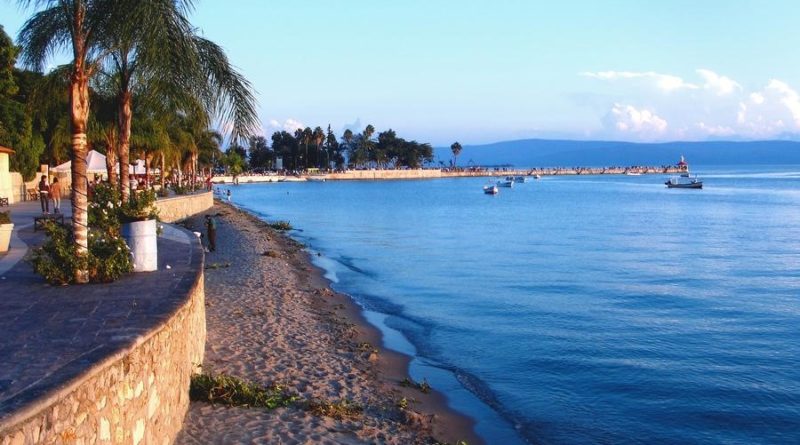
Many people have asked me about the level of pollution in Lake Chapala, the largest lake in Mexico which I happen to live on. Here is an article about the state of the lake that echoes what I have been telling people. The author, Kristina Morgan, is a local realtor and a long-time citizen of Chapala. It might be of interest to both Lakeside residents and Word Press bloggers that although he lives in Texas, her great uncle, Marion Couvillion, is a WP blogger (his blog is entitled Los Perdidos) and also a contributor to the Ojo del Lago.
Despite widespread and persistent myths and misconceptions, Lake Chapala is healthier than most people realize.
So says expat and civil engineer, Todd Stong, PhD, in a recent interview. Dr Stong is well-known in our area for 17 years of involvement in studies and projects related to the lake, local wells, water treatment and related matters. He donates his expertise and is widely considered our region’s most objective and informed advocate for Lake Chapala.
As he puts it, “Mexico will offer you an infinite number of latter life missions. Providing clean water where it’s needed is mine. I’m a free engineer for any county around Lake Chapala that wants me.”
Dr. Stong helped plan the picturesque Malecon (boardwalk) in Jocotepec and spear-headed the 3-kilometer sewer pipe in Chapala to keep sewage out of the lake.
This is not a glossy portrayal to boost tourism or sales and not a horrifying picture to line pockets with money. The state of Lake Chapala, as in most things in life, has a more moderate reality and knowing the truth, we can enjoy the blessings we have at Lake Chapala as well as work to make the lake even better for our generations to come.
Evolution of Lake Chapala
It is important to first understand the evolution of Lake Chapala. Thousands of years ago, the lake was a mile deeper than its average depth of 14 feet today. Over time, sediment has turned it into a shallow lake with a clay and silt bottom that gets stirred up by the movement of the waves at the shoreline, making it appear dirtier than it is. Moving away from the shoreline about 300 feet the water is almost clear.
A Look at Lake Levels
Up until 1978 water flowed out of the NE corner of the lake via the Santiago River. No water has flowed out of the lake into the Rio Santiago since 1978. Lake Chapala is dependent on the Rio Lerma for 90% of its water and the remaining 10% from annual rainfall.
To Lake Chapala’s detriment, between 1980 and 2002 more than 500 dams were constructed on the Rio Lerma by thousands of farmers using the 470 miles of river water to irrigate their crops. Lake levels dropped significantly as a result.
Around 2002, the lakeshore receded far from Lakeside villages.
Is Lake Chapala dying?
Due to the diversion of water, in 2001-2003 the lake fell to just 15% of capacity. The shoreline receded over a mile from Lakeside villages. Lake Chapala was on the verge of dying.
When the city of Guadalajara realized there wasn’t enough water in the lake to pump to their residents and people at Lake Chapala witnessed the alarming physical evidence of the lake disappearing, they became a squeaky wheel to save the lake. Lake Chapala is the only viable fresh water reservoir for 3 million residents in Guadalajara, so Guadalajara and the residents here have a vested interest in maintaining the levels and the quality of the lake.
As a result, the federal government drew up an agreement with the five states that the Rio Lerma passes through allocating 80% of the water from the Rio Lerma to be used by farmers, while maintaining Lake Chapala at 60% capacity at least and Lake Chapala became a protected lake under the RAMSAR convention and the Living Lakes Foundation.
Although the lake has been over 60% full since 2004, with periods during the rainy seasons when it is 80% full, misconceptions that the lake is drying up and dying persist to this day.
How Lake Chapala’s Water is Utilized
Contrary to popular belief, Lakeside Chapala’s villages obtain their water from deep wells, rather than the lake. However, as mentioned earlier, Lake Chapala is the primary water source of water for nearby Guadalajara, Mexico’s 2nd largest city.
Approximately 2,500 gallons per second 24 hours/per day are piped from our lake, passing through a 30-year-old pipe. There is concern the pipe could break. Should the pipe rupture, it would devastate Guadalajara’s water supply and cause extreme damage and flooding at the location it breaks.
Dr Stong is working to convince authorities to approve the use of an electro-magnetic testing device to map the pipe and highlight where there are leaks in order to do repairs and avoid a costly and lengthy pipe replacement. Mexico City has already mapped their aqueduct successfully with this device.
Is Lake Chapala dirty and polluted?
As stated above, it is important to note that although it’s widely assumed that Lake Chapala is the water source for the villages here, that’s not the case. The water piped into homes at Lake Chapala comes from deep wells that the Federal government drilled 50-70 years ago for the 30 villages around the lake.
About 40 years ago the Rio Lerma was a significant source of pollution for Lake Chapala, based on the deep sediment in the lake showing heavy metals. However, today the Rio Lerma has over 200 waste-water treatment plants over 466 miles, far more than most regions of Mexico. So, while not perfect, the treatment plants on the Lerma River have eradicated most of the industrial and agricultural pollutants.
In addition, the slow, meandering nature of the lower third of the river allows most sediment to sink to the bottom of the river before it reaches the lake.
Stong says, “Contrary to the easy assumption that pollution accumulates as the river flows, it is found that the best of the water in this river is that which enters the lake.”
Lake Chapala itself has 16 waste-water treatment plants. This region has far more facilities than most of Mexico to treat wastewater. As may be expected, every year one or two fail and they leak.
Dr Stong recommends that local governments test regularly and publish their findings monthly. He envisions a red flag/green flag system, letting citizens know the water quality on the shore of their village, similar to how it is done in the US. He also would like to see 1% of the shore become engineered wetlands, to provide a natural filter for contaminants and give the fish and birds a safe place to propagate.
Is the lake safe for recreation and swimming?
Contrary to common belief, Lake Chapala is safe for boating and swimming. With the lake currently averaging 70-80% of capacity, contamination levels are minimal.
• Bacteria level: The bacteria level in Lake Chapala is normally 75% below the health safety limit for recreational use, thus four times better than found at an average California beach.
• Mercury level: Despite lingering false reports, the internationally reported testing of over 200 fish from 20 locations in the lake has proven that heavy metal contamination of the fish does not exist, and is 60% below the international limit for health safety. This represents the same aunt of mercury found in a can of tuna in the US and Canada.
• E-Coli/Coliform: According to the US official recreational water quality standards, e-coli cells should not exceed 200 per 100 ml of water. Mexico measures 240 and below as safe. In three years of testing at 20 different sites around Lake Chapala, the level of coliform bacteria measured 50-60 on average, which is 4-5 times lower than the amount Canada, the US and Mexico will allow. In other words, the lake bacteria level is normally 75% below the US health safety limit for recreational use., thus four times better than what you’ll find at an average California beach. By contrast, a fourth of California’s beaches are closed each day due to coliform bacteria levels that are over 800.
• Lirio Water Hyacinth: Lirio, as it is called locally, was introduced years ago to combat pollutants and evaporation of lake Chapala. It multiplied out of control and has been a problem in years past, requiring periodic manual removal. Lirio coming down the Lerma River to the lake has been light this year.
Dr Stong recommends that as in Asia, lirio could be combined with the areas abundant chopped corn stalks to create an excellent livestock feed that is 30% protein.
Primary obstacle to recreation
The primary obstacle to lake recreation is underwater dangers. During the years when the lakeshore receded, a large area of the shoreline was exposed. Although legally under federal control, some people saw opportunity and began to put up barbed wire fences and walls to delineate the new lakefront as “their” land.
But when the lake began to recover, these fences and such were left in place and remain under water today, making some areas near the shore unsafe for swimming, boating, etc. Chapala has a safe swimming beach and a boat launch, as well as several other places in villages that are deemed safe for swimming and recreational activities.
In short, the water is safe, but you need to go to designated beaches, such as the one off of Chapala’s Malecon, to swim or boat due to the debris that is still underwater.
The shorelines are Federal Zones that prohibit commercial use, so any businesses that could open up for boating, jet skiing, parasailing, restaurants on the water, etc. aren’t currently permitted. Consequently, Mexico’s largest lake appears UNUSED by the public for recreation and tourism.
Dr. Stong recommends that the 9 counties about the lake must appeal to Jalisco and Michoacán States for authorization from the government to be permitted to create public and commercial facilities along the lake shore. Dr. Stong is working to convince the Federal Government to allow 1-2% of over 200 miles of shoreline to be used by the villages that live here to encourage recreation and commerce which would be a benefit to our communities here financially.
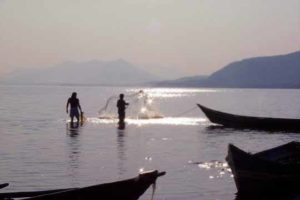
Net fishing on Lake Chapala, Photo by Ute Hagen.
What about fishing at Lake Chapala?
The many pueblos surrounding Lake Chapala have traditionally been known as fishing villages. Over 15 years ago, nearly 3000 Lakeside families gained their livelihood from fishing the lake; today that number is closer to 600 due to unregulated overfishing and inadequate restocking by the government.
So, while the fish is safe to eat, the lake has been over-fished.
Dr. Stong conducted a three-year pilot program to test the viability of floating cage aquaculture wherein high value fish could be economically raised in cages in the lake that has been very successful and could provide up to 15,000 jobs for the Mexican people with the use of just 1% of lake surface area. Restocking the lake is also an option, but fishing locally would have to stop until the fish reached maturity and were able to successfully propagate.
Protecting our National Treasure
We have a national treasure in Lake Chapala and an obligation to protect it for generations to come. Ongoing water testing with transparency, education, maintenance, and preservation of wetlands for birds and fish need to be in balance with the need for communities to develop some recreational waterfront to help support their towns and local businesses.
Editor’s Note: If you would like to get involved in the protection and improvement of Lake Chapala or want more information, please feel free to contact the author of this article at AskKristina@choosechapala.com. She can provide Todd’s 25-page report detailing his findings to the Governor of Jalisco.
* * *
ABOUT THE AUTHOR: Kristina Morgan
Kristina has lived and worked in Mexico and the Lake Chapala area for over 17 years. Three of her four children were born and raised here, and are now living north of the border. Kristina is an Unlimited License General Contractor, as well as a Real Estate Broker and relocation specialist currently working for Lake Chapala Real Estate in Ajijic. She has codirected an info-tourism group and loves writing about her experiences in Mexico.
Can’t resist reposting this post from 4 years ago.
SPEAKING GERMAN IN TEXAS
In Texas there is a town called New Braunfels, where there is a large German-speaking population.
One day, a local rancher driving down a country road noticed a man using his hand to drink water from the rancher’s stock pond.
The rancher rolled down the window and shouted: “Sehr angenehm! Trink das Wasser nicht. Die kuehe haben darein geschissen.”
(This means: “Glad to meet you! Don’t drink the water. The cows have shat in it.”)
The man shouted back: “I’m from New York and just down here campaigning for Trump’s Presidential run. I can’t understand you. Please speak in English.”
You will not be disappointed if you go to THIS website and listen to the unique concert presented. Then come back and tell me what you think! Do listen to it all the way through. It keeps increasing in intensity. And thanks, Bluebird, for sharing it.
If you are considering voting for Trump in spite of all of his past illegal actions because he is “such a good businessman,” please read Heather Cox Richardson’s “Letters from an American” below and then subscribe to her free newsletter. Subscribe for free to Heather Cox Richardon’s daily letter here: heathercoxrichardson@substack.com
Two big stories today that together reveal a broader landscape.
The first is that the Bureau of Labor Statistics today released another blockbuster jobs report. The country added 272,000 jobs in May, far higher than the 180,000 jobs economists predicted. A widespread range of sectors added new jobs, including health care, government, leisure and hospitality, and professional, scientific, and technical services. Wages are also up. Over the past year, average hourly earnings have grown 4.1%, higher than the rate of inflation, which was 3.4% over the same period.
The unemployment rate ticked up from 3.9% to 4%. This is not a significant change, but it does break the 27-month streak of unemployment below that number.
The second big story is that Justice Clarence Thomas amended a financial filing from 2019, acknowledging that he should have reported two free vacations he accepted from Texas billionaire Harlan Crow. While in the past he said he did not need to disclose such gifts, in today’s filing he claimed he had “inadvertently omitted” the trips on earlier reports. ProPublica broke the story of these and other gifts from Crow, including several more trips than Thomas has so far acknowledged.
Fix The Court, a nonprofit advocacy group that seeks to reform the federal courts, estimates that Thomas has accepted more than $4 million in gifts over the last 20 years. As economic analyst Steven Rattner pointed out, that’s 5.6 times more than the other 16 justices on the court in those years combined.
These two news items illustrate a larger story about the United States in this moment.
The Biden administration has quite deliberately overturned the supply-side economics that came into ascendancy in 1981 when President Ronald Reagan took office and that remained dominant until 2021, when Biden entered the White House. Adherents of that ideology rejected the idea that the government should invest in the “demand side” of the economy—workers and other ordinary Americans—to develop the economy, as it had done since 1933.
Instead, they maintained that the best way to nurture the economy was to support the “supply side”: those at the top. Cutting business regulations and slashing taxes would create prosperity, they said, by concentrating wealth in the hands of individuals who would invest in the economy more efficiently than they could if the government interfered in their choices. That smart investment would dramatically expand the economy, supporters argued, and everyone would do better.
But supply-side economics never produced the results its supporters promised. What it did do was move money out of the hands of ordinary Americans into the hands of the very wealthy. Economists estimate that between 1981 and 2021, more than $50 trillion dollars moved from the bottom 90% of Americans to the top 1%.
In order to keep that system in place, Republicans worked to make it extraordinarily difficult for Congress to pass laws making the government do anything, even when the vast majority of Americans wanted it to. With the rise of Senator Mitch McConnell (R-KY) to the position of Senate majority leader in 2007, they weaponized the filibuster so any measure that went against their policies would need 60 votes in order to get through the Senate, and in 2010 they worked to take over state legislatures so that they could gerrymander state congressional districts so severely that Republicans would hold far more seats than they had earned from voters.
With Congress increasingly neutered, the power to make law shifted to the courts, which Republicans since the Reagan administration had been packing with appointees who adhered to their small-government principles.
Clarence Thomas was a key vote on the Supreme Court. But as ProPublica reported in December 2023, Thomas complained in 2000 to a Republican member of Congress about the low salaries of Supreme Court justices (equivalent to about $300,000 today) and suggested he might resign. The congressman and his friends were desperate to keep Thomas, with his staunchly Republican vote, on the court. In the years after 2000, friends and acquaintances provided Thomas with a steady stream of gifts that supplemented his income, and he stayed in his seat.
But what amounts to bribes has compromised the court. After the news broke that Thomas has now disclosed some of the trips Crow gave him, conservative lawyer George Conway wrote: “It’s long past time for there to be a comprehensive criminal investigation, and congressional investigation, of Justice Thomas and his finances and his taxes. What he has taken, and what he has failed to disclose, is beyond belief, and has been so for quite some time.” A bit less formally, over a chart of the monetary value of the gifts Thomas has accepted, Conway added: “I mean. This. Is. Just. Nuts.”
As the Republican system comes under increasing scrutiny, Biden’s renewal of traditional economic policies is showing those policies to be more successful than the Republicans’ system ever was. If Americans turn against the Republican formula of slashing taxes and deregulating business, those at the top of the economy stand to lose both wealth and control of the nation’s economic system.
Trump has promised more tax cuts and deregulation if he is reelected, although the nonpartisan Congressional Budget Office recently projected that his plan to extend the 2017 tax cuts that are set to expire in 2025 will add more than $3 trillion to the deficit over the next decade. In April, at a meeting with 20 oil executives, Trump promised to cut regulations on the fossil fuel industry in exchange for $1 billion in donations, assuring them that the tax breaks he would give them once he was in office would pay for the donation many times over (indeed, an analysis quoted in The Guardian showed his proposed tax cuts would save them $110 billion). On May 23, he joined fossil fuel executives for a fundraiser in Houston.
In the same weeks, Biden’s policies have emphasized using the government to help ordinary people rather than to move wealth upward.
On May 31 the Internal Revenue Service (IRS) announced that it will make its experimental free electronic filing system permanent. It asked all 50 states and the District of Columbia to sign on to the program and to help taxpayers use it. The program’s pilot this year was wildly successful, with more than 140,000 people filing that way. Private tax preparers, whose industry makes billions of dollars a year, oppose the new system.
The Inflation Reduction Act provided funding for this program and for beefing up the ability of the IRS to audit the wealthiest taxpayers. As Fatima Hussein wrote for the Associated Press, Republicans cut $1.4 billion from these funds last summer and will shift an additional $20 billion from the IRS to other programs over the next two years.
Today the U.S. Department of Health and Human Services issued five new reports showing that thanks in part to the administration’s outreach efforts about the Affordable Care Act, the rate of Black Americans without health insurance dropped from 20.9% in 2010 to 10.8% in 2022. The same rate among Latinos dropped from 32.7% to 18%. For Asian Americans, Native Hawaiians, and Pacific Islanders, the rate of uninsured dropped from 16.6% to 6.2%. And for American Indians and Alaska Natives, the rate dropped from 32.4% to 19.9%. More than 45 million people in total are enrolled in coverage under the Affordable Care Act.
President Biden noted the strength of today’s jobs report in a statement, adding: “I will keep fighting to lower costs for families like the ones I grew up with in Scranton.” Republicans “have a different vision,” he said, “one that puts billionaires and special interests first.” He promised: “I will never stop fighting for Scranton—not Park Avenue.”






 Retablo by Judy Dykstra-Brown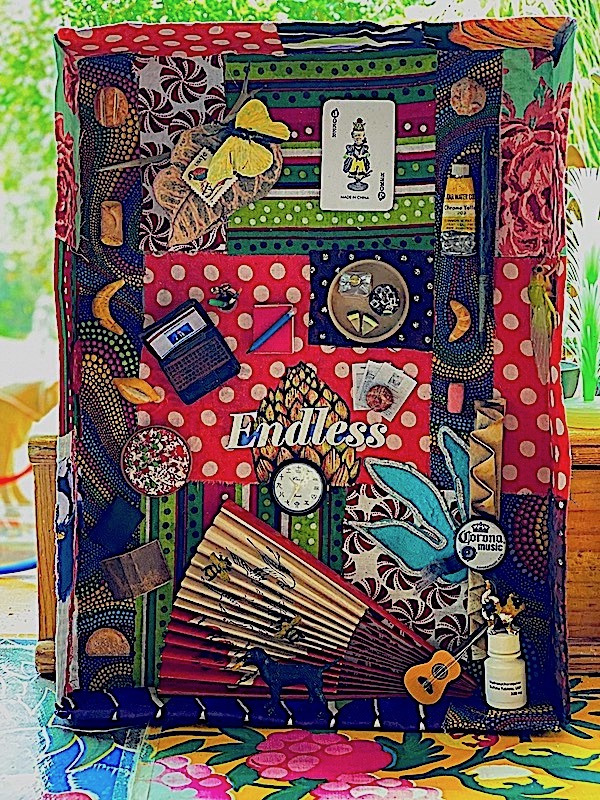


 ABOUT THE AUTHOR: Kristina Morgan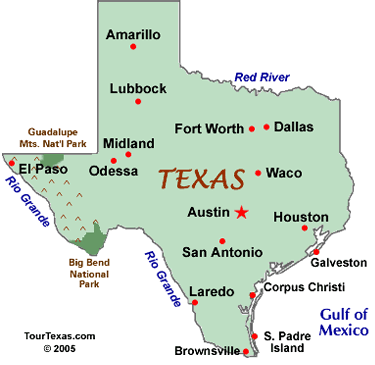


 lifelessons - a blog by Judy Dykstra-Brown
Very interest interview! Thank you for the discovery of this talented lady!
Liked by you and 1 other person
Reblogged this on lifelessons – a blog by Judy Dykstra-Brown and commented:
In case you aren’t already following her blog, here is Andrea Huelsenbeck’s second (and last) installment of her interview with me regarding both my art and writing and that of my husband, Bob. Bob’s work as well as my work before coming to Mexico 19 years ago was covered in Installment 1. This installment covers my present work.
Liked by 2 people
What an interesting and informative interview! Sometimes you follow a blogger, but don’t have the time to go back and read all they wrote from the beginning of time…I’ve been following Judy’s blog for a few months now and enjoying it, but appreciate the background and insight that is added here.
Liked by you and 1 other person
I’m a huge fan of Judy’s writing, a very talented and interesting woman, thanks for sharing!
Liked by you and 1 other person
Thank you for introducing me to Judy Dykstra-Brown. I hopped over here to see what you were up to for the poetry challenge and was surprised by the scope and depth of this interview. Interestingly, Allen and I lived in San Miguel de Allende for several months back in the 1970s, so her comments about life there brought back many memories. And your poetry is lovely here. Write on!
Liked by 1 person
Thanks so much, Beth. You’ll love Judy’s blog. She posts a poem every day and they are wonderful.
Liked by 1 person
Judy is a fascinating, multitalented person, and your interview showcased her very well.
Liked by you and 1 other person