Tag Archives: writing

Writing Habit

The Prompt: Winning Streak—What’s the longest stretch you’ve ever pulled off of posting daily to your blog? What did you learn about blogging through that achievement, and what made you break the streak?

Writing Habit

I’ve written every day since April 1, 2014, except for yesterday, when I couldn’t get online all morning. I then got involved in working with the illustrator of my next book, who came to visit for two days to work on the covers. They are now finished, except for the lettering, and he’s done a wonderful job. Thrilling! I actually did answer yesterday’s prompt today and I’ve answered every other WordPress Daily Prompt since May, when I switched over from the NaPoWriMo prompt. I have not, however, managed to post a pingback to the WordPress Prompt page 3 or 4 times in the past and have not now been able to do so for the past 7 days, which is frustrating. I wonder if anyone reading this knows what the problem is and why some can trackback/pingback and others are unable to?

Blogging and the WordPress and other prompts have given me two things: a daily audience and pressure/permission to make writing a priority. I write every day, first thing, with very few exceptions. I now exercise in the late afternoon instead of the morning, giving me the entire morning to write if I need it. If I have activities, I get up early to write and sit waiting for the prompt like the parent of a teenager out after curfew.

I also sometimes post things I’ve written as a draft, waiting for a prompt to which they will relate. This serves as a backup as well, but so far I haven’t had any writer’s block. I think writing every day helps to prime the creative flow. I expect it to be there, so it always is. I also try not to censor myself. It’s necessary to let thoughts flow naturally. One can always delete or edit things later, but sometimes what feels not up to par when being written actually ends up being good. We need to give ourselves a chance and to be as supportive of ourselves as we are to our fellow writers.

Risking It

The Prompt: Envelope Pushers—When was the last time you took a risk (big or small), and pushed your own boundaries — socially, professionally, or otherwise? Were you satisfied with the outcome?

Risking It

What risks are left in life at 67? That big risk of childbirth far behind me (and since I said no to it, so is the risk of my life being detoured by the products of it); travel no longer the thrill it once was; too tired to build and decorate any more houses; and love seemingly something that is going to be experienced in online spurts for the rest of my life; it seems as though the only risk left is that big one. And I fear it. Actually, resent it. I don’t want for life to ever be over.

I can’t stand the thought of fading into nothingness. Yes, my “work” might live after me, but my work is just the rumor of me. It is only the part of me I have been able to express. What about that entire unexplored rest of me? Where will it go? Will it ever have another chance? I feel the press of my own potential. Have I let it down? Will Hell really be the fleeting awareness, as I fade away, that I have left the most delicious offerings on the plate of life untasted?

I am not an athlete. I was never a mother. Although I have made some brave decisions in my life, nonetheless, I have feared too much. I fear being laughed at, rejected, passed over—so much so that at times I haven’t even tried. Like so many others, I have too often escaped. The power of books and films is that they afford us the opportunity to live vicariously those risks we put off taking in our own lives.

Then, the internet. Finally, the opportunity to control our fantasy lives—to create personalities for ourselves where we can leave out the parts we don’t want to face. We can always be 40 on the internet. Frozen at 145 pounds. Our successes are there on our cyber page for all to see and we can simply neglect to mention our failures. The internet is like a scrapbook with all of the faces we don’t want to see, ever again, relegated to Facebook, where we can block them with the push of a button.

Online, we get to think before talking, or at the very least, a chance to review and edit before hitting the “send” button. We are able to choose greater exposure with fewer risks. Or, one can opt for the “voyeur” stance—simply watching and imagining without ever taking the risk of exposing ourselves.

There is a swimmer a hundred yards off shore who swam by going in the opposite direction a half hour ago. A kayaker paddles by as close to the shore as she can safely travel without being swamped by waves. Two more kayakers come into view 500 yards out, paddling for shore.  It is not only the large decisions in life that expose us to risk, but there is risk, also, in the everyday details. You rent a kayak, yes, but how far out into the bay are you willing to paddle it? You go to potentially dangerous places, but to how much of that risk are you willing to expose yourself? We are all here at the same place at the same time, but I am sitting on my porch, well-shaded by the palapa roof.

The tern bobs just beyond the surf line, ducking his head underwater now and then, in search of any fish who are dumb enough to make it easy for him. Up above, magnificent frigate birds are executing their perpetual ballet—this time on our stage. Even clams stick their necks out now and then, albeit to their peril. Younger women and men jog by. Buxom grandmothers plod by. Children draw hopscotch patterns in the sand and poke at a large dying fish. I want to tell them to leave the fish alone as the child touches the eye, but when the fish doesn’t flinch, I hope it signals the end of its too-long death, gasping for air it can’t draw in now that it is surrounded by too much of it.  Simply by going after his own breakfast, he has taken a risk that will lead to his becoming someone else’s.

Part of taking risks is going into worlds we are not familiar with, to risk the discomfort of adjusting ourselves to that world. I think the secret is, however, to find familiar worlds within every world we take ourselves off to. It is not that we are rejecting the new, but rather that we are clinging onto those parts of ourselves that make us “us.” When I come to the beach, I occasionally meet with other writers. This keeps me reassured that I am sane to spend so much my life in recreating that life in words. It keeps me less lonely. It gives me a timeline and a goal. Without these touchstones that remind us who we are, we can all too easily become wanderers without purpose, going on to the next place in search of ourselves.

Sitting here on the porch, I am not necessarily any safer than the man or woman swimming so far offshore. It is my own risks I’m taking. I risk telling you something that will make you like me less. Something that will make me look foolish, deluded, poorly-informed, naïve, even crazy. A bigger risk is that in this writing I might see a part of myself I don’t like. This prompt today has done that: raised a question I don’t want to answer, even though I know the answer is hiding there somewhere within me. I know what the risk is that I’m afraid to take, but like the name of that acquaintance whose face I know so well but whose name suddenly eludes me, I just can’t quite put my finger on it. There is at least one risk left to take before that final risk formerly alluded to. Now I just need to set about trying to remember what it is.

Beached!!!

WritersWorkshop01

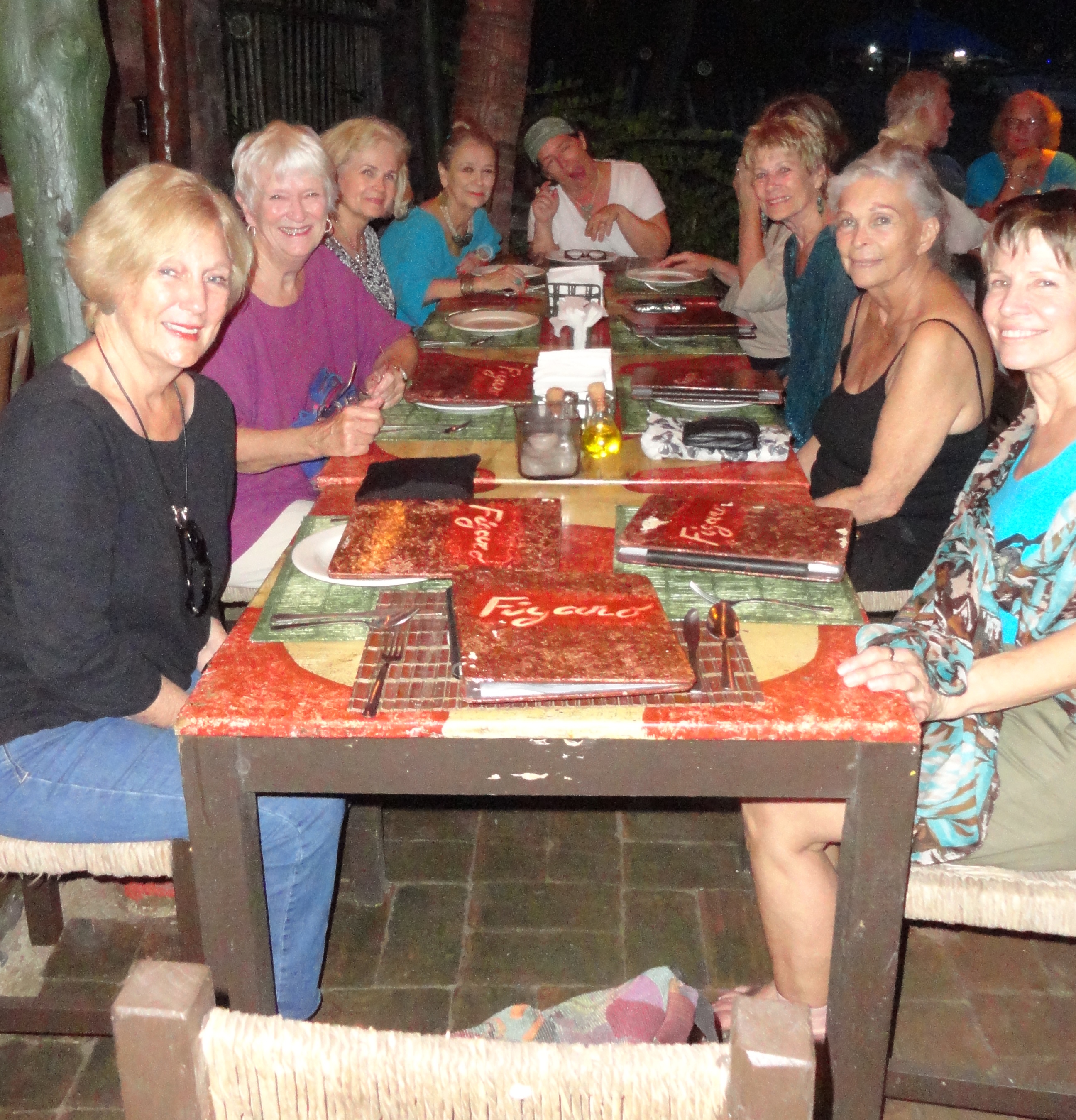
Ten women including Judy Reeves as the workshop director. Fabulous writing. Fabulous time. An hour after this picture was taken, six of us were up on the bandstand backing up the guitar player/singer. Yes, I was up there with them, but I’m behind the camera in this shot!!!

Beach Writing Retreat, November 2014: Ten of us spend 3 days together writing, critiquing, learning, growing. (Eating, swimming, dancing, laughing, walking, listening, singing.)

Tomorrow, we’ll add shopping to the list as we take an hour or two off to go to the great outdoor weekly market.

Hello, Madam

Hello, Madam

My story begins years ago, when the gringo woman first bought the palapa house that fronts the beach in our village. It is many years now since that day I first passed her walking on the beach—heading south as I headed north. I saw her falter when I drew close enough for her to see the machete in my hand. It was held down by my side, as this is how I always carry it, so I think perhaps she didn’t see it until I was quite close. I saw her alter the cadence of her walk, start to turn around, then instead, veer out into the water so as to cut as wide a swath as possible in our passing. I bid her good morning, trying to be as non-threatening as a six-foot-tall Mexican man carrying a machete could be on this deserted section of the beach. No other people walk in the dawn darkness before the sun comes over the palm trees and palapa rooflines.

She bid me good morning as well, saying “Buen dia,” in our fashion, instead of the usual “Buenos dias,” that would brand her as a gringa. Not that anyone would have mistaken her for anything else. She wore the sackish coverup that many norte americanos adopt as their bodies get older and wider. Her skin was white, her hair straw-colored. She carried a big bag and stooped often to retrieve shells, stones, driftwood and other objects from the beach that she made into art. I have seen these objects spread out on the palapa-covered front porch of her house on the beach, very close to the water. Sometimes when she was not outside, I had peeked at her new constructions and after our first month of passing daily on the beach, I held out to her a small treasure I had found: a seahorse, bright orange, no longer than half my thumb. It was dead but still pliable. When I held it out to her, she was at first taken aback. Then I saw the pleasure on her face, as though I’d handed her a rose. The next day, I handed her a small rock imprinted with the fossil of a shell. It was gratifying to give these small ordinary things to someone who found them to have value.

The third day, I gifted her with three seahorses I’d found lying side-by-side on the beach, as though ready for a communal funeral. After I gave them to her, spread out to dry on a small section of a palm seed sheath that I had hacked out with my machete, it was she who initiated a conversation by asking why I carried the machete; and this is what I said back to her:

“Hello Madam. Someone has already told me that you are looking for stories, and knowing that I have many that I remember well and also have been said to share interestingly enough, he has recommended that I seek you out. In spite of this, do not think that our meeting on this beach was anything but coincidental. I have walked here every morning at this time for many years. It is fate that engineered our introduction, not I.

I am Fernando, but everyone here calls me “The Machete.” There is a story to this, of course, as there is a story to everything in Mexico. Sometimes I think our country is composed more of stories than of flesh or blood or clay or concrete. Stories and dreams and reality. Almost always, it is hard to know the difference.

Many years ago. Well, not really so many years—maybe twelve or fifteen—it was not as it is now. Few gringos lived in our community. Instead, there were dogs. Many wild dogs who roamed the beach. Sometimes some of them were rabid and there were at times problems when people carried food onto the sand. A few times, they even invaded the restaurants that opened onto the beach, rushing past tables, grabbing arrechera from plates and sometimes catching a hand or leg in the process. This brought a good deal of fear because of the fear of rabies, and everyone was talking to those who ran our pueblo, asking them what they were going to do about it. Finally, some of the men of the pueblo took guns and machetes and went in search of these dogs, disposing of many of them. For a while, peace reigned on the beach, but every few years, another wild pack would form and people would again be afraid to go onto the wilder parts of the beach—those parts where you and I like to walk.

Since I live a few miles from the place of my labor, it has been my practice for all these years to walk to work on the beach and as you might have guessed, this machete was my weapon against the wild dogs. Through the efforts of the many gringos who now live in our town, and the free spay and neuter clinics they provide twice a year, the problem of the wild dogs has disappeared; but I still carry my machete. It is as though my body has altered itself to accept this extra weight on my right side, so that without the machete, I cannot walk right. I cannot stride. I am not as sure-footed. This daily encumbrance has become a part of me, so always I carry it by my side. The story is simple. This is all there is to it.”

We passed on then, each in our particular direction; but I believe we parted as, if not friends, at least as congenial acquaintances. This was my first conversation with this woman who would one day have such an impact upon my life. It seems an inconsequential thing—this exchange of four seahorses and an imprinted stone—but these simple objects of seemingly no value were to be the golden key to my future—a story I will perhaps tell you one day if kind fate should set us in each others’ path.

The Prompt: Golden Key—You’ve been given a key that can open one building, room, locker, or box to which you don’t normally have access. How do you use it, and why?

This is actually Chapter Four of my novel.  I used today’s prompt as its starting point…Actually, its ending point.  Yes, I’m doing the novel but still can’t figure out how to post it on NaNoWriMo.  If anyone can give me some pointers about this, I would appreciate it!  Duh.

Eight Months Wait

Eight Months Wait

Today’s the day I’m leaving to spend two months at the beach
to try to write a novel that‘s been just beyond my reach
since I wrote the first three chapters when last I spent time there;
but since I returned home, I’ve just been tearing at my hair
searching for the next word—the next turn in the plot—
in vain for though I’m waiting, the words seem to be caught.

And so I’m going after them. I’m driving there today
to see if at a different spot, I’ll have something to say.
I don’t have any friends there, or any obligation.
Understand, I’m going to work, and not for a vacation.
I’d thought to start two weeks ago, by joining NaNoWriMo,
but couldn’t figure out the site, though I knew where to go.

And so I’ve just kept writing my daily blog instead,
deciding that with just three chapters done, the book was dead.
That may be so, but nonetheless, I guess I’ll try once more
and so within the hour, I’ll be walking out the door.
My alarm clock didn’t function, so I am already late,
but I could not let you wait in vain for our daily date.

Will I be here tomorrow? My mind is most conflicted.
I really shouldn’t, but I fear that I’m badly addicted.
I get up early at the beach to dodge the morning sun.
By 8 ‘clock, my daily two hour walk is always done.
Perhaps while I am walking, my book will find me there
so I will find the plot again—and grow back all my hair.

So it’s adieu for now, perhaps. We’ll see how I will do
at writing words for chapters that I fear have been too few.
Just how it will all wind up, I do not have a clue.
All I know is that I’ll sorely miss the lot of you.
Pine for your fine company and all your ideas, too,
I’ll miss my daily visits to this lovely WordPress zoo!

The Prompt: Waiting Room—“Good things come to those who wait.” Do you agree? How long is it reasonable to wait for something you really want?

Wooden Heart

Wooden Heart

He handed it to me without ceremony—a small leather bag, awl-punched and stitched together by hand. Its flap was held together by a clasp made from a two fishing line sinkers and a piece of woven wax linen. I unwound the wax linen and found inside a tiny wooden heart with his initials on one side, mine on the other. A small hole in the heart had a braided cord of wax linen strung through that was attached to the bag so that the heart could not be lost. He had woven more waxed linen into a neck cord. I was 39 years old when he gave me that incredible thing I never thought I would receive: his heart—as much of it as he could give. Continue reading

Frozen

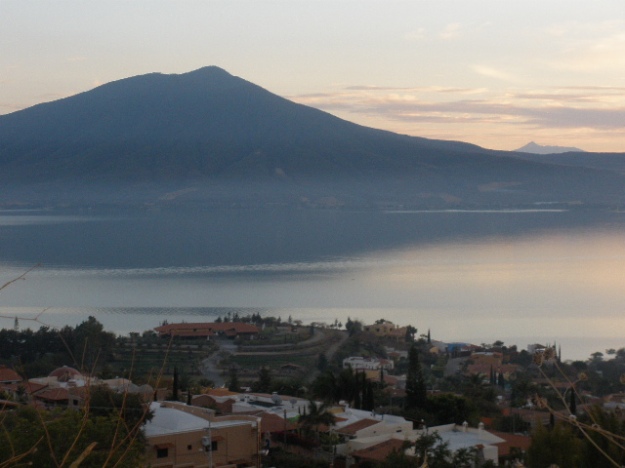
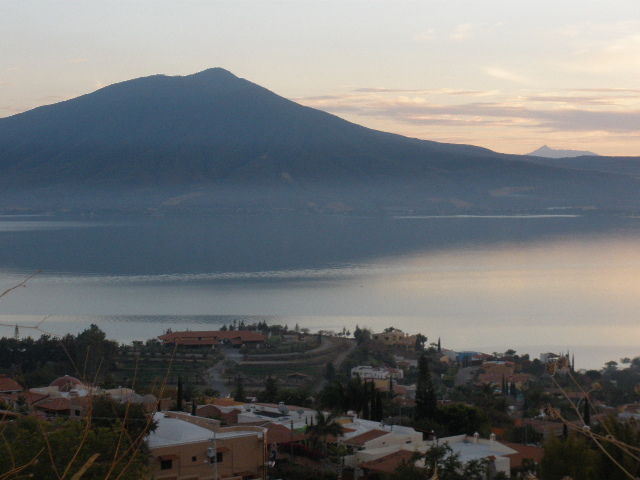
  OLYMPUS DIGITAL CAMERA That little peak you see peeking over the shoulder of the big mountain we all call Senor Garcia is the sister peak to Colima Volcano, who gifts us with the 120 degree steaming hot water that streams into our pools, hot tubs and cisterns in the neighborhood above San Juan Cosala, where I live.

Frozen

Lately, the mornings had grown crisp. Even here, below the tropic of Cancer, where they were rumored to have the second best climate in the world, they suffered a few weeks of weather where she regretted having neither heat nor air conditioning in her house. Its brick and concrete walls held-in the cool air. In the summer, this was a welcome fact. Now, in mid-November, it created the effect of the cold storage locker at the butcher shop in the small South Dakota town where she had grown up.

The butcher shop had a room-sized walk-in freezer that functioned as a meat safety-deposit vault. People in the town paid to rent private lockers. Ranchers could bring  a live cow to the butcher and he and his family would kill it, age the meat, wrap it in neat packages labeled hamburger, rib eye, chuck roast, rump roast or sirloin; and then stow it away in drawers big enough to hold an entire dismantled cow. When she was very small, she could remember going to the locker with her mother or father to get the week’s meat from the drawer that had their name scrawled on a piece of masking tape stuck on its front.

The locker also sold ice cream sandwiches by the carton of 50 or so, which they would take home and store in the freezer compartment of their refrigerator. They were square little bars—half the size of the bigger ones you could buy individually at the supermarket, and she grew chubby the year she turned nine—probably mainly due to her mother’s lack of rules about how many could be consumed daily. When the supply grew sparse, it was replenished by whoever went to the locker—her mom or dad or oldest sister.

It is early morning and she puts off getting out of bed to face the brisk air. Water is streaming into the pool. She can hear its hiss as the hot volcanic water hits the cooler water of the pool. Pasiano the gardener clears his throat. Later, when Yolanda arrives, the dogs will grow restless and bark to be fed. It is not the bright morning promised by the precognition of the weather channel. Even through the white scrim of the manta cloth drapes, She can tell that the sun is muted. The past two days have been marked by intermittent rain showers coming from a sky permanently cottoned-over by a layer of clouds that now and then the sun peeks through. As she lies in bed typing, she can see a light ray through the curtains, but it fades quickly away.

8:01. It is now legal for the noises of the day to begin. The neighbor’s spoiled son roars by in his ATV that is muffler-less. The harsh sound slashes a gash through the gentler sounds of the day: the whisk whisk whisk of Pasiano’s broom, the surge as a steadier supply of hot water streams into the pool from the pipe hidden within the concrete form of a plumed serpent that spews water from between the fangs of its open mouth.

She has fantasized about stringing a wire across the cobblestone road to spill that teenaged brat from his ugly machine. This is the violence prompted by an early morning slaughtered by his ear-splitting exit. On weekends, he is up the hill and down the hill with his friends. Once, when she went to protest, they steered their monster tricycles in her direction, veering off just as she jumped back onto the sidewalk. She couldn’t hear their laughs above the deafening din of three bikes, but the girls on the back of the vehicles  turned to look at her as they roared away, and their mouths were stretched in broad grins of amusement over this aged gringo who had come out with a frown to comment on the fun of youth.

They have gone. She can hear their mechanical beasts speeding down the road toward the carretera, their loud roars terrorizing neighborhood after neighborhood as they pass. She returns to the house to make the phone call to the office that will protest this noise and this small terrorist action.

“Yes, senora, we will look into it.”

“Will you call their father this time?”

“Yes, senora. The father is in Guadalajara now, but when he comes, we will call him.”

“They veered their bikes toward me so I had to jump back on the sidewalk!”

“Yes, senora. We will tell them.”

She hangs up knowing they will not tell the parents anything. They are important enough to have a huge house here in the tennis club where she lives— house they use on occasional weekends. A house which sits empty for most of the year. A house where they once brought their children and their cousins and friends to swim in the steaming hot water of the club pool or their own pools. A party house for their children, now that they have reached their teen years.
The father would be an important business man with connections, perhaps a judge or politician. It was rumored that one of the houses on her street, one further up the mountainside, was owned by a member of the cartel.

Whatever the truth of this, the complaint would not be made. In Mexico, so long as their misdeeds did not come too completely to the surface, the rich were invulnerable—cushioned by a layer of privilege augmented by mordida. No foreigner who chose to come up against a Mexican would ever win—no matter how large the misdeed. Murderers might be caught, but the case would then fade away in time so that they might never be tried, but again would be released on some technicality given birth to by mordida. Houses and land paid for in full by gringos could be reclaimed by entrepreneurs or ejidos powerful enough to know the right judge or the right politician.

Now the roar of the ATV’s is forgotten with the passing of the first truck hauling gravel and stone up to the construction site at the highest point presently reachable on the mountain. One day those mountains that rose so beautifully above her would be filled with houses to the very top; but for now, as the noise of the churning engine fades into the cold white sky, she contemplates what she will write about now that the demands of the prompt have been met. She will not write a funny rhyme today. Her mind has already been trapped by the mood prompted by the demands of this day’s topic.

She wonders how the parts of what she has written can be brought together. It is as though she has written a beginning and an end with no middle. Perhaps that was how a novel was begun in the mind of a novelist—to start out with meat in a cold storage locker and end up with a neighbor’s son terrorizing the neighborhood on an ATV. Was that how it went? Could she stuff those two vignettes with enough information to stretch them apart like a bota bag full of sweet wine? Did she have the capacity to grow those grapes, the skill to ferment them and siphon them into the bag she has created on this cloudy morning that only now was beginning to let the rays of sunlight through? That strong Mexican sun made more powerful by the high elevation of this place at the almost top of a mountain on a street set at such an angle that if there were ever snow here, she could step outside her house and sled in one straight line down to the lake that was a mile away, across its frozen surface, all the way to the other side.

The Prompt: Today you can write about anything, in whatever genre or form, but your post must include a speeding car, a phone call, and a crisp, bright morning. (Wildcard: you can swap any of the above for a good joke.)
Romancing the Word

The Prompt: Oil, Meet Water—Of the people who are close to you, who is the person most unlike you? What makes it possible for you to get along?

Romancing the Word

Scrabble, Dice and Mexican Train—
I play them once and then again,
while he won’t play a single game
of any sort or any name.

I like to travel. He sits at home.
Walmart’s as far as he will roam.
Won’t go to movie theaters, clubs,
exhibitions, galleries, pubs,

museums, fiestas, meetings, for
such crowding makes him hit the door.
Tourist attractions leave him numb
and make him wonder why he’s come.

I fill my house with Mexican art
that drains my purse but fills my heart,
but my artful clutter makes him frown.
His décor? Purely hand-me-down.

I like people. He sits alone.
His desk chair is his chosen throne
where he supervises the internet—
the biggest nerd you’ve ever met.

I dance whenever I’ve the chance,
but you might have guessed—he doesn’t dance!
He’s six-foot-two. I’m five-foot-six.
Yet tall and short just seem to mix.

I know our friends and family
find us an anomaly.
for these differences are just a start.
We’re 1600 miles apart!

So how can he be my best friend
when our differences never end:
a scorpion talking to a crab,
a Chihuahua running with a Lab?

What makes our congress less absurd?
We’re both addicted to the written word!
We both love puns and definition.
Apostrophe errors? Pure sedition!

While other folks discuss Obama,
we dissect uses of the comma.
We discuss dashes from en to em,
and how the world misuses them!

Splitting hairs but not infinitives,
sound editing advice he gives
for everything I write online.
If words were grapes, he’d strip the vine

of sour grapes and slugs and weeds
and after he had done these deeds,
the wine would pour more sweet and rare,
culled out by his loving care.

And so it goes here on my blog.
In its machine he is a cog—
mending lost links and feeling free
to cut that spare apostrophe.

To wrestle errant prepositions,
question faulty suppositions,
to polish off each word writ wrong
until a ditty becomes a song.

We meet each day on the cyber page
that is the parchment of our age.
While you meet others of your type
at coffee bars, we meet on Skype.

Our discourse clever, funny, rare.
We do not pine and ache and stare
eye-to-eye hour after hour.
For us, it’s words that carry power.

(Here) is another response to this prompt that I loved! It is by Sam Rappaz.  Check her out!

NaYesWriMo

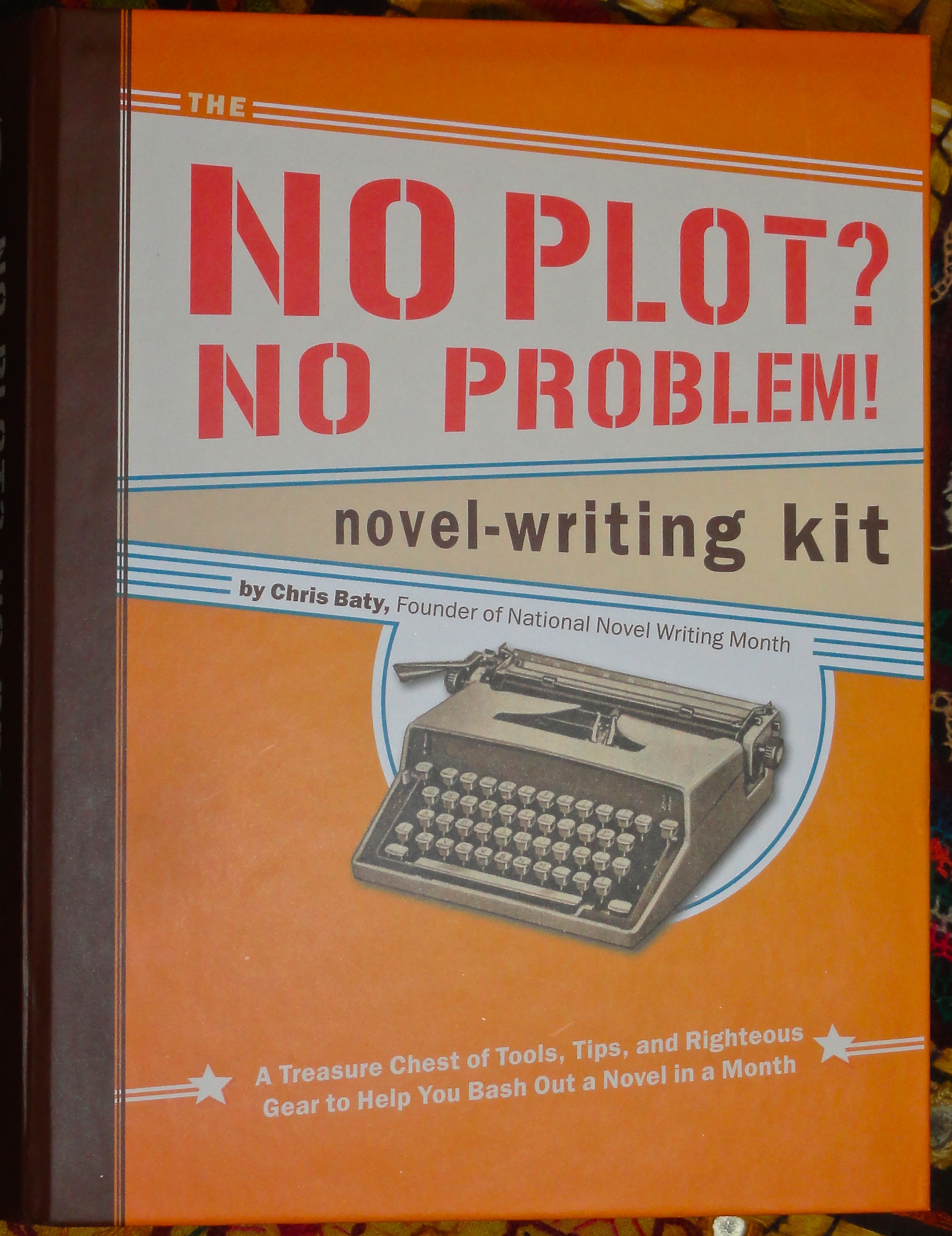
DSC08906The day before yesterday, I decided to let my novel of three chapters die a quiet death.  My plans to go to the beach to finish it already firmed up and rents paid, I decided I’d devote the time to my other books, already written, getting them illustrated and formatted.  Then yesterday, my dear friends Betty and Larry showed up at our monthly reading at La Rueda with this gift for me.  Looks like that novel (or a different one?) is back in the works.  Who can reject a gift from a friend?

Less Salt in My Success Story, Please

Failure is the condiment that gives success its flavor.”
–Truman Capote

Less Salt in my Success Story, Please

Is it coincidence that spice is also known as “seasoning?”
The reason for this must be (according to my reasoning)
because we need a bit of this and then a bit of that
lest our cuisine, and more importantly, our lives become too flat.
Summer, winter, spring and fall—no season dominates them all.
So this is why, then, in my view,
a pinch of failure will surely do.

The Prompt: The Spice of Success—if “failure is the condiment that gives success its flavor” (Truman Capote), how spicy do you like your success stories?

Okay, trying to link to NaBloPoMo.  Let’s hope this works!!!