Category Archives: Essays

In Cold Blood

IMG_9290.jpg

                                                        In Cold Blood

I’m sure that the horrible, violent and senseless murders described in Truman Capote’s book In Cold Blood captured the imaginations of most of us in the U.S. Unaccustomed to such vivid descriptions of such violent acts, what small town family did not start locking their doors at night?

The slaughter of the rural farm family occurred on Saturday night, November 14, 1959; and although Capote’s book was not published until 1966, the press made much of it at the time it happened and I was well aware of most of the details of the murder of the father, wife and teen-aged children—a boy and a girl––as well as the capture of the two men who had murdered them. I was especially affected by the sad detail of the discovery of the girl’s Sunday School money tucked into her shoe in the closet. Whether she heard the men breaking in and hid the money so it would not be found or whether she placed it there so she wouldn’t forget, the detail has the same poignancy

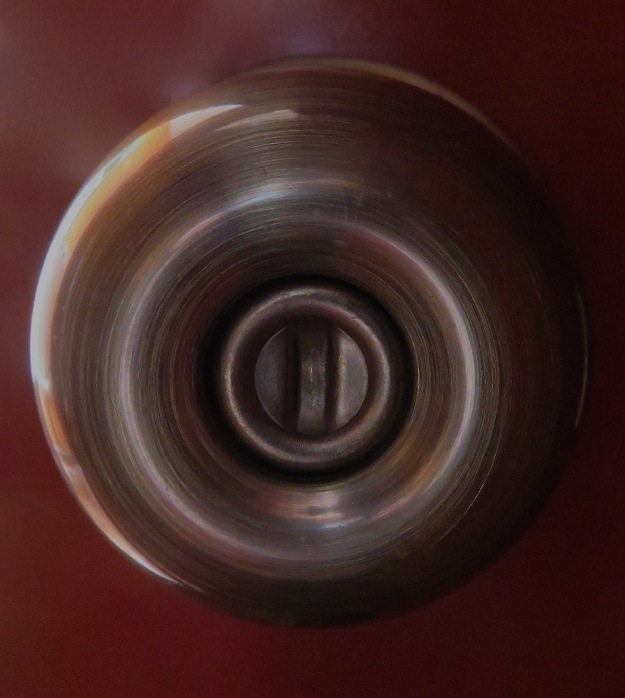
After the murder, as I lay in bed at night––especially on summer nights when I found it even harder to surrender to sleep than during blustery cold nights in the winter––I often thought to get up and check the doors again: the front door, the door to the garage, the door from the garage to the mud room, the door to the basement and the back door off the pantry that led to the back porch. All had push-locks accessed by a key from the other side.
On one night in particular, that summer that I turned 13, I lay awake listening to the night sounds that streamed in through my screened window. My window adjoined the front door stoop and it suddenly occurred to me that anyone could slice the screen and easily enter. I got up from bed to close the window and open the air conditioning vent in the floor under it. While I was up, I decided to check all the doors again. All were securely locked except for the lock to the back “porch” which was really just a platform four or five feet wide with a hand railing that ran the entire length of the house from the back garage entry to the pantry/kitchen area.

The pantry held a sink for my dad to wash up in when he came in from the ranch, and since we rarely locked our house, many times he would just walk along this platform/porch and enter the house from the back where he pulled off his boots and emptied his cuffs off the back porch so he wouldn’t track wheat chaff or mud or other souvenirs of his day’s work through the house. Then he’d wash his hands and neck and face in “his” special sink and make his way to his rocking chair in the living room, where he’d spend the rest of the day resting until supper and reading before bed.

This platform/porch was actually quite a distance above the ground because our lot was on a small hill that sloped from front to back and right to left. This enabled the windows in the basement to be above ground level, whereas there were no windows at all in the front of the basement. On this particular night, I stepped out onto this roofless sideless porch platform. I could see the big dipper and part of the little dipper and the thousands of other stars in the summer sky, but I didn’t know the names of any of the other constellations.

I could smell the newly cut grass that my mother had mowed in the early evening of that day, after the sun had gone low in the sky. I remembered when I was little how my dad was less tired by the time he got home and so he’d mow the huge lawn around the old house. My mom would come after him with the lawn sweeper that collected the grass cuttings in a huge canvas cube open at the top to dump the grass into a huge pile by the gravel road where we kids would build nests and play bird. I was the baby bird fed imaginary worms or, if we’d had the right dinner, sauceless spaghetti, by my older sister.

By my teen years, however, my dad would be too tired when he got home from a day that started at 5 or 6 in the morning and often didn’t end until 8 or 9 at night if they were cutting wheat. His life was a hard one and I often wondered if he resented coming home to daughters reading on their beds or talking on the phone to friends.

Did it seem unfair to him that he worked so hard to support daughters and a wife who had such a life of ease? Although I had not yet started to really write, except for a diary I once kept for a few months or assignments for school, I did have an active imagination; and from a very early age, I had concocted elaborate stories all involving imaginary selves of the future.

Now on this night, I wondered why that door that I had checked before coming to bed to read was now open! Who and why would anyone open a locked door? As I lay thinking, I heard the door to my parents’ bedroom farther down the hall open. I could hear my father’s heavy barefoot tread turning not to his right—to the bathroom between their room and my sister’s––but instead to the left. Down the long hall to my room, the entrance hall, the kitchen, the mudroom and the back porch. I could hear the door opening and a few minutes’ delay before he padded down the hall again and closed his door.

Chill. I felt it zoom down my spine, hit my tailbone and ricochet back up to my brain where it froze the back of my head. I waited. For five minutes, and ten. Barely breathing. I cracked my door and when I could again hear my father’s loud snores, I sneaked back out to the door to the back porch, which was once again unlocked. As quietly as possible, I pushed the button lock in, then returned to bed where I remained vigilantly awake for the rest of the night. Twice more, my father got up to unlock the door. Twice more, I got up to relock it.

During all those long hours before dawn, I imagined the scenario. My father, formerly my protector, allowance provider and generous benefactor to the pleasures of my life—turned in my mind into plotter. He, too, had read all of the coverage of the Kansas murders, and it had given him ideas.  He had hired a man to sneak in, to bind him up and leave him helpless and then to kill us all. He wanted to be free. He was tired of his idle daughters, tired of his wife.

My father had, previous to this, gone through one of his week long silent periods where we knew he was upset about something—cattle prices, the threat of hail before harvest, my mother or us. We never knew what caused these silent periods where he would speak to none of us and sometimes even move to the basement to sleep. They never lasted over a week and afterwards he would be our same joking, generous, hard-working dad. But during those times, we tiptoed. We tried to cajole and charm, but it didn’t work. If we asked if he wanted his head rubbed, we were met with a curt sideways bob of the head or a “Not tonight!”

This was unheard of at other times, when we’d ask for money for a new dress or the show and he’d answer with, “Ya. Rub Pa’s head!” We’d do so, and then the wallet would come out. Not that we didn’t rub his head gratis as well. It just got to be a joke—this returning of favor for favor. Then he’d hand us his wallet and put his hand over his eyes, like he didn’t want to see what we’d take. We’d always show him, though. Was this okay? It always was.

At times other than his silent periods, he was our loving dad. Proud of us. Funny around guests, and talkative, but when home alone with us, usually tired––sleeping or reading one of the piles of magazines and books that lay on the long coffee table beside his chair. I mention the silent periods as an explanation of why I might even in my most fertile imagination conceive of an idea that my dad would be capable of planning to “off” his entire family.

But, imagine it I did. I became the protector of our family that summer, lying awake for as long as I could to listen for my father’s footsteps down the hall. And this was not the only night that he got up once or twice to unlock that back door. I never said a word to my mother or sister. I perhaps told my best friend, thinking if my protective efforts failed, at least one person could point the way to insuring the perpetrator of my demise came to justice.

In later years, I forgot about that terrifying summer and went back to loving and admiring my dad almost as much as before, but by then there was a difference. Whether it was caused by radical ideas picked up in my sixties college life and my need to define myself as more modern than my parents—who were themselves quite liberal––or a vestige of that summer of distrust, I’ll never know.

By the time my dad died eleven years later, they’d sold the house in town and moved to a smaller house they built a mile out of town. It was to escape town taxes, my dad always said, but I’ve always thought that for him it was a return to his early homestead days in another house with nothing in view but prairie grasses and a big weathered barn. This new “country” house built by my parents after I left high school was closer to town than the homestead of my grandparents, but was within sight of the big red barn of a farm he’d bought years ago for a hired man and his family to live in and afterwards rented out. The barn sat squarely between my parents’ new modern modular and the old farmhouse. There was a small lake nearby with otters and where the wild geese landed overnight in their migrations.

It was one summer night when I was home from college for vacation that my dad got up from where he’d been sleeping in his chair and walked through the hall and kitchen and out the back door of the house.

“Where do you think he’s going?” I asked my mother.

“Oh, he likes to go out to sniff the night air and have a pee in the dark,” she said with a chuckle. “He loved to pee off the back porch of the house in town at night, even though it was so much farther away than the bathroom. I never could convince him not to do it. I worried that the neighbors would see him. But I think he thought it saved water, or perhaps it just reminded him of his youth—peeing out the back door of the house into the night air.”

This post was written in response to Elyse’s scary babysitting piece which you can read here:  http://fiftyfourandahalf.com/2012/08/01/all-the-cool-kids-are-doing-it/


Merry-Go-Round


daily life color086 (1)
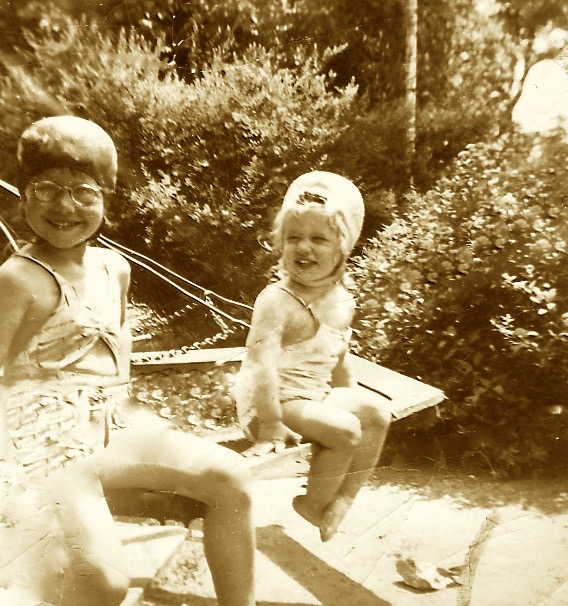
My sister and I at a park near my grandma’s house in Kansas on a merry-go-round similar to the one in the school playground across from our house in South Dakota.

                                                                   Merry-Go-Round

Their creaks were my alarm that kids were on the elementary school playground across the street and if my biggest sister was downstairs or away from home or even sleeping as soundly as she always did after coming home late the night before, I’d sneak into her room to look out on the playground from above and see who was there. I knew the difference in the sound between the merry-go-round and each set of swings—the little swings next to the little slide, or one of the three big sets directly across from the block my house was on. Higher, with longer and more flexible chains, these swings could be made to loop de loop—pass up so high that you actually went over the top of the frame the swings were suspended from and wound the chain once around the pipe.

Some of the boys could repeat this three or four times until the swing got so high that none of the little kids could get up to it. Then the janitors would have to get their tallest ladder and go up to push the seat over and over the cross pole with one of their big push brooms to straighten it out again and bring the seat down closer to earth.

There were rules forbidding loop de looping, but the boys would come after school when all the teachers had gone home and even our janitors, Mr. and Mrs. Polachek, who lived kitty-corner across from the south end of the playground, were at home in their backroom away from the sounds of kids in the neighborhood, sealed up tight and safe. They were Polish, and now that I think of it, probably displaced persons from WWII. Their accents were thick and her temper was short and they were the objects of constant tauntings from the boys. One year the boys had hung a dead cat from their front porch on Halloween. I wish I could remember whether I thought this was funny, as many of the kids did. I hope I didn’t––that I was as sickened by it then as I am now.

The creak I was listening for was the creak of the merry-go-round. Teepee shaped, it had a wooden runner all the way around it a foot up from the ground. There was a handrail about thirty inches above it, so you could stand on the wooden runner, facing the center pole, hold onto the hand rail and enjoy the ride as the big kids ran around in circles around the merry-go-round, pulling it with them to go faster and faster, then stood on four sides of it, grabbing the handrail pipe and pushing it off to make it go faster still. One by one, more onlookers would be enrolled in the joint effort to get it going fast enough. Then they’d jump on and everyone would pump up and down, sticking their bottoms out into space as they bent their knees, pumping to keep up the momentum.

There were other ways to use the Merry-go-round. The bigger girls like Marie Holstedt who lived on the street that faced the opposite side of the playground from the one my house faced, would sit on the foot board with her boyfriend Robert. Their feet side by side on the ground, they would sway to and fro in a kind of two-step movement—two to the right, then one to the left––their knees touching with their swing to the right, their hips touching when they swung to the left. When they did this, the sound of the merry-go-round reminded me of the strange rhythmic creaking I’d hear sometimes late at night in my house.

It was probably the TV antenna on the roof, my mother had said. Or maybe the furnace trying to pump out heat, she had speculated when I pointed out that it had been a windless night.
Life was simple and I believed her. Only now do I make sense of it and of my father’s late night short trips down the hall to the bathroom—the washcloth always draped over the tub faucet the next morning.

It was an innocent age where it was entirely possible to be eleven years old and to never have had the least idea that anything like sex existed in the world. Yet a good deal of what eventually led up to it went on in the playground across from my house. Older girls would sit in the swings, swaying back and forth without ever taking their feet from the ground. Or, take fast running steps forward and backward without really letting go and allowing the lift off. To their side or in front of them would be their crush of the day or the week or the hour. If he was not the boy of choice, sometimes the girls would switch swings. If the boy switched again, too, and the other boy let him, then it was a sign language of sorts that indicated which boy favored which girl, and if the girls went home, a clear message that things had not matched up correctly to their satisfaction.

But at other times––usually during games of ditch ‘em played in the twilight and darkness of summer, courtships could progress toward hunkering down in the ditches around the playground, close up to some culvert where the ditches were their deepest, the girl in front, the boy with his arms around her waist, holding her back from running to try to get to home base when one of the littler kids who was “it” ran past without seeing them. In these junior high years just past childhood, the objects of the games started to shift until finally in high school, the rituals of the old games were left behind entirely and ditch ‘em became merely a starting place––as did the swinging back and forth, the pumping, the dance.

Today, with merry-go-rounds a thing of the past, they are still an appropriate metaphor for what life pushes us toward from our birth. It begins with our rocking in the arms of our mothers, the rocking chairs of our grandmothers, the wild swings through the air locked hand-to-hand with our fathers. It is what slippery slides and swings and merry-go-rounds and dancing move us towards. Everything going around and around and in doing so really going back and forth from generation to generation. Passing the world on and fading away. Now and then doing a loop de loop just because we can.

daily life color087 (1) daily life color088 (1)
In response to The Daily Post’s writing prompt: “Ode to a Playground.”A place from your past or childhood, one that you’re fond of, is destroyed. Write it a memorial.

Cast in Potato Salad, Carved in Stone

daily life color083 (2)
Cast in Potato Salad, Carved in Stone

The last thing I ever thought I would do would be to pose for a nude sculpture, but when I married a sculptor, I guess it was inevitable.  Since I never had children, this probably marked the longest period in my life that I ever lay nude being observed by a second party.  I remembered having no reservations about doing so, in spite of the fact that I am really rather modest–that is about revealing myself physically. Words are another matter all together.

My husband first sculpted me in plasticine clay. (No, not the ubiquitous Sculpey, but a very dense artist’s clay used to make the originals for bronze sculpting.) He then made a plaster mold followed by a rubber reverse mold that would enable him to make further plaster molds once he destroyed the plasticine original so he could reuse the plasticine.  After mastering the intricacies of wood carving, bronze casting, welding, clay, sandblasting, paper making and stone carving, he was in a difficult spot.  A tool junkie, he had already purchased or made every tool necessary for working in these media. How could he justify buying any more tools or building another studio addition to add to the seven studios he had already set up?

The answer came when our artist friend Diana moved to town.  Her medium was cast glass and Bob soon became fascinated with the process.  Of course, this necessitated the purchase of dozens of large jars of different colored glass casting pellets as well as books, chemicals and other supplies necessary for the process. Unfortunately, we already owned a large kiln, so he couldn’t justify buying a new pristine kiln to be used only for the melting of glass.  True, some molecules of clay might permeate the glass castings, but he decided at least for his first project, to use our existing kiln.

I can’t remember what his first few castings were, but after a few experiments, he decided that his first large glass project would be–ta da–a glass casting of his recumbent nude wife!

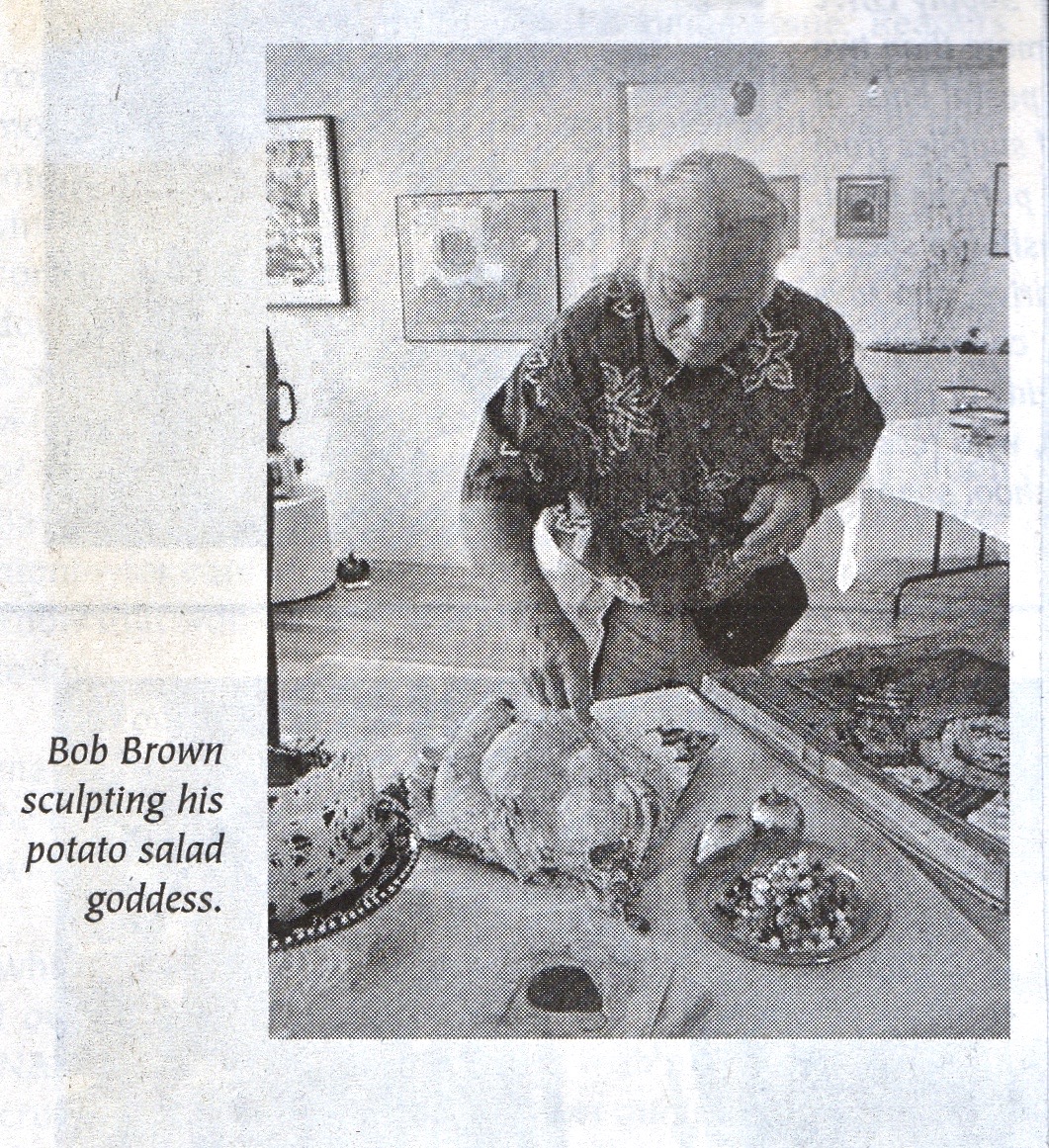
The thing was, this necessitated ordering a good deal more glass, and in the meantime, he had this wonderful rubber mold just sitting there unused!  He tried to busy himself with carving stone and wood, but meanwhile that mold beckoned!  Enter fate in the guise of the next show at the Santa Cruz Mountains Art Center, where we were both members.  And the next show was–Edible Art!  In addition to food-centered art themes, there was to be a cookbook of artist’s favorite recipes and the piece de resistance was–an edible category, to be consumed at the reception!!!  Thus it was that I came to be cast in potato salad–first molded in “the” well-washed and disinfected rubber mold  and then fine-sculpted by Bob’s hands.

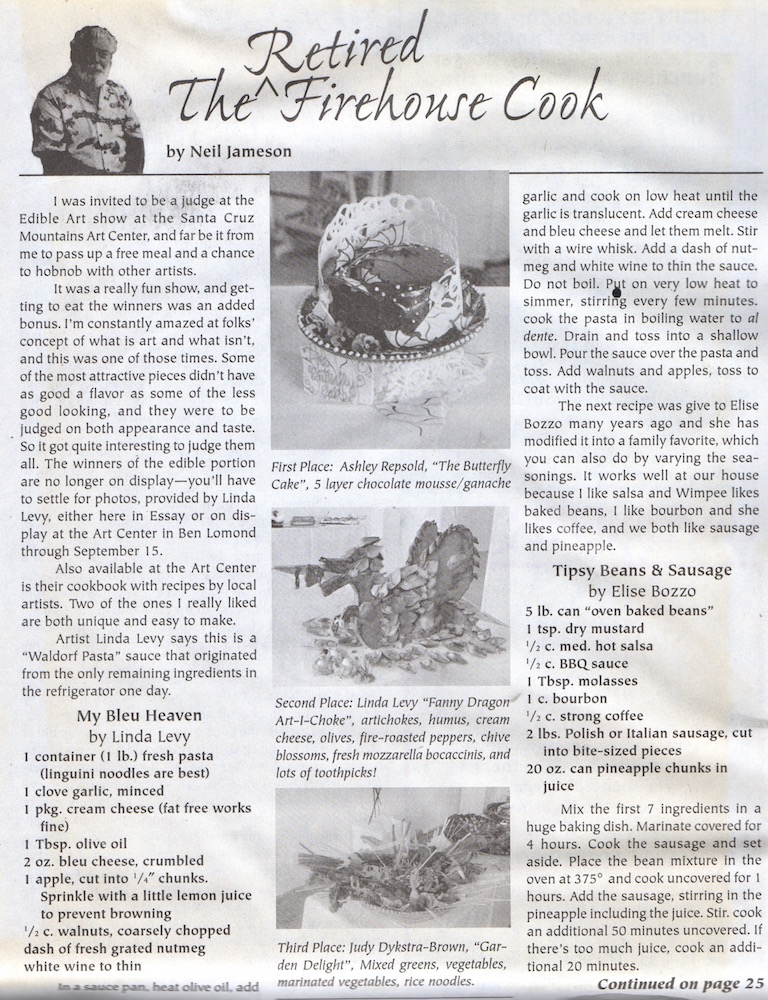
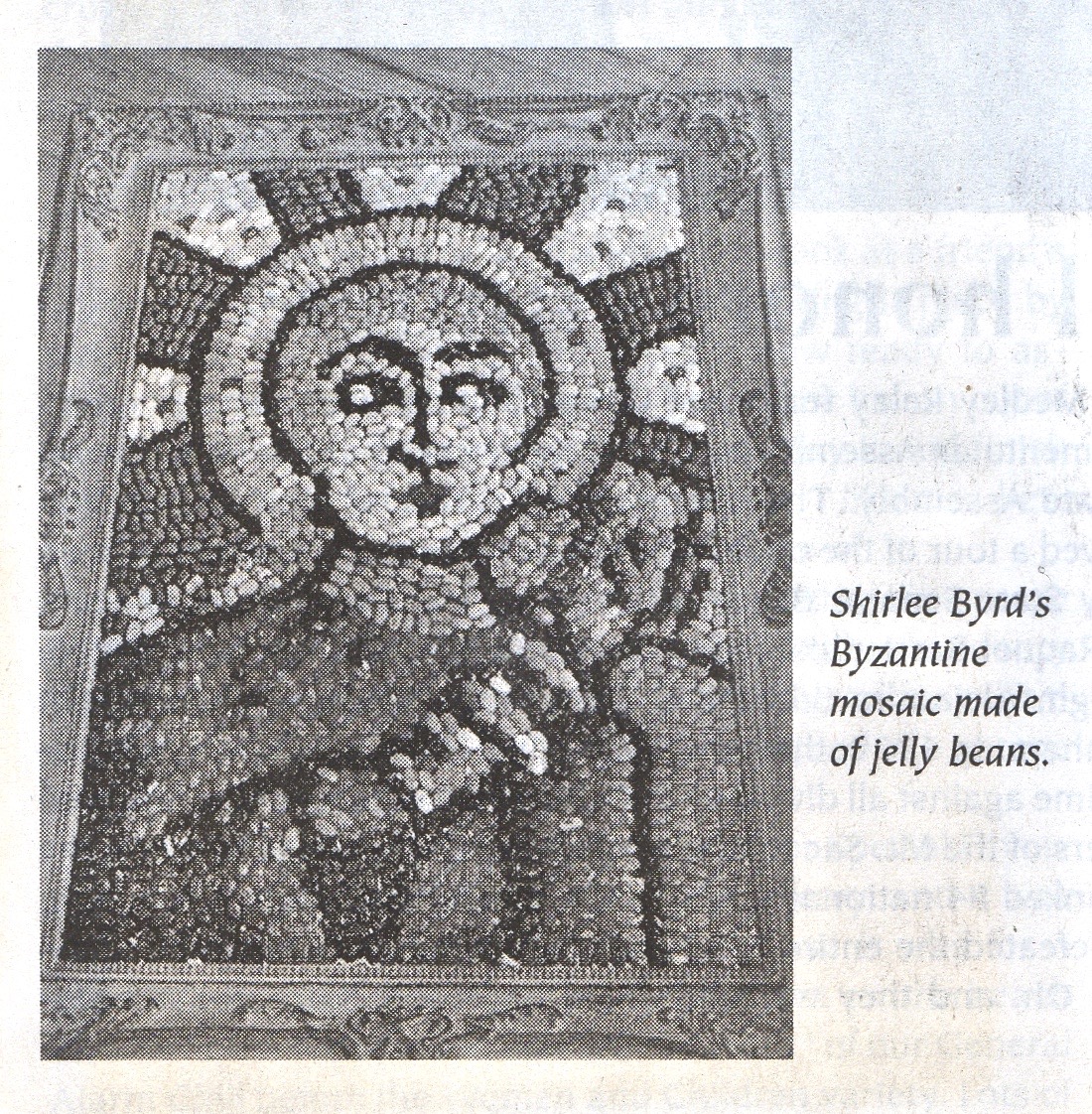
I must admit I felt some trepidation about first being viewed nude, then being consumed by my fellow artists and friends.  This smacked of the Donner party or some sort of sixties orgy, but how we suffer for our art.  I requested Bob not reveal who his model was and all went well.  Later, the judge told us that he would have won first place for edible art if I had not forgotten and used some of the water I used to boil the eggs to add moisture to the potato salad. I had forgotten that I always put a half cup of salt in the water to seal the eggs in case they cracked during the boiling process and that addition made the potato salad totally inedible.  The judges could do nothing but award his sculpture fourth place prize in place of first, right ahead of a jellybean mosaic in the Byzantine style, but behind my third place for my “Garden of Earthly delights!”

Yes, the glass grains did arrive and yes he cast the sculpture, but what happened during the further fiasco of my chain of nude effigies must be left to another time and post lest this one grow too long for certain (unnamed) friends to read.    Suffice it to say that once cast in potato salad, twice in glass, it seems only appropriate that my grave be marked by my magnificent if inedible body rendered into stone!!!  It will be the sensation of my little town, I can promise you.
daily life color084 (4) Version 2(photos and copy above taken from the Valley Press)

In response to The Daily Post’s writing prompt: “Immortalized in Stone.”Your personal sculptor is carving a person, thing or event from the last year of your life. What’s the statue of and what makes it so significant?

An Antidote to Violence

An Antidote to Violence

1913688_1136038087858_6027993_n
One thing that has increasingly contributed to my depression over the past few years is my fear that the world population is becoming addicted to violence. Movies, TV and video games become more and more barbaric in their depiction of cruelty. It is as though mere shootings and stabbings are no longer enough. Writers think up unspeakable types of torture and infuse our favorite movies and TV shows with them. I don’t dare describe the cruelties, the memories of which literally keep me up at night. I can mention some of the shows, though, and if you’ve seen them, you will know the scenes of which I speak.

Homeland, The Bridge, Scandal, Revenge, The Blacklist–all of these are programs that, as excellent as they are, I had to stop watching. The horrors just escalated and escalated to a point where it was torture even hearing the sound effects. (I have always had to close my eyes during scenes of violence. Now I have to plug my ears and hum as well.) Yet there must be many who watch, eyes wide, and wait to see how much more horrible the next torture will be. If this were not true, they wouldn’t be some of the most popular shows on television. And, like their parents, our children have become voyeurs of violence. No wonder they bully and bring guns to school to mow down their own friends.

Recently I saw a training film shown to military personnel who were sent to Japan following WWII. Written by the man whose real name you would not recognize but whom everyone knows as Dr. Seuss (yes, that Dr. Seuss) it showed how the Japanese were schooled and brainwashed in the years leading up to the war to train them to accept violence as a patriotic (and religious) duty. How often has religion been used in this way? The Crusades, the Spanish Inquisition, the Salem (and many other) witch trials and now ISIS are examples that trip easily from my memory, but I’m sure each person reading this could provide more examples.

If hate can be taught, why can we not devise an antidote to it? Art, writing, dance, volunteer activities, choir, music and some sports are all activities that fill minds and hopefully push out the fascination with (and time for) violence. (Unfortunately, wildly popular sports such as football and boxing contribute to the world’s obsession with violence.)

Kids need to be afforded a substitute for what now fills their minds. Is this being furnished? Is anyone creating non-violent video games that can engage young minds as completely as the violent ones do? Are books being written that are as alluring as series of books about werewolves and vampires and zombies where love and sex and romance are bonded to death and violence?

And kids are not the only ones. The 50 Shades of Gray series? What was it about those books (Oh my!) that appealed so universally that they outsold every other book in the history of the written language in Great Britain and are second only to a Harry Potter book world-wide? Is violence so much a part of every one of us that we cannot help but devour these books? What element of them other than the sadism and masochism created the draw?

Jung acquainted us with the different archetypes within us all and world-class villains such as Hitler, General Tojo, Idi Amin, Saddam Hussein and Pol Pot certainly brought out the dark sides of their legions of followers, but after all of these horrific periods of history, balance was restored. Whether this will be possible now that the weapons have become more cataclysmic in scope, it remains to be seen.

A few years ago, I was astonished to see one of the questions used to measure and define the personalities of members of the social introduction site OkCupid was, “In one respect, wouldn’t a nuclear war be kind of exciting?”. I don’t know the numbers of answerers who answered anything other than “No,” but I guess the very fact that the question was accepted (members were allowed and encouraged to submit their own questions) indicates that there are people in the world who would answer “Yes,” and brings up a further possibility that makes me shudder—that there is a possibility that such a person might someday (if not already) be in possession of the means by which to start such a war.

Impossible?   How possible was it that a good portion of a nation would follow Hitler or Pol Pot or General Tojo? Idi Amin? Saddam Hussein? The fact is that fear drives us to do much that might be against our natural instincts—or at least the natural instincts we choose to follow.

The fact is that we are human, and as humans we do have a complicated goulash of emotions, needs, impulses, compulsions, fears, dreads and instincts. Events and necessity trigger these contrasting sides of us and one very strong instinct in the masses is mob mentality. It may be hard for most who have read this far in this post to believe that they would ever be so led, and it may be true that they would not; but history shows that time and time again, it has happened. The acts of a charismatic leader, supported by henchmen in sufficient numbers, backed up by fear, fueled by prejudices efficiently stirred up, have stained most societies on earth at some time or other.

All of the villains I have named share many common traits, including one you might have noticed. None of them are American! If someone from another country (or a Native American) were to make up a similar list, who from America might be included? Would it be Joseph McCarthy? J. Edgar Hoover? Charles Manson? Custer? Some high mucky muck of the K.K.K? It is harder to see one’s own mob instinct and in the U.S., the examples might be more limited in numbers or occult in practice, but it may be that in our blood lust for vampires, zombies, werewolves and violent computer games–added to our insistence that the right to own any kind of gun from a purse pistol to an assault rifle is a patriotic right if not an obligation—are all components of our own mob instinct.

How is it that ISIS can reach out and recruit followers from our midst? Could it possibly be because we have prepared a path for them? Schooled our young people so thoroughly in the appeal and glamour and blood lust of violence that we have made them easy targets for those who might appeal to such stirred-up instincts?

It is easy to blame every other country in the world for harboring violence, but when will we start to take responsibility for our own? How many countries are viewing the movies and TV shows we produce that spew out violence? How many buy our computer games and books and comic books that all send the same message? Have we, perhaps not knowingly and with no clear-cut agenda, somehow become the world’s instructors in war games and violence? And even if we have the niggling sense that this could perhaps have some gram of truth in it, would we have the bravery to admit it, let alone the intelligence to somehow stem the tide?

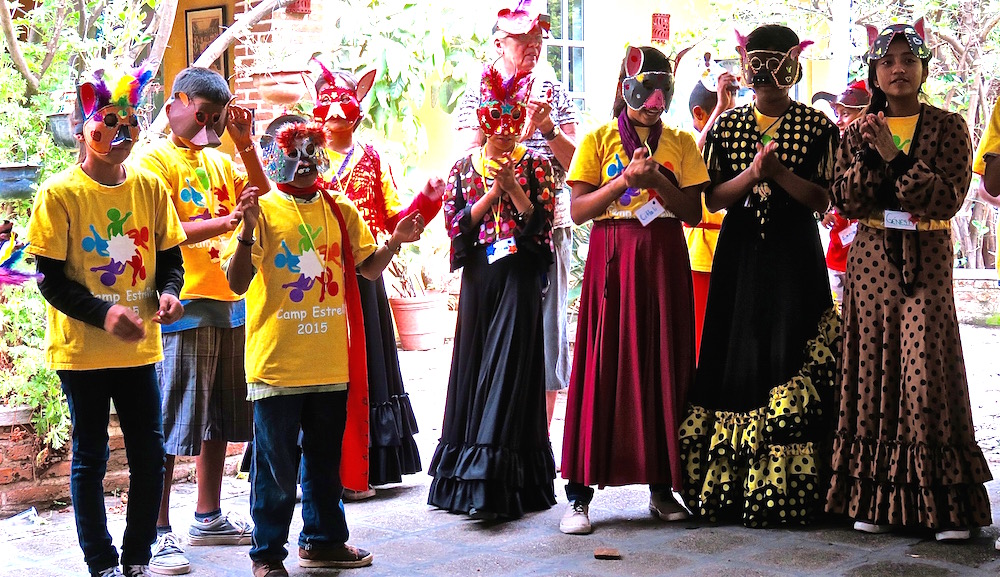
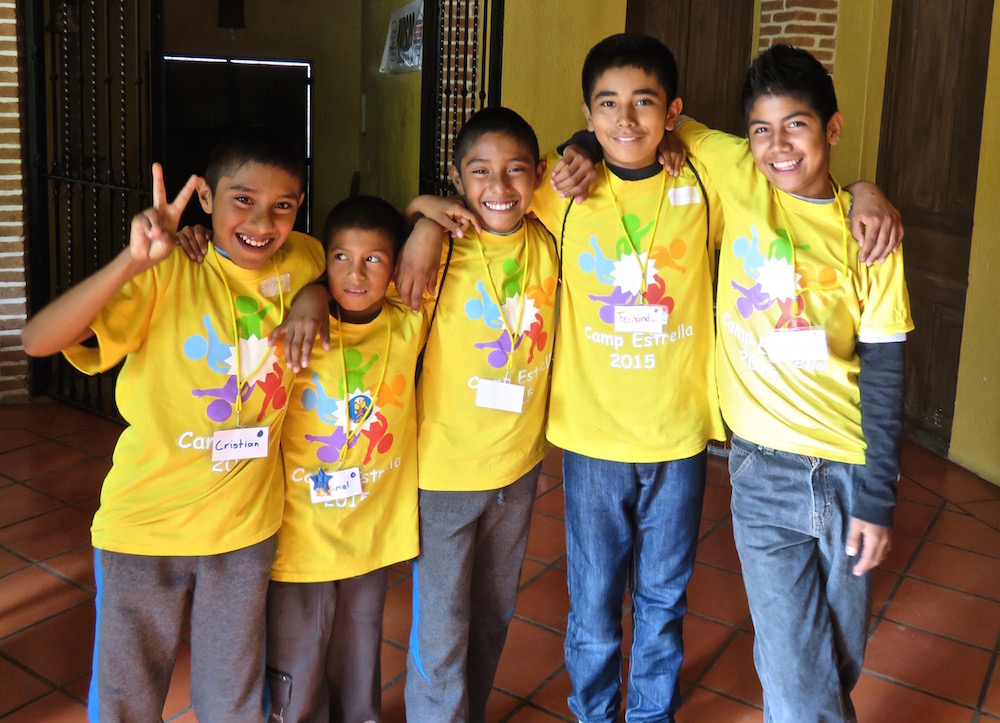
In the past few weeks, I have felt such a huge change in mood. I feel energized, excited about planned activities and more rounded out. It think it came about in a larger part from working with kids and young adults in Camp Estrella. That excitement in seeing their enthusiasm and growth has not waned. I am enthusiastic about ongoing and upcoming plans–the dance classes and sugar skull decorating coming up–but I think, also, that people I’ve met in the blogging world have given me such reassurance that there are good people everywhere who want to do right and want positive things for everyone–not just those of their own country or race or religion or sex. The hope for the world lies within people such as you who take the responsibility to foster in your own children and the children of others interests that will lead them away from the violence that is coming at them from so many directions.

IMG_2243IMG_2184 IMG_2098

“To the Moon, Alice!”

“To the Moon, Alice!”
th

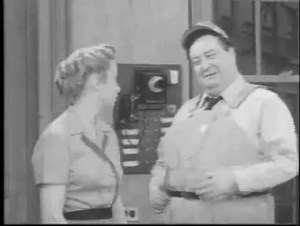
On “The Honeymooners,” Ralph Kramden (played by Jackie Gleason) had a phrase that those of us of a certain age can’t help but remember.  “To the moon, Alice, to the moon!” he would rasp at his wife (played by the inimitable Audrey Meadows) whenever he had no less predictable comeback to her never predictable jibes. Of course, the idea was that this was how far he would knock her.  An upraised fist often accompanied his threat.

The audience, of course, would roar.  So hilarious this empty threat, for America knew that Ralph would never make good on the threat. Even Alice never flinched–supposedly because she, too, knew those words signaled an empty threat.  But underneath those words and the fact that viewers found them to be so hilarious, was the idea that such threatened violence was funny–and, somehow, that such treatment of his wife was a man’s right.

Alice’s only defense was her wicked wit, and unlike many abused wives then and now, she was never really punished for it.  Somehow America knew that if he ever made good on the threat, that Alice would be out the door and probably within a manner of days, on the arm of a man who didn’t weigh 300 pounds plus–a man who made more than the $65 a week Ralph made as a bus driver.

All-in-all, the situation was not very believable–that trim beautiful (sharp-tongued) Alice would ever be wooed and won by fat, acerbic, not-too-clever Ralph required a suspension of disbelief we were well-accustomed to in the early years of TV, not to mention the movies.  From “The Honeymooners” to “Doctor Who,” we were willing to believe anything to be entertained, but the element of violence toward women found so howlingly funny in the Jackie Gleason show was at least not echoed in the wildly implausible “Dr. Who” plots.  There it was highly likely that one would in fact (or in this case, fiction) be flown to the moon–something that never quite happened on “The Honeymooners.”

How far would I go for someone I loved?  Certainly not as far as Alice went. For although it is true that in my lifetime at least a dozen men have “sent me to the moon,” that is beyond the limits of where I’d allow anyone to knock me to!  Yes, I would and have done many things for those I’ve loved.  I have faced up to a gunman, done nursing tasks I never thought I would have done in a million years, faced up to a police captain to release a man  from jail (and succeeded) in a situation I should have had the good sense to know was impossible, and stayed in a country torn by revolution until I knew the man I loved would live, but one thing I would not do is allow myself to be knocked to the ground, let alone to the moon.  Abuse is something I would not take–by a husband, a lover, a parent or a friend.

It was inevitable that one clever cartoonist would come up with this answer to the question, “What did the astronauts find when they landed on the moon?”  Of course, Alice Kramden! But let me tell you, one person she would never have as a companion there is me! “I’d do anything for you, dear,” is a song those of us “of that certain age” will find familiar, but in my case it is not true.  I will not take abuse–either orally or physically–from anyone, no matter how close the connection, and have absolutely no expectations that anyone would take it from me.

In response to The Daily Post’s writing prompt: “Take Me to the Moon.” How far would you go for someone you love? How far would you want someone else to go for you?

In response to The Daily Post’s writing prompt: “Inside the Bubble.”  A contagious disease requires you to be put into quarantine for a whole month (don’t worry, you get well by the time you’re free to go!). How would you spend your time in isolation?

Bubble Think

If I were to be quarantined for a month, I would see it as serendipity’s way of forcing me to confront some tasks I’ve been putting off for too long.  First of all, there are the boxes in the garage cupboards that I have been neglecting to deal with for 14 years–old tax records going back to 1964, a life’s correspondence, sets of slides of Bob’s and my art that we used to jury into shows, Bob’s stone carving tools.

Also on the shelves are boxes of art made at the beach and boxes of art supplies from when I was doing art activities with the girls at La Olla orphanage last year. Other boxes of art supplies from this summer’s art camp sit on the floor in front of the cabinets along with assorted things taken out of the back of my car to enable other things to be put into it.

I want to deal with these things.  I want my garage restored to its former neat order, but I dread finding places for all the supplies and disrupting my studio I just got back into a semblance of order.  And I dread going through those old letters for two reasons.  First, because they may be too dull to deal with and secondly because they may not be and may dredge up old feelings, sadnesses or stupidities.  But most of all, because I saved all those things thinking I might someday want to write about them and if I read them, I might feel the obligation to do so.  Note that I didn’t say compulsion.  If I felt a compulsion, it would be wonderful; but then what things would I have to put off doing to make time for this new compulsion?  My blog? My art that I haven’t been doing for the past year anyway?

I don’t know why I put off things I would really like to do.  I just keep shoving them to the back of my mind, where they niggle at me from the darkness like an especially good chocolate bar saved  for last from my Halloween bag of pleasures.  They have been stashed for fourteen years or one year or six months.  The layers most easily dealt with are on the outside of the dread cupboards, saying, “Deal with me.” Why don’t I do so?

Perhaps it is because something is telling me to simplify and to do only what I want to do.  So I do the blog.  Overdo the blog.  I’m compulsive about it.  Is there a prompt left undone? The other thing I’m compulsive about is daily exercise in the pool.  Today is overcast and there was no hot water yesterday due to a break in the main pipe, so my compulsion rests for the day.  Friends are coming for Mexican Train and comida, so I have a replacement activity.  The pork loin and carrots are in the crock pot.  Spuds prepared for baking.  Lettuce for the salad disinfected and dried. My blog is about written (or so you perhaps hope.) Should I sort just one box? Or do another prompt?

If you have an especially visual imagination, you can perhaps envision me with a thought bubble coming up out of my head.  “What to do?” it reads.  I sit in front of my laptop at the dining room table.  I’m still in my nightgown.  Morrie sleeps in a curlicue at my feet.  Guests are not due for another four hours.  What to do?

If I were quarantined for one month, I wouldn’t have to choose.  I’d have time to do them all.

Newer boxes taken out of the car and never dealt with are boxes of art made at the beach and kids’ art supplies that need to

“Las Mananitas” and Other Less Lovely Bastardizations of the Spanish Language

“Las Mananitas” and Other Less Lovely Bastardizations of a Foreign Language

th-1th


The prompt: What was the #1 song when you were born?  Write about how the song relates (or not!) to your personality.

The #1 song in the U.S. on the day I was born was “Chi-Baba, Chi-Baba Chihuahua (My Bambino Go to Sleep) ” by Perry Como.  Although I would advise against it, you can hear it HERE.

I guess the song, which I had never heard before today, reflected the attitude of most U.S. citizens at the time–that being that any language other than English was just gobbledegook and no one would notice that you weren’t speaking it if every once in a while you threw in a word they would recognize (in this case “Chihuahua”) which at even that early date had managed to blast its way over the border. Somehow, it escaped notice that “bambino” was Italian and “chihuahua” Spanish.

The song itself crosses all borders from innocuous, irritating and of small musical originality to mildly insulting to the culture.  It is probably in atonement that at the age of 54, I myself crossed that border going in the opposite direction and although I, too, butcher the Spanish language a bit, at least I use real words to do so.

So here I am, Mexico, many years later and a bit worse for wear but here to atone for the ills of my birth year.  Do with me what you will.  Stream slightly off-key banda music into my ears nightly from regions down below. Awaken me to the strains of “Las Mananitas” (Little Mornings)–a lovely serenading song that unlike that other silly song meant to lull me to sleep so many years ago, does not offend at all.

On any given morning somewhere in Mexico, its strains may be heard outside some early morning window.  It might be used to propose, to declare love or to honor a mother on mother’s day, but it has also come to be the traditional song sung on birthdays.  The first time I heard it, and still the most lovely rendition I have heard, was in the movie ” Boys on the Side” with Whoopi Goldberg, Drew Barrymore and Mary-Louise Parker.

Here is Mexico’s favorite, Vicente Fernandez, singing that song.

And HERE is where you can watch “Boys on the Side”–one of my all-time favorite films.

One No Trump: JNW Prompt Generator

Today, in honor of my sixth posting to Jennifer’s site, I decided to take the first six prompts given by her prompt generator and to try to use them all, in order, in a poem, story or essay. What occurred was this short short story. The phrases that were generated were: hurt awareness, fair incident, muddy kitchen, innocent ring, tired reputation, stupid recommendation.

th-1
One No Trump

I wouldn’t say that she was totally disillusioned with life, but she did carry this air of hurt awareness that one unfair incident after another had worked against her best interests in life. She remained stubbornly sure that her choices, if they had worked out, would have led to a glorious life. No one even tried to convince her that her goals and means toward them were destined to fail from the first–not because the plans themselves were not worthy ones, but because she had an innate talent for messing them up.

She started in working diligently to attack the one wrong thing in her life she could most easily alter: her muddy kitchen. When the first giant crashes of thunder had been loosed upon the world, the dogs had set up a tremendous chorus of howls, scratches at the door and barks. She had let them in immediately, not realizing that the little one had been amusing himself in her new flower bed. In their great rush, one had upset the water dish and that combined with Hampton’s muddy paws, had made quick work of her earlier labors in creating a spotless kitchen.

She washed the mop out in the kitchen sink, creating a second dark ring around the sink. It was the innocent ring—dark black—that paralleled the slightly raised reddish-rust ring a few inches above. It was that red ring that she needed to scrub off before the break of day. It would not do to let anyone see that guilty ring. No matter what her justifications were, the world would not believe her. She had one of those unlikable faces that turned people against her, no matter how reasonable her arguments were. It was too late to alter the frown lines that pulled her lips downward, the darting eyes that said “I am not entirely believable” and the hands that wrung themselves by habit.

It was not, given the record of her entire life, that she did not have an adequate reputation—respected family, charitable acts, donations to the correct causes. It was just that over the years she had started espousing strange causes and slowly her actions had started becoming a bit odd as well. Chasing odd cars down the rows of the Walmart shopping center screaming abuse at their drivers for the sentiments revealed on their bumper stickers. Standing on a corner on Main Street holding up a placard that read “Polluter!” each time a car or truck passed, spewing black smoke.

She called the parents of children she witnessed bullying other children as she sat on a park bench near the school crossing and harangued the parents of large families about zero population growth. She was so scathing in her criticism of her bridge partner when, even though he had opening count himself, he had failed to raise her one trump opening bid, that he’d dropped out of bridge club; and when no one else would consent to be her partner, she, too, had been forced to quit.

So, it wasn’t so much that she had a bad reputation but that she had a tired reputation. She just couldn’t bother with the niceties anymore. She said what she thought—without taking tact into account. Bastards didn’t deserve tact. But even her best friends, the few of them she had left, admitted that her behavior was becoming ever more aggressive and bizarre.

And this is how she came to have that damned second ring in her sink. She knew she never should have gotten into a discussion about politics with anyone in this town, let alone a stupid plumber who lived up to all the stereotypes of plumbers when he knelt down showing his butt crack.  What tipped the balance was the cretin smugness of the plumber as, seeing her Hillary sticker on the fridge, he declared that he was going to vote for Trump just to see the fun that resulted.

This, coupled with the coincidence of his request that she give him the big wrench, had caused her, for that one moment in her life, to act to the full extent of her wishes. She gave him the wrench full force over the back of his head. He then departed this life with no fuss, no struggle, merely sinking forward into a full bow, his forehead against her kitchen floor.

There was a lot of blood, and although it was an unplanned act, she congratulated herself in her choice of locales—the kitchen being the best possible place to get rid of the evidence. That was why she had taken care of the hard job first, digging the new flower bed a good bit deeper, dragging his body out, head in a black garbage bag pulled tight, pouring the quick lime and then covering the body well with soil, planting the bushes that would establish the deepest roots. Putting the ring of flowers around the bushes and raking a solid cover of largish stones over them, fooling herself into believing this would discourage the new terrier’s digging instincts.

So now, taking the pup’s paws into account, she supposed she’d have additional work to do on the flowerbed, too; but her first priority was the blood rings in the sink. Like Lady Macbeth, no matter what she did, those stains held fast. She rued, then, that penurious nature which had caused her not to replace the porous old sink, older than she by far, that held stubbornly on to everything that passed its way–blueberries, coffee. Blood. She scrubbed to no avail.

Looking out the window, she could see where the puppy had uprooted Peony bushes and flowers and ground cover. More work there to complete before sunup. Hours ago, she had called a housekeeping company in another town to ask about the best way to remove bloodstains from a worn porcelain sink. The woman had been no help. “Call a plumber,” she had said,“He should be able to solve your problem!” Stupid recommendation.

https://topicgenerator.wordpress.com/      https://dailypost.wordpress.com/dp_prompt/que-sera-sera/

What Should Be and Be and Be

What Should Be and Be and Be

IMG_4197

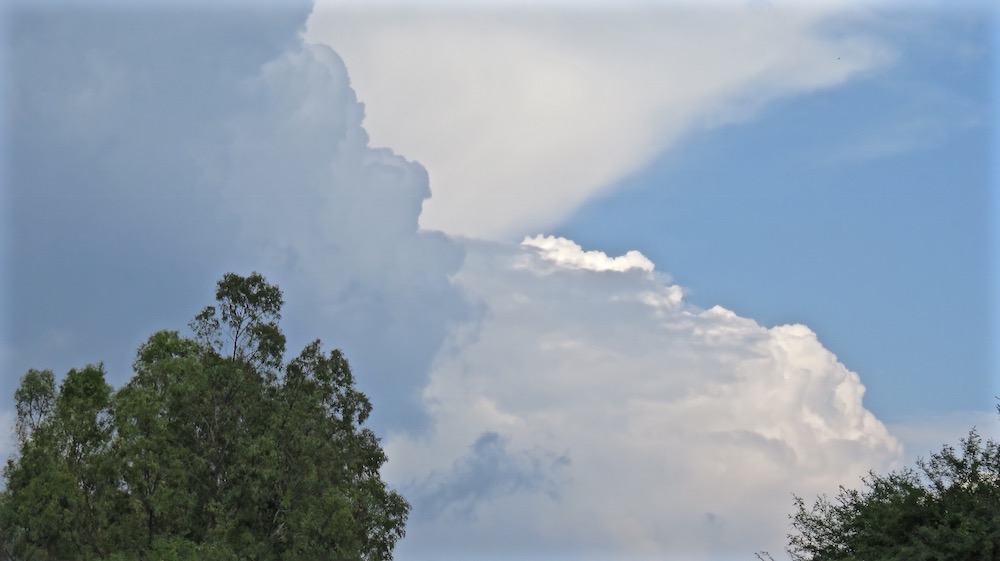
I don’t really believe in fate because I don’t think life would make much sense if we were just following an unknown preordained script; but I do think some things are more likely to happen if we follow our intuition.  If quantum physics is fact, I think our intuition is what guides us back to our other parts. This is why some people seem so familiar when we meet them and so right.  And perhaps why others seem so wrong from the very beginning.  How boring a game is life if we are fated.  What an engaging game if life after life it is a game of go seek! It is not a case of what will be but rather a case of what “should be”

Prompt: Que Sera Sera--Do you believe in fate or do you believe you control your own destiny?

Different Thanks: JNW’s Prompt Generator

 Different Thanks

IMG_4226

                                                      Family Thanks Giving

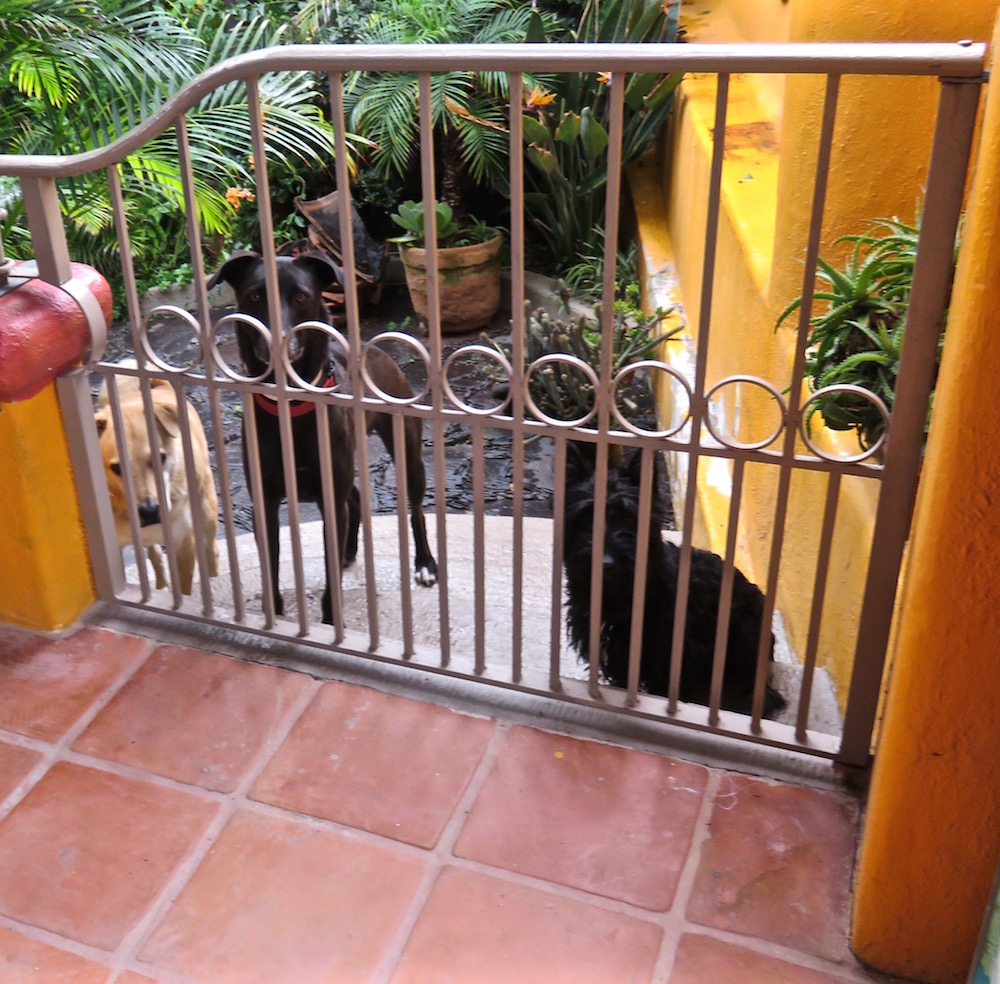
Three dogs, paws up on the gate to the garage whenever I get home. The little one leaps up and down like some ballerina at the bar, the biggest with his irritating barks–loud and harsh and insistent—for whatever reason, be it mom’s arrival home or a dog who dares to pass by in the street. All of them escorting me to the door, attempting to help me with my bags and bundles.

The big dog sneaking into my room at night when she thinks I haven’t noticed. Wanting to be even closer than within eye-shot down the hall, she sleeps on the cold floor in lieu of her warm padded bed, perhaps because she wants to remind me that although the second dog is cleverer and handsomer and the newest dog is the littlest and most pleasant to have jump up on the bed with me, she was the very first and has known me for the longest. She has put up with intruders—both these two canine upstarts and the one human one who entered my house and stole my house guest’s laptop years ago when she was my one and only!

And although I am allergic to them, I wash off the licks of thanks that Morrie gives for a few cuddles on the bed before he sinks down to the foot to curl at a more hypoallergenic distance. Wash off my hands and arms after I’ve pulled off clumps of Frida’s thick undercoat. Dress the wounds that Diego’s claws have left on my legs and arms when he just can’t resist jumping up for closer contact. All of these wounds and welts and sneezes and wheezes just the aftermath of the constant thanks these kids adopted from the streets offer every day, as often as I will allow them.

*