Category Archives: Memory

Frozen

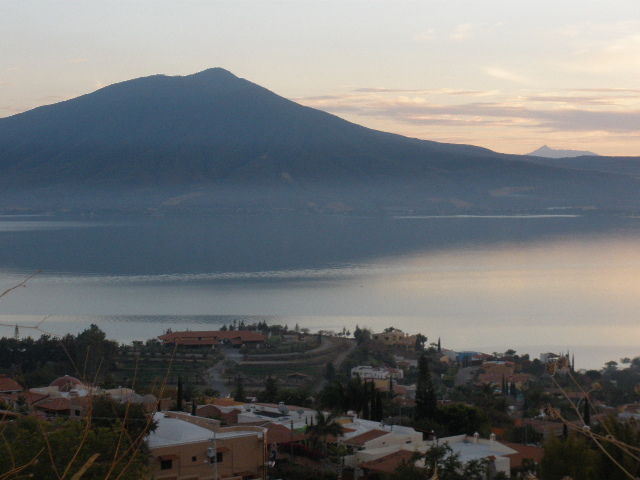
  OLYMPUS DIGITAL CAMERA That little peak you see peeking over the shoulder of the big mountain we all call Senor Garcia is the sister peak to Colima Volcano, who gifts us with the 120 degree steaming hot water that streams into our pools, hot tubs and cisterns in the neighborhood above San Juan Cosala, where I live.

Frozen

Lately, the mornings had grown crisp. Even here, below the tropic of Cancer, where they were rumored to have the second best climate in the world, they suffered a few weeks of weather where she regretted having neither heat nor air conditioning in her house. Its brick and concrete walls held-in the cool air. In the summer, this was a welcome fact. Now, in mid-November, it created the effect of the cold storage locker at the butcher shop in the small South Dakota town where she had grown up.

The butcher shop had a room-sized walk-in freezer that functioned as a meat safety-deposit vault. People in the town paid to rent private lockers. Ranchers could bring  a live cow to the butcher and he and his family would kill it, age the meat, wrap it in neat packages labeled hamburger, rib eye, chuck roast, rump roast or sirloin; and then stow it away in drawers big enough to hold an entire dismantled cow. When she was very small, she could remember going to the locker with her mother or father to get the week’s meat from the drawer that had their name scrawled on a piece of masking tape stuck on its front.

The locker also sold ice cream sandwiches by the carton of 50 or so, which they would take home and store in the freezer compartment of their refrigerator. They were square little bars—half the size of the bigger ones you could buy individually at the supermarket, and she grew chubby the year she turned nine—probably mainly due to her mother’s lack of rules about how many could be consumed daily. When the supply grew sparse, it was replenished by whoever went to the locker—her mom or dad or oldest sister.

It is early morning and she puts off getting out of bed to face the brisk air. Water is streaming into the pool. She can hear its hiss as the hot volcanic water hits the cooler water of the pool. Pasiano the gardener clears his throat. Later, when Yolanda arrives, the dogs will grow restless and bark to be fed. It is not the bright morning promised by the precognition of the weather channel. Even through the white scrim of the manta cloth drapes, She can tell that the sun is muted. The past two days have been marked by intermittent rain showers coming from a sky permanently cottoned-over by a layer of clouds that now and then the sun peeks through. As she lies in bed typing, she can see a light ray through the curtains, but it fades quickly away.

8:01. It is now legal for the noises of the day to begin. The neighbor’s spoiled son roars by in his ATV that is muffler-less. The harsh sound slashes a gash through the gentler sounds of the day: the whisk whisk whisk of Pasiano’s broom, the surge as a steadier supply of hot water streams into the pool from the pipe hidden within the concrete form of a plumed serpent that spews water from between the fangs of its open mouth.

She has fantasized about stringing a wire across the cobblestone road to spill that teenaged brat from his ugly machine. This is the violence prompted by an early morning slaughtered by his ear-splitting exit. On weekends, he is up the hill and down the hill with his friends. Once, when she went to protest, they steered their monster tricycles in her direction, veering off just as she jumped back onto the sidewalk. She couldn’t hear their laughs above the deafening din of three bikes, but the girls on the back of the vehicles  turned to look at her as they roared away, and their mouths were stretched in broad grins of amusement over this aged gringo who had come out with a frown to comment on the fun of youth.

They have gone. She can hear their mechanical beasts speeding down the road toward the carretera, their loud roars terrorizing neighborhood after neighborhood as they pass. She returns to the house to make the phone call to the office that will protest this noise and this small terrorist action.

“Yes, senora, we will look into it.”

“Will you call their father this time?”

“Yes, senora. The father is in Guadalajara now, but when he comes, we will call him.”

“They veered their bikes toward me so I had to jump back on the sidewalk!”

“Yes, senora. We will tell them.”

She hangs up knowing they will not tell the parents anything. They are important enough to have a huge house here in the tennis club where she lives— house they use on occasional weekends. A house which sits empty for most of the year. A house where they once brought their children and their cousins and friends to swim in the steaming hot water of the club pool or their own pools. A party house for their children, now that they have reached their teen years.
The father would be an important business man with connections, perhaps a judge or politician. It was rumored that one of the houses on her street, one further up the mountainside, was owned by a member of the cartel.

Whatever the truth of this, the complaint would not be made. In Mexico, so long as their misdeeds did not come too completely to the surface, the rich were invulnerable—cushioned by a layer of privilege augmented by mordida. No foreigner who chose to come up against a Mexican would ever win—no matter how large the misdeed. Murderers might be caught, but the case would then fade away in time so that they might never be tried, but again would be released on some technicality given birth to by mordida. Houses and land paid for in full by gringos could be reclaimed by entrepreneurs or ejidos powerful enough to know the right judge or the right politician.

Now the roar of the ATV’s is forgotten with the passing of the first truck hauling gravel and stone up to the construction site at the highest point presently reachable on the mountain. One day those mountains that rose so beautifully above her would be filled with houses to the very top; but for now, as the noise of the churning engine fades into the cold white sky, she contemplates what she will write about now that the demands of the prompt have been met. She will not write a funny rhyme today. Her mind has already been trapped by the mood prompted by the demands of this day’s topic.

She wonders how the parts of what she has written can be brought together. It is as though she has written a beginning and an end with no middle. Perhaps that was how a novel was begun in the mind of a novelist—to start out with meat in a cold storage locker and end up with a neighbor’s son terrorizing the neighborhood on an ATV. Was that how it went? Could she stuff those two vignettes with enough information to stretch them apart like a bota bag full of sweet wine? Did she have the capacity to grow those grapes, the skill to ferment them and siphon them into the bag she has created on this cloudy morning that only now was beginning to let the rays of sunlight through? That strong Mexican sun made more powerful by the high elevation of this place at the almost top of a mountain on a street set at such an angle that if there were ever snow here, she could step outside her house and sled in one straight line down to the lake that was a mile away, across its frozen surface, all the way to the other side.

The Prompt: Today you can write about anything, in whatever genre or form, but your post must include a speeding car, a phone call, and a crisp, bright morning. (Wildcard: you can swap any of the above for a good joke.)
Life Is Too Short to Be Afraid

Staid: adjective: sedate, respectable and unadventurous. “staid law firms”
synonyms: sedate, respectable, quiet, serious, serious-minded, steady, conventional, traditional, unadventurous, unenterprising, set in one’s ways, sober, proper, decorous, formal, stuffy, stiff, priggish

Life Is Too Short To Be Afraid

Life is too short to be afraid,
caught, traditional and staid,
serious, steady, lacking flair,
always well-clothed and never bare.
We were not meant for formal fare,
pinched and tucked with perfect hair.

We’re meant to flap and drag and wear
with tattered bits and unkempt hair.
Life’s meant to mess us up a bit
as we make use of all of it.
Not just the parts traditional,
decorous and conditional.

Take a chance to win or fail.
Face the flood and face the gale.
Jump right in with both your feet
when adventure you chance to meet.
Go out to meet the world with grace,
hand extended, face-to-face.

In this great apple called mankind,
live in the fruit, not in the rind.
In the messy, fragrant, toothsome center
be an enjoyer, not a repenter.
Buy life full-price and not on clearance.
Live on the pith and not appearance.

For all too soon it will be over.
That field you rolled in, full of clover,
will sprout small stones that bruise your spine.
The rich mussels on which you dine
will be something you’ll have to pass
for fear that you might suffer gas.

The places where you want to go
can’t be got to when you’re slow.
You won’t have the energy
to travel fast and travel free—
to hitchhike, backpack, hop a train
when you have rheumatism pain.

So gather ye rosebuds while ye may.
“Real” life will wait another day.
Be silly and take chances now.
Forsake the contract, pledge and vow.
Too soon the walker and the cane.
You never will be young again.

The Prompt:No Time to Waste—Fill in the blank: “Life is too short to _____.” Now, write a post telling us how you’ve come to that conclusion.


The Twenty-fifth Hour

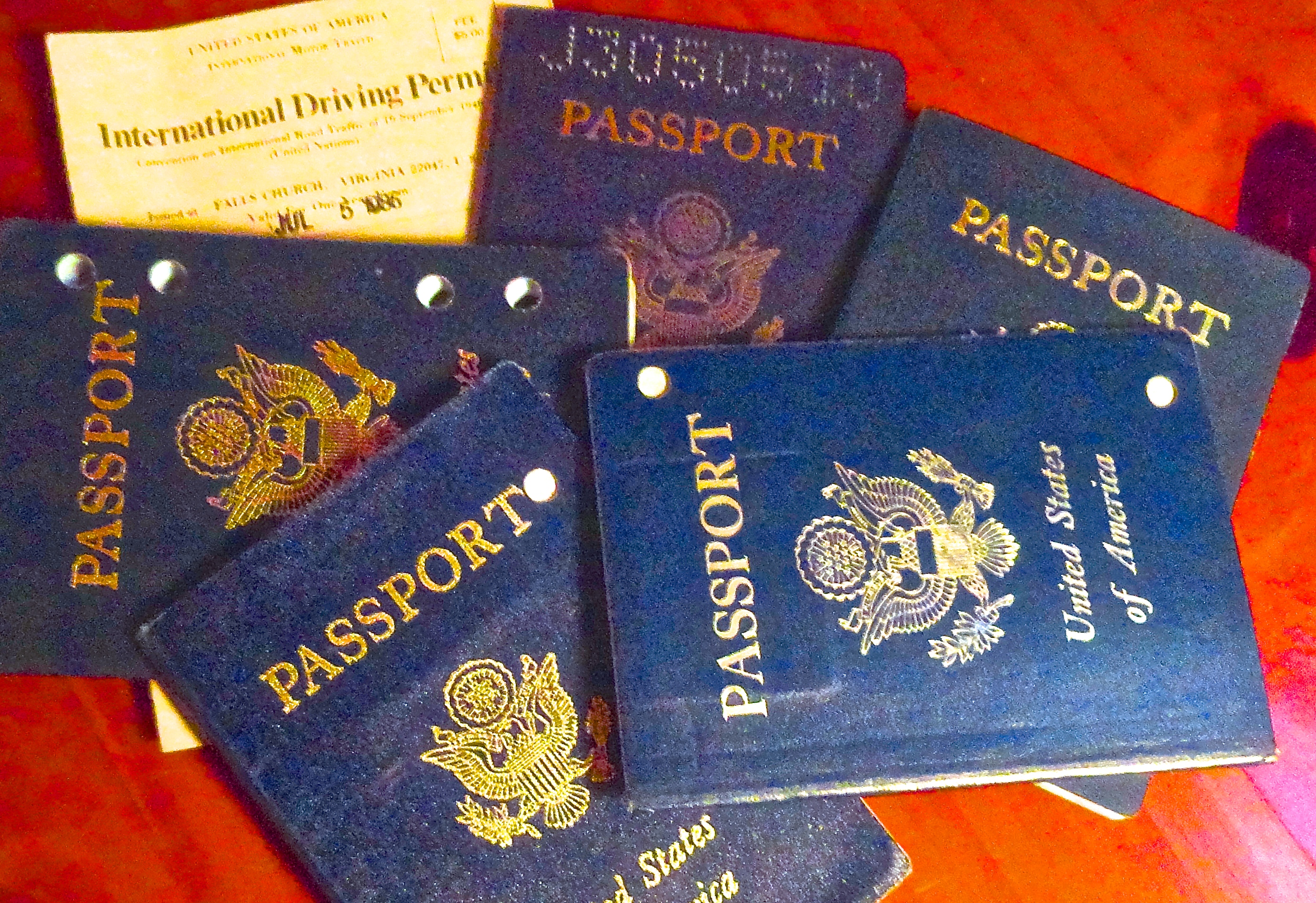
DSC08473I found five old passports and an international driving permit from 1986.
Why, oh why can I not find my current passport?


The Twenty-fifth Hour

An extra hour would be nice. A day’s not long enough.
I know I’d use the extra hour looking for lost stuff!
My passport has gone missing and it’s been a major pain.
I would give most anything to have it back again.
I’ve looked in all my files, my drawers and every purse.
I have too many places. It couldn’t get much worse.
If I ever find it, I’ve made myself a vow to
make my life much simpler, if I just could figure how to!

Post Script: I actually lost my passport a few years ago. I looked for it for  4 or 5 hours without finding it, but  my housekeeper found it in 5 minutes when she came the next day–in a place where I’d looked twice!!! She lit a candle and said whenever I lost things I should do the same. She says her friend has a Virgin and Child statue, and whenever she loses anything, she takes the baby out of the mother’s arms and says she’ll return it when she has helped her to find whatever she has lost!! Talk about blackmail in high places! Ha. A simple solution.

Back and Forth

Back and Forth

If I should find a time machine, I might or might not buy it.
And even once I bought it, I might or might not try it.
To think about the future always makes me sweat,
for I am trepidatious about how bad it might get.
I foresee live-in bubbles for one or two or three
who merely turn on YouTube for whomever else they see.
Pollution would be too advanced to venture far outside—
the world turned way too violent for most folks to abide.

If I visited the future, chances are I’d see
the death of friends and loved ones—perhaps the death of me!
See our country crumble due to earthquakes or to slaughter.
See Monsanto poison food crops after ruining our water.
Our seasons turned to drought, tornado, hurricane and flood—
by turn made dry or spinning or blown away or mud.
I know there are alternatives, but I can’t help but doubt
that current politicians will let it all work out.

But if I went into the past, perhaps I’d also rue it.
I might just be happier if I chose to eschew it
I might see as a toddler that I was just a brat—
a little squirming dervish—graceless, spoiled and fat.
I might hear that my singing voice was just a bit off-key
and see the looks the others gave as they were hearing me.
If I encountered me, we might just end up in a fight
like ones I had with sisters—and discover they were right!

Yet, this probably won’t happen and perhaps it might be fun
to have another look at what I’ve seen and what I’ve done.
And though to relive some things would leave me feeling queasier,
I know that it would certainly make memoir-writing easier.
What fun to relive Christmases from year to year to year,
To see my mom and dad again, what’s more, to get to hear
all the stories of my dad and this time to record them—
to spend time with my sisters and to show how I adored them.

What fun to watch me with my friends— Rita, Lynn and Billy—
to see when we were children if we were just as silly
as little kids I see today who just seem to be reeling
with energy and foolishness and excesses of feeling.
I’d drive on roads with fewer cars to spots no longer there.
Go roller skating in Draper gym. Fall on my derriére!
I’d have a Coke in Mack’s Café and then I’d shop at Gambles.
Buy love comics at Mowell’s Drug and then expand my rambles

down to the playground monkey bars, where I would do a flip.
Then to the Frosty Freeze where I would have another sip
of orange slush and then I’d have to buy a barbecue.
(I fear that in my tiny town, that’s all there was to do!)
I’d skip ahead, then, many years, to 1971,
and fly off to Australia for adventures in the sun.
Then Singapore and Bali, Ceylon and Africa.
See everything as it once was, when it was new and raw.

Regrets? Of course. I’m human, and so I’ve had a few,
but over precognition, I prefer déjà vu.

The Prompt: One-Way Street—Congrats! You’re the owner of a new time machine. The catch? It comes in two models, each traveling one way only: the past OR the future. Which do you choose, and why?

Mind Freeze

  • The Prompt: Overload Alert—“Everybody gets so much information all day long that they lose their common sense.” — Gertrude Stein. Do you Agree?

    Mind Freeze

    There is new news all day long, for every single minute.
    By radio and television, we are immersed in it.
    Even on the Internet, they repeat and repeat
    every warlike action, every athletic feat.

    We know before their spouses do when politicians slip,
    view every starlet’s nightclub spree via a Youtube clip.
    Stock market scams and Ponzi schemes and other news that scares
    as big guys pick our pockets in order to line theirs.

    Sans Blackwater and Monsanto, we would be better off,
    but we’d still be deluged by news of Enron and Madoff!
    We consult Wikipedia to see what it might say,
    keep up with the Kardashians a dozen times a day.

    It’s hard enough to keep abreast of those they might be bedding,
    let alone to know the date of their most recent wedding.
    Who has gained a pound or two or who’s the most hirsute?
    This information makes our lives a Trivial Pursuit.

    There are so many details that come at us day and night,
    filling up our minds until our craniums feel tight.
    We’re stuffed with sound bites, news clips and every TV show
    until it is inevitable. Something’s got to blow!

    No wonder that we can’t remember names of our best friends
    or what we came out shopping for or how that movie ends.
    We can’t remember song lyrics or what we meant to do
    when we came in here for something. Was it scissors, paint or glue?

    I am forgetting everything I always used to know.
    Every mental process has just gotten kind of slow.
    It’s taking me much longer now to ponder each decision—
    a factor that the younger folks consider with derision.

    Like-aged friends agree with me, for they all feel the same.
    They all have minds stuffed just as full, and we know what to blame.
    There’s too much information, and like any stuffed-full larder,
    to locate things within them gets progressively harder.

    If we could sort our minds out the same way that we pack—
    putting unimportant stuff way at the very back
    and all the more important things in front and at the top,
    we wouldn’t have to search our minds and wouldn’t have to stop

    to figure out the names of things or places or of folks,
    and then we wouldn’t be the brunt of all their aging jokes;
    but it seems that we can’t do this so perhaps the answer is
    to just turn off the TV news and gossip of show biz.

    The scandals and the killings—all the bad things that astound us—
    we’d leave behind to concentrate on happenings around us.
    We’d notice more the little things in our immediate world:
    the spider in the spider web, the bud that’s tightly furled

    and notice when it opens, and the dragonfly that’s on it
    and take a picture of it, or perhaps construct a sonnet.
    See the children who are hungry and instead of our obsessing
    on matters where we’re powerless, instead bestow a blessing

    on all those things around us where we have the power to act.
    When we see whatever needs doing, to take action and react.
    Perhaps then all the horrid facts that rise up in the mind
    will settle to the bottom and then all of us will find

    the keys we’ve lost, our glasses, and remember why we came
    into this room and how to recall every person’s name.
    And all the time we save we’ll spend on the important things
    and feel the sense of purpose helping others always brings.

    The world is too much with us with its bad news of all kinds,
    and all this information simply freezes up our minds.
    Perhaps with less input, there would be less facts to astound us
    and we could concentrate on what’s important close around us.

Leftovers


Leftovers

When my father died forty years ago, it was in Arizona, where my parents had been spending their winters for the past ten years.  They maintained houses in two places, returning to South Dakota for the summers. But after my father died, my mother never again entered that house in the town where I’d grown up.

Our family had scattered like fall leaves by then—my mother to Arizona, one sister to Iowa, another to Wyoming. Both the youngest and the only unmarried one, I had fallen the furthest from the family tree. I had just returned from Africa, and so it fell to me to drive to South Dakota to pack up the house and to decide which pieces of our old life I might choose to build my new life upon and to dispose of the rest.

My father’s accumulations were not ones to fill a house. There were whole barns and fields of him, but none that needed to be dealt with. All had been sold before and so what was to be sorted out was the house. In that house, the drapes and furniture and cushions and cupboards were mainly the remnants of my mother’s life: clothes and nicknacks, pots and pans, spice racks full of those limited flavors known to the family of my youth—salt and pepper and spices necessary for recipes no more exotic than pumpkin pies, sage dressings and beef stews.

Packing up my father was as easy as putting the few work clothes he’d left in South Dakota into boxes and driving them to the dump. It had been years since I had had the pleasure of throwing laden paper bags from the dirt road above over the heaps of garbage below to see how far down they would sail, but I resisted that impulse this one last run to the dump, instead placing the bags full of my father’s work clothes neatly at the top for scavengers to find—the Sioux, or the large families for whom the small-town dump was an open-air Goodwill Store.

It was ten years after my father’s death before my mother ever returned again to South Dakota. By then, that house, rented out for years, had blown away in a tornado. Only the basement, bulldozed over and filled with dirt, contained the leftovers of our lives: the dolls, books, school papers and trophies. I’d left those private things stacked away on shelves—things too valuable to throw away, yet not valuable enough to carry away to our new lives. I’ve been told that people from the town scavenged there, my friend from high school taking my books for her own children, my mother’s friend destroying the private papers. My brother-in-law had taken the safe away years before.

But last year, when I went to clear out my oldest sister’s attic in Minnesota, I found the dolls I thought had been buried long ago–their hair tangled and their dresses torn—as though they had been played with by generations of little girls. Not the neat perfection of how we’d kept them ourselves, lined up on the headboard bookcases of our beds —but hair braided, cheeks streaked with rouge, eyes loose in their sockets, dresses mismatched and torn. Cisette’s bride dress stetched to fit over Jan’s curves. My sister’s doll’s bridesmaid dress on my doll.

It felt a blasphemy to me. First, that my oldest sister would take her younger sisters’ dolls without telling us. Her own dolls neatly preserved on shelves in her attic guest bedroom, ours had been jammed into boxes with their legs sticking out the top. And in her garbage can were the metal sides of my childhood dollhouse, imprinted with curtains and rugs and windows, pried apart like a perfect symbol of my childhood.

Being cast aside as leftovers twice is enough for even inanimate objects. Saved from my sister’s garbage and cut in half, the walls of my childhood fit exactly into an extra suitcase borrowed from a friend for the long trip back to Mexico, where I now live. I’ll figure out a new life for them as room décor or the backgrounds of colossal collages that will include the dolls I’m also taking back with me.

Mexico is the place where lots of us have come to reclaim ourselves and live again. So it is with objects, too. Leftovers and hand-me-downs have a value beyond their price tags. It is all those lives and memories that have soaked up into them. In a way, we are all hand-me-downs. It’s up to us to decide our value, depending upon the meaning that we choose to impart both to our new lives and these old objects. Leftovers make the most delicious meals, sometimes, and in Mexico, we know just how to spice them up.

The prompt: Hand-Me-Downs—Clothes and toys, recipes and jokes, advice and prejudice: we all have to handle all sorts of hand-me-downs every day. Tell us about some of the meaningful hand-me-downs in your life.


Wise Thoughts Unsaid and Unremembered

Wise Thoughts Unsaid and Unremembered

The perfect reply that I hadn’t yet thought of
but figured out later? I have had a lot of;
but the problem is that now they still can’t be gotten,
for though once I had them, I now have forgotten!

It’s true.  Great retorts are jewels in the crown,
but truer that one has to write them all down!
And it’s best that you write them down lickety-splickly,
for though they come slowly, they seem to go quickly!


The Prompt:  We’ve all had exchanges where we came up with the perfect reply—ten minutes too late. Tell us what it was, being sure to sign off with your grand slam unused zinger!

Justification

Justification

I spent all day in town today for business and for pleasure,
so by the time I got back home, I felt I’d had full measure
of driving-selling-trying on, shopping-eating-walking;
so I just thought I’d have some time that didn’t include talking.
I put my suit on thinking I would jump right in the pool,
but then the cat began to whine, the dogs commenced to drool—
sure signals it was feeding time—in this they were united.
They’ve learned their human serves their supper faster when invited.

The problem was, the dog food was still up in the car,
so I ran out to get it. (It wasn’t very far.)
I fed the dogs and cat, then found new flea collars I’d bought,
and so, of course, I had to put new collars on the lot.
Then, finally, the pool was mine—aerobic exercise
kept my body busy while a movie wooed my eyes
to disregard the time that passed while bending, kicking, flopping,
for when I am distracted, I am less intent on stopping.

With no prompt to finish early, I just went on and on.
Two hours passed so quickly that the setting of the sun
(and the ending of the movie—I guess I must admit)
finally gave the signal that it was time to quit.
But as I climbed the ladder, something poked my breast—
something sharp and lumpy that had made a little nest
there between my cleavage all my hours in the pool;
and when I drew it out you can’t image what a fool

I felt like, for this faux pas cannot help but win the prize
of all the times that I’ve done stupid things in any guise.
As teacher, daughter, writer, artist, sister, lover, friend,
I’ve committed stupid acts impossible to mend.
But this one takes the cake, I’m sure, as stupidest by far.
I’ve told you how I went to get the pet food from the car,
then fed and put flea collars on protesting dogs and cat.
(I doubt you’d do much better when dealing with all that!)

When I went out to do all this, I didn’t want to lose ‘em.
That’s why my car keys (with remote) wound up within my bosom!


Try as we may, those little indicators of age will sneak up on us.  There is no plastic surgery for a sagging memory!!!  (The Prompt today was:  “Age is just a number,” says the well-worn adage. But is it a number you care about, or one you tend (or try) to ignore?”)

DSC07216
Wonder of wonders, when I put the key in the ignition the next morning, it worked!!! Saved on this one!

First Friends

DSC07187

The Prompt: Do you — or did you ever — have a Best Friend? Do you believe in the idea of one person whose friendship matters the most? Tell us a story about your BFF (or lack thereof).

First Friends

I am three years old, lying in my Mom’s room taking a nap. I can hear voices in the front room. The world comes slowly back to me as I rouse myself from the deep sleep I swore I didn’t need. I hear my mom’s voice and the voice of a stranger. I slide my legs over the side of the chenille-covered bed, balancing for a moment like a teeter totter before giving in to gravity and letting my feet slide through space to the floor below. I creak open the door, which had been left ajar. My mom’s voice gets louder. I smell coffee brewing and hear the chink of china coffee cups in the living room.

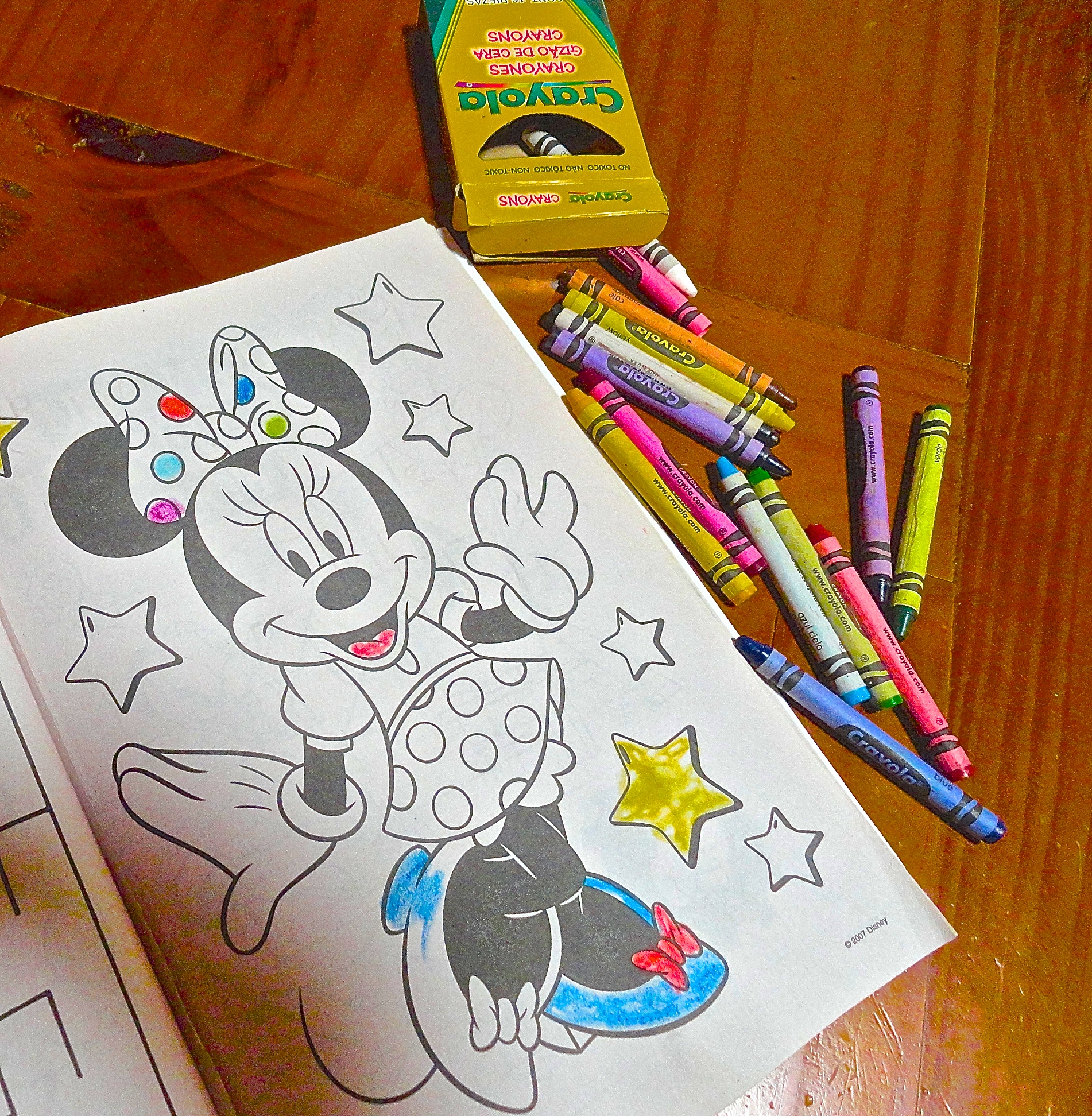
I hear a dull rubbing sound and move toward it—through the kitchen to the dinette, where a very small very skinny girl with brown braids is sitting at the table coloring in one of my coloring books. She is not staying in the lines very well, which is crucial—along with the fact that she is coloring the one last uncolored picture in the book which I’ve been saving for last because it is my favorite and BECAUSE I HAVE IT PLANNED SO THERE IS SOMEWHERE IN THAT PICTURE TO USE EVERY LAST COLOR IN MY BOX OF CRAYOLAS!

I sidle past her, unspeaking, aflame with indignation. Who could have—who would have—given her the authority to color in my book? I stand in the door of the living room. My mom is talking to a mousy gray-haired lady—tall, raw-boned, in a limp gray dress. My mom sees me, and tells me to come over and meet Mrs. Krauss. They are our new neighbors. They are going to live in Aunt Stella and Uncle Werner’s house two houses down. Did I meet their daughter Pressie in the kitchen? She’s just my age and Aunt Stella and Uncle Werner (who are not actually related to us, but just friends of my folks) are her real aunt and uncle.

The gray lady calls Pressie in to meet me. She is quiet and I am quiet. Then we go back to color at the table together. We drink orange juice and eat potato chips. We will be best friends for what seems like a lifetime but what is really only until we approach adolescence. I will have a love-hate relationship with her mother, who will continually set up competitions between Pressie and me to see who will win. She will try to coach Pressie first; but still, I will always win.

Pressie and I will play hollyhock dolls and dress-up. We play, sometimes, with Mary Boone; but her parents are too religious and don’t think we’re nice enough to play with her very much. I want to put on neighborhood plays and circuses, but none of the other kids want to perform. I want to play store and school, but Pressie eventually goes home to help her mother varnish the floors.

Pressie’s house is full of loud brothers and a sulky teenage sister. It is full of high school-aged cousins who tease us unmercifully and old ladies who come to play Scrabble with her mother. It is full of a missionary sister who comes back from South America and married brothers who come from Florida with babies that Pressie and I take charge of.

Pressie’s house is full of slivery floors that are always in the process of being varnished or de-varnished. There is one drawer in the kitchen full of everybody’s toothbrushes, combs, hairpins, hair cream, shampoo tubes, old pennies, crackerjack toys, rubber balls, lint, hairballs, rolled up handkerchiefs and an occasional spoon that falls in from the drain board above it. They have no bathroom—just the kitchen sink and a toilet and shower in the basement, across from the coal bin and the huge coal furnace. Their toilet has a curtain in front of it, but the shower is open to the world.

Sometimes when I am peeing, someone comes down to put coal in the furnace or to throw dirty clothes in the washtub next to the wringer washer. I pull the curtain tight with my arms and pray that they won’t pull it back and discover me, my panties down to the floor, pee dripping down my leg from my hurried spring from the toilet to secure the curtain. To this day, I have dreams about bathrooms that become public thoroughfares the minute I sit down. To this day, I get constipated every time I leave the security of my own locked bathroom.

Pressie babysits with the minister’s kids for money. I go along for free. She spanks them a lot and yells a lot. I think I can’t wait until I’m old enough to have kids so I can yell at them, but when Pressie is gone and the minister’s wife asks me to babysit, I don’t yell at them.

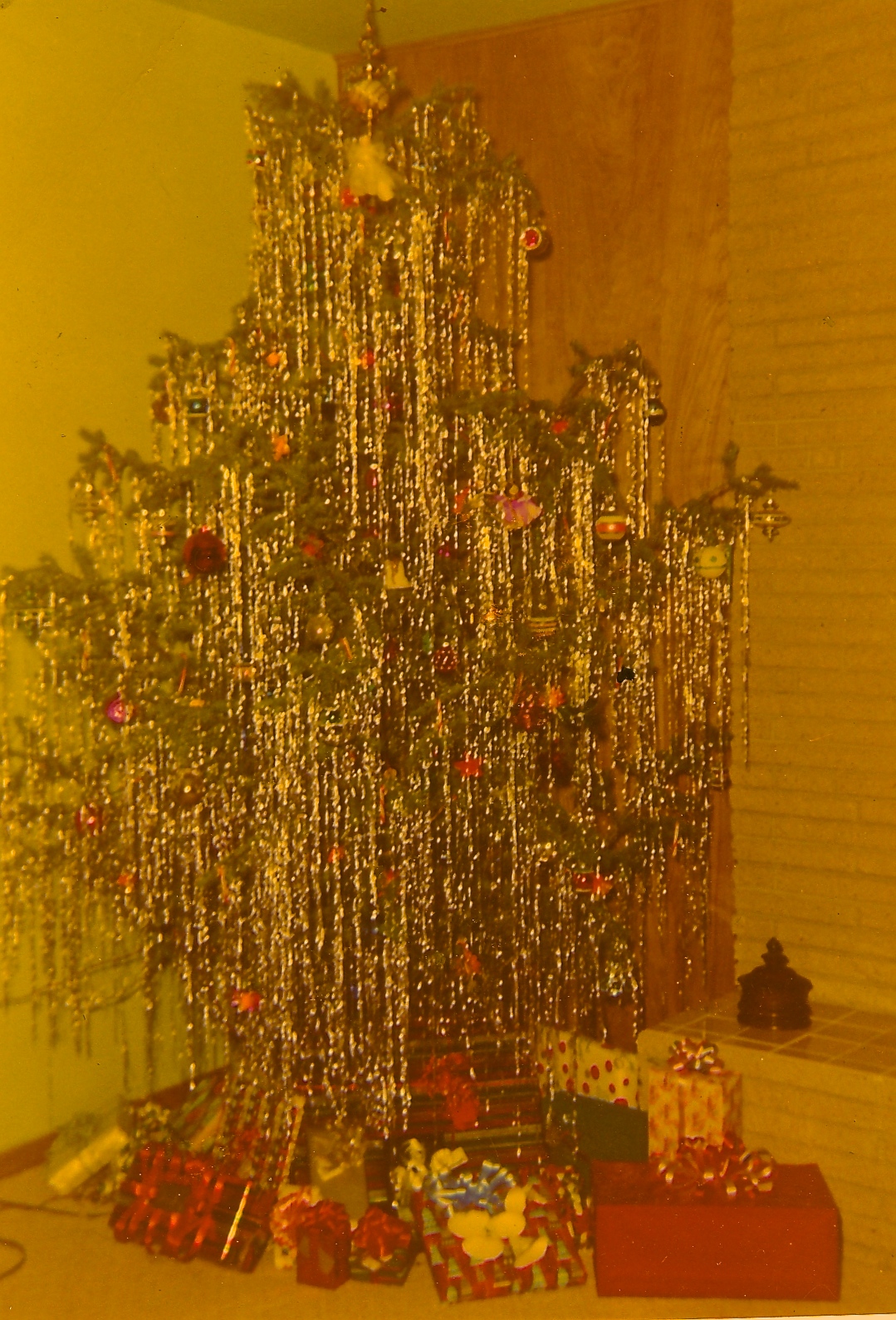
At Christmas I can’t wait to have Pressie come see my gifts: a Cinderella watch, a doll, a wastebasket painted like a little girl’s face, complete with yarn braids, books and toilet water from aunts, a toy plastic silverware set from my sister, stationery from my other aunt, playing cards, sewing cards, paint by numbers, a new dress. I run over through the snow to Pressie’s house to see her presents: a new pair of pajamas, a coloring book and new crayons, barrettes and a comb. In her family, they draw names. Quickly we run to my house, but she doesn’t pay much attention to my presents. She is funny sometimes, kind of crabby. The more excited I get, the more withdrawn she gets.

Later, I want to make snow angels in the yard and feed leftover cornmeal muffins to the chickadees, but Pressie wants to go home. Pressie always wants to go home. What she does there, I don’t know. She doesn’t like to read. None of us will have television for another five years. She doesn’t much like games or cards. I don’t know what Pressie does when she isn’t with me.

When she is with me, we take baths together and sing the theme music from “Back to the Bible Broadcast,” washing our sins away in the bathtub. We play ranch house in our basement. We pull the army cot against the wall and put old chairs on either side of it for end tables. We upend an old box in front of it for a coffee table. My grandma’s peeling ochre-painted rocking chair faces the army cot couch. We sneak into the hired man’s room and steal his Pall Mall cigarettes and sit talking and smoking. We rip the filters off first, which is what we think you’re supposed to do.

Pressie will always stay longer if we smoke. I blow out on the cigarette, but Pressie inhales. We smoke a whole pack over a few weeks’ time and then go searching for more. When the hired man starts hiding his cigarettes, we discover his hiding place and learn to take no more than four at a time so he doesn’t miss them. When he has a carton, we take a pack and hide it under the mattress on the army cot. My mother wonders where all the filters are coming from that she sweeps from the basement floor, but never guesses our secret.

Pressie spends more time with me than before, drops by almost every morning and always wants to go to the basement to play and smoke. Then the hired man finds another room and moves out and when Mrs. Church’s granddaughters come to visit, I will want to play with them but Pressie won’t. Then we will pair off—Pressie with Sue Anne, the girly one, me with Kate, the boyish one. We have a little war—mainly instigated by the sisters.

When the new farm agent moves in with two daughters—one a year younger than Pressie and me, the other a year younger than my sister Addie—I want to ask the girl our age to play with us, but Pressie won’t. I have a slumber party for everyone—all the girls we know. I invite the new girl, whose name is Molly, but no one talks to her much. She is shy and doesn’t push herself on us. No one else ever wants to include her. I go play with her anyway and spend the night at her house. Her mother is nervous, her dad cocky. Her older sister laughs nervously under her breath a lot, as does her mother.

Many years later, by the time we are in high school, everyone has accepted them. By then, all of those girls have parties where I’m not invited. They are always a little reserved when I come up to speak to them. Maybe they’re always reserved. How would I know how they are when I’m not around? Later, they all got to be pretty good friends. But in the beginning, I was everyone’s first friend.

Unwrapped Packages

daily life  color008

Unwrapped Packages

It is the difference between that present handed to you
by a person who says, “It’s only a tie,”
and a package under the tree
squeezed and prodded at—perhaps a corner loosened
or a hole poked in through supposed accidental handling,
pondered like a good detective show.

Who wants these mysteries revealed before their time?
What value in the present whose contents you already know for sure?
The magic of Christmas for some is that faith that the girl,
untouched by human lover, gave birth—and it is that sort of faith
that “saved” the world. If we knew the whole truth of that story
would all it prompted fall into the hole covered all these years by mystery?
The whole world seems to be standing more on what we don’t know
than on what we absolutely know empirically—what we can prove.

And so I look at the picture of my young mother
in her cotton housedress and saddle shoes
holding her baby in front of her in her stroller,
whole contraption, child and carrier,
a foot or two above the ground,
and there is mystery in the reveal.
I do not hear what transpired to cause this pose.
I do not know if my father caught her carrying me
from the porch to sidewalk and said,
“Here, Tootie, turn around,” and snapped the picture,
or whether my older sister planned the pose.
Or whether some movie star was snapped in a similar scene
and my mother and sister, like two conspiring fans,
planned the shot to steal the glamor formerly reserved
for “Photoplay” or “Look” or “Life.”

There would be no reel-to-reel
in any normal person’s life for years.
No movie camera to tell me exactly what my mother was like
or my sister or me before my memory took hold and even then,
my mind’s remembrance
more like reflections in a lake that color and change
depending on the clouds or rain,
distorting the light like moods.
My Aunt Peggy’s house,
always remembered as feeling like
the color chartreuse,
and I will never know why.
That smell of a friend’s house that became associated
with her memory more than any concrete proof of reel-to-reel
or spinning film of movie camera.

I do not know my mother’s voice at thirty.
I did not witness myself since birth
by either sound or sight.
There is a different mystery
to a past caught
in boxes of Kodacolor prints
curling and yellowing in a closet
than one documented like a science experiment
with every event taped and filmed.

Where does the mystery of you reside when you see yourself
so clearly, as others have seen you all along?
What does it leave for you to try to discover?
No tapes.
No film.
No Internet.
No Skype.
No YouTube.
No home movies.
All of our pasts were once wrapped up forever.
Only our fingers poking in the edges.
Only our voices asking,
“What was it like the day when I was born?”
What do you remember about the day when. . . .?

The Prompt: Can’t Stand Me—What do you find more unbearable: watching a video of yourself, or listening to a recording of your voice? Why?