Category Archives: Poem

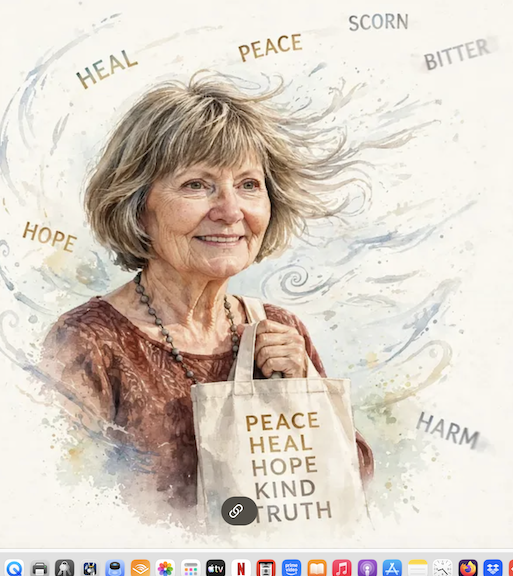
Self-Portrait for SOCS

Looking Glass Menagerie

I am trying to escape the menagerie—
all those selves I hold in front of me
as well as the ones I have let escape.
Those that run ahead—
the ones that are my future selves—
are here, hidden in the portrait that you see.
Domineering, perhaps. But seasoned with
an awareness of what might have created
all of the parts of myself I try to reign in.
This has produced a certain slowness to connect.
The natural is seasoned with a desire to honor dreams
of what I hope to be. When I look in the mirror,
I see them all: my mother and my grandmother
and my sisters. We demand, are stubborn.
Sometime we are martyrs, stifling tears.
Then suddenly, I pass them by like memories
of nightmares: all the anxiety attacks,
illnesses and heartbreak.
We are all wonderful performers,
using bad luck to fuel good.
The belles of our own ball,
we push back the grim news
of what we fear we really are.
Headstrong, we reach for what we can be.
Utterly addicted to change,
Tony or no Tony,
we are the stars of our own lives.

The SOCS prompt is Portrait

A Culinary Confession for the Three Things Challenge.

A Culinary Confession

My kitchen is my “killer kit,” or so my husband thinks,
as warily he eyes his meal––main course, dessert and drinks.
He says he doesn’t blame me for my culinary lack,
because he didn’t marry me because I have the knack
to fry and broil and grill and roast
or even fail to burn the toast.
Yet I see him eye the knishes,
turkeys, pies and other dishes
served up by the other wives
who, wielding pans and spoons and knives
create dishes edible
as well as being bedable.
While I, though skillful in the sack,
their kitchen talents sadly lack.
So for years, we’ve had to make out
mainly on phone-in or take out!

Prompt words for the Three Things Challenge 375 are: killer, kit, kitchen. (Image created with help from AI)

“Breaking Her Diet” for Esther’s Writing Prompt

Breaking Her Diet

IMG_0683

Breaking Her Diet

I measure her cat food with care from the vat,
but she has such an aptitude, my little cat,
for flushing out lizards and others like that.
With delicate paw thrusts, she gives them a bat
’til they barely know where it is that they’re at,
then unleashes her claws for a more severe pat.

Be it lizard or bird or scorpion or rat,
she defeats it as though it were merely a gnat
and lays it out nicely on my front door mat:
one scorpion sting less or a feather for my hat,
then returns to the stool where she formerly sat,
licking her chops, and that’s why she’s so fat!!!

Esther’s Writing Prompt this week is “Break.” Nope, I’m not condoning such behavior…especially in regards to birds. Breaks my heart. The scorpions I can put up with, so long as she’s careful and doesn’t get stung.

The China Bulldog––Review by Derrick J. Knight

Here is a link to Derrick J. Knight’s review of my book, The China Bulldog. His review is personal and touching and I thank him for the time he spent both reading and reflecting on the book. He includes a good many long excerpts of my what turned out to be my own favorite poems and passages, as well. If you want to read the entire book, it is available Here on Amazon.

You can see the entire review on his blog by clicking on the link below:

The China Bulldog

Tunneling, for Weekly Prompts


Tunneling

Deep is neither
party conversation
nor the subject of Valentines.
It seeps into the
crevices
under
fingernails
and
the
caverns
of
ears.

Internal
and
curvaceous,
it is hard to get
right to the point of.
Deep does not put down roots––it is roots.
Betrayal, breaking glass
and tunnels leading to
dark wombs that bear us anew
to rock us harshly
and swaddle us in pain.
Deep, I am
sometimes deep,
at other times
swift cold water
with surface
swirlings
or mist
rising
through
sunlight
clarified
by
deep
shadows.


For Weekly Prompts, the prompt is “Tunnel.”

Memories of Bob for dVerse Poets Acrostic Challenge

Bob Brown sculpture and visitor

Memories of Bob
(Judy Dykstra-Brown Acrostic Poem)

Just as I was about to give in to distress,
up came a memory of you,
diverted by all those dreams
you carried in your head.

Dreams consisting of wood, metal, paper, stone––
your first loves
katapulting themselves into your art.
Sculptures startling in their originality,
taking their viewers into new worlds,
returning, eventually, to
actual life, and me.

Beautiful memories
return daily, now that you are gone.
Over the years, I see you daily, nonetheless,
when I see what you created––
now the only part of you that remains.


For dVerse Poets the task is to write an acrostic poem for the name of a famous person, loved one or yourself. I used my own name, Judy Dykstra, which after marriage included my husband’s last name as well, blending us, as does this poem. I hope.

Popsicle Etiquette

Popsicle Etiquette

Snap apart this summer sweetness and share it with a friend.
Or, before you finish, it will melt from end to end,
running down your hand and then half way up your arm,
and though you feel that arm-licking is part of summer’s charm,
the taste of cherry mixed with sunscreen resin isn’t fun,
as your rush to finish turns into a race against the sun.
So take your frosty passion and snap it into two
and ask a friend to partake of its lusciousness with you.
Then if you are lucky, your friend will buy one more,
break it apart and hand you half as you leave the store.

Word Prompts for The Sunday Whirl 749 are: taste summer sweetness snap rush half resin turn melts luck hand

EASY STREET FOR SOCS

daily life color018 - Version 3

Easy Street

Her wishful dreams did not include the latest Paris fashions.
Pedicures and facials were not numbered in her passions.
Being a wife and mother was what she loved the best.
It’s said that wild horses couldn’t drag her from the nest.

If they held a World Olympics of mothering and wifery,
she’d excel in matches such as ironing and knifery,
and her family members no doubt would all concur
that she’d capture golden medals in the wash and bake and stir.

If you questioned her contentment, you’d hear her lilting laugh
as she dished up cornmeal muffins, buttering each half,
thawed out frozen orange juice, avoiding the debate
as she hurried us through breakfast, afraid that we’d be late.

When the fifteen minute warning bell was rung across the street
in the school bell tower, we beat a fast retreat.
She drained her cup of coffee, then poured another cup,
put fish food in the goldfish bowl and fed the cat and pup.

She filled the sink with wash water and scrubbed and dried and listened
to her morning radio until the glasses glistened.
She’d make the noontime casserole and put it on slow bake.
Sometimes make a cherry pie or a chocolate cake.

She’d sweep the floors and make the beds, polish, dust and mop
until the noon bell sounded and she had to stop.
She’d make a hasty salad of lettuce and tomatoes
and serve what we called dinner— ham and scalloped potatoes,

meatloaf, hamburgers or a ring of cooked baloney,
Spanish rice or navy beans or cheese and macaroni.
Spaghetti, ham and cabbage, goulash or steamed steak—
whatever she could fry or steam or boil or broil or bake.

My dad would come in from the fields and eat and leave again.
With just an hour for lunch, we kids were always in a spin
to get back to the playground and lay claim to the best swings
or be first in line for tether ball or other schoolyard things.

Then she lay down on the sofa with our little terrier curled
right up close beside her as she learned about the world
through books, papers and magazines, reading there until
the let-out bell was sounded and kids bolted down the hill.

Time enough for supper preparations to be started
as one by one she was rejoined by her dearly departed.
Tales of school spats, teachers’ stories, what our best friends said.
From four to five, our childish raves and rants swirled through her head.

Then my father home again to wash up at the sink,
his mouth up to the faucet for a little drink.
“Use a glass, Ben,” She would say. A rather tardy rule
as he sank into his chair with feet up on a stool.

Supper at six, then radio, or later the T.V.
Dad in his favorite rocking chair, teasing my sis and me.
Mother in her usual place, prone on the divan
reading “Redbook,” eating stove-popped popcorn from the pan.

Did she wish she’d gone to college and had a different life
than just being a mother and a rancher’s wife?
She would laugh and say to us, seemingly undaunted,
“Girls, basically I’m lazy. I’ve had just the life I wanted!”

Mom resting up with Scamp before doing the noon dishes.

I always write stream of consciousness, so no problem there, but I couldn’t resist running this poem from 7 years ago for the SoCS prompt. I had actually forgotten about it, but it is a true story.

The picture at the top is of Mom and me. She was 38 and I was perhaps 1.

War Games for The Sunday Whirl

War Games

Those bitter hopes that sting one’s mind
are wishes of the futile kind
that make us restless, turn us odd
as we assume that frail facade
that we think hides our fears and doubt
about what this new world’s about.
Massive ills that strip our world
as daily missiles are unfurled
to hit those cities torn by war
 to stem the orange monarch’s roar––
his curiosity to quell
concerning this day’s nouveau Hell
unleashed upon the place he names
to be the target for his games
of fire and brimstone, bomb and gun––
war games he invents for fun!!

For The Sunday Whirl, the prompt words are: facade doubts curiosity bitter torn hit restless hope massive frail strip sting

Dakota Dirt for dVerse Poets

Dakota Dirt


Dakota Dirt

My father toiled for fifty years,
facing the worries and the fears—
the gambles that a farmer faced
when all his future he had placed
as seeds beneath Dakota dirt.
Every year, he risked the shirt
right off his back. With faith, he’d bury
his whole future in that prairie.
Sticky gumbo, that fine-grained silt
upon which his whole life was built.
Then, closer to our summer home,
near the river, in sand and loam,
he hoped he could prepare for ours:
our clothes, our college, and first cars.

Then came those years that brought the change
that altered fields and crops and range.
The rain that formerly turned to rust
plows left untended, turned to dust
that, caught up in the wind’s mad thrust
caused many a farmer to go bust
as a whole nation mourned and cussed
black clouds of dirt that broke the trust
that nature would provide for all.
What formerly fed, now brought their fall.

It broke the men who couldn’t wait
for the drought years to abate,
but my father kept his faith in soil.
Found other paying forms of toil
building dams to catch what rain
might later fall on that dry plain.
And though others thought his prospects poor,
he kept his land and bought some more.
He learned to vary furrow line,
believing it would turn out fine.

So when good fortune returned again,
bringing with it snow and rain,
he welcomed and was ready for it.
That April it began to pour, it
filled his dams and nourished what
soil remained. He filled each rut
with clover, alfalfa and wheat.
Allowed the summer sun to beat
and change them into fields of gold—
into grain and feed he sold.

Bought cattle. Planted winter wheat.
Once more secure on his two feet,
expanded and as he had planned,
bought more cattle and more land.
Some said that he had just exploited
those whose land he’d reconnoitered
and purchased after they’d given up,
empty hands transformed to cup.
He was a hero unsung, unknown,
until long after when I was grown.

At the centennial of our town,
I learned a bit of his renown
when others told to me how he
shared nature’s generosity.
He sent three daughters to university,
then shared with his community 
to build a church and give more knowledge
to those young men he sent to college.
Then made loans without fame or thanks
to other farmers denied by banks.

I’d always known how rich my life
was made by all his toil and strife—
the insurance he gave his family
that enabled us all to be free.
But, aside from daughters, wife and mother,
I’d never know of every other
soul he’d helped  to prosperous ends:
neighboring ranchers, sons of friends.
Could my father have known he’d also planned
all these other futures when he bought the land?

This rich Jones County gumbo on the treads of my tire at one of our all-town reunions a few years ago is what sent me to college!

For dVerse Poets “Embodying a Landscape” prompt.