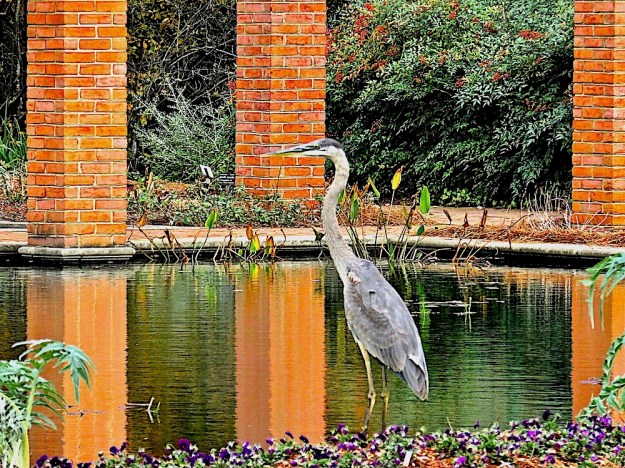
For Cee’s Challenge: B and W Houses.
For Cee’s Challenge: B and W Houses.

First Friends
I am three years old, lying in my Mom’s room taking a nap. I can hear voices in the front room. The world comes slowly back to me as I rouse myself from the deep sleep I swore I didn’t need. I hear my mom’s voice and the voice of a stranger. I slide my legs over the side of the chenille-covered bed, balancing for a moment like a teeter totter before giving in to gravity and letting my feet slide through space to the floor below. I creak open the door, which had been left ajar. My mom’s voice gets louder. I smell coffee brewing and hear the chink of china coffee cups in the living room.
I hear a dull rubbing sound and move toward it—through the kitchen to the dinette, where a very small very skinny girl with brown braids is sitting at the table coloring in one of my coloring books. She is not staying in the lines very well, which is crucial—along with the fact that she is coloring the one last uncolored picture in the book which I’ve been saving for last because it is my favorite and BECAUSE I HAVE IT PLANNED SO THERE IS SOMEWHERE IN THAT PICTURE TO USE EVERY LAST COLOR IN MY BOX OF CRAYOLAS!
I sidle past her, unspeaking, aflame with indignation. Who could have—who would have—given her the authority to color in my book? I stand in the door of the living room. My mom is talking to a mousy gray-haired lady—tall, raw-boned, in a limp gray dress. My mom sees me, and tells me to come over and meet Mrs. Krauss. They are our new neighbors. They are going to live in Aunt Stella and Uncle Werner’s house two houses down. Did I meet their daughter Pressie in the kitchen? She’s just my age and Aunt Stella and Uncle Werner (who are not actually related to us, but just friends of my folks) are her real aunt and uncle.
The gray lady calls Pressie in to meet me. She is quiet and I am quiet. Then we go back to color at the table together. We drink orange juice and eat potato chips. We will be best friends for what seems like a lifetime but what is really only until we approach adolescence. I will have a love-hate relationship with her mother, who will continually set up competitions between Pressie and me to see who will win. She will try to coach Pressie first; but still, I will always win.
Pressie and I will play hollyhock dolls and dress-up. We play, sometimes, with Mary Boone; but her parents are too religious and don’t think we’re nice enough to play with her very much. I want to put on neighborhood plays and circuses, but none of the other kids want to perform. I want to play store and school, but Pressie eventually goes home to help her mother varnish the floors.
Pressie’s house is full of loud brothers and a sulky teenage sister. It is full of high school-aged cousins who tease us unmercifully and old ladies who come to play Scrabble with her mother. It is full of a missionary sister who comes back from South America and married brothers who come from Florida with babies that Pressie and I take charge of.
Pressie’s house is full of slivery floors that are always in the process of being varnished or de-varnished. There is one drawer in the kitchen full of everybody’s toothbrushes, combs, hairpins, hair cream, shampoo tubes, old pennies, crackerjack toys, rubber balls, lint, hairballs, rolled up handkerchiefs and an occasional spoon that falls in from the drain board above it. They have no bathroom—just the kitchen sink and a toilet and shower in the basement, across from the coal bin and the huge coal furnace. Their toilet has a curtain in front of it, but the shower is open to the world.
Sometimes when I am peeing, someone comes down to put coal in the furnace or to throw dirty clothes in the washtub next to the wringer washer. I pull the curtain tight with my arms and pray that they won’t pull it back and discover me, my panties down to the floor, pee dripping down my leg from my hurried spring from the toilet to secure the curtain. To this day, I have dreams about bathrooms that become public thoroughfares the minute I sit down. To this day, I get constipated every time I leave the security of my own locked bathroom.
Pressie babysits with the minister’s kids for money. I go along for free. She spanks them a lot and yells a lot. I think I can’t wait until I’m old enough to have kids so I can yell at them, but when Pressie is gone and the minister’s wife asks me to babysit, I don’t yell at them.
At Christmas I can’t wait to have Pressie come see my gifts: a Cinderella watch, a doll, a wastebasket painted like a little girl’s face, complete with yarn braids, books and toilet water from aunts, a toy plastic silverware set from my sister, stationery from my other aunt, playing cards, sewing cards, paint by numbers, a new dress. I run over through the snow to Pressie’s house to see her presents: a new pair of pajamas, a coloring book and new crayons, barrettes and a comb. In her family, they draw names. Quickly we run to my house, but she doesn’t pay much attention to my presents. She is funny sometimes, kind of crabby. The more excited I get, the more withdrawn she gets.
Later, I want to make snow angels in the yard and feed leftover cornmeal muffins to the chickadees, but Pressie wants to go home. Pressie always wants to go home. What she does there, I don’t know. She doesn’t like to read. None of us will have television for another five years. She doesn’t much like games or cards. I don’t know what Pressie does when she isn’t with me.
When she is with me, we take baths together and sing the theme music from “Back to the Bible Broadcast,” washing our sins away in the bathtub. We play ranch house in our basement. We pull the army cot against the wall and put old chairs on either side of it for end tables. We upend an old box in front of it for a coffee table. My grandma’s peeling ochre-painted rocking chair faces the army cot couch. We sneak into the hired man’s room and steal his Pall Mall cigarettes and sit talking and smoking. We rip the filters off first, which is what we think you’re supposed to do.
Pressie will always stay longer if we smoke. I blow out on the cigarette, but Pressie inhales. We smoke a whole pack over a few weeks’ time and then go searching for more. When the hired man starts hiding his cigarettes, we discover his hiding place and learn to take no more than four at a time so he doesn’t miss them. When he has a carton, we take a pack and hide it under the mattress on the army cot. My mother wonders where all the filters are coming from that she sweeps from the basement floor, but never guesses our secret.
Pressie spends more time with me than before, drops by almost every morning and always wants to go to the basement to play and smoke. Then the hired man finds another room and moves out and when Mrs. Church’s granddaughters come to visit, I will want to play with them but Pressie won’t. Then we will pair off—Pressie with Sue Anne, the girly one, me with Kate, the boyish one. We have a little war—mainly instigated by the sisters.
When the new farm agent moves in with two daughters—one a year younger than Pressie and me, the other a year younger than my sister Addie—I want to ask the girl our age to play with us, but Pressie won’t. I have a slumber party for everyone—all the girls we know. I invite the new girl, whose name is Molly, but no one talks to her much. She is shy and doesn’t push herself on us. No one else ever wants to include her. I go play with her anyway and spend the night at her house. Her mother is nervous, her dad cocky. Her older sister laughs nervously under her breath a lot, as does her mother.
Many years later, by the time we are in high school, everyone has accepted them. By then, all of those girls have parties where I’m not invited. They are always a little reserved when I come up to speak to them. Maybe they’re always reserved. How would I know how they are when I’m not around? Later, they all got to be pretty good friends. But in the beginning, I was everyone’s first friend.
The prompt today is varnish.


“Gorge”ous
Everyone is cognizant that
runway models gone to fat
will very promptly get the axe
for appetite control grown lax.
Alas, it is a tragic truth
that larger forms are viewed uncouth.
Plus-sized is not viewed as “in,”
within a world that’s based on thin.
Designers never seem to feel
that models who enjoy a meal
do their fashions adequate
justice in the hips and butt.
Their hungry models stroll and strut
with tiny waist and taut-stretched gut,
looking very lank and lean
and also just a little mean.
No doubt from hunger––their daily fate.
While as we watch, those overweight
have found a way to compensate.
We gain revenge by chocolate!


For the WordPress Daily Prompt: Gorge.
Squash Blossom
Hard to herd and hard to wrangle,
growing in a clustered tangle
here beside my kitchen stoop,
good as fritters or in soup.
Squash blooms don’t merely do their duty
as a thing of sun-filled beauty.
Their life as flowers fades in haste.
Best to enjoy them as a taste!
(Or, if at growing things you’re feckless,
just enjoy them as a necklace!)


 Lone Mountain Squash Blossom necklace. Image “borrowed” from internet.
This wonderful woman is the epitome of the word “cheeky,” both in appearance and demeanor.
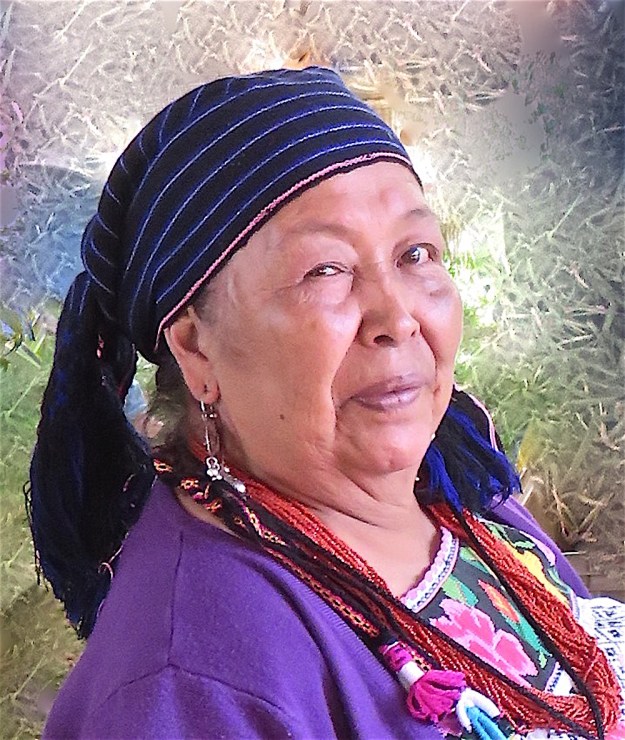
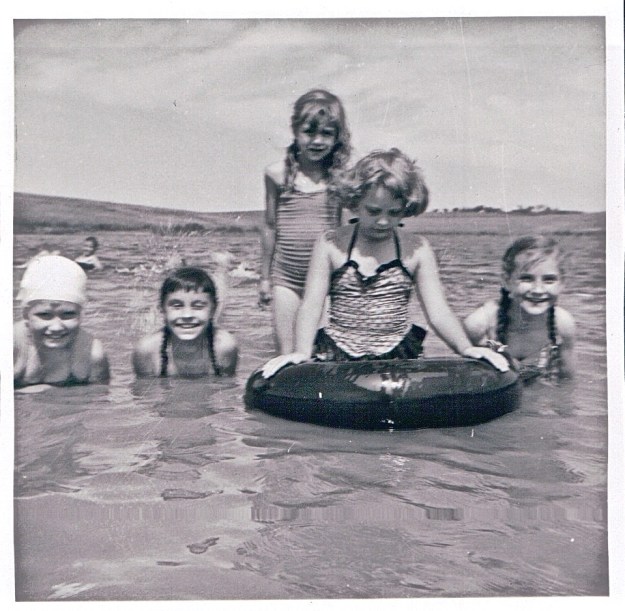
Can you guess which of the above cheeky little girls is me?
The cheeky critter below broke out that slat of the bathroom window and eventually recruited her sisters and brother. The four of them pushed in the screen and hopped down into the bathtub. That will show their mom she can’t lock them out of the house!

The person below is in witness protection, but she is letting me borrow her cheeks, at least.

Since I have determined to finish my novel (now 27 pages strong) and had decided to lay back a bit on the blogging to do so, it seems an incredible bit of synchronicity that the prompt today should be “saintly.” Why is this so? Because my book happens to be about a group of traveling nuns and three of the saintly orphans they have left behind to go renew their vows at the convent of their novitiate. Minor disasters and much hilarity ensue. Here is the opening scene. I won’t be publishing further bits until the book is finished:
Holy Vacation, Chapter One
Three little girls sat on the bench. They could have been triplets. Their black hair arranged neatly in braids with a straight fringe just hitting their eyebrows, neatly dressed, their socks pulled tight up their smooth brown legs, they sat quietly, as they had been taught to do by the nuns. It was as though they’d been cast to the role of angelic orphans. Only their eyes were allowed action: darting in unison up the road each time a car motor was heard in the distance.
The first car had taken Louis, the second that Armando boy who pulled their braids. Car after car came and whisked away yet another orphan until it was just the three of them: Maria Rosario, Maria Constanza and Maria Carmen. Three monkeys who didn’t even know the meaning of evil, they sat with hands folded neatly in their laps.
“They will come, chiquitas,” said Sister Candelaria. “Just be patient and say your rosaries and the cars will come for you.” And just then, a white truck with the back closed in came and the lady named Janice herded them all into the comfortable seats inside the truck.
“I’m sorry I’m late,” she said to them in her gringa Spanish. Actually, she said, “I’m sorry I do not keep the time,” but they were all used to this strange way of speaking in the foreign people who came each week to play with them or to bring beans or tortillas or school supplies. At Christmas, they unloaded their great cars and carried armloads of presents into the orphanage. Pale haired dolls, yellow trucks with shovels to move the dirt, piñatas full of candy and pesos and small plastic toys.
At this time, however, the gringo cars, instead of bringing bounty, carried it away. Orphan by orphan, they emptied the low slung adobe buildings. The beds stood neatly made row upon row. Mismatched bottom sheets were covered tightly by army blankets and Winnie the Pooh comforters or castoff bedspreads in every pattern and color imaginable. The dormitories were gardens of bright fabrics that had been cast off beds from the gringo communities that stood in a chain on the other side of the lake. The children could see their lights when they sneaked out of bed after the nuns had gone to their evening prayers.
The older children told the younger ones stories about the lights. With each telling, the stories grew. First, they were the glowing flies at rest in the trees. Then they were the eyes of light serpents who lay draped over the low hills that led up to the high hills and watched for parentless children. That is why all of the parentless children were kept here on the far uninhabited side of the lake. The nuns were protecting them from the creatures who ate children.
Pablito, the meanest of the big boys who threw rocks at squirrels and tried to catch lake birds by their wings, had told them that each time an orphan was adopted, that they were really being taken to the north shore to be devoured by the spirits who demanded sacrifice. And so as they entered the car and took seats on the long soft benches inside, Maria Rosario and Maria Constanza and Maria Carmen felt blended excitement and horror. They had not been left, yet what were they being taken to?
“Take your chair straps in your hands and put them into your wrists,” said Janice, the yellow haired gringa, in her strange way of speaking.
Each child fumbled behind her for a seat belt and obediently wound it around her wrist.
”No, stupid children, like this,” she said, fastening each seat belt in turn around their middles, which was what they would have done if she hadn’t told them to put them on their wrists.
They knew she didn’t really mean to call them stupid, that it was just the closest word she knew to calling them silly. Señora Janice was trying very hard to learn Spanish, but she was a poor student and often mixed up words to the glee of the children, who varied from thinking her funny, stupid, dumb or very kind indeed. The children who found her to be kind were the ones who knew her best, for she came one day a week to spend with them. One day she brought ropes cut into short lengths to jump over and another she brought all 30 orphans bright colored small balls. She taught them to use them as big marbles to try to hit the balls of the other children, but they were allowed to keep only one ball each and told not to try to keep the balls of other children whose balls were captured.
“Take your birds and roll them on the spaghetti toward the other birds,” the Señora had instructed them.
“She means to take our balls and roll them in the grass,” instructed Celia, one of the older girls, in a hushed voice. She was accustomed to interpreting the strange requests of the señora.
Now this Janice had come for the last three orphans, to take them to her house and to the houses of friends so that the nuns could all go north to the place of their novitiate to renew their vows. This was the first time this had ever been done in the twenty years since they had founded this orphanage on the south shore of the biggest lake in Mexico. For twenty years, they had been scraping together the bedding and clothes and food and medicine necessary to care for the orphans who came to them through as many different avenues as there were children. Some were brought by the police, others by relatives or by weeping girls with bloodstains on their skirts or by angry fathers. Some were simply left on their doorstep at night or left like abandoned puppies along the long dirt road that lead up to the orphanage.
“Our Lady’s Sanctuary for Lost Lambs” was the gringa translation for the words written in metal in a large arch that stretched over the road close to where it joined the large paved road that extended around the lake. Now the three small Marias craned their necks as they were driven under it and away.
“Where is she taking us?” whispered Constanza to Carmen and Rosario.
“She’s taking us to live with her, but she’s taking you to the lights in the mountains!” giggled Carmen.
“Hush, Carmen,” said Rosario. “You’re scaring her.”
Constanza’s eyes had grown very round and she had started to cry.
“We’re all being taken by gringas so the nuns may make new promises to God,” Rosario said in her low wise kind voice. She was thought to be a year older than the other girls, but here in the orphanage, age was arbitrary. With no birth certificates, most children were given ages and birth dates by the nuns, who voted when they could not agree on the supposed age of a child. So it was that Rosario was said to be five while the other two Marias were labeled as four. Yet they were as like as three brown pinto beans, their faces scrubbed and their clothes neatly pressed by Sister Angelica.
Chapter 2.
Half an hour later, only Maria Rosario was left. She had moved to the front seat where she sat buckled in, her eyes never departing from the wonders that flowed by her window. More cows than she had ever seen in her life, vast fields of corn and large pieces of plastic that seemed to cover whole hillsides which señora told her were places that raised chickens. She could not imagine why it was necessary to cover their chickens. At the orphanage, the chickens scurried free over the courtyard and the ground where the boys played soccer. They wandered into the kitchen and sometimes into the classroom. Once she had found a warm brown egg on her pillow, and Sister Lourdes had fried it for her breakfast. In the rain, the chickens ran to the casa overhangs or into the shed or under trees. No one in the orphanage covered their chickens with plastic.
Now they passed three burros laden with firewood. Now two live dogs nosing a dead dog by the side of the road. The mountains that she saw from afar from the roof mirador above the kitchen now loomed very close, but just as Rosario was settling her eyes on them, the Señora swung the large car into a bumpy little road and soon she had stopped before a beautiful little house with blue shutters and a shrine to the virgin by the front door. Inside the house seemed to be larger, and very strange. There was too much furniture. “How many people live in this house?” she wondered, but she did not speak, for she did not know if the señora would understand her words and she did not know if it was polite to speak them.
There was a sala with large soft-looking sofas and chairs and a television and other grey boxes piled on top of each other. Red lights glowed from these machines and when the señora touched one, music came out of different parts of the room. Instead of a large table for comida, there were many small tables in this room, one next to each chair and others in front of the sofas. She wondered if everyone ate at their own tables, but the very next room turned out to be a separate room just for the big table where they were to eat their meals. The table there was spread with a beautiful cloth and a large armoirio held many colorful plates. There were plants in all the rooms and there were pictures on every wall.
There was a whole room for washing and drying clothes and machines that did it all for you. There was a room just for the computer and another room for storing garden tools and rubber boots and dog food.
But the room she liked the best was the kitchen. It was big with beautiful tile floors and brilliant copper pans on the wall. Large clay pots were arranged along the top of the cupboards. They were like the pots of old people: very charred. Some of them were chipped or cracked.
On the counters were machines that Rosario knew were for preparing food. This was a kitchen, after all, so what else could they be? She barely had time to take them all in before the Señora was leading her out of the kitchen and down a long hall.
“This is your room,” said the Señora as she opened a door at the end of the hall. Inside were two beds with matching covers.
“Who will sleep in the other bed?” asked Rosario.
“No one. This is your room. You will sleep here alone. I have a room of my own,” said the señora.
Rosario’s eyes grew very large. She had never slept in a room alone. In the orphanage, as soon as a bed was emptied, it was filled again. She didn’t know that beds were ever kept just to go empty.
Rosario was perplexed. Which bed was meant to go empty and which was hers? How was she to know? She began to cry.
If you read this to the end, please comment. I may be taking it down soon. Just wanted to gauge reactions, plus it matched the prompt and my electricity is down and my power backup is about to go so no time to write another post. To be continued and hopefully finished within the year. . . .
The prompt today was saintly.
 jdbphoto
The photo above is one of my favorites—a closeup of a copper shower head patinated by water and age. A few years ago, when I returned to the house I rent on the beach at La Manzanilla, they had replaced it with a shiny new one. I mourn its absence!
The prompt today is patina.

This isn’t the tree I meant to post, but when I saw Becca’s tree, it was such a contrast to it that I had to post it. See Becca’s tree from the link below.
For Becca’s Sunday Trees prompt.