Tag Archives: Childhood Angst

They’ll Be Sorry!!!

They’ll Be Sorry!!!

She’s stuffing Mommy’s reticule with necessary stuff,
putting on her bunny coat and leaving in a huff.
All the sundry items contribute to its thickness—
pajamas for her dolly and candy pills for sickness.

She’s packed her favorite nightie and her dolly and her bear,
a pair of extra panties and a hairbrush for her hair.
She grabs a sun umbrella as she passes by the rack,
squishes up her raincoat and stuffs it in her sack.

So now she’s set for sun or rain as she sets off to roam.
She’ll make her parents sorry when she runs away from home!
The hall clock ticks its countdown as she sets off on her lark.
She’ll have to run away right now to be back before dark.


Prompt words are reticule, sundry, countdown, cohere and sickness.
Image by Zahra Amiri on Unsplash

Leftover Nightmares: Weekly Wordle 519

Leftover Nightmares

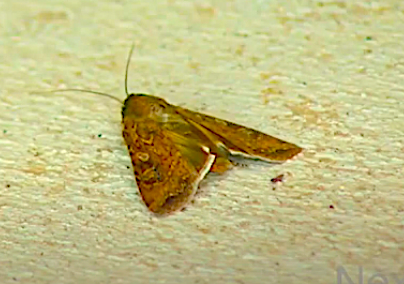
Sharp teeth of moths that daily fray the fabric of my dreaming
through the faulty screens of youth continue to come streaming.
Will nothing seek to stop their flights and free me from my dread
of lines of dusty millers that by rights should now be dead?

I try to curb my memory—the dull sheen of their eyes
as they fly slowly toward me in their moth disguise.
All those evil prairie spirits, rising from the grass
to find me after midnight and fill my dreams enmasse.


This poem is partially memory, partially fiction. The flutter of Miller moths, the adult form of the cutworm, are so much a part of my growing up on the prairies of South Dakota that I named my first book, “Prairie Moths.”  Then when I built my own house in Wyoming, moths again rose to swarm around me–so many that I had to light ceiling bulbs at night and put large bowls of sudsy water under the lightbulbs to trap the moths by the hundreds to free my house from them. So, although the surviving nightmares of moths are completely exaggerated, the theme is authentic, brought out by this week’s Wordle prompts. Prompt words today are daily, sheen, rightstry, nothing, sharp, moth, fray, free, line, seeks and streaming.

For The Sunday Whirl Weekly Wordle Prompt 519

To a Pensive Pre-Teen

(I posted this photo this morning but had appointments all day long until now, when I’m finally posting a poem to go with it. I just now noticed it is my 2,000th post in this blog!!)

DSC00027 - Version 2
Judy Dykstra-Brown Photo

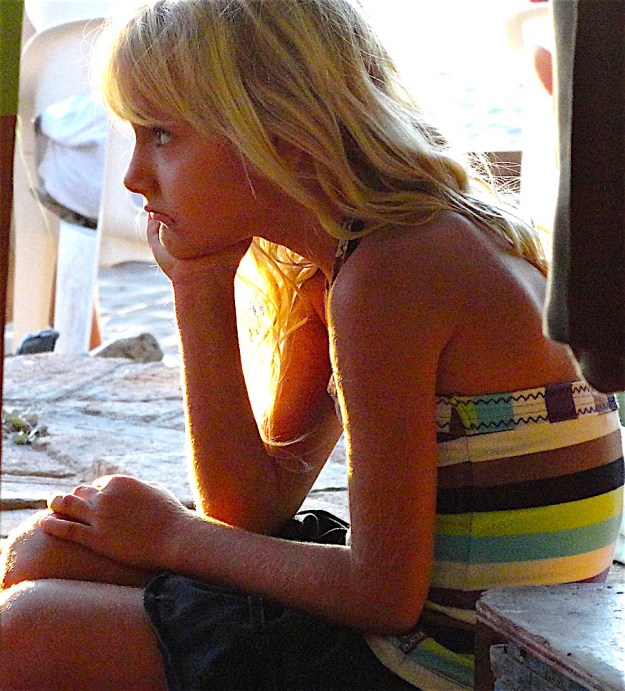
To a Pensive Pre-teen with Her Toes Curled in the Sand,
Outside the Beachside Cafe with Her Chin Cupped in Her Hand

What might you be dreaming of?
What thoughts have formed your frown,
child sitting on the steps
where ocean meets the town?

Perhaps you do not have a coin
to stay the vendor’s cart
for paletas of strawberry
or guava, cold and tart.

Perhaps you do not wish to stay
and yet you cannot leave.
There are so many stories
that a taleteller could weave.

But the truth is, you’re eleven,
and your parents are inside.
Reason enough for you to choose
the company of the tide.


Note: A paleta is an ice cream bar or popsicle.


https://dailypost.wordpress.com/prompts/pensive/

In Cold Blood

IMG_9290.jpg

                                                        In Cold Blood

I’m sure that the horrible, violent and senseless murders described in Truman Capote’s book In Cold Blood captured the imaginations of most of us in the U.S. Unaccustomed to such vivid descriptions of such violent acts, what small town family did not start locking their doors at night?

The slaughter of the rural farm family occurred on Saturday night, November 14, 1959; and although Capote’s book was not published until 1966, the press made much of it at the time it happened and I was well aware of most of the details of the murder of the father, wife and teen-aged children—a boy and a girl––as well as the capture of the two men who had murdered them. I was especially affected by the sad detail of the discovery of the girl’s Sunday School money tucked into her shoe in the closet. Whether she heard the men breaking in and hid the money so it would not be found or whether she placed it there so she wouldn’t forget, the detail has the same poignancy

After the murder, as I lay in bed at night––especially on summer nights when I found it even harder to surrender to sleep than during blustery cold nights in the winter––I often thought to get up and check the doors again: the front door, the door to the garage, the door from the garage to the mud room, the door to the basement and the back door off the pantry that led to the back porch. All had push-locks accessed by a key from the other side.
On one night in particular, that summer that I turned 13, I lay awake listening to the night sounds that streamed in through my screened window. My window adjoined the front door stoop and it suddenly occurred to me that anyone could slice the screen and easily enter. I got up from bed to close the window and open the air conditioning vent in the floor under it. While I was up, I decided to check all the doors again. All were securely locked except for the lock to the back “porch” which was really just a platform four or five feet wide with a hand railing that ran the entire length of the house from the back garage entry to the pantry/kitchen area.

The pantry held a sink for my dad to wash up in when he came in from the ranch, and since we rarely locked our house, many times he would just walk along this platform/porch and enter the house from the back where he pulled off his boots and emptied his cuffs off the back porch so he wouldn’t track wheat chaff or mud or other souvenirs of his day’s work through the house. Then he’d wash his hands and neck and face in “his” special sink and make his way to his rocking chair in the living room, where he’d spend the rest of the day resting until supper and reading before bed.

This platform/porch was actually quite a distance above the ground because our lot was on a small hill that sloped from front to back and right to left. This enabled the windows in the basement to be above ground level, whereas there were no windows at all in the front of the basement. On this particular night, I stepped out onto this roofless sideless porch platform. I could see the big dipper and part of the little dipper and the thousands of other stars in the summer sky, but I didn’t know the names of any of the other constellations.

I could smell the newly cut grass that my mother had mowed in the early evening of that day, after the sun had gone low in the sky. I remembered when I was little how my dad was less tired by the time he got home and so he’d mow the huge lawn around the old house. My mom would come after him with the lawn sweeper that collected the grass cuttings in a huge canvas cube open at the top to dump the grass into a huge pile by the gravel road where we kids would build nests and play bird. I was the baby bird fed imaginary worms or, if we’d had the right dinner, sauceless spaghetti, by my older sister.

By my teen years, however, my dad would be too tired when he got home from a day that started at 5 or 6 in the morning and often didn’t end until 8 or 9 at night if they were cutting wheat. His life was a hard one and I often wondered if he resented coming home to daughters reading on their beds or talking on the phone to friends.

Did it seem unfair to him that he worked so hard to support daughters and a wife who had such a life of ease? Although I had not yet started to really write, except for a diary I once kept for a few months or assignments for school, I did have an active imagination; and from a very early age, I had concocted elaborate stories all involving imaginary selves of the future.

Now on this night, I wondered why that door that I had checked before coming to bed to read was now open! Who and why would anyone open a locked door? As I lay thinking, I heard the door to my parents’ bedroom farther down the hall open. I could hear my father’s heavy barefoot tread turning not to his right—to the bathroom between their room and my sister’s––but instead to the left. Down the long hall to my room, the entrance hall, the kitchen, the mudroom and the back porch. I could hear the door opening and a few minutes’ delay before he padded down the hall again and closed his door.

Chill. I felt it zoom down my spine, hit my tailbone and ricochet back up to my brain where it froze the back of my head. I waited. For five minutes, and ten. Barely breathing. I cracked my door and when I could again hear my father’s loud snores, I sneaked back out to the door to the back porch, which was once again unlocked. As quietly as possible, I pushed the button lock in, then returned to bed where I remained vigilantly awake for the rest of the night. Twice more, my father got up to unlock the door. Twice more, I got up to relock it.

During all those long hours before dawn, I imagined the scenario. My father, formerly my protector, allowance provider and generous benefactor to the pleasures of my life—turned in my mind into plotter. He, too, had read all of the coverage of the Kansas murders, and it had given him ideas.  He had hired a man to sneak in, to bind him up and leave him helpless and then to kill us all. He wanted to be free. He was tired of his idle daughters, tired of his wife.

My father had, previous to this, gone through one of his week long silent periods where we knew he was upset about something—cattle prices, the threat of hail before harvest, my mother or us. We never knew what caused these silent periods where he would speak to none of us and sometimes even move to the basement to sleep. They never lasted over a week and afterwards he would be our same joking, generous, hard-working dad. But during those times, we tiptoed. We tried to cajole and charm, but it didn’t work. If we asked if he wanted his head rubbed, we were met with a curt sideways bob of the head or a “Not tonight!”

This was unheard of at other times, when we’d ask for money for a new dress or the show and he’d answer with, “Ya. Rub Pa’s head!” We’d do so, and then the wallet would come out. Not that we didn’t rub his head gratis as well. It just got to be a joke—this returning of favor for favor. Then he’d hand us his wallet and put his hand over his eyes, like he didn’t want to see what we’d take. We’d always show him, though. Was this okay? It always was.

At times other than his silent periods, he was our loving dad. Proud of us. Funny around guests, and talkative, but when home alone with us, usually tired––sleeping or reading one of the piles of magazines and books that lay on the long coffee table beside his chair. I mention the silent periods as an explanation of why I might even in my most fertile imagination conceive of an idea that my dad would be capable of planning to “off” his entire family.

But, imagine it I did. I became the protector of our family that summer, lying awake for as long as I could to listen for my father’s footsteps down the hall. And this was not the only night that he got up once or twice to unlock that back door. I never said a word to my mother or sister. I perhaps told my best friend, thinking if my protective efforts failed, at least one person could point the way to insuring the perpetrator of my demise came to justice.

In later years, I forgot about that terrifying summer and went back to loving and admiring my dad almost as much as before, but by then there was a difference. Whether it was caused by radical ideas picked up in my sixties college life and my need to define myself as more modern than my parents—who were themselves quite liberal––or a vestige of that summer of distrust, I’ll never know.

By the time my dad died eleven years later, they’d sold the house in town and moved to a smaller house they built a mile out of town. It was to escape town taxes, my dad always said, but I’ve always thought that for him it was a return to his early homestead days in another house with nothing in view but prairie grasses and a big weathered barn. This new “country” house built by my parents after I left high school was closer to town than the homestead of my grandparents, but was within sight of the big red barn of a farm he’d bought years ago for a hired man and his family to live in and afterwards rented out. The barn sat squarely between my parents’ new modern modular and the old farmhouse. There was a small lake nearby with otters and where the wild geese landed overnight in their migrations.

It was one summer night when I was home from college for vacation that my dad got up from where he’d been sleeping in his chair and walked through the hall and kitchen and out the back door of the house.

“Where do you think he’s going?” I asked my mother.

“Oh, he likes to go out to sniff the night air and have a pee in the dark,” she said with a chuckle. “He loved to pee off the back porch of the house in town at night, even though it was so much farther away than the bathroom. I never could convince him not to do it. I worried that the neighbors would see him. But I think he thought it saved water, or perhaps it just reminded him of his youth—peeing out the back door of the house into the night air.”

This post was written in response to Elyse’s scary babysitting piece which you can read here:  http://fiftyfourandahalf.com/2012/08/01/all-the-cool-kids-are-doing-it/



Hearts and Flowers: cees-odd-ball-photo-challenge-2015-week-31/

                                                              Hearts and Flowers

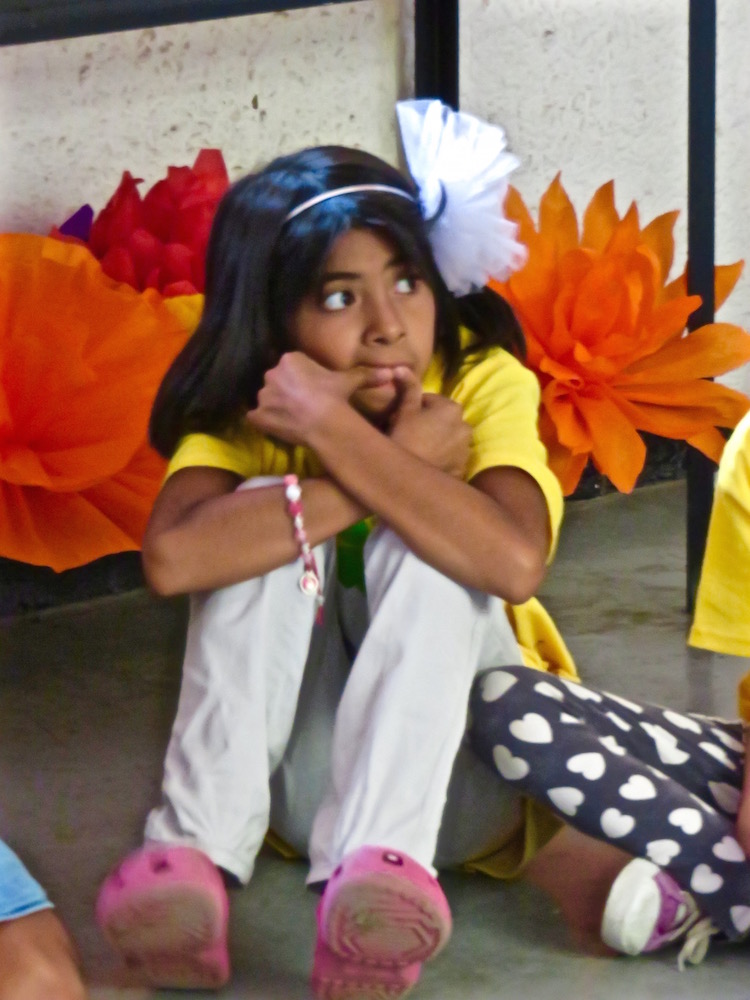
The combined effect of the hair ribbon and the flowers behind her that looked like wings, plus her interesting body arrangement gives this shot a sort of oddball charm, at least in my opinion!

I linked another oddball to the wrong  place (called it week 30, which I don’t think existed and linked it to week 29, where I had already posted,) so  if you didn’t see it, go HERE for another oddball.

IMG_2962http://ceenphotography.com/2015/08/02/cees-odd-ball-photo-challenge-2015-week-31/

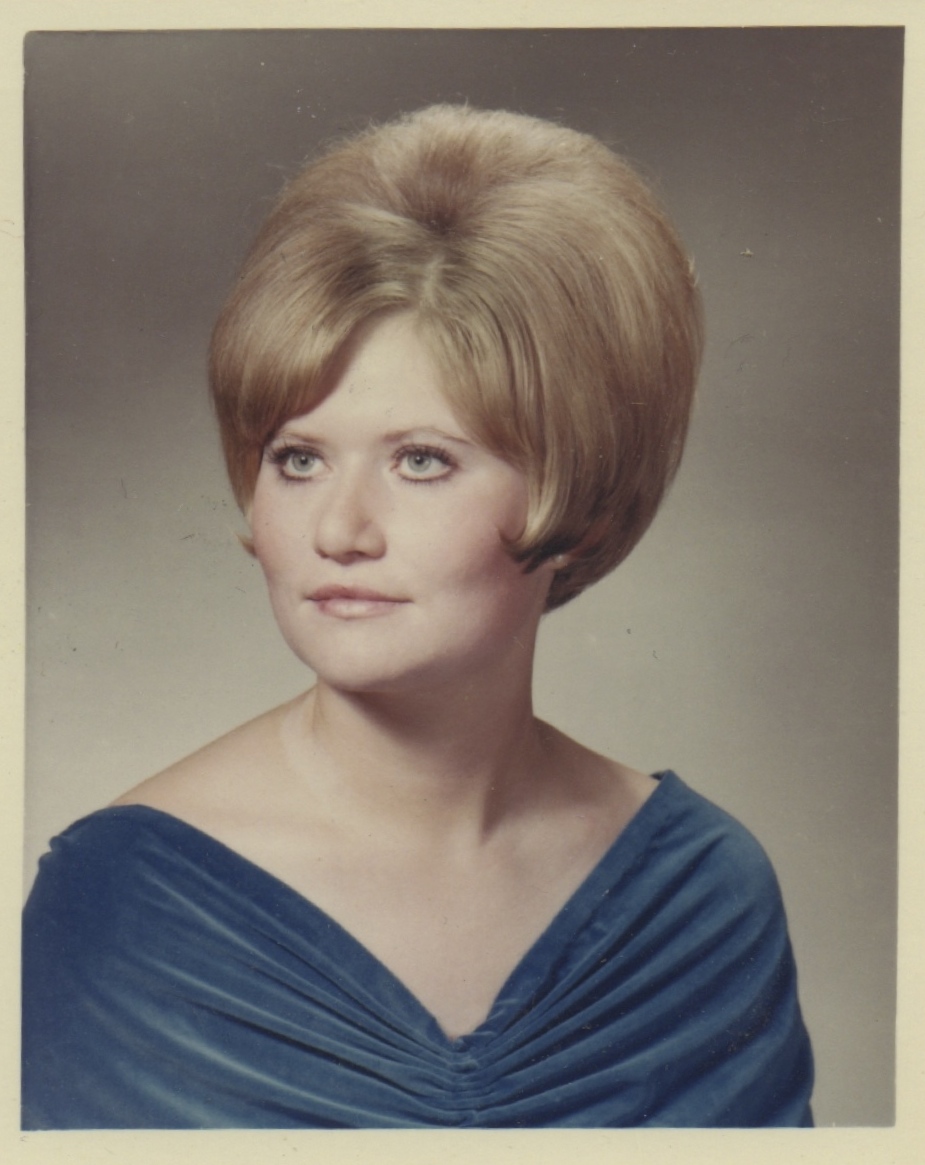
“Adult”ery


JudycurlsJudycurls - Version 2

Unfortunate hairstyles of the past


“Adult”ery

I don’t remember, as a child, ever really thinking about what it would be like to be an adult in terms of where I would live or what I would choose as a profession. I do remember, however, two things I worried about.

First of all, I worried about what instrument I would play in the school band. I had two sisters, one eleven years older and the other four years older, who both played saxophone. As a matter of fact, there being 7 years difference in their ages, they both played the same saxophone! When I entered the sixth grade and was old enough to play in the starter band, I knew two things. #1: I had to play in the band because both of them had done so. #2: I had to find a way to be unique in doing exactly what they had done, and so I had to find a different instrument. This resolve was strengthened by the fact that my sister Patti was still using the “family saxophone.” As long as I was being different, I decided to stretch my uniqueness as far as it would go. No one in either the starter or the regular band had ever played a flute. It was exotic and not very heavy to carry. I would play a flute!!! Or rather, I would attempt to play a flute.

I faked it for two years, blowing energetically into the little hole as we sat in the band loft at games or marched along behind the regular band, practicing for parades or football games; but I never really developed much of a tone and my memory of which note was which was limited. It was really easy, though, to carry that little case about as large as a large pencil case the two blocks to the auditorium where our band practice occurred. My band instructor could not afford to be picky as there were only 200 students in the entire school system—grade school and high school combined—so every warm body available was required to flesh out the physical body of the band. If a few were miming, so be it. As long as they could stay in step for the marching band and didn’t play any really loud false notes, who would ever know?

When my sister left for college, she left the sax behind; and when I headed out for my first band practice as a high school freshman, I left that dread flute behind as I took sax in hand to continue the family tradition. I was not a whole lot better at it, but found something held between the lips and teeth was a lot easier than something held sideways and blown across and although the sax was heavier, it was held in a much more sustainable position than the flute, which was an exercise in arm isometrics as I held it aloft!!

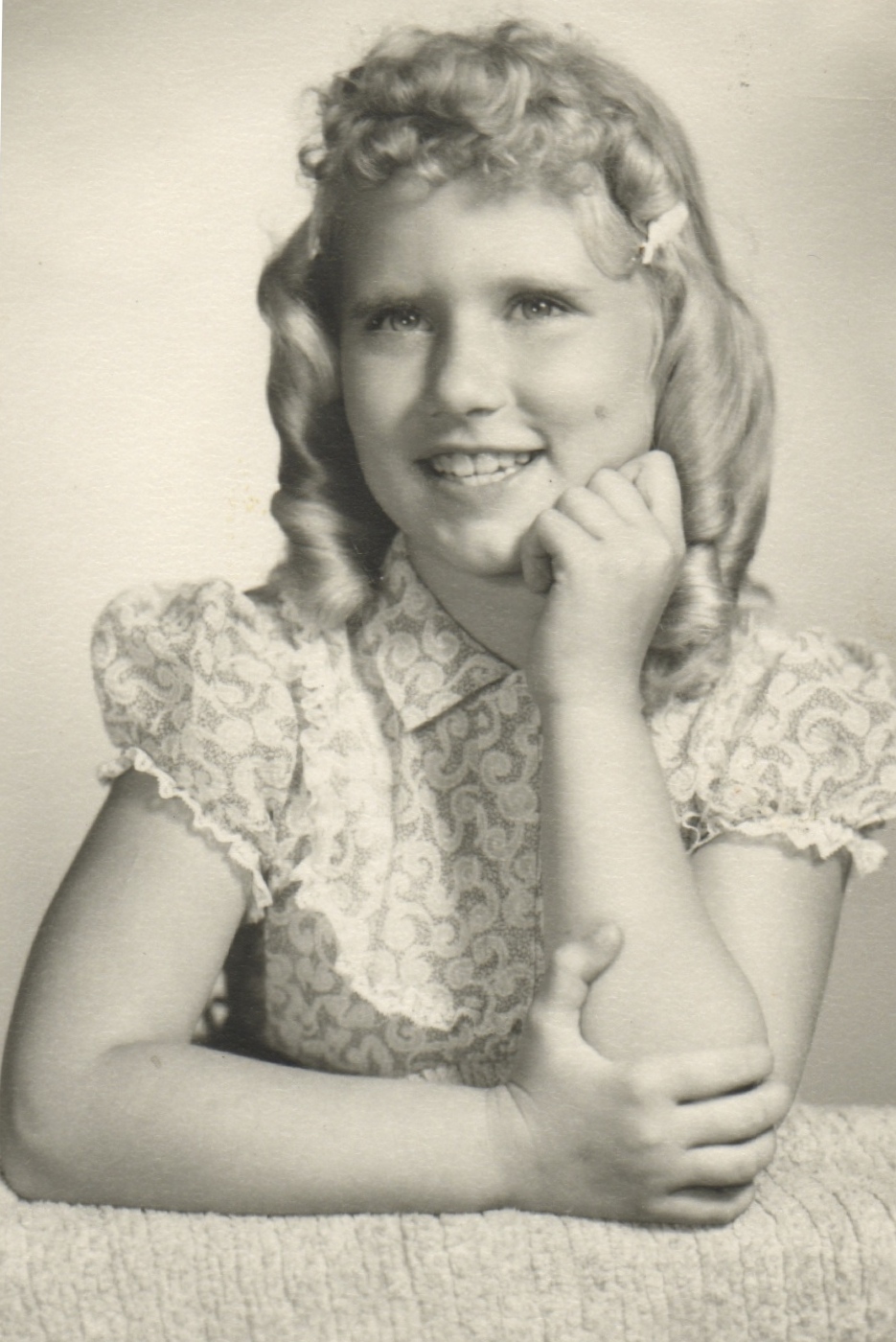
The second worry I had about growing up was how I would wear my hair. I would lie awake nights worrying about what hairstyle I would adopt when I could no longer sport the sausage curls my mother formed around her finger each morning. Shirley Temple, who had already grown to adulthood, needed to be replaced! My hair was too long, however, to duplicate Shirley’s bouncy little curls. It hung in fat tubes down beside my cheeks, offsetting my tight little bangs curled up each night in pink rubber curlers. For some reason, both my mom and I thought this made me look real good, and I am not exaggerating when I admit that there were nights when I’d lie in bed, tears streaming down my cheeks, worrying about what I would do when I grew up and could no longer wear curls!!

So now you know why I dropped the saxophone as soon as I graduated high school and why I had to move to Mexico to escape the shame of all those years when I allowed my mother to shape my esthetic sense of hair. I haven’t owned a curler of any type for 20 years. That saxophone was handed on to the next generation of my family and its mouthpiece, at least, met its demise when it snapped in two as my niece tried to grip it with the fourth pair of teeth in three decades. With a new mouthpiece, it survived four more years—hopefully this time with someone with more talent than I. I know not where it ended up. Probably in some second hand store or donated to some child who couldn’t afford an instrument. I hope it wound up with some talented individual who could restore its pride in itself.

Now that I have been an adult for many many years, I have conquered most of its demands. I have found many hairstyles, only a few of them more ridiculous than sausage curls (see my college picture above as an illustration of this fact) and attempted only one additional instrument, the guitar. Having played only solo or in duet with a college friend who tried to mold me into Joan Baez but failed, I did learn about seven chords and learned to adapt a whole succession of seventies songs to fit into those seven chords. I played for sing-alongs with the kids I counseled at summer camp and for groups of little neighbors around the world, who would come to my house on Saturday mornings to sing silly songs. And I have that guitar to this day. But I haven’t played it for years and harbor no illusions about my prowess. It is there for visiting friends who want to play for me and as a big, cumbersome, hard-to-store reminder that I can choose my own failures as surely as my own successes.

I am an adult like other adults—growing more childish year-by-year, but in my regression toward soft food and adult diapers, I will never sink so low as to repeat some mistakes of my youth. Never ever more sausage curls or flutes held aloft like punishment. And never again will I try to be different just to be different. “The Far Side” has shown that this is nothing that really needs to be aimed for. We all grow odd enough just following the path of nature, thereby furnishing the humor for all the generations that follow us.

The Prompt: As a kid, you must have imagined what it was like to be an adult. Now that you’re a grownup (or becoming one), how far off was your idea of adult life?

P.S. Thirty years after high school, when I was doing an art show in Oregon, a man walked by my display and then did an about-face and came back and said, “You’re Judy Dykstra, aren’t you?”  I admitted the fact and asked him how he knew me.  He said he was 5 years behind me in school in the small South Dakota town where I grew up.  He was a country boy and since we’d never been in school together, I didn’t recognize him but did recognize the family name.

“How in the world did you even know what I looked like, let alone recognize me thirty years later?” I asked.

“Well, a bunch of us used to collect in the the school library and look at old annuals,” he said.  “I recognize you from your high school picture.”  Suddenly, it all came clear.

“You used to look at them to laugh at all the funny hairstyles, didn’t you?”   Sheepishly, he laughed and admitted it.  I had hit the nail (or the girl?) right on the head!!!!