Tag Archives: poem about remembering a lost loved one

After the Storm: Wordle 549 For Sunday Whirl


After the Storm

My former blithe spirit is rocked by the rain,
but I’ll dry it out and use it again.

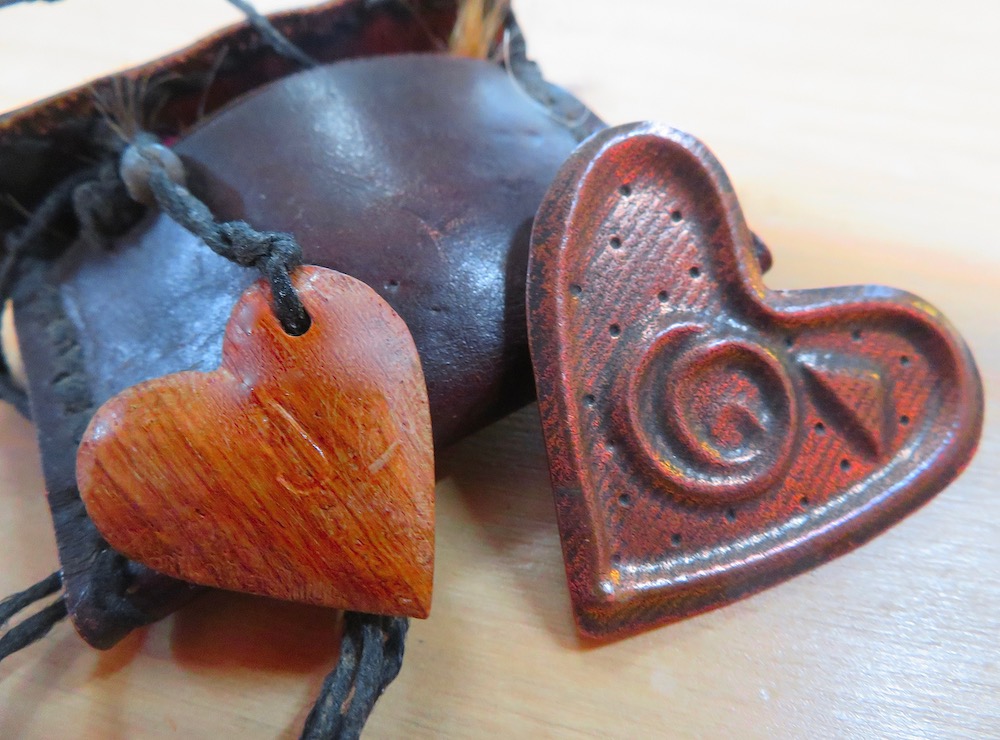
I fold up my heart and tuck it away
in case I should need it some future day.

The lingering legs of love walk the floor
long after the time he walked out the door.

Preferring the narrows, the reefs and the gales
to the calm of safe harbors, his  ship stretched  its sails.

Now he sits in a vase, secure on my shelf,
while I pace in seclusion, all by myself.

The Sunday Whirl prompt words are: ship lingering legs instead narrow stretch door heart vase fold rocked rain

This Dress: The Sunday Whirl, Wordle #511

This Dress

This dress, stuffed in a corner of an old trunk,
sparks memories, rekindling magic.
From far in the future, I feel the past
rising to join me. It heats the cold air of the attic
and the skies outside the window clear of clouds.

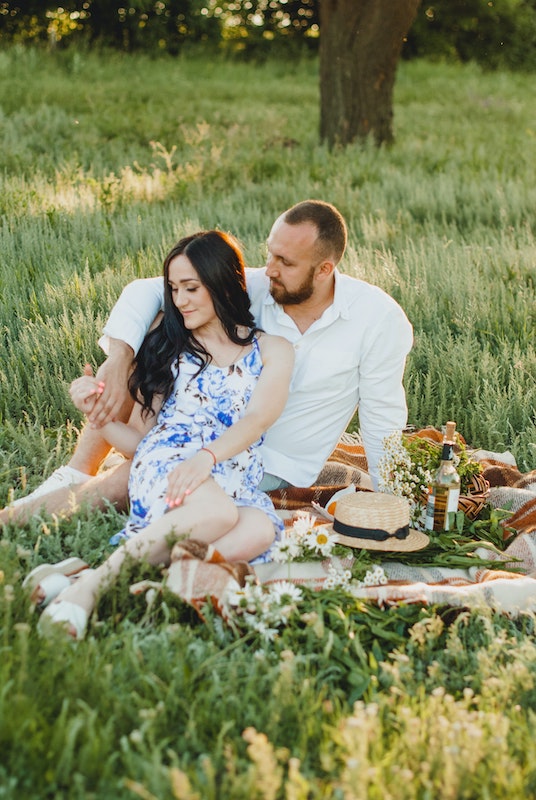
A warm spring afternoon on a blanket in the park,
the outing I thought spontaneous
crowned with the offer of a ring.
Spilling the wine, falling sideways into the three-tiered coconut cake,
rising as one, laughing—a freshly engaged couple.

Licking the frosting off your arm. Your licking the frosting off my neck.
Symbiotic in new plans for our continuance into the future—
into the length of our lives.
That dress. A bit of frosting still on the collar.
You, so many years after, still blooming in my memory.


For the Sunday Whirl Wordle # 511 the prompt words are rekindle, dress, far, future, magic, ring, rising, sky, heats, spontaneous legendary sparks. Image by Kate Hizlitznova on Unsplash.

Act Three

Act Three

The echo of your footsteps as you trod across my mind
creates anticipation of a nostalgic kind.

You elevate my consciousness as you were wont to do

and so in time I manifest the whole grand rest of you.

You’ve been a silent tenant for so many years
that this surprise appearance prompts again those  tears

I thought had been dried up in me when you had to go
to that place where you were drawn by the undertow.

For only a brief moment, we are as we have been, 
’til with a click of memory, I banish you again.

You slip back into shadow in the attic of my mind,
where both of us lie tangled, hopelessly entwined.

I come back to the present while you’re banished to the past,
once again resuming the roles in which we’re cast.

You imprisoned in act two, caught eternally
while I assume a solo role, living out act three.

Prompt words today are elevate, echo, click, tenant and cross.

Reunion


Reunion

We perambulate the meadow, our eyes drinking their fill,
our memories straying farther up over yonder hill.
The tirades of an angry world do not survive the climb,
leaving us to peacefulness simple and sublime.
The higher up thoughts wander, memory grows hypoxic,
screening out the terrors of a world that has grown toxic.

Wild poppies sway and bend to currents fresher than below
as what we both remember overtakes what lies below.
We draw fresh energy and joy from everything we pass.
The cicadas churr rain’s promises from the obscuring grass.
Small creatures race for burrows, unaccustomed as they are
to the human menace that approaches from afar.

But our thoughts pass without harming, for memories pose no threat,
and we shed years and worries the higher that we get.
Remember all those years ago, those passions that we shared
with each new faltering kiss and each new secret that we bared?
Though the present is what nourishes, youth vanished way too fast.
What harm can be in going back for a light repast?

Prompts today are memory, passed, thoughthypoxic, tirade, perambulate, fill.

White Owl (Sijo for NaPoWriMo 2021, Day 20)

White Owl

All these years I ‘ve done without your heavy breath and gentle touch.
My mind turned to other things. Sounds in the night, the call of birds.
But it’s time. The owl asks “Who? Who?” Leaves me to find the answer.


The NaPoWriMo prompt is to write a sijo.

The sijo (Korean 시조, pronounced SHEE-jo) is a traditional three-line Korean poetic form typically exploring cosmological, metaphysical, or pastoral themes. Organized both technically and thematically by line and syllable count, sijo are expected to be phrasal and lyrical, as they are first and foremost meant to be songs.

Sijo are written in three lines, each averaging 14-16 syllables for a total of 44-46 syllables. Each line is written in four groups of syllables that should be clearly differentiated from the other groups, yet still flow together as a single line. The first line is usually written in a 3-4-4-4 grouping pattern and states the theme of the poem, where a situation is generally introduced.The second line is usually written in a 3-4-4-4 pattern (similar to the first) and is an elaboration of the first line’s theme or situation (development).The third line is divided into two sections. The first section, the counter-theme, is grouped as 3-5, while the second part, considered the conclusion of the poem, is written as 4-3. The counter-theme is called the ‘twist,’ which is usually a surprise in meaning, sound, or other device.

The sijo may tell a story (as the ballad does), examine an idea (as the sonnet does), or express an emotion (as the lyric does). Whatever the purpose may be, the structure is the same: line 1 of the 3-line pattern introduces a situation or problem; line 2 develops or “turns” the idea in a different direction; and line 3 provides climax and closure. Think of the traditional 3-part structure of a narrative (conflict, complication, climax) or the 3-part division of the sonnet, and you’ll see the same thing happening.


Mentor

Mentor

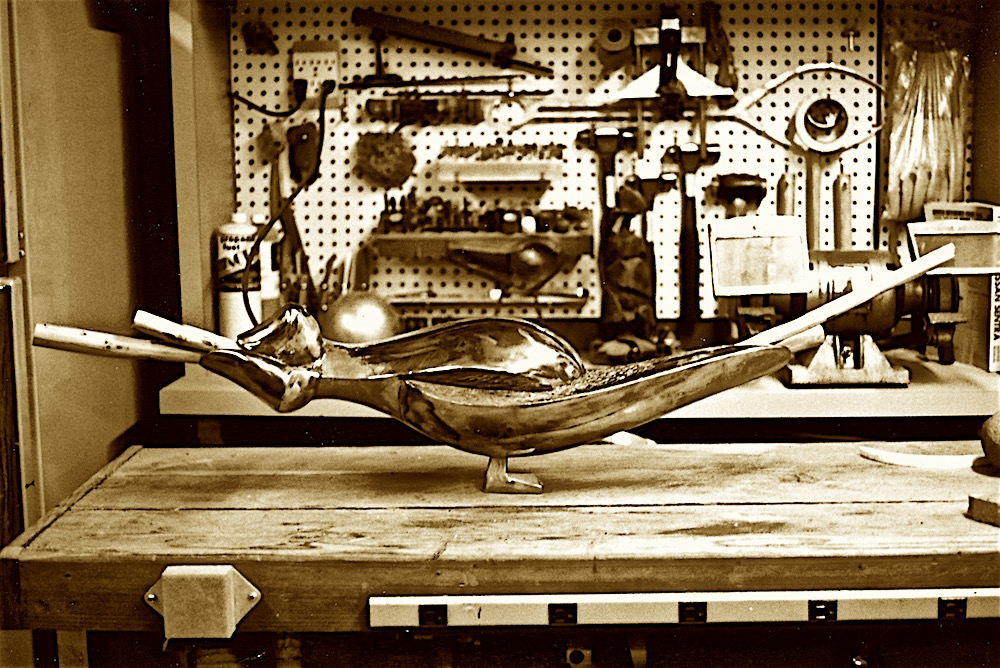
As an old man, he grew his hair long
and wore it unsecured, flowing white over his shoulders,
hiking it back as he walked with one sure toss of the head.
Few except himself would have judged him anything but superior.
His art, original and finely-crafted, showed him as the rogue he was,
yet he pored over art books piled around his chair—
large books rich in imagery and heavy to lift—
a laborious chore to plow through
page by page for anyone except him,
looking for himself in the pages, perhaps,
or looking for part of what he would become.

She thought he thought too much,
looking for answers in books
instead of in himself.
Religion, philosophy, art—
he searched for solutions
in Swedenborg and Picasso.
Compared his poetry to Sarton, Frost and Whitman
while others compared their art, their words to him.

Every piece he completed, he saw himself in as he created it,
but once done, it was as though he’d lost a part of himself in it
and so he started the search again in metal and wood and stone
larger and heavier each time, risking everything
to build himself ever higher.
Seven feet, then twelve, then eighteen feet—
stretching himself to the heaven
that he sought, also, through books.
Searching for what to be.

Wood, stone, metal, clay, glass, paper, words.
None quite solved the puzzle of himself.
Books on the shelf he read again and again
never had all of the answers.
He went as deep into himself as he could go.
Digging for the words he mined
from the parts of himself he most feared,
he often came up empty-handed,
as though he could not bear to see
all of the truth already revealed
in the pure instinctual lines of his sculpture
and those few fine poems he got out of the way of.

A virile man, he worked his angst out
in the shape of children—ten of them
with three different women—going through women
as he went through plasticine or wood or stone,
leaving crumbled remnants to reconstruct themselves
afterwards, as he built poetry out of their mutual pain.
He moved through the world
as most beautiful things do—unaware of his swath.

I rose from his rubble, missing him but remembering
all he taught. The scrape and cut and vibration of a fine machine,
the shaping with hands, the dip of the mold and deckle,
the power of a 20-ton press, the fine hiss of a torch.
Showing me how to get the beauty out of myself,
he formed that confidence within me that he lacked in himself.
Looking in books for what he already had,
looking in the faces of women for love
he never quite believed in,
he never fully realized that it did exist,

even during his worst rages,
right here in the heart
of one who so long afterwards
tries
to sculpt his essence
through these words.


(Click on photos to enlarge.)

Here is also a write-up and photo shoot that a gallery owner did of our home and studio during the Santa Cruz Open Studio Tours a few years before we closed down our house and studio to I move to Mexico: http://www.wmgallery.com/cruz/brown.html

And here is another blog I did on him and his art: https://judydykstrabrown.com/tag/bobs-sculpture/

Prompt words today were hike, write, original and superior.
Upon Losing a Friend or Lover

Click on any photo to enlarge all.

Upon Losing a Friend or Lover

It does no good to have remorse for partners you are missing.
Better that you concentrate on ones you could be kissing.
Be not forlorn. Frustration is something you can fix.
Just engage with life again and get back in the mix.
Life was meant to be lived out, no matter what the cost,
though it might take many friends to replace one you’ve lost.

https://ragtagcommunity.wordpress.com/2019/01/10/rdp-thursday-partner/
https://fivedotoh.com/2019/01/10/fowc-with-fandango-remorse/
https://onedailyprompt.wordpress.com/2019/01/10/your-daily-word-prompt-frustration-january-10-2019/
https://wordofthedaychallenge.wordpress.com/2019/01/10/forlorn/

Unraveled

“Sleep that knits up the raveled sleave of care, The death of each day’s life, sore labor’s bath, Balm of hurt minds, great nature’s second course, Chief nourisher in life’s feast.”—Wm. Shakespeare

Ravel can mean either to combine thread or to separate it (in linguistics, a word like this is called an auto-antonym). In the sense that it means to combine, unravel developed as a true antonym.reddit.com

Unraveled

The pain of love unraveling? No one knows it better,
for she wears her heart upon her sleeve, knit into her sweater.
Each day her heart unravels and lies tangled down her arm.
They say it cannot harm her. Loosened hearts cannot do harm.
But she’s a prisoner of these tendrils of love that’s come undone—
the truth of it revealed to her each day by a new sun,
while each night in her dreams, sleep knits it up again
and the ardor of her lost love once more draws her in.
She forgets the present and relives what she once had—
what she imagines in her slumber cancelling out the bad.
This unknitting and reknitting can’t be what life is for.
She must search for her dream’s exit. She must try to find the door.
Cast her old garment on the flames. Burn up that raveled sleeve.
Real love stays firmly knitted. A true love doesn’t leave.

The prompt today is sleeve.

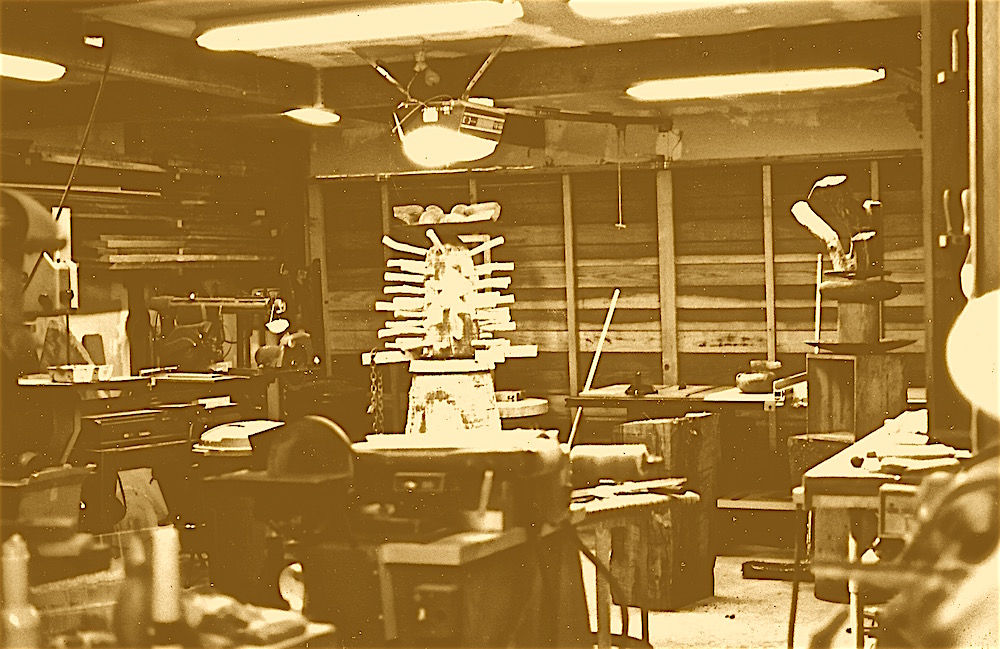
Empty Studio

  daily life color132

Empty Studio

My memories
are footsteps
leading me to you.

I smell your scent of wood,
your sweat with the bouquet of bronze,
remember the finger you sacrificed
to impetuosity and art.

Finally the world fed all of you to the blade––
our severance as final as one of your straight sure cuts––
making you into memory I follow one step at a time,
my passing visible through stone dust
and wood shavings on the floor.

This is how you and I
create patterns
even after you are gone
from memories as fragmented
as what you left behind
when you created art––

stone chips, sawdust, pebbled glass,
curls of metal and winged shards of paper––
my footprints
pushing them farther apart
each time I pass through.
Leaving more of me
and less of you.

daily life color133

https://dailypost.wordpress.com/prompts/footsteps/