Tag Archives: ” books

Books or Kindle, Eye or Ear?


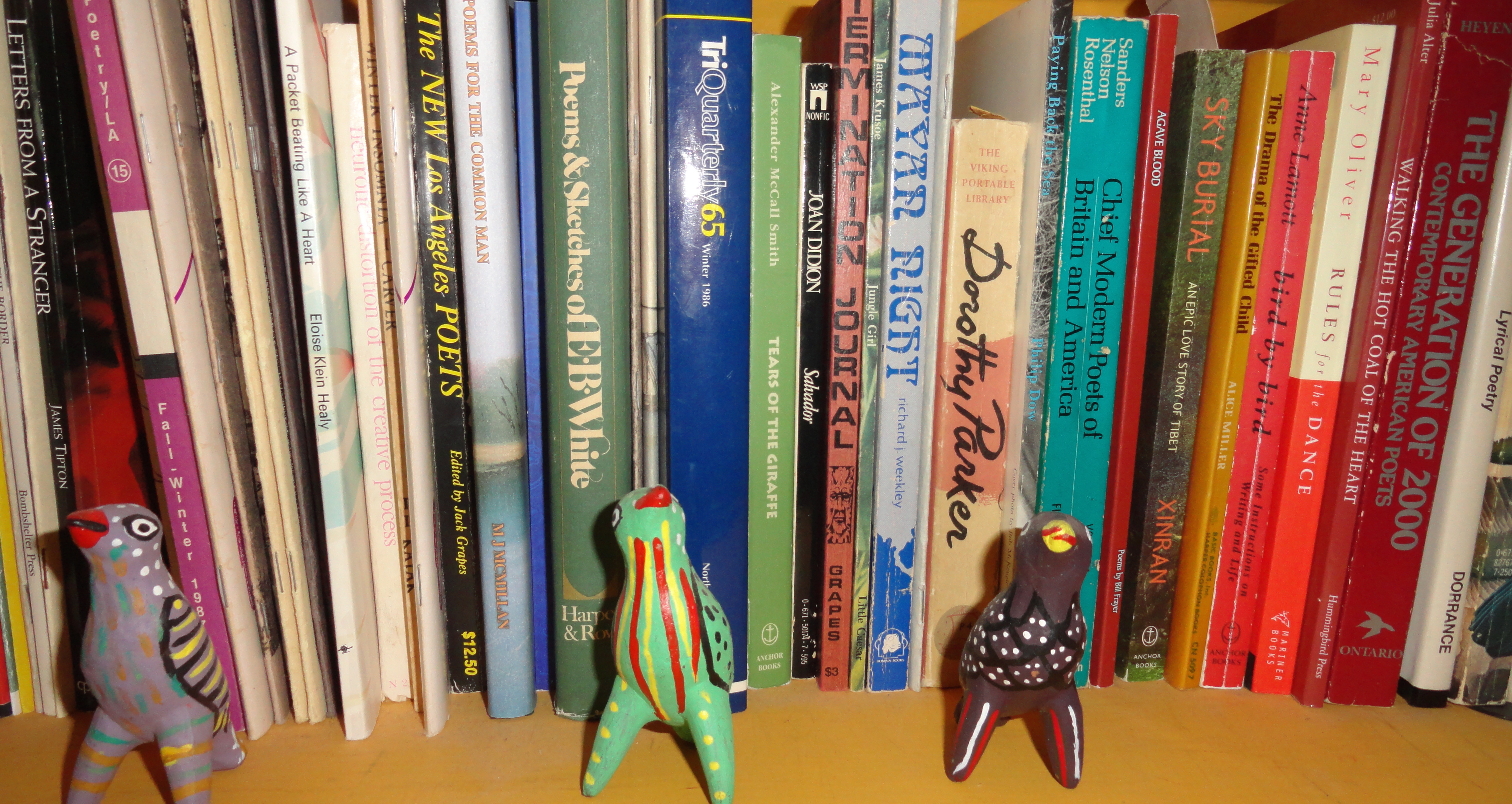
The prompt word today was controversy. Are Kindle and Audible a blessing or a curse?  Will libraries and bookstores become a thing of the past, vanished like scrolls and slates and blackboards?  Will technology continue to wed the concrete and the abstract until there is no difference?  In looking for one of my photographic images to accompany this prompt, I found this poem written two years ago and decided to reblog myself!


Books

 The fresh bookstore smell of them,
bending the pages to crack the spine,
notes scribbled in the margins,
underlines,
hearts with initials on the flyleaf,
something to loan or to wrap for a gift,
something propped up on the bathtub edge,
it’s paper sprinkled with drops–
pages wrinkled into a Braille memory–
that rainstorm run through,
how he put it in his back pocket.

Poetry touched by fingers.
Single words met by lips.
Words pored over by candlelight or flashlight
in a sleeping bag or in a hut with no electricity.
Books pushed into backpacks
and under table legs for leveling.

Paper that soaked up
the oil from fingers
of the reader
consuming popcorn
or chocolate chip cookies
in lieu of the romance on the pages–
finger food served with brain food.
Passions wrapped in paper and ink–
the allure of a book and the tactile comfort.
The soul of a book you could touch, fold, bend.

Books are the gravestones of trees
but also the journals of our hearts.
Cities of words,
boards and bricks of letters,
insulated by hard covers or the curling skins
of paperbacks.
Something solid to transfer the dreams
of one person to another in a concrete telepathy
of fingers and eyes.
Books are the roads we build between us,
solid and substantial–
their paper the roadbed,
the words the center lines directing us.

What will fill the bookcases of a modern world?
Google replacing dictionaries,
Wikipedia already an invisible bank of Encyclopaedia Britannicas.
What will we use our boards and bricks for,
if not to hold up whole tenements of books?
How will we furnish our walls?
What will boys carry to school for girls?
What will we balance on heads
to practice walking with perfect posture?
What will we throw in the direction of the horrible pun?

Will there be graveyards for books, or cities built of them?
Quaint materials for easy chairs or headboards for beds?
Will we hollow them out for cigar boxes
or grind them up for packing material?
Where do books belong in the era of Kindle and Audible?
These dinosaurs that soon will not produce more eggs.
Perhaps they’ll grow as precious as antiques.
Perhaps the grandchildren of our grandchildren
will ponder how to open them. Will wonder at their quaintness,
collecting them like mustache cups or carnival glass,
wondering about the use of them–as unfathomable as hieroglyphics.
That last book closing its pages–one more obsolete mystery
fueling the curiosity of a bygone era that has vanished
into a wireless universe.


Rebuilding Your Life after the Death of a Loved One

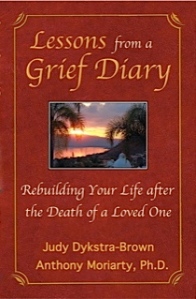
Since  the WordPress prompt is “Rebuild” and I have  written a book with that word  in the title, I guess this is an obvious time to link to it here:
1 Master embossed -front onlycream big & little spinecopy copy

Now available on Amazon, in print and Kindle versions and in Bookstores, including Diane Pearl Colecciones, La Bella Vida, Jose Melendrez and Mi Mexico in Ajijic, MX.

Lessons from a Grief Diary: Rebuilding Your Life
after the Death of a Loved One

Judy Dykstra-Brown and Anthony Moriarty, Ph.D.

 A widow’s grief diary chronicling the illness and death of her husband as well as the process of her recovery from grief over the next eight years is analyzed in alternating chapters by a psychologist. Includes methods of overcoming grief, suggested further reading and ending notes that summarize main points of the book.

Synopsis

When Judy let her husband Bob persuade her to buy a house in Mexico, little did she know that five months later, she would be moving into that house alone. Her diary takes us along through their initial adventures in Mexico, their return to California to sell off the contents of their home, her nursing Bob through his final illness and death and her move to Mexico. For eight years, she chronicles the triple challenge of dealing with the loss of her husband, learning to adjust to the culture of a foreign country where she knew no one and finding ways to find the positive in the most negative situations. Making use of his extensive research in the field of grief as well as experience gained through years of counseling others going through the grief process, Tony’s insightful comments on Judy’s thoughts and actions will serve as a guide for any reader suffering from the death of a family member or other loved one.

Readers’ Reviews and Comments

Having the courage to speak with unembellished honesty, Judy Dykstra-Brown begins by describing the move she and her husband Bob are planning to make to a more relaxed life in Mexico. As the van is being packed and plans finalized, Judy learns her husband is dying. In beautiful prose and poetry, she chronicles her grueling role of caretaker to Bob, their last days together and the death and rituals that follow. Knowing she will be leaving behind all of her support systems, Judy relocates to Mexico alone, sharing her intensely personal journey of grief, growth and finally the excitement of moving towards a different and full life. Uniquely, Anthony Moriarty follows each chapter with a psychological and/or mystical interpretation of the behaviors that accompany Bob’s processes of dying and Judy’s struggles with the loss of her husband. This is a must read for anyone who has experienced loss.Romaine Presnell, Clinical Social Worker, mental health therapist at John Hopkins and in private practice, Supervisor of Counseling Services as Associated Catholic Charities and group facilitator for The Wellness Community, providing free services for cancer patients and their families.

This book combines the personal account of a woman whose husband has unexpectedly become ill and died with the commentary of an experienced clinical psychologist. The story is compelling, the theme universal, and the dual viewpoints of the authors give us unique and valuable insight into the experience of loss, grief and life beyond.Amelia Stevens, M.D., Psychiatrist  

After suddenly losing my partner of 8 years, the combination of emotions that battered me day-to-day left me lost with no idea of how to find my way back to a relatively normal life. I ordered and read a number of the best-selling books on the subject of grief, but felt none of them applied to me until I discovered this brave and startling book. The combination of Judy’s honest personal journey and Tony’s objective observations make this a very important book with which I was able to easily identify. Had I read it earlier, I seriously think my journey would have been shorter and less debilitating.Linda Richards, Artist

With the hundreds of books available to help people navigate their way through the grief process, it is a rare find to discover one that approaches it from a whole new perspective. Lessons from a Grief Diary presents material from what I call Wise Mind, with an alternating blend of raw emotional disclosure combined with intellectual analysis and commentary. We get to travel along with Judy as she copes with the unexpected illness and untimely death of her husband and goes on to build a whole new kind of life on her own. Through her ‘real-time’ journal, she reveals nuances ofthoughts and emotions that are rarely spoken aloud. Tony’s intermingled commentary adds a perceptive depth of understanding, providing the reader valuable balance and insights into this complicated evolving process we call grief. Anyone seeking to better understand and explore their own experience of grief will find this book to be an optimistic and eminently relatable companion on their journey.Joy Birnbach Dunstan, MA, Licensed Professional Counselor

Once I started reading this book, I could not put it down. I loved the way Judy dealt with the death of her husband as well as the way in which she expressed her feelings. So many things she did and felt were the same as my feelings and actions when I lost my husband. Her sense of humor, her sadness, her guts to push on will make you feel like you are her best friend. Getting Tony’s perspective also gives another window into Judy’s heart. If you have lost someone close to you, everything she says will make sense. If you have not yet lost someone close to you, it will prepare you for when it happens.Audrey Zikmund, Widow for Two Years

Bereavement is a solitary, uphill climb. I watched my mother make the journey and to my child’s eyes, it took forever. Lessons from a Grief Diary is a candid account of the grieving process. It’s as if author Judy Dykstra-Brown is leading the bereaved individual into Dr. Tony Moriarty’s office where the three explore this complex emotional transitional state. I recommend this book to those who have suffered a loss, their families and friends, and to any of the professionals they turn to for help. Reading this book would have helped my mother and me.Harriet Hart, Social Worker and Past Director of Rehabilitation, Manitoba Paraplegic Association

This book is a great trail guide for exploring the pathway through grief.  We get to move between the powerful, surprising ways grief grabs us and the insights and understandings that give us something to hold on to as we pick our way through the boulders.Georgia King, County Mental Health Counselor

Reading Lessons from a Grief Diary is the surest way to go from grief to joy.Gloria Palazzo, Writer, Artist and Widow

“The  reading of this  book  took me to a place  where no other book has  ever  taken me and gave me a new appreciation of lakeside as a magical healing place.  Thank  you  for  that.  It’s a  big revelation  for me—and a big step in accepting this place that I have always  before thought of as just a place I was passing  through.  I actually read it in two nights—pretty  fast for me.  It was a privilege to  experience this book.”––Candace Spence, Lake Chapala Resident


Bios

After earning her Masters in Creative Writing and Curriculum and Instruction at the University of Wyoming, Judy Dykstra-Brown taught English and writing for ten years in Australia, Ethiopia and Wyoming before moving to California to study film production and to work for a television production company. She studied writing at UCLA and in the Jack Grapes workshop, where she met her husband Bob, a poet and sculptor. After marrying, they moved to Northern California and exhibited their individual and collaborative work at galleries and art and crafts shows nationwide for thirteen years. She was curator of the Santa Cruz Mountains Art Center for three and a half years. After Bob’s death in 2001, she moved to Mexico, where she has continued to publish her work in English language print and online magazines, to read and speak for various lecture series and performance groups and to exhibit her retablos and mixed media sculptures at local galleries. This is her third book.

Tony Moriarty holds a Ph.D. in Counseling Psychology from the University of Illinois at Urbana-Champaign. He has been a Licensed Clinical Psychologist since 1978, working both in private practice and community mental health, where his clinical specialties include grief management. As a police psychologist, he was involved in the post-incident counseling of officers whose use of force in the line of duty had resulted in a death or serious injury. He recently retired as the Principal of Homewood-Flossmoor High School in Flossmoor, Illinois, where he developed a number of programs involving non-punitive methods of managing student behavior as well as two high school police resource officer programs. He has published more than thirty articles in the professional literature and is the author of three books prior to this one.
30 thoughts on “Books for Adults”

  1. Norma Jean Iverson HuhnMarch 27, 2013 at 2:44 AM
    I will definitely be purchasing this book. I cannot wait to read this. Thank you for sharing this.

    Liked by you

    Reply
  2. Tony MoriartyMarch 28, 2013 at 11:10 AM
    We all need to remember there is no one best path to recovery from the loss of a loved one. My path is not yours; yours is not mine. We know we’re doing OK so long as we have a path, no matter where it leads us. The point is the path.

    Like

    Reply
  3. Judy KingMarch 30, 2013 at 7:12 PM
    I sure wish I could have found a book like this when I was grieving the loss of my fiance. There wasn’t a hospice group in the area, we had moved there not long before he became ill, so we hadn’t made friends yet, and I was so alone, with no one to talk to about what I was feeling. A few months after he did I thought I’d gone into early onset dementia — I couldn’t remember anything. Then I found a grief group and learned that everyone there had the same problem. What a great service you are providing with this double-faced look at grief.

    Judy King

    Like

    Reply
    1. grieflessonsPost authorMarch 30, 2013 at 11:43 PM
      Thanks, Judy. People have been going through the experience of grief for as long as there have been people–and I imagine it is just within our lifetimes that grief support groups and organizations have come to be. Good friends do a lot and perhaps are enough in some cases, but at other times–I think the most helpful and comforting support comes from someone who has been through what you are going through. We are lucky we’ve survived to live in an age when it is okay to talk about such things.

      Like

      Reply
  4. audreyMarch 31, 2013 at 4:01 PM
    If you have lost someone this book will open up your mind and your heart to deal with things you did not at the time. I can stuff things back about as good as any one but while reading Judy and Tony’s book it brought out feelings I had not dealt with. There were several crying jags and could not finish reading but to be picked up again later. I , too lost my husband then within a month moved to Mexico, it was the best thing I ever did especially since one of the first people I met was Judy. I would say for about the first year I was In Mexico I could not talk about my husband with out crying and I am sure making every one around me uncomfortable. There were so many similarities in Judy’s story and mine it was like going to therapy, also made me realize feelings that I had not allowed myself to feel. Judy has a way with words that will make you laugh and cry. I loved her book and will purchase one so I can read it again. Thank You Judy for having the fortitude to write this book.
    Audrey Zikmund

    Like

    Reply
  5. grieflessonsPost authorMarch 31, 2013 at 11:27 PM
    Audrey. You were so brave when you came down that no one would have guessed you had lost someone–even me, if I hadn’t been told about it by a mutual friend. It goes to show that we can’t always know what someone is feeling. I’m quite an observant person and I don’t think I ever saw you break down. You seemed determined to get the most out of life that you could and not to inflict your own pain on others. I guess the first time I knew what you were going through was in your response to my book. I am so glad to have struck a chord. I can’t guess what other people go through. I can just face up to how I felt and what I did and hope it can be of help to others–especially my friends. It’s a truth of life that we get closer through hard times and that once we reveal the things we fear most to reveal, that it usually brings people closer to us. oxoxoxo Judy

    Like

    Reply
  6. grieflessonsPost authorApril 10, 2013 at 1:42 AM
    Thank you for visiting my blog and taking the time to study it. This is my 9th day of blogging and I have much to learn about navigating the blogs. So far I’m having trouble trying to find any way to comment on other people’s blogs…Something simple I’m missing, I’m sure. Glad I found this place to thank you!!! Hope to see your name again….

    Like

    Reply
    1. grieflessonsPost authorApril 13, 2013 at 11:14 AM
      It is at the formatter’s. I’ll let you know. I’m in the process of choosing an illustrator for my “Sock Talk” book. Do you remember that I wrote that for you loooooong ago when I sent you that box of crazy socks? For years, people have been saying I should publish it as a children/adult picture book but I could never find an illustrator. Finally decided to bite the bullet. I’m negotiating with four different professional illustrators–all of whom have many books under their belt. It will be expensive, but I just want to get that goal accomplished. Three other rhymed children’s books–all completed but never published– will follow if I find the process is successful. This feels like the year to accomplish big goals.

      Like

      Reply
      1. Cintra L. GodfreyApril 15, 2013 at 7:01 AM
        Okey dokey, I’ll check back! I’m delighted to hear that Sock talk is going to press. That was one of the best gifts I’ve ever received. You gave me two pairs of shoes as well!

        Like

  7. Patti Dykstra ArnieriApril 13, 2013 at 1:19 PM
    I’ve spent this morning reading your poems and the comments on them (isn’t Ann remarkably insightful? She’s another woman who has a way with words). As always, I love your writing and love seeing how others respond to it. I’m so proud of you. xxoo Patti

    Like

    Reply
    1. grieflessonsPost authorApril 13, 2013 at 3:12 PM
      Yes, as I’ve told her, she captures every nuance. Makes a writer feel so appreciated to have someone look so closely at their work, internalize and experience it. Are you ready to proof my next book? It is only 14 pages long, luckily–finally, the much-shelved “Sock Talk” will come to bookstores and Kindles near you!!!!

      Like

      Reply
  8. mariaholmJanuary 22, 2015 at 3:50 AM
    I would like to get your books too. I have battled with grief also in different ways; nearly losing teenage children to the consequences of addiction and emotional disturbances, still having to manage full time work as if nothing was wrong.

    Liked by you

    Reply
    1. lifelessonsPost authorJanuary 22, 2015 at 10:13 AM
      They are all available on Amazon in both print and Kindle versions, and I think there should be a link on my Books pages. I hope if you do read them that you’ll write to give your further thoughts on the themes…I love these comments almost as much as the writing…especially if they turn into dialogues. Thanks for reading and commenting, Maria. Judy

      Liked by 1 person

      Reply
      1. mariaholmJanuary 22, 2015 at 3:47 PM
        I love to find people like you to exchange thoughts with. I will buy them via Amazon.uk as there is a lot of tax if we in Europe buy from .com
        We can’t get Kindle here, but a regular book in your hand is very nice

        Liked by you

      2. lifelessonsPost authorJanuary 22, 2015 at 7:14 PM
        I’m surprised you can’t get Kindle. Do you know why? Would you believe I’ve never read a book on Kindle? I do listen to books on audible while I’m driving, in the studio or falling asleep..Best way to do two things at once. Doubt my books will ever be on Audible, but you never know…Judy

        Like

      3. mariaholmJanuary 23, 2015 at 12:06 AM
        In Denmark we have E-books, but I remember that I have tried to order some in the kindle form from Amazon, but could not. Ordinarily books are so good for me as I hear classical music nearly always

        Like

    2. lifelessonsPost authorFebruary 13, 2015 at 6:48 AM
      Maria. I hope by now that if you have read my books that you will comment on whether they have been a help to you. This blogsite quickly evolved from one dealing primarily with grief to one celebrating the joys of life, but it is all part of one process. I’d love to hear how you are doing now and what you have found to be of help in your life. Best, Judy

      Like

      Reply
      1. mariaholmFebruary 13, 2015 at 6:52 AM
        You should only know that I lost track of you and had to write a few days ago on the common blog roll #blogging201 if any body could help me to find you. I got the answer very quickly from an English blogger and then found that I was already following you. I had looked through nearly a hundred bloggers that I follow. So I have not yet ordered the books. But so happy to know where you are.

        Liked by you

      2. lifelessonsPost authorFebruary 13, 2015 at 2:30 PM
        What synchronicity that I should contact you out of the blue just as you were searching. I’ll look forward to your comments after you read the books. Thanks for being so diligent in your search, Maria…Judy

        Liked by 1 person

  9. RonovanSeptember 22, 2015 at 8:07 PM
    If I were not so backed up on LitWorldInterviews with Book Reviews and Interviews I would want an interview with you. Still do. If you could email me at ronovanwrites (a) gmail (dot) com I would like to keep in touch and have another proposal as well.:)

Since I have written a book entitled Lessons from a Grief Diary: Rebuilding Your Life after the Death of A Loved One, I guess this is an obvious place to establish a link to it. 

https://dailypost.wordpress.com/prompts/rebuild/

So Many Books

IMG_2833So Many Books

I don’t “do” lunch, I don’t do sport.
They’re things to which I don’t resort.

For time just seems to be the stuff
of which I never have enough.

As I grow older, and years grow tight,
I find that I would rather write.

So, much as I might like to look
at a favorite once-read book––

Jane Austen or a Bronte sister––
time after time, I must resist her.

So many books are being written
that when the reading bug has bitten

and I find the time to view one,
inevitably, I choose a new one


The Prompt: Second Time Around–Tell us about a book you can read again and again without getting bored — what is it that speaks to you?https://dailypost.wordpress.com/prompts/second-time-around/

Generational Drift

daily life color073 (2)

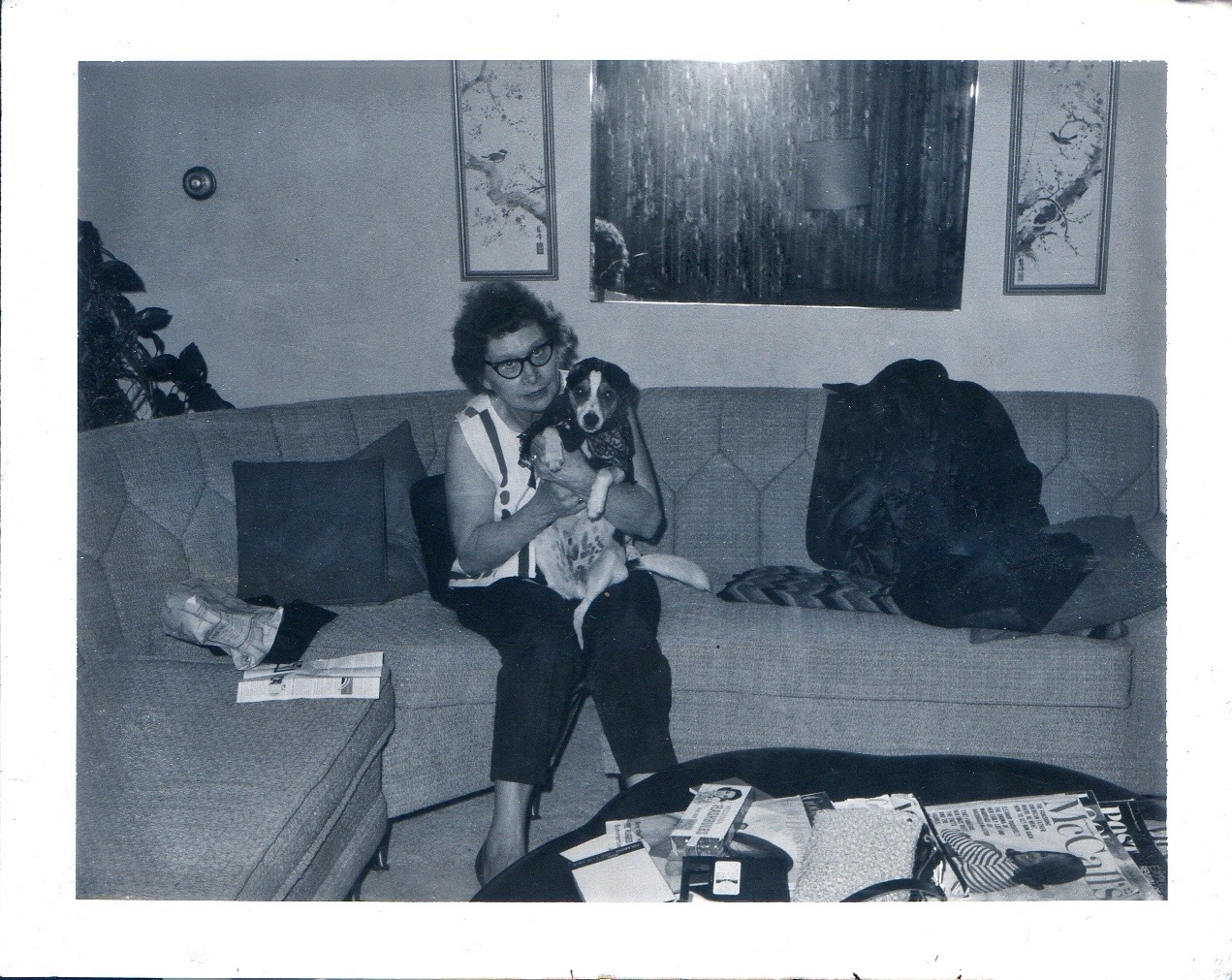
My mother and Scamp in an uncharacteristic upright position. Note reading material to their right.

                                                                Generational Drift

My mother would have been the first one to say that she was lazy.  To be fair, this wasn’t true. I had seen her iron 32 white blouses at a sittingher at our large mangle, running the fronts and the back of the garments, then the sleeves and collars through the large rollers, my sisters or I then taking our turns ironing the details near the seams and around the buttons.  We had a regular assembly (or wrinkle de-assembly) line going every Saturday morning.

She cooked every meal and kept the house reasonably clean.  But on weekends, she was the commander and we were the workers.  One vacuumed while the others dusted.  We were the window cleaners and the front walk sweepers, the table setters and dish washers when school or social activities allowed.

But there were times when a good book consumed each of our interests to a degree that weekend chores were lost in a blur of fantasy–each of us in thrall to a different book–my sisters in their rooms or on beach towels spread out in the sun of the back yard, me on on my back on the porch roof just outside my older sister’s bedroom window, and my mom flat on her back on the living room sofa.

Or sometimes it was the same book–taking turns reading 9-year-old Daisy Ashford’s memoir “The Young Visiter” [sic] as the rest of us howled–holding sore stomachs, tears running down cheeks.  At times like this, a week’s clutter might sit untouched on surfaces, that morning’s dishes still in the sink, last night’s shoes still lying like rubble in front of the t.v. or half obscured beneath piano bench or assorted chairs around the room.

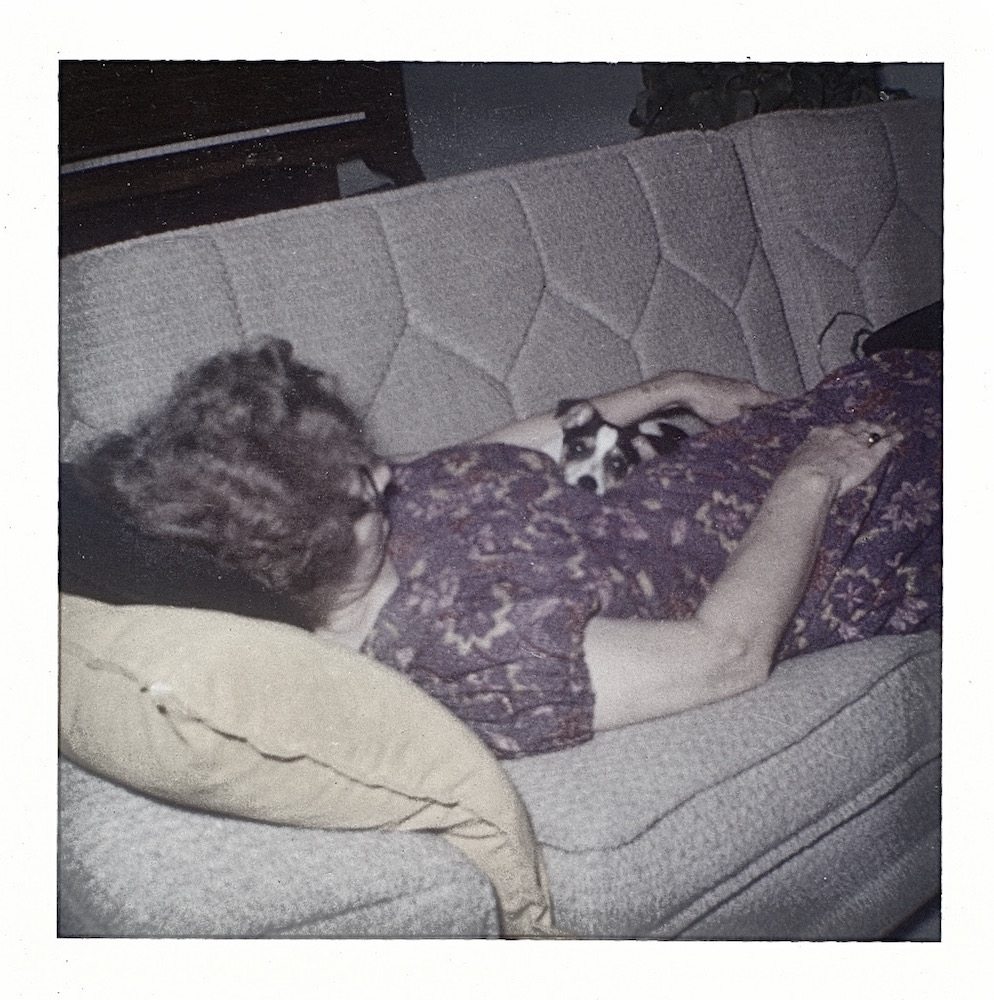
In short, housework, although generally done weekly, never got in the way of activities or a good book.  We were a family of readers, and generally this reading was done on our backs.  My mother’s spot was always the living room couch–some family pet (a tiny rabbit or raccoon, kitten, or the family terrier, Scamp) spread out between her side and the divan, my dad in “his” comfy rocking chair, feet up on the foot stool. I loved my bed or the floor or in the summer, outside under a tree.  My older sisters’ bedrooms were sacrosanct.  A closed door meant privacy.  No one entered uninvited.

This was in an age before computers, cellphones, or other texting methods.  The one telephone in our house was on the kitchen wall or counter.  It was a party line in more ways than one.  Not only were our conversations held within earshot of the entire family, but also could be “overheard” at will by the two neighborhood families who shared our party line.  Today’s technological wheel had not yet been invented.  With no TV possible until I was 11, I spent a youth devoted to two things:  my immediate surroundings and the people or book readily within sight.  If company was called for, it walked or drove to you or you drove or walked to it.  The rest of life was family, homework, housework, play or books, and my mother, luckily, considered the play and books to be equal in importance to housework.

“I’m basically lazy,” she always said, but I must repeat again that this was not true.  Our house usually assumed a state of more or less perfection at least once a week.  It is unclear the degree to which this was motivated by my oldest sister, who was an excellent commander. “Mom, we’ll do the dishes.  Patti, you wash and Judy you wipe,” she would instruct, while she herself disappeared into her room for an after dinner nap.

I do remember a certain Saturday when each of us lay on her back or sat sprawled in a different chair reading when a knock sounded at the front door.  Impossible!  No one in our small town ever dropped by uninvited.  Even sorties to or from my best friend’s house just two houses away from me were always preceded by a phone call. We remained silent, but the insistent knocking continued. I peeked out at the front door through the living room drapes and the eyes of two girls and an older woman all shifted in unison towards the drapes.  Caught!

Each of us grabbed a different pile of garments, books, shoes or ice cream dishes from a  living room surface and stashed them in a closet, drawer or cupboard as my mother answered the front door to a woman and her two daughters from a neighboring little town, just 7 miles away. They had dropped by because they were building a new house and had been told by my dad that they should stop by to see our house, which had been built a year before by a builder they were considering.

My sisters and I stayed a room ahead as my mother s-l-o-w-l-y showed them the house.  I cleared dirty dishes from the last meal into the stove as my sister hastily made beds and tossed dirty clothes into closets, sliding them closed to obscure reality as the visitors probably wondered what all the banging closets and drawers were about.

This was not the norm.  All of Saturday morning was traditionally spent cleaning floors, dusting my mother’s salt and pepper collection, neatly piling stacks of comic books on the living room library shelves, washing windows, straightening kitchen shelves.  We were not slovenly, but neither was my mother a cleaning Nazi. Life and literature often intervened.

Now, more than fifty years later, my mother has been gone for 14 years.  One sister has been lost to Alzheimer’s, the other is the perfect house keeper my mother never was.  But every morning, I lie in bed writing this blog until it is finished.  My favorite location for reading is still flat on my back, and I do not need to compete with my mother for my favorite reading spot on the living room sofa.  Sometimes Morrie, my smallest dog, spreads out beside me, and I can’t help but think of my mother–feeling as though I’ve taken her spot–stepped into the role set for me by the preceding generation.

Yes, the day’s dishes lie stacked in the kitchen sink. There are books piled on the dining room table from Oscar’s last English lesson. Papers are piled on the desk next to my computer, a pair of shoes under each of several pieces of furniture. Bags of beads and Xmas presents purchased during my trip to Guad a few days ago are still on the counter, ready to be whisked off to cupboards or the art studio below.

But my book is a good one and Yolanda will be here tomorrow, bright and early, looking for tasks to justify her three-times-a-week salary.  With no kids of my own to boss around or delegate bossing authority to, and salaries cheap by comparison here in Mexico, I have hired myself a daughter/housekeeper/ironing companion.  Sometimes we stand in the kitchen and talk, letting the dust remain undisturbed on surfaces for ten minutes to a half hour more, or go down to the garden to decide where to move the anthurium plant, to just admire a bloom I’ve noticed the day before or an orchid recently bloomed that she has noticed in the tree I rarely glance up at.

Every generation cannot help but be influenced by the last, and in spite of many differences, I am still my mother’s daughter. It is in my genes to place some priorities above housework, firmly believing that this is good for my soul as well as the souls of those around me.

daily life color073 (1)

My mother and Scamp in a more characteristic pose, resting up from reading.

In response to The Daily Post’s writing prompt: “I’ve Become My Parents.” Do you ever find yourself doing something your parents used to do when you were a kid?

First Blush: Bougainvillea–Flower of the Day Challenge 9/5/15

First Blush: Bougainvillea– Flower of the Day Challenge

IMG_4653

IMG_4664

IMG_4656

IMG_4656This bougainvillea has a different look from my others.  I love its simplicity, color, and the three pistil-like protrusions. I know that literally, these are leaves, not flowers, but somewhere within their makeup they contain what will become flowers!

More flor:  5/09/05/flower-of-the-day-september-5-2015-orchid/

NaPoWriMo 2015, DAY 14: The Holy Apewoman of Mexico

th-8th-9th-6

The Prompt: Write a poem that takes the form of a dialogue. My dialogue takes place between my 7 year old self and my 67 year old self who, ironically, is writing this in Mexico.


Childhood Dreams

7
The mysteries
of Grandma’s barn
and basement–
whole lost worlds down there.
Our own attic–that door held down
by a gravity never challenged.

I wanted to see
the hanging gardens of Babylon,
Mexico and Africa–
all these places from books,
their pieces jumbled together
like puzzle pieces
in the deep recesses of my closet,
scattered,
but ready for assembly
some day
when I would
make my future memories
happen.

67
I crouch with myself at seven–
sharing imagined dangers
in deep closets,
trying to conjure the world.
So many small town stories
overlooked
while I dreamed of living
in those fairy tale places
of Bible stories
that stood on a shelf
sandwiched between
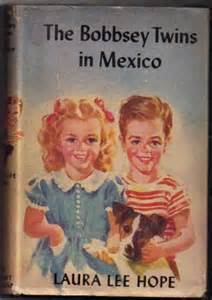
the Bobbsey Twins
and Tarzan.

Some of us spend our lives
trying to be like books,
then spend our old age
trying to remember childhood,
mainly remembering
childhood’s dreams.

*

Unopened Rooms

The Prompt: Brain Power–Let’s assume we do, in fact, use only 10% of our brain. If you could unlock the remaining 90%, what would you do with it?

Unopened Rooms

My working thoughts live in a mansion, restrained to just ten rooms.
When the unused rooms grow cobwebs, they must sweep them out with brooms.
They cannot see their pleasures, for they enter with eyes shut.
Sealed chambers filled with many things, but we do not know what.
It is exhausting just maintaining all these extra spaces.
No wonder that I lose my keys and forget most new faces.

No telling when we’ll let our thoughts roam free in other rooms.
For all these years they’ve been sealed up like dark and unused tombs.
Perhaps we’ll find they’re portals to other times and places.
Perhaps they lead to other worlds in intergalactic spaces.
They might allow a journey into the minds of others.
Would extrasensory perception make us enemies or brothers?

I’m sure the reason that we use small portions of our brain
is because if we knew of them, we’d use them all in vain.
We’d journey through the cosmos to plunder other spheres.
React to them like enemies, guided by our fears.
If there is any entity guiding how things go,
perhaps they recognize that Earth’s evolving sort of slow.

Our energies put into things instead of who we are.
Instead of love? Investments. Instead of aid? A car.
If perhaps we aren’t allowed the full use of our brains,
it is because we have not learned to use them for our gains.
How we look’s important. How much it costs the point.
We’re ruining our planet by cluttering up the joint.

Our brains we use for warfare. Weapons we can’t control.
They wind up in a child’s hands or on a grassy knoll.
They’re used for entertainment on a computer screen
in games that build agression. We win by being mean.
Shows they call reality prefabricate each role.
The lowest denominator seems to be their goal.

True, other things are in our mind: poems, music, art,
dance and social functions, a few of them with heart.
So we stage elaborate galas to raise the money for
children who are hungry, adults chewed to the core.
And yet some of us still balk at giving medicine to the ill.
If they are not wealthy, they must chew the bitter pill.

No doctors and no dental care. No succor for the poor.
If they would work, they’d have health care. Complaints are such a bore!
These things we fill our minds with. There’s no need for more brain space.
In the ten percent of brain we use,new thoughts we cannot face.
This E.S.P. is hogwash, and U.F.O’s are fiction.
Even the thought of universal health care causes friction.

For every room within the mind that’s used, there are nine more
filled with mysteries we won’t know until we try the door.
Some enter and return to tell of wonders they have spied.
Yet unenquiring minds respond by saying they have lied.
We’ll never leave these sealed up rooms unless we learn to dream.
Let creative thoughts flow out in an uncensored stream.

To seep beneath closed doors into our mind’s more spacious realms.
Be adventurous voyagers standing at the helms
of ships of mind that sail the wilder seas of consciousness
regardless of the ones who try to censor and to hush.
Turn off the TV sets and games of war and violence.
Let Honey Boo Boo slip back into former innocence.

Lay Kim Kardashian to rest, pull out your skeleton key
that just might let you in to all the rest that you can be.

Voice

In response to The Daily Post’s writing prompt: “In Good Faith.” Describe a memory or encounter in which you considered your faith, religion, spirituality — or lack of — for the first time.

Voice

The stranger on an airplane in the seat right next to me
never said a single word, and so I let her be
until our arrival, when I prepared to stand
and she produced a paperback—put it in my hand.

“It’s time for you to read this,” she said, then went away.
I didn’t say a word to her. Didn’t know what to say.
That book, however, changed my life and attitude and choices—
encouraged me to listen close to interior voices.

Buscaglia, Jampolsky and all of Carl Jung’s books
drew my mind away from appearances and looks
and into that finer world of instinct and of mind;
then drew me westward to the sea and others of my kind.

After a writer’s function, a stranger sent to me
“The Process of Intuition,” which I read from A to Z.
I read it twenty times or so, then sent it to a friend.
Then bought up every copy left to give as gifts and lend.

I don’t remember talking to the one who sent it to me,
but if I need a proof of faith, I guess that this will do me.
For I believe there is some force that draws the next thing through me
and if I follow instincts that hint and prod and clue me,

they are the truths that guide me on the path towards the new me.
The signs are there in all our lives if we choose to see.
No, I don’t believe a God guides our destinies.
I don’t believe in lifelines or spirits within trees.

I don’t believe in any faith that has a name or church.
I do believe, however, that I’m guided in my search
by something that unites us and sets our pathways right
so long as we listen to our own interior sight

that urges us to follow the right side of our brain
even though those choices are logically inane.
I know that it takes many types of brains to run the world,
but for me it’s intuition that when carefully unfurled

guides me best—towards art and words and unplanned days and oceans
and prompts me make a Bible of what others may call notions.
And so to simplify I’d say that I must have faith in
that voice we’re all a part of that speaks to us from within.

Exhortation in Support of the Written Word!

DSC08454

Exhortation
in Support of the Written Word!

Discussing a good book can improve any conversation,
while other books just serve us as a means of rumination.
Books come in many forms from poetry to exhortation.
Some use them to improve their minds, others as decoration.

Books furnish everyone a chance to get an education
as writers entertain us and provide elucidation.
Ghost stories and horror books give rise to palpitation.
Action and adventure lead to heights of exultation.

Comics lead to laughter and beyond—to jubilation.
Histories tell tales of conquerors and usurpation—
deprivation due to wars, like bombing raids and rations,
slaughter, mayhem, battle strategies and amputations.

Some books furnish thrills while some serve only as sedation.
Some books read as sermons, others bombastic oration.
Preachers read from Bibles to provide their congregation
with words that furnish some with hope, others with trepidation.

Some dread books they feel may raise their “lessers” to their station.
Some fear the joy they rouse in us and label our elation
as the hands of Satan, which they’ll cure with amputation,
labeling their action as an act of “God’s creation.”

Driven to destroy the means of all our excitation,
having few words of their own, a zealot’s main “quotation”
is burning books they fear in a colossal conflagration
that gives another meaning to the word “illumination!”

Whatever you might like to read, a certain exultation
waits for you when reading is your favorite vocation.
A torrid romance may work best while on a beach vacation,
(the heat a good excuse for your excessive perspiration.)

Mysteries serve for planes and trains—all forms of transportation—
either while you’re riding or just waiting in the station.
Books are everywhere. They form a great accumulation.
They bore us, reassure us, or provide great inspiration.

Information in most books serves as a vaccination
against hate and bigotry and all discrimination.
For those trapped by fate, they make a good means of migration,
as reading has no borders as to neighborhood or nation.

The Prompt: Reader’s Block—What’s the longest you’ve ever gone without reading a book (since learning how to read, of course)? Which book was it that helped break the dry spell? (My consideration of books took me off on a slightly different tangent, but the prompt is to get us started. Right?)


Reading

This post has been removed as a stipulation for submitting it in a poetry contest.

The Prompt: Middle Seat—It turns out that your neighbor on the plane/bus/train (or the person sitting at the next table at the coffee shop) is a very, very chatty tourist. Do you try to switch seats, go for a non-committal brief small talk, or make this person your new best friend?