Tag Archives: Judy Dykstra-Brown

Leave it to Beaver: One Word Photo Challenge–Beaver

                                                   Leave it to Beaver

The color challenge this week really is “Beaver!’–a light brown color shown below –no telling what viewers this tag will bring into my blog!!  Here goes:

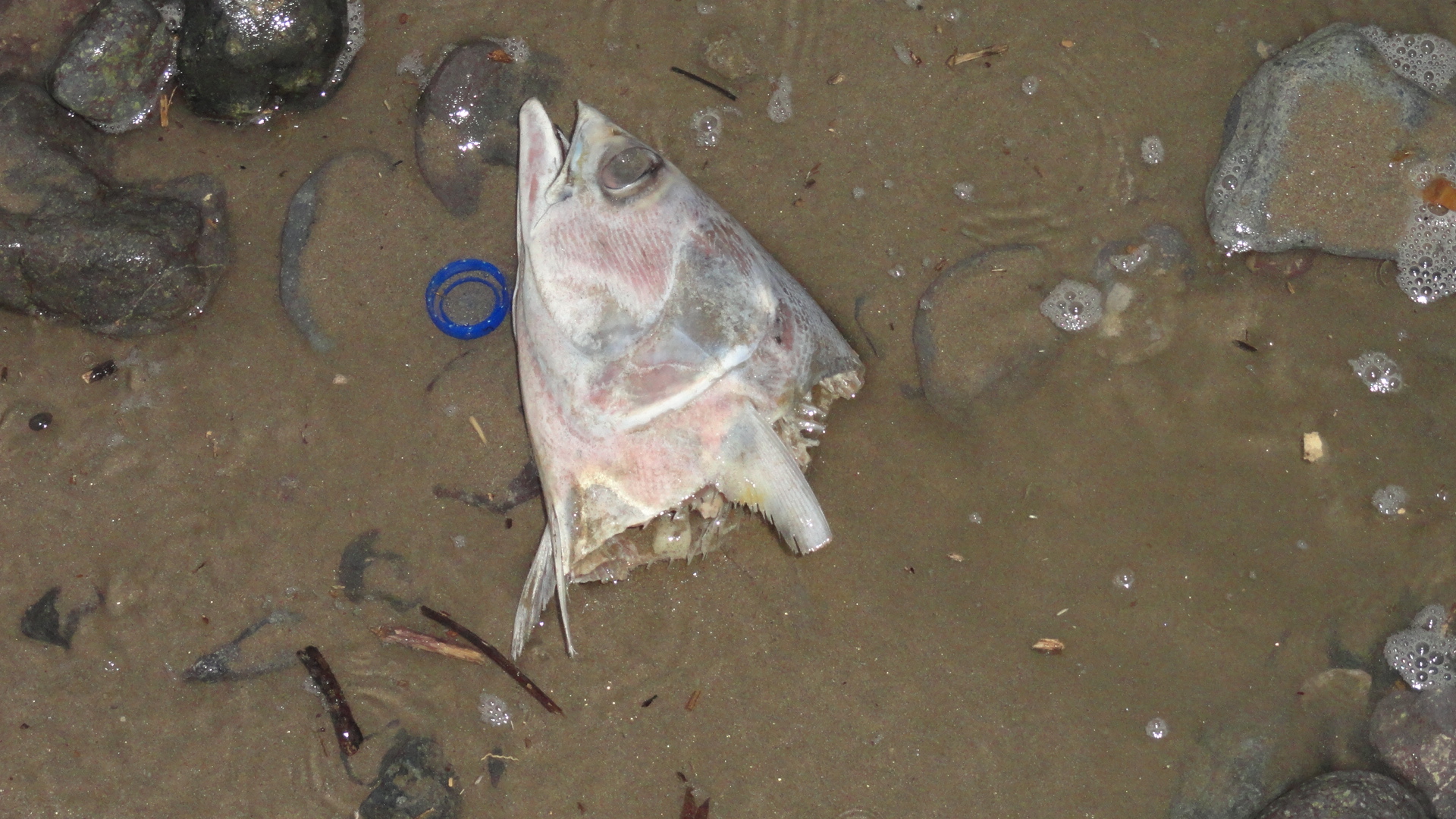
94715B  DSC00924DSC00013 DSC00391  P2220075_2_2


http://jennifernicholewells.com/2015/03/10/one-word-photo-challenge-beaver/

Most of the Time: A Serial Tale, Chapter 3

The prompt I have been doing for the past three days involves taking the first and last line of a favorite book and using the last line as the first line of my writing and using the first line of the book as the last line in my piece.  Links to the results of the first two chapters, if you haven’t read them, you can find below.   I’m going to continue so long as people keep providing me the first and last lines.  More info about that is at the end of my Chapter 2.  So, here goes Chapter 3:

Most of the Time

                                                                            Chapter 3

Nothing that is not there and nothing that is.  That is what most people think about.  There were a few of such thinkers scattered atop the stools along the long bar that ran front to back on the left side of the room.  The right side was taken up by three pool tables and a series of plastic beer signs where water bubbled up from deep springs and pristine rivers and, supposedly, directly into amber bottles with labels such as Pabst and Old Milwaukee.

This was the sum total of nature that Ninny had thought to infuse within her establishment.  No fern bar this.  A bit of black mold, perhaps.  And as noted before, the place seemed equally devoid of human nature–the drinkers here like robots with glazed eyes seemingly staring at the mirror behind the bar or the bottles in front of the mirror, or perhaps their own reflections reflected behind the bottles.  Little conversation seemed to be going on.  There was no music.  Even the bartender, an ancient man with unintentional chin whiskers and a small protuberant belly over a tight-cinched bolo belt and baggy Levis, seemed to be muffled–negotiating the world behind the bar without clinks of glasses, or pops of bottle corks or whooshes of the draft beer dispenser.  It was as though I’d entered a “Quiet” zone.

Ninny being gender non-specific, now that I thought of it, I wondered if this quiet gentleman was, in fact, Ninny.  I established myself on a bar stool, ordered a dirty Martini, then took myself and my over-sized bag off to the ladies room where I struggled out of my shooting range jeans and into the diaphanous swirly skirt of the day.  Under my T-shirt was a spaghetti-strap little top that color-coordinated with the skirt.  Let the games begin.

Unsurprisingly, no one seemed to notice my transformation as I sashayed back into the room I had purposefully and sedately left only moments before, but as though I had caused the change in the room, the jukebox immediately sprang to life, causing the Pabst Blue Ribbon sign to blink off and on, seemingly in cadence with the song.  It was familiar, but I’ve never been good at remembering the names of other people’s songs…nor my own, as a matter of fact.  It was something about somebody’s baby being somebody else’s baby now, but that doesn’t narrow down the field much.

I parked my recently-freed shanks on the bar stool, allowing my skirt to hike up as it was wont to do.  The controlling part of my life was over for a few hours.  I looked around the room, seeing what new adventure was about to present itself, and my eyes fell immediately on a wizened little woman sitting at the end of the bar.  She was not, understand, old.  Simply wizened, with sharp little features:  nose, chin, cheekbones.  Even her eyes made sharp little glances around the room, as though she was taking everything in. Me, too, although I could never catch her eyes on me.

After every sip of what looked like a Rum and Coke, her sharp little tongue darted out of her mouth to extract every drop from her lips, as though she was unable to control this “Yum yum” action–every sip duly acknowledged and appreciated.  She had the fiery intelligent demeanor of a weasel or a mink.  Darting, secretive and swift.  I observed this all with my own sneaky eyes as they executed furtive reconnaissance missions in her direction while seeming to be merely surveying the room.  In fact, I couldn’t have told you a thing about any of its other inhabitants.  My long glances in various directions were merely subterfuge.  It was little weasel lady that was drawing my full attention.

She was tidy and trim, in a polyester sea foam green pant suit with a flowered polyester blouse–the collar turned neatly over the collar of the jacket.  On her wrist was a dainty bracelet of fake pearls and tiny rhinestones.  Her shoes were thick-heeled and square-toed-like shoes a schoolteacher might wear.  Her hair, in tight little ringlets, looked as though she’d just ducked out of the beauty parlor for a quick drink before her comb-out.  She could have looked severe, given her sharp features and tailored clothing, but she was saved by a sweet rosebud mouth, the corners of which curled up as she drew her lips into a tight little compressed grin.

There was a plate of peanuts on the bar beside her, and I picked up my drink and moved over to the bar stool next to her, as though in pursuit of them.

“Hungry,” I half-chortled as I took a handful and stuffed most of them into my mouth.  I half-expected her not to answer, but saw her raise a finger at the barman and say in a sweet little-girl voice moderated by a smoker’s huskiness : “Nestor, give this lady some fresh peanuts, please.”  Then she looked at me quizzically, causing two little furrows to pop up over her tiny straight ski-slope nose.  “You want something else to eat?  We have frozen pizzas that are pretty good.  Or sub sandwiches we can also heat up for you.  Chips. Beef jerky.”

“Pizza sounds good.  Are you Ninny Ricketts?”

She was.  We polished off one little pizza and then another.  I switched to Rum and Cokes, which went much better with pepperoni and tomato sauce and cheese than gin did.  We talked for three hours, and by the end of that conversation, I almost understood the quote hanging on the wall behind the bar between the bottom shelf of liquor bottles and the top of the draft beer dispenser.

“If you look at zero you see nothing; but look through it and you will see the world. ”

“What does that mean, Ninny? ” I’d asked her when I first noticed it.  We were only fifteen minutes into our initial conversation at that time.

“If yer just lookin’ at it, you’ll never know,” she shot back at me with those furrows over her nose again.  But then she smiled. “I reckon soon enough you’ll be seein’ through it like everbuddy else at the bar.”  Then she chuckled, and for the next three hours we talked about football (her interest, not mine), politics, recipes for shortbread, the freeing qualities of polyester, the clitoral orgasm, Parcheesi, the Nebraska watershed, stepmothers, the immorality of Christian missionaries in Africa, lawn fertilizer, Walt Whitman, Edith Sitwell, Bob Dylan, Patty Duke, Cheetos, Philodendrons and Richard Nixon’s incredible gall.

I’d left my house at 11 a.m. for my supposed trip to the firing range. By the time I thought to look at my watch again, it was nearly four.  If I stopped at the grocery store on my way home and made a few quick and non-selective runs down a few aisles, I might be able to fill up enough bags to convince Peter I’d had a long leisurely shopping session after my shoot.  I paid my bill, told Ninny I’d be back soon because I’d enjoyed talking to her, and walked calmly for door, breaking into a sprint only after I reached the parking lot.

In the car, I wriggled into my Levis, extracted myself from the skirt by pulling it over my head, pulled my T-shirt from my purse and pushed one arm through the armhole as I turned on the key, the other as I let up the hand brake.  As I drove, I tried to will myself to slip back into home mode.  But as my body got closer to home, my mind seemed to slip further away from it.  And although I was no closer to solving its puzzle than I’d been four hours ago, my final thought as I drove into my driveway was one I’d be puzzling over for a good many months to come, “If you look at zero you see nothing; but look through it and you will see the world. ”

The Prompt: The book suggested to furnish the beginning and ending lines of this chapter is “The Nothing That Is: A Natural History of Zero” by Robert Kaplan. First line: If you look at zero you see nothing; but look through it and you will see the world. Last line (which quotes Wallace Stevens): Nothing that is not there and the nothing that is.  My thanks to Robert Okaji for furnishing a beginning and end for me to fill in today.  Please keep those prompts coming in.  Without them, this story will abruptly end.   Judy

See the first chapter of this piece HERE.
See the second chapter HERE.
See Robert Okaji’s blog HERE.

Lightning in a Bottle

This was my response to a message sent to me on a social networking site.  Since there seem to be very few divisions in our cyber world anymore, why not print it here?

We will all go
to lightning in a bottle
too soon too soon
ashes on a shelf
so for today
let’s be words
art
one foot down
another in the air
moving
on sand or in the mind
lightning
that in its freedom
is continually seeking
ground.


P.S. As soon as someone sends me the name of a book and its opening and closing sentence, I can get started on Chapter Three.  (See my earlier post today for an explanation.) No suggestions, no further chapters.  Please come be my muse.

Most of the Time: A Serial Tale, Chapter 1

Instead of the WordPress prompts, I chose this one from the Poets & Writers site. The Prompt: Choose a book at random from your bookcase. Use the last sentence in the book as the first sentence of what you write. Then turn to the first sentence of the book and use it for your ending sentence. (I used the ending line of the book I chose as my title, which actually is the first line of a book to my way of thinking. Hereafter, however, I will use whatever prompt I’m given as the first line of the next section of the story.)

Most of the Time

I don’t remember much of my past. It makes it easier to live the present, that’s for sure. Ninny Ricketts, for example, is hidden so far back that I have to go into a dream state to remember her, and when I do, I’m unsure how much of what I remember is real and how much I’ve made up like people do, you know, when they are inventing excuses to tell their parents or, later, for their spouses.

In the past, I’ve gotten away with such lame excuses as that my lipstick was messed up because I ate an ice cream cone on the way home and had been rubbing my mouth with a napkin or that I have always worn a particular sweater backwards. It’s not that my husband hasn’t had his suspicions. He has been known to go out and sniff the backseat of my car like a German Shepherd, searching for drugs—as though he’d recognize the smell of sex after all these years of substituting fly rods for nookie. Still, even though I’m not the particular fish on his hook, he doesn’t want anyone else rifling through his bait box. Go figure.

I’ve become very good at covering up my tracks, or wriggles, or whatever you’d call this fish’s explorations of new waters. It’s become a sort of game. One that I always win. Which, I think, is okay with Peter. What he can’t prove, he doesn’t have to deal with. And Ninny Ricketts is buried so far back, as I said before, that there is not a person we are still in contact with that I’ve ever mentioned her name to. She is a fish once gone bad who has since faded away into nothingness—no longer an idea even fresh in my own remembrance. She is stripped bones on a pile of skeletons baked clean in the light of a day that only shines dimly in my memory.

With all this fish imagery, you would think I was a fisherman, but that is not a fact. It is my husband of 25 years who is the fisherman. I am the hunter in the family. That rack of guns locked up tight in the case in my husband’s man cave? They are mine. Even if he had a key, he would not have one iota of a sense of what to do with a gun—how to open the cylinder to load it or how to take aim. I tried to take him target shooting once, many years ago when love was new and he was doing anything I asked to meet my favor. But he could never see the point of wasting bullets on something you felt neither angst about nor an appetite for. We’d eaten thousands of fish in our years together, but never one thing I’d shot. I had no desire to eat anything I’d killed. My paper targets went into the recycling bin on my way out of the shooting range to go to the grocery store to buy the meat for our evening meal.

Now I retrieved the bag of raw steaks and potatoes and frozen peas from the back seat. A bit of blood had oozed out from the paper wrapping of the steaks and stained the back seat in one spot. I left it for Peter to discover. It would make his day interrogating me, and I could always produce the stained wrapper for proof. Having him obsess on the blood would distract him from other evidence of my real guilt—the new dress hanging in my closet where dresses had been shoved to the far edges long ago. The strapped dancing shoes and electric hair curler. If he had been the sort who looked at everything—the entire picture—he would have caught me years ago; but I was like that huge fish of legend that swam deep waters, emerging in a leap that defied the laws of gravity and mass every half year or so, far out in the lake where a single fisherman would see it and further the yarn of this Loch Ness Monster of fishes that had evaded the hook for scores of years.

I shifted the bag on my hip as I searched for the right key on the huge hank of keys I carried around with me everywhere I went. It made it easier, to hunt for one huge ring of keys other than to remember where individual keys were kept. It also made it harder for Peter to find the key that opens up the file cabinet where I keep my writing—all of my stories, essays, poems and journals.

“You evil, evil, woman,” he would say if he ever found and read them. But I am not an evil woman. I am merely one who has taken the reins of destiny into her own grip. I am in the driver’s seat of the buckboard of my own desires—fighting off love bandits in fern bars and marauding savages in late night diners. I have learned well the art of subterfuge—adopting the camouflage of ladies luncheon garb and pillow talk about charity bazaars and yoga lessons.

In the trunk of my car is a locked suitcase with a selection of sling-backed heels and dresses with swirly skirts to be slipped into before I wriggle out of the pants and jackets of neat pants suits or the simple streamlined skirts I don to exit and enter my house. These swirly skirts are redolent of the odors of barrooms: martini olives and Dos Equis, nicotine and the very faint skunk smell of really good pot. A slightly-opened bag of dark roast coffee obscures the odors sealed up in that case that my husband believes is my snow-emergency kit: gloves, long underwear, hat, muffler, snow boots, energy bars and water.

To be perfectly clear, most of the time I am the everyday housewife that has been my disguise for the 25 years of my marriage. Like an underground love goddess, I emerge on special assignment once or twice a year, feast on my fill of prurient pleasures, and then go underground again.

That is the sort of mission I was on the day I met Ninny Ricketts. I was on my way to the shooting range, wearing my usual Levis and t-shirt and Birkenstocks. Yes. I had strapped on the holster that usually held my favorite pistol on the days that I chose a handgun rather than a rifle or shotgun for my shooting practice. But on that day, there was just one difference. I didn’t wear my gun.

To Be Continued?

The book I chose was Kindness Goes Unpunished by Craig Johnson. If you would like to suggest a book for me to use the first and last lines of for tomorrow’s writing, please give the title of the book, the author, and the book’s first and last lines in the comments section of this posting. Remember that I’ll use the last line as the first line of tomorrow’s posting and the first line as my last line. Who knows where this tale will wind? If no one gives me tomorrow’s prompting lines, the rest of the story will never be heard, and perhaps that is a good thing. C’est la vie.

P.S. If any of you would like to accept this same challenge, just watch to see what beginning and ending lines I use and use the same ones. If you are a day behind, no problem. It would be interesting to see what varied stories occur given the same beginning and ending lines. Please post a link to your story or poem on the page it corresponds to in my blog—i.e. the one where I make use of the same beginning and ending lines. Will anyone accept my challenge? Sam? Macgyver? Laura? John?

To See Chapter 2, go HERE

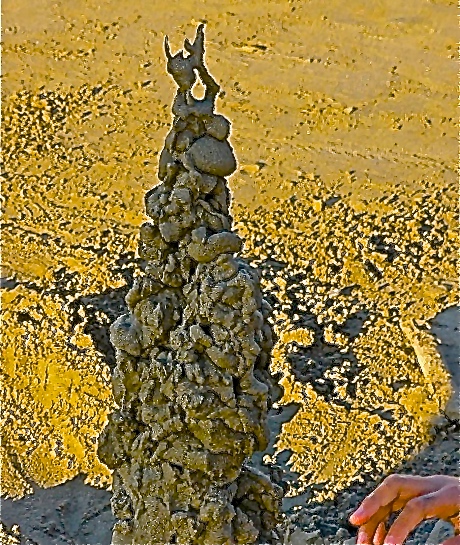
Sand Castles

(

Sand Castles

Under the sand are palaces, I’ve seen them in my dreams.
Vast halls and empty chambers smooth rounded at their seams.
Every wall is made of sand. Each ceiling, archway, floor
carved by master craftsmen–each digging at its core–
so magnificent, you’d think they were the stuff of lore.
You, too, are free to see them, but you must provide the door.

For the chambers are filled in, though they are there without a doubt.
You are the one creating them by what you will scoop out.
The beauty’s hidden in the sand, waiting in your sleep
for you to dig the castles out from where they’re buried deep.
All your day’s exhaustion your dream labor will abort,
for what you build in slumber is work of a different sort.

Sand brought to the surface is what you get to keep
of subterranean palaces dug out in your sleep.
As you build above ground castles in the world that we all know
you reveal the outward structure of the inner rooms below,
furnishing the magic that the world will see through you,
showing what’s inside of you by what you choose to do.

OLYMPUS DIGITAL CAMERA

The Prompt:  Just a Dream

See also: This!!!  (This video may be one of the most remarkable things you’ve ever seen in your life.  Don’t miss it!)

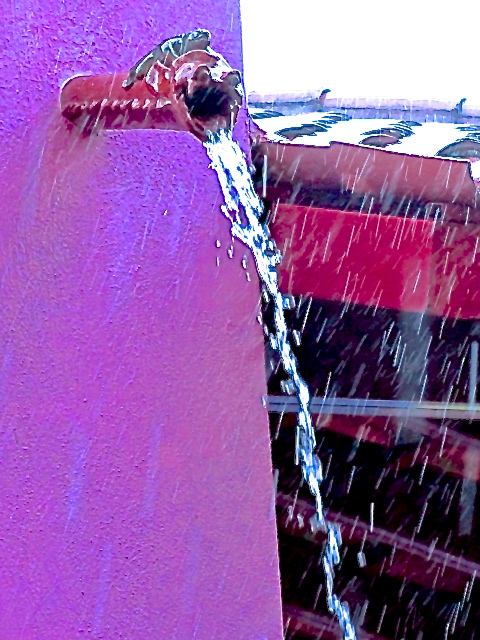
Rain

DSC08898 - Version 2

Rain

Gives an excuse
for that bright orange umbrella
and yellow overshoes
toppled over in the hall closet,
yet it is nighttime and I am old.
I lie under blankets on the sofa,
content with its comforting
rat-a-tat
on the plastic skylight
overhead.

It is a friend knocking
insistently,
calling me out to play.

Six years old,
Imprisoned by summer,
we were given occasionally
the refreshing release
of a hard summer rain.
Bare feet splashing,
we raced dry leaf boats
manned by our imaginations
through the caves of culverts,
down to those ultimate puddles
magnificent in their magnitude.

Sixty years later,
I am caught up in the currents
of that sudden rush downwards
and backwards to
a plastic umbrella
abandoned on the sidewalk
as we opened like  flowers.

Rain
hides tears.
Forces growth.
Cleans up our messes
and provides glorious new ones.
Washes away today
and grows tomorrow.

Five Shadormas

The Prompt: For this week, write a shadorma (a non-rhyming six-line poem consisting of 3/5/3/3/7/5 syllables.)  Instead of following the WordPress prompt, My Circle of 5 will be 5 Shadormas. Thanks, Sam, for the prompt.

Used

 This paper
very slightly used–
erasures
and a stab.
This morning’s poem now dead–
unsung, unmourned.


Chinese Takeout

That rice grain
and the plastic fork–
evidence
against me
of another food court sin.
Yes, I ate it all.


Misanthrope

Walk away
lest you find reason
to stay here,
fouling up
your determination to
have a fucked-up life.


Signing the Papers

You prompt me
to mind my timing.
Five o’clock
on the dot.
I come early anyway.
Her scent signs the air.


Salt Water Taffy

Sweet toffee
cannot hide the tang–
bitter salt
on my tongue–
of all the tears I swallowed,
waiting for your touch.

To see more shadormas, go HERE.

Fault Lines

Fault Lines

She lives up on a hillside far from the busy town,
and every year she lives there, she’s less likely to come down.
Her dog sits on her house’s dome and barks at all that pass.
One day she’ll likely join it, but for now she feels it’s crass.
Besides, she’s not that agile.  She seems to fall a lot–
merely due to clumsiness. A drinker, she is not.

She spends too much on artwork. The results hang down her halls,
sit upon her furniture and cover all her walls.
Her closets? Full to bulging with sizes large to small.
Her friends keep telling her there is no need to keep them all,
but to toss the ones that do not fit would cause her great duress.
She cannot throw any away, for next year she’ll weigh less.

Her refrigerator is her favorite scenic spot,
though entering’s an adventure with dangers amply fraught:
dog food barely balanced on a small sweet pickle jar
she has to brush against to get to where the short ribs are.
I’ve said that she is clumsy.  She doesn’t take her time.
This really isn’t new, for she was like this in her prime.

Her elbow strikes the pickle jar, the dog food comes out spinning.
They crash upon the tile floor. Our heroine stops grinning–
her thoughts no longer on the food but on the awful mess
of dogfood, pickles, broken glass–the rest you’ll surely guess.
The exercise that she will get mopping all this glop up.
will surely compensate for all the ribs she’ll later sop up.

And so she’ll lose her weight again and fit in that size eight.
As soon as this feat comes to be, he’ll ask her for a date.
Her dog will come down from the roof and she’ll come down the hill.
Her fridge and all her closets will suddenly unfill.
She’ll sell the art and cease to fall and fulfill all her scheming.
For the sixth thing true about her is that she’s prone to dreaming!

The Prompt: Far from Normal–Take a step back and take a look at your life as an outsider might. Now, tell us at least six unique, exciting, or just plain odd things about yourself.

For more writing on this topic go here: https://dailypost.wordpress.com/dp_prompt/far-from-normal/

Today’s prompt was really “Plead the Fifth” about a question we hate to answer.  We were given the choice of an alternate prompt, which is the one I chose, but ironically, it was one I didn’t want to answer so my post really fulfills both prompts.  Tricky.  If you want to see today’s prompt and other answers to it, you will find it:  HERE.

Odd Little Saturday Morning Poem

Odd Little Saturday Morning Poem

I lie in bed, flat on my back, head raised by pillows,
computer raised to eye level
by a wadded comforter over bent knees.
I listen to raised voices in the village down below,
the staccato of an inadequately mufflered car revving up,
a hammer falling on wood, birds in the coco  palms.
A pianissimo chorus of dogs spread
over the surrounding hills swells to a frenzied crescendo,
then falls silent but will swell again.

I have dropped obligations
like clothes shed for a lover.
My Saturday morning pool aerobics and zumba,
I slipped out of years ago.
Group luncheons hang from doorknobs and chair backs.
Committee meetings lie sloppily abandoned in the hall.

I have retired from the running of the world
to run my own small universe on paper.
Saturday morning is my brainstorm session
with “Me,” “Myself” and “I.”
“I” suggested feeding the dogs,
but they are quiet now, so
“Me” suggested we let them lie.
“Myself” laid out some words to dry
in the heat of the fire of our communal
inspiration, laying them smoothly on the page,
rumpling up others in her fist to send them sailing
to join the crumpled singles event invitations in the corner.

This slow Saturday morning dressing of pages
and stripping them bare
is a sort of ceremony celebrating seizing time
and making it my own.
Pages  fill up with passion, angst, anger,
irritation, joy, laughter, camaraderie.
There is more than one word for each.

Imagine such control over your world–
not having to live the world of any other.
If you could have any life you wish?
Imagine a Saturday morning  building it.


The Prompt:  Me Time–What do you like to do on Saturday morning?  Are you doing it now?

The Old Ones Deign to Tweet

The Old Ones Deign to Tweet
(With Character Counts)

Immanuel Kant
on the subject of building “platforms” for
blogs, websites, Twitter accounts or Facebook:

. . . the favor of the multitude is seldom got by honest and lawful means.
Seek the testimony of few; and number not voices, but weigh them.
(140)
*

Charles Dickens
on the subject of tweeting, texting , e-mailing, or other social media:

Electric communication will never be a substitute
for the face of someone who with their soul
encourages another person to be brave and true.
(140)
*

Mark Twain:
On the subject of those (like me) who resist
tweets, texts and ubiquitous handheld devices:

One who stops learning is old, whether 20 or 80.
One who keeps learning stays young.
The greatest thing you can do is keep your mind young.
(140)
*

Me:
And, a further comment about those tweets:

Mind without heart conveys no wisdom.
Where brevity is the only rule,
larger truths may be lost. (96)

We must remember that “character” has two meanings
and count our truths as closely
as we count our keystrokes.
(109)