Tag Archives: Lake Chapala

“Day is Done” for RDP, July 20, 2025

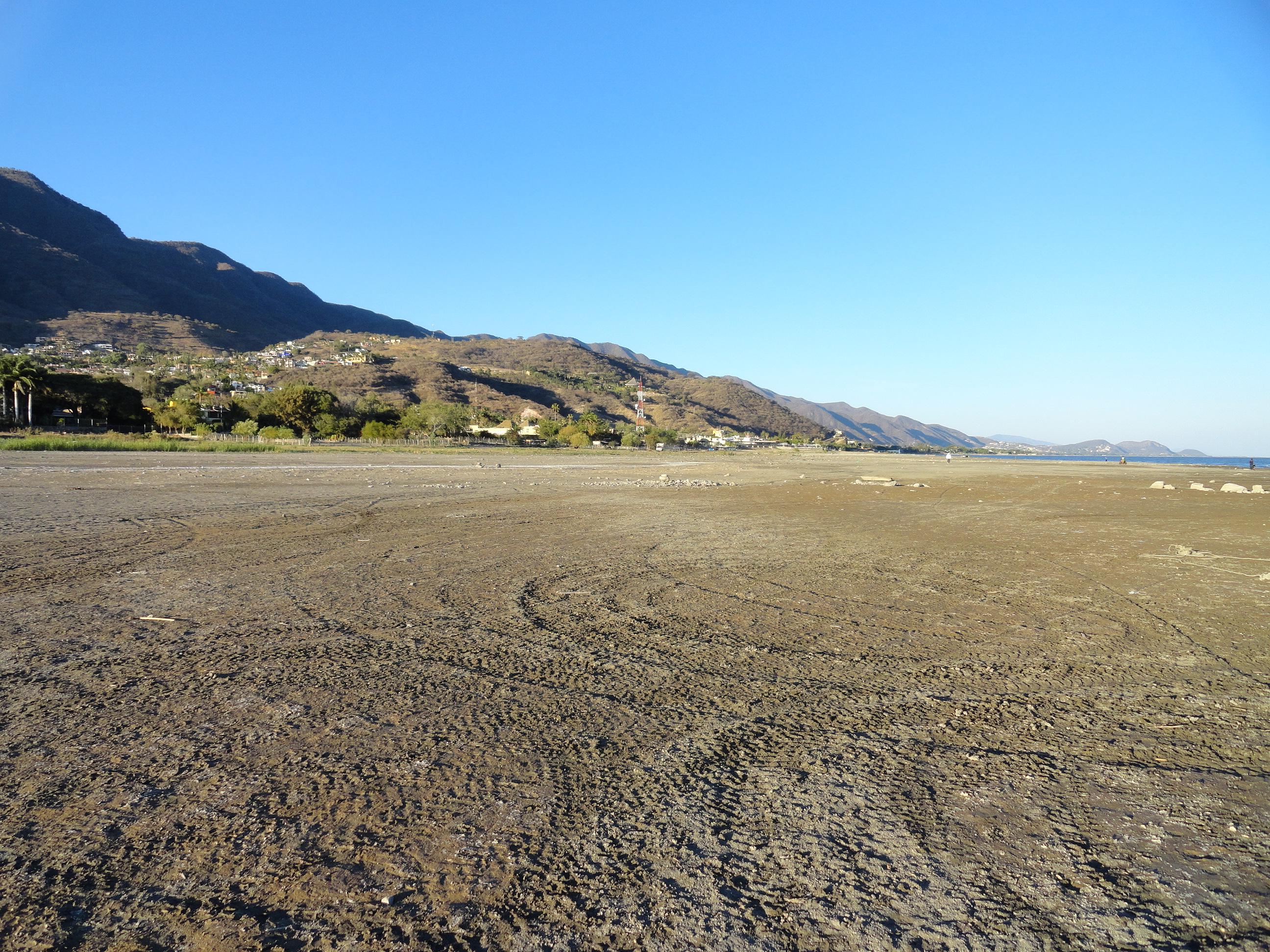
Dry lakebed. Once again revealed

                                            Dry lakebed. Once again revealed

Interloper (Day is Done)

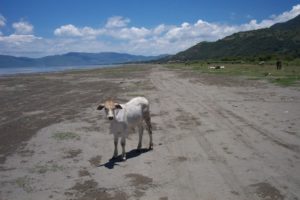
The year was 1913. I’d had a very busy day and I didn’t get around to taking my walk until about an hour before sunset, and I finally finished this poem at around 11 PM.  The lady I talked about who spread her skirts under the extinct volcano known as Señor Garcia is Lake Chapala, the usually beautiful lake whose shores I have lived upon since 2001. Ringed by the Sierra Madre mountains, she reclines in the heart of Mexico, about an hour from Guadalajara. When I moved here, they thought the lake would be completely dried up within five years due to low rainfall and three big dams further upstream which drew off most of the water. At that time, the sixty-mile long lake had shrunk to a point where people often took a taxi from the Chapala pier to get out to the water! It was at this time that I started to take my daily walks on the part of the lakebed that was once under water. This land had sprouted a new civilization of herds of horses left to wander free, cattle, burros, wild dogs, flower nurseries, fishermen’s shacks, small palapa restaurants, huge thickets of willow trees and acres and acres of tall cattails. A few years later, when the lake filled up again, all of this was lost. Of course, it was fortunate that rains and legislation concerning water usage swelled the dying lake; so although I missed my old walking ground, I did not mourn it. Unfortunately, by 2913, the lake was again in dire straits. It had once again shrunk, but this time it left a wasteland of rocks, dead tree stumps and a beach littered with fresh water shells and abandoned graveyards of soda bottles. This was the first time in a long time that I’d walked in my old walking grounds and it was a somewhat depressing experience that nonetheless contained some hopeful signs toward the end.

Interloper

If you live long enough,
what others consider history
will become your life.

Twelve years ago,
I walked for hours every day
on this dry lake bottom,
in places the lake
a mile further out
from its usual banks.

Then, five years
from its supposed extinction,
the rains came.
The floodgates
of the dams upstream
opened as well
and the lake swelled to its former girth.

My old walking trails
through the cattails
and the willows
became suffused in a watery world.
Tree tops became the perches for egrets
scant inches above the waterline,
and the lake became once more
the private property
of homes and landowners who fronted
on the water.

But now, again,
the water has retreated,
and for the first time
in eleven years,
I am again walking
on what was once lake bottom.
I see for myself how this
venerable lady
who spreads her skirts under the mountain
known as Señor Garcia,
has done so in a curtsy,
before beating a hasty retreat.

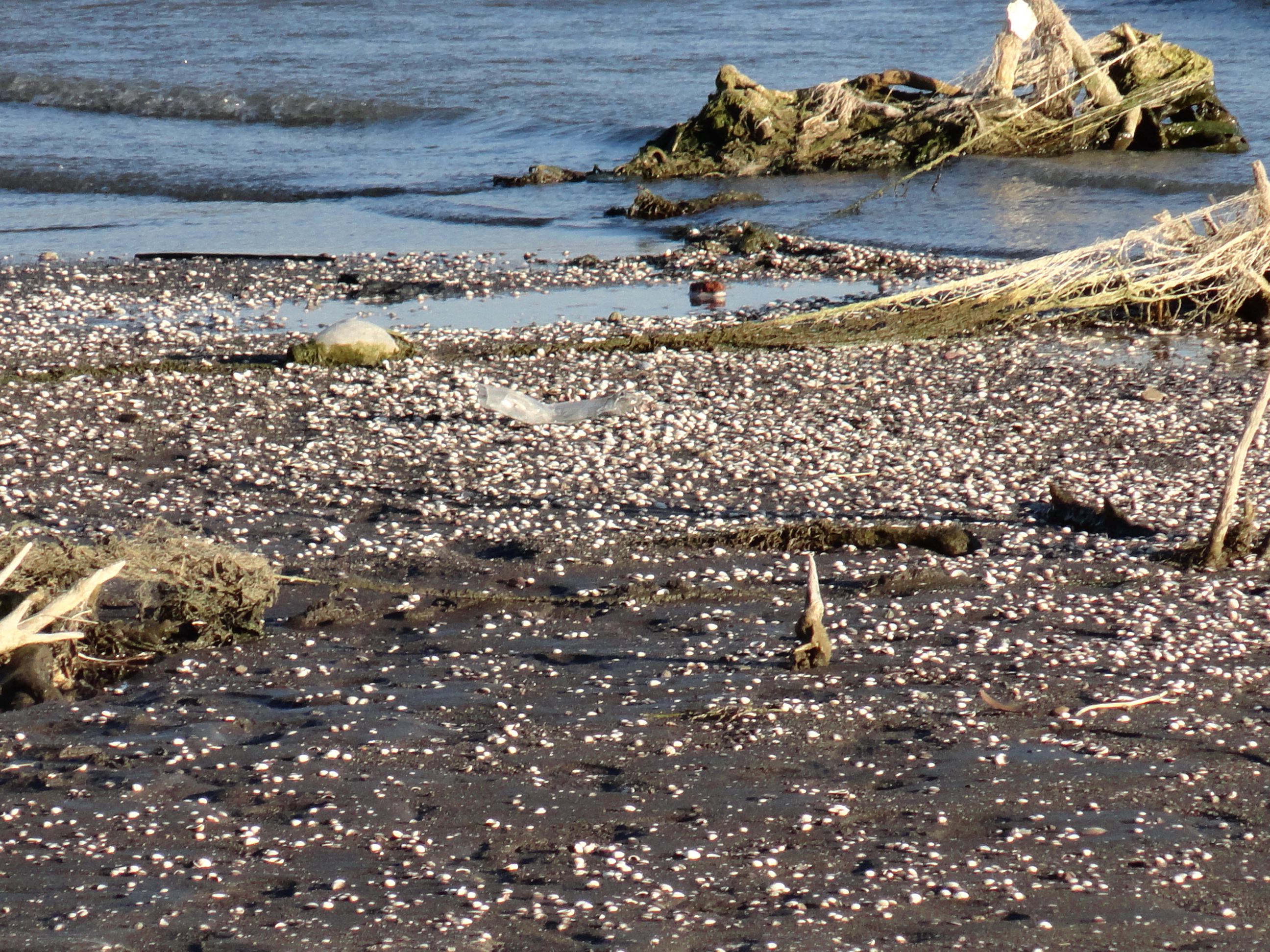
Freshwater shells pave the dry silt.
Discarded soda bottles , moss-covered and corroded,
lie in a pile as though emptied like catch from a fisherman’s net.

Coots and grackles replace the white pelicans
who have circled over in their last goodbye
like other snowbirds heading north.
Sandpipers whistle their reedy pipes,
as if to rein in the small boy
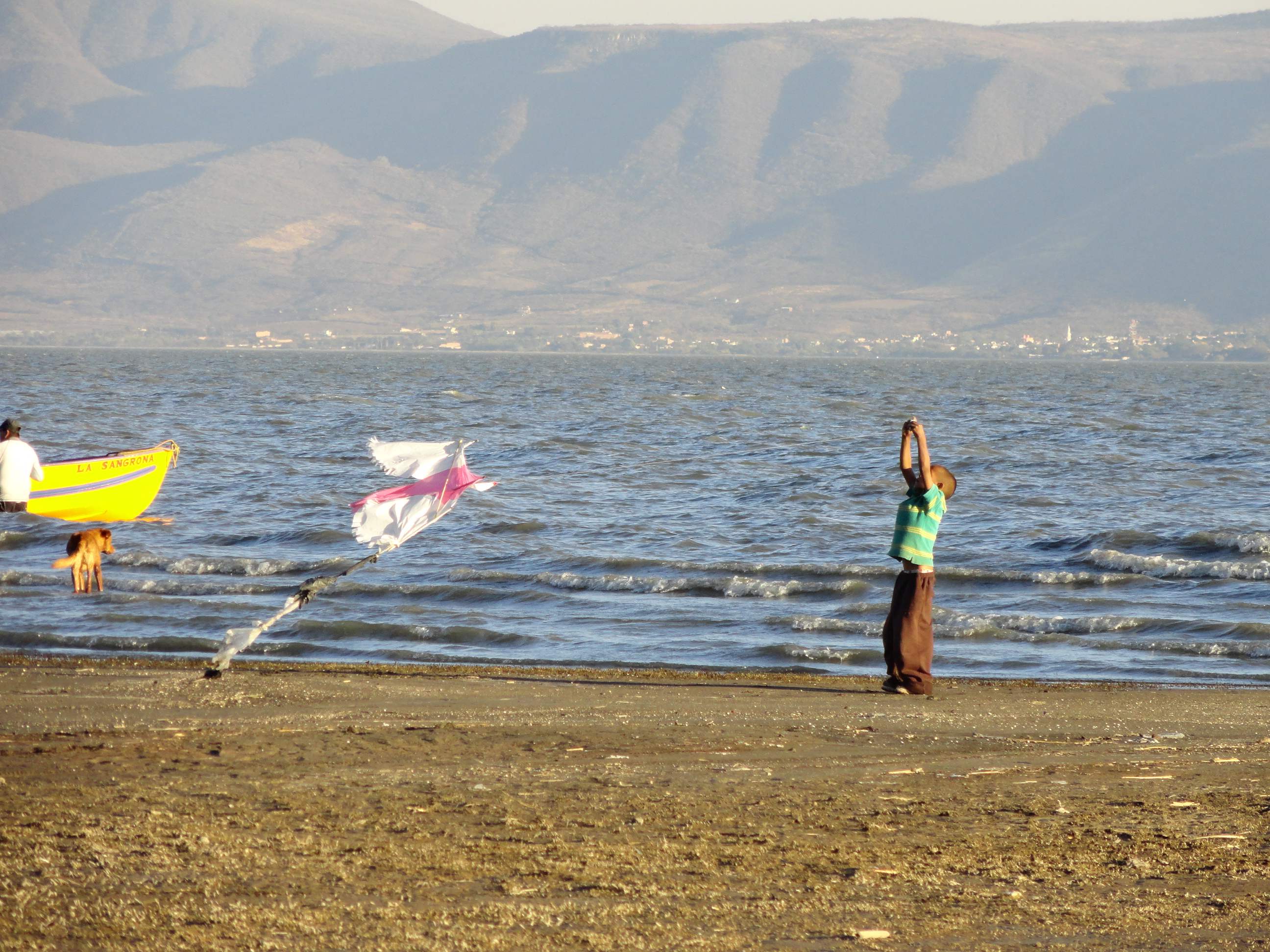
who runs with a rag of kite
streaming out behind him,
creating his own wind.

A man in red shorts wades out
to a bright yellow boat,
lugging a five gallon gas container.

The kite pilot
and his two brothers,
as tattered as their kite,
walk past,
then circle as though I’m prey,
to sit behind me on an archipelago
of large stones
that form a Stonehenge
around the sheared-off skeletons of willows.

I wrote about these willows in their prime—
when the villagers had come to clear and burn them
eleven years ago,
not knowing they would not grow back.

What had been foremost in their prayers for years would soon happen.
The lake would rise
again to her former banks.

But now she once again
beats a hasty retreat,
leaving the stubs and skeletons
of trees revealed again.
It is a wasteland
stripped of
the life of water or of leaves.

“Rapido!” the boy in the green shirt
demands of his brother.
Their sister pulls the bones of the kite
from their plastic shroud.
Rags turn back to rags,
their flight over.

The brother in the black Wesley Snipes T Shirt
winds the coil of string as though it is valuable
and can’t be tangled or lost.

The sun is half an hour from setting.
“Be off the beach by nightfall,”
a man had warned me
as I set off for my walk.
He was a gringo,
yet still I am ready
to start back.
I remember the banks of blackbirds
that used to settle in clouds in the reeds—
acres and acres of cattails—
enough to get seriously lost in.
At sunset, the birds would lift in funnels
by the thousands–
a moving tornado of winged black
that moved as one.
But they are history, now.

La Sangerona—
that bright yellow boat
whose name translates
as “the annoying one”
does not disappoint.
Despite her fresh infusion of fuel,
she has to be pulled manually ashore.
She is like a princess
being towed
up the Nile.
She expends no energy
to further her own movement.

A red dog,
wet sand to his high tide mark,
settles politely in the sand beside me.
Like iron filings drawn to their pole,
the children gather closer.
They pull at the rocks
as though mining for worms—
prod at the packed sand,
casting eyes up, then away.
Curious but silent.

Now, all run away.
I am left with one grackle,
three sandpipers
and fourteen coots,
drawn out by the waves
and pushed back in,
over and over
in a lullaby.

As I climb to the malecon,
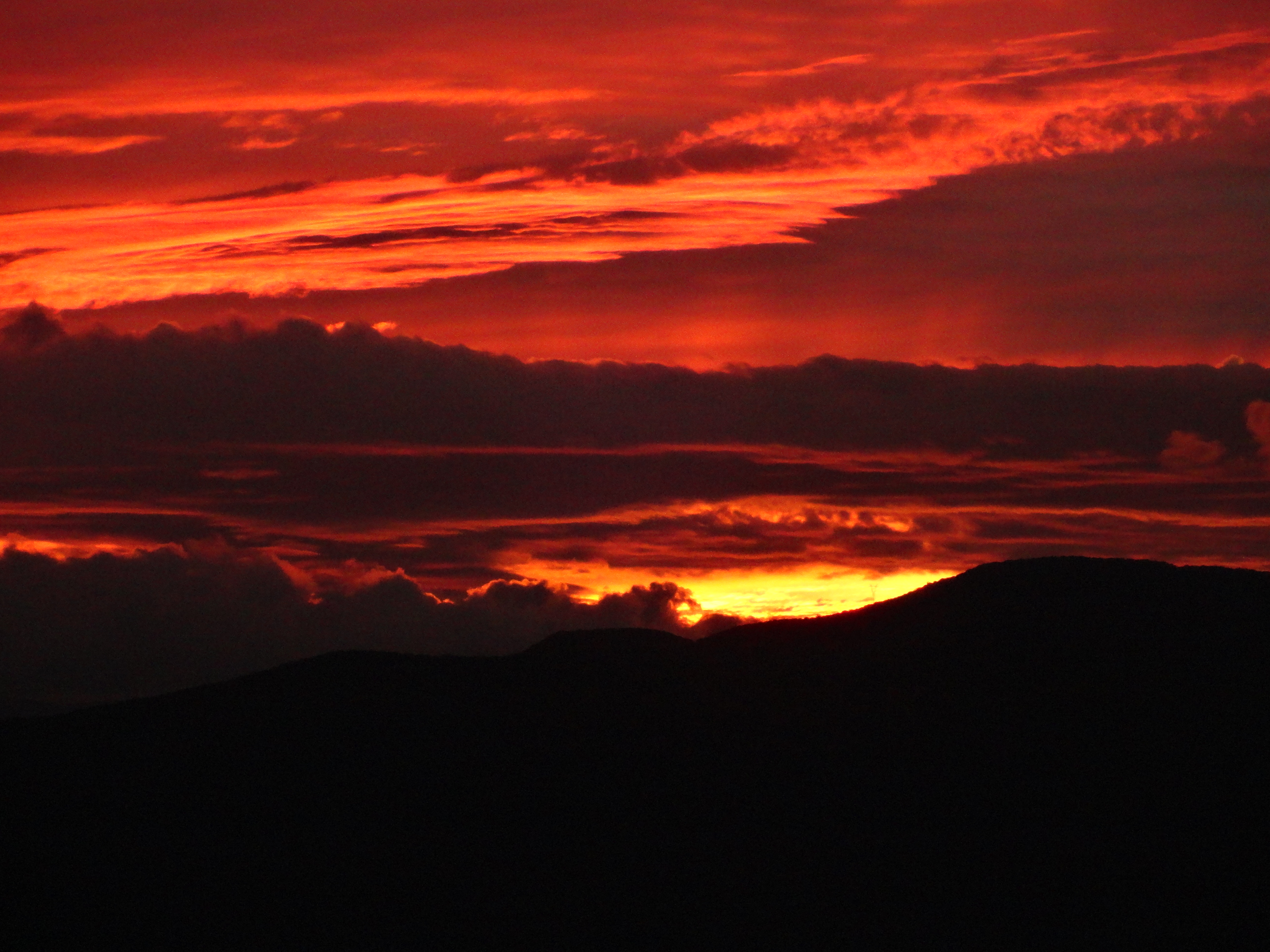
the sun dissolves
into the mountains
to the west.
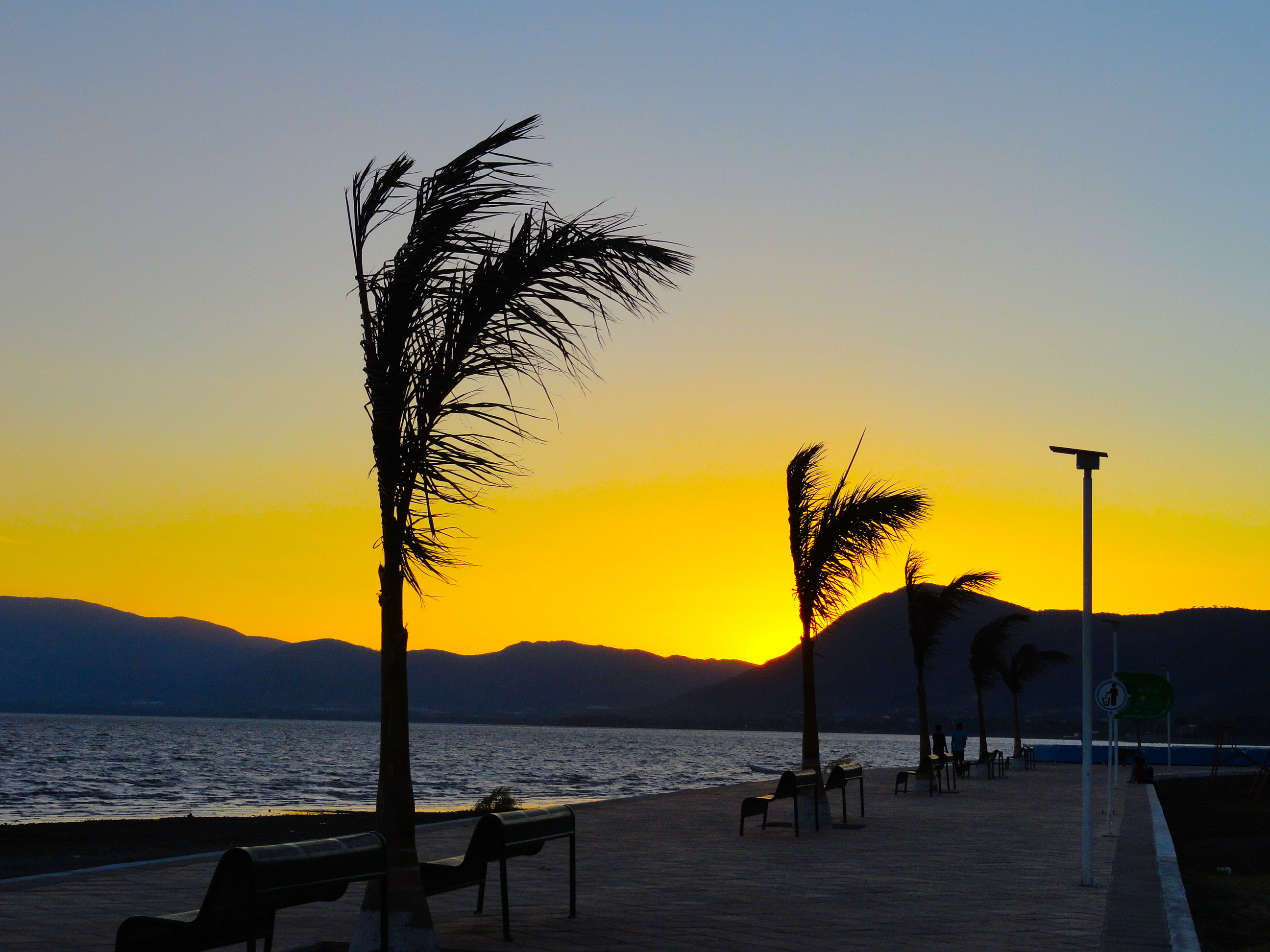
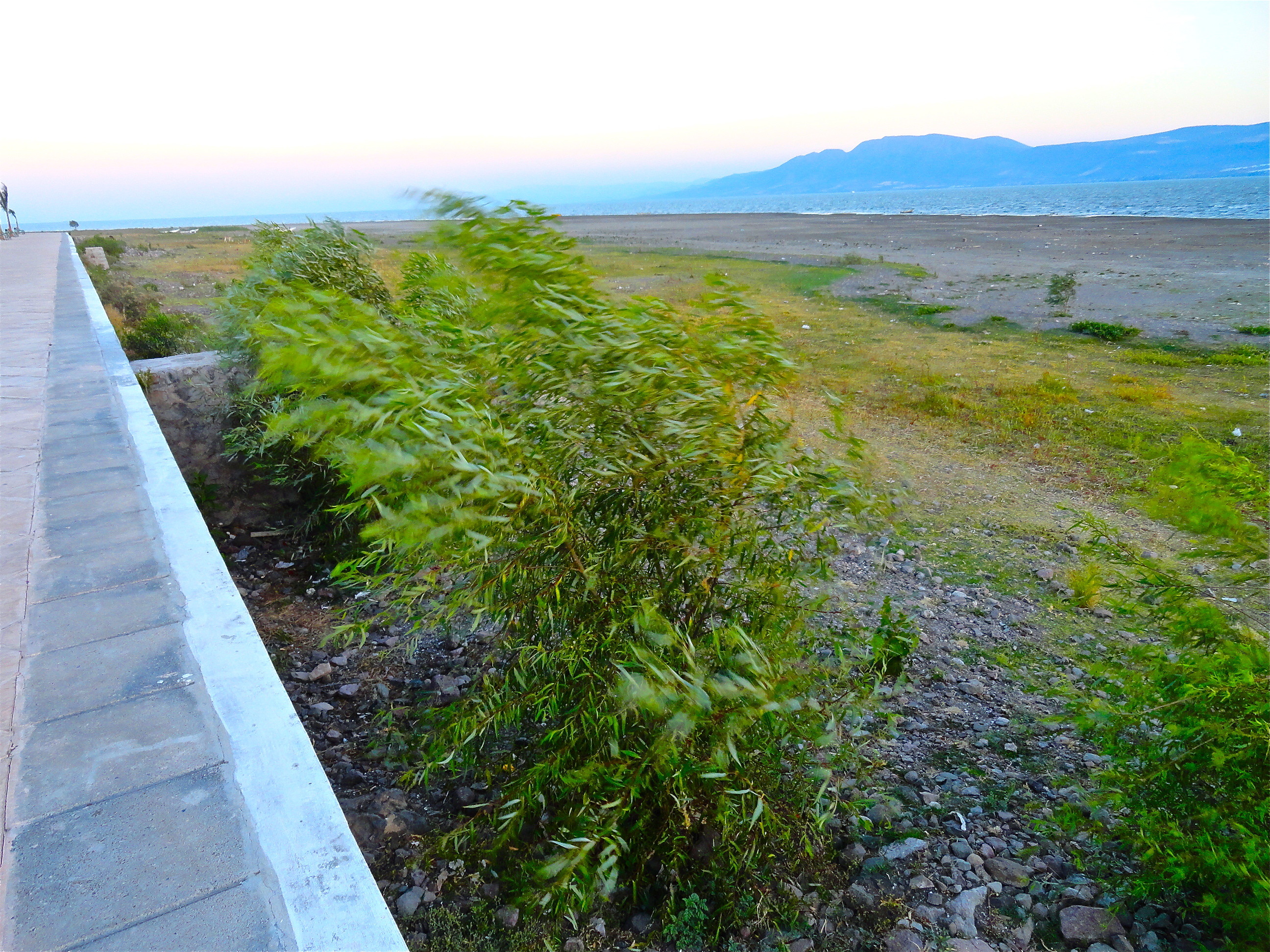
Shadows of palms
are blown in a singular direction,
all pointing north.
Below them,
the skirts of lesser trees,
as low as bushes
but lush in their fullness,
toss with abandon,
as though this lower wind
did not know its own direction.
I have a hunch, go closer and examine.
I am rewarded.
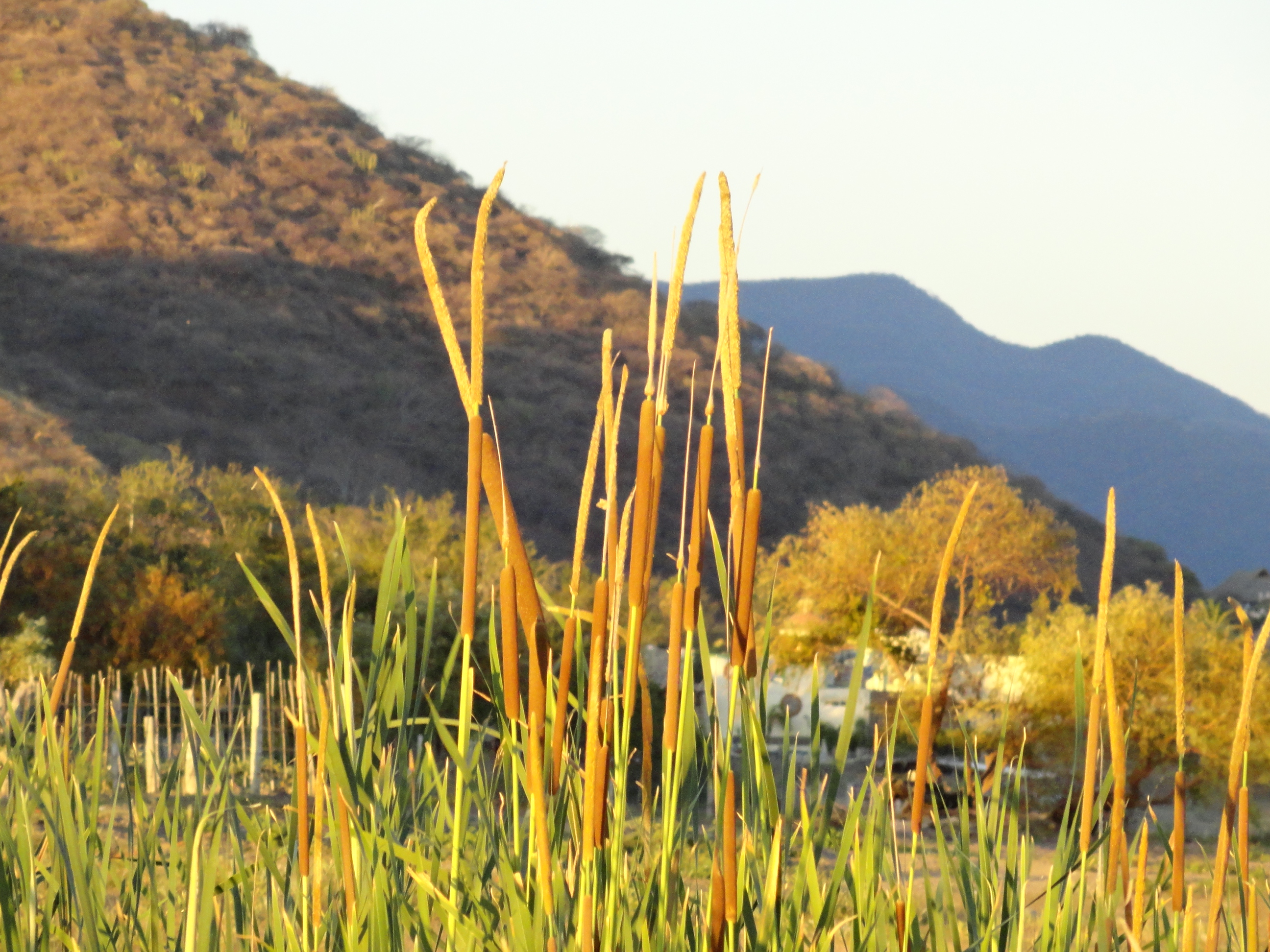
They are willows,
swaying to obscure
a fresh stand of cattails,
once again beginning their
long march of dominance.
The water that was interloper
is history. And I am part of it.


Freshwater shells revealed by retreat of lake
      Freshwater shells revealed by retreat of lake 

DSC07741
                                 The Kite
 DSC07719

palms point northwards in the sunset breeze
   Palms point northwards in the sunset breeze

The first surprise. New willows!
The first surprise. New willows, and, below, cattails!!!

DSC07751

A lake sunset

A lake sunset

This is a poem that covers the phases of the lake from 2001 to 2013, when these photos were taken. The lake has continued to shrink and swell for the 12 years since then, but luckily has not shrunk to its former much-depleted size. I am sharing this poem for the For the Sunday RDP prompt: Done

Levels of Pollution in Lake Chapala

Many people have asked me about the level of pollution in Lake Chapala, the largest lake in Mexico which I happen to live on.  Here is an article about the state of the lake that echoes what I have been telling people. The author, Kristina Morgan, is a local realtor and a long-time citizen of Chapala. It might be of interest to both Lakeside residents and Word Press bloggers that although he lives in Texas, her great uncle, Marion Couvillion, is a WP blogger (his blog is entitled Los Perdidos) and also a contributor to the Ojo del Lago.

Lifestyles

Dr. Todd Stong offers expert 2020 State of Lake Chapala assessment

By Kristina Morgan

Despite widespread and persistent myths and misconceptions, Lake Chapala is healthier than most people realize.
So says expat and civil engineer, Todd Stong, PhD, in a recent interview. Dr Stong is well-known in our area for 17 years of involvement in studies and projects related to the lake, local wells, water treatment and related matters. He donates his expertise and is widely considered our region’s most objective and informed advocate for Lake Chapala.
As he puts it, “Mexico will offer you an infinite number of latter life missions. Providing clean water where it’s needed is mine. I’m a free engineer for any county around Lake Chapala that wants me.”
Dr. Stong  helped plan the picturesque Malecon (boardwalk) in Jocotepec and spear-headed the 3-kilometer sewer pipe in Chapala to keep sewage out of the lake.
This is not a glossy portrayal to boost tourism or sales and not a horrifying picture to line pockets with money. The state of Lake Chapala, as in most things in life, has a more moderate reality and knowing the truth, we can enjoy the blessings we have at Lake Chapala as well as work to make the lake even better for our generations to come.

Evolution of Lake Chapala

It is important to first understand the evolution of Lake Chapala. Thousands of years ago, the lake was a mile deeper than its average depth of 14 feet today. Over time, sediment has turned it into a shallow lake with a clay and silt bottom that gets stirred up by the movement of the waves at the shoreline, making it appear dirtier than it is. Moving away from the shoreline about 300 feet the water is almost clear.

A Look at Lake Levels

Up until 1978 water flowed out of the NE corner of the lake via the Santiago River. No water has flowed out of the lake into the Rio Santiago since 1978. Lake Chapala is dependent on the Rio Lerma for 90% of its water and the remaining 10% from annual rainfall.
To Lake Chapala’s detriment, between 1980 and 2002 more than 500 dams were constructed on the Rio Lerma by thousands of farmers using the 470 miles of river water to irrigate their crops. Lake levels dropped significantly as a result. 

Around 2002, the lakeshore receded far from Lakeside villages.

Is Lake Chapala dying?

Due to the diversion of water, in 2001-2003 the lake fell to just 15% of capacity. The shoreline receded over a mile from Lakeside villages. Lake Chapala was on the verge of dying.

When the city of Guadalajara realized there wasn’t enough water in the lake to pump to their residents and people at Lake Chapala witnessed the alarming physical evidence of the lake disappearing, they became a squeaky wheel to save the lake. Lake Chapala is the only viable fresh water reservoir for 3 million residents in Guadalajara, so Guadalajara and the residents here have a vested interest in maintaining the levels and the quality of the lake.
As a result, the federal government drew up an agreement with the five states that the Rio Lerma passes through allocating 80% of the water from the Rio Lerma to be used by farmers, while maintaining Lake Chapala at 60% capacity at least and Lake Chapala became a protected lake under the RAMSAR convention and the Living Lakes Foundation.
Although the lake has been over 60% full since 2004, with periods during the rainy seasons when it is 80% full, misconceptions that the lake is drying up and dying persist to this day.

How Lake Chapala’s Water is Utilized

Contrary to popular belief, Lakeside Chapala’s villages obtain their water from deep wells, rather than the lake. However, as mentioned earlier, Lake Chapala is the primary water source of water for nearby Guadalajara, Mexico’s 2nd largest city.

Approximately 2,500 gallons per second 24 hours/per day are piped from our lake, passing through a 30-year-old pipe. There is concern the pipe could break. Should the pipe rupture, it would devastate Guadalajara’s water supply and cause extreme damage and flooding at the location it breaks.
Dr Stong is working to convince authorities to approve the use of an electro-magnetic testing device to map the pipe and highlight where there are leaks in order to do repairs and avoid a costly and lengthy pipe replacement. Mexico City has already mapped their aqueduct successfully with this device.

Is Lake Chapala dirty and polluted?

As stated above, it is important to note that although it’s widely assumed that Lake Chapala is the water source for the villages here, that’s not the case. The water piped into homes at Lake Chapala comes from deep wells that the Federal government drilled 50-70 years ago for the 30 villages around the lake.
About 40 years ago the Rio Lerma was a significant source of pollution for Lake Chapala, based on the deep sediment in the lake showing heavy metals. However, today the Rio Lerma has over 200 waste-water treatment plants over 466 miles, far more than most regions of Mexico. So, while not perfect, the treatment plants on the Lerma River have eradicated most of the industrial and agricultural pollutants.
In addition, the slow, meandering nature of the lower third of the river allows most sediment to sink to the bottom of the river before it reaches the lake.
Stong says, “Contrary to the easy assumption that pollution accumulates as the river flows, it is found that the best of the water in this river is that which enters the lake.”

Lake Chapala itself has 16 waste-water treatment plants. This region has far more facilities than most of Mexico to treat wastewater. As may be expected, every year one or two fail and they leak.
Dr Stong recommends that local governments test regularly and publish their findings monthly. He envisions a red flag/green flag system, letting citizens know the water quality on the shore of their village, similar to how it is done in the US. He also would like to see 1% of the shore become engineered wetlands, to provide a natural filter for contaminants and give the fish and birds a safe place to propagate.

Is the lake safe for recreation and swimming?

Contrary to common belief, Lake Chapala is safe for boating and swimming. With the lake currently averaging 70-80% of capacity, contamination levels are minimal.

• Bacteria level: The bacteria level in Lake Chapala is normally 75% below the health safety limit for recreational use, thus four times better than found at an average California beach.

• Mercury level: Despite lingering false reports, the internationally reported testing of over 200 fish from 20 locations in the lake has proven that heavy metal contamination of the fish does not exist, and is 60% below the international limit for health safety. This represents the same aunt of mercury found in a can of tuna in the US and Canada.
• E-Coli/Coliform: According to the US official recreational water quality standards, e-coli cells should not exceed 200 per 100 ml of water. Mexico measures 240 and below as safe. In three years of testing at 20 different sites around Lake Chapala, the level of coliform bacteria measured 50-60 on average, which is 4-5 times lower than the amount Canada, the US and Mexico will allow. In other words, the lake bacteria level is normally 75% below the US health safety limit for recreational use., thus four times better than what you’ll find at an average California beach. By contrast, a fourth of California’s beaches are closed each day due to coliform bacteria levels that are over 800.
• Lirio Water Hyacinth: Lirio, as it is called locally, was introduced years ago to combat pollutants and evaporation of lake Chapala. It multiplied out of control and has been a problem in years past, requiring periodic manual removal. Lirio coming down the Lerma River to the lake has been light this year.
Dr Stong recommends that as in Asia, lirio could be combined with the areas abundant chopped corn stalks to create an excellent livestock feed that is 30% protein.

 Primary obstacle to recreation

The primary obstacle to lake recreation is underwater dangers. During the years when the lakeshore receded, a large area of the shoreline was exposed. Although legally under federal control, some people saw opportunity and began to put up barbed wire fences and walls to delineate the new lakefront as “their” land.
But when the lake began to recover, these fences and such were left in place and remain under water today, making some areas near the shore unsafe for swimming, boating, etc. Chapala has a safe swimming beach and a boat launch, as well as several other places in villages that are deemed safe for swimming and recreational activities.
In short, the water is safe, but you need to go to designated beaches, such as the one off of Chapala’s Malecon, to swim or boat due to the debris that is still underwater.
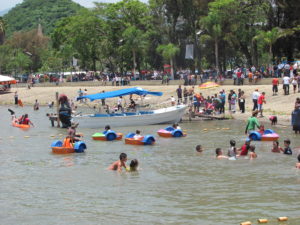
The shorelines are Federal Zones that prohibit commercial use, so any businesses that could open up for boating, jet skiing, parasailing, restaurants on the water, etc. aren’t currently permitted. Consequently, Mexico’s largest lake appears UNUSED by the public for recreation and tourism.
Dr. Stong recommends that the 9 counties about the lake must appeal to Jalisco and Michoacán States for authorization from the government to be permitted to create public and commercial facilities along the lake shore. Dr. Stong is working to convince the Federal Government to allow 1-2% of over 200 miles of shoreline to be used by the villages that live here to encourage recreation and commerce which would be a benefit to our communities here financially.

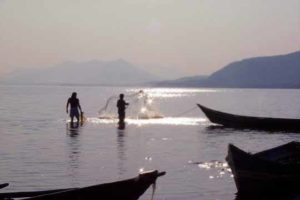
Net fishing on Lake Chapala, Photo by Ute Hagen.

What about fishing at Lake Chapala?

The many pueblos surrounding Lake Chapala have traditionally been known as fishing villages. Over 15 years ago, nearly 3000 Lakeside families gained their livelihood from fishing the lake; today that number is closer to 600 due to unregulated overfishing and inadequate restocking by the government.
So, while the fish is safe to eat, the lake has been over-fished.
Dr. Stong conducted a three-year pilot program to test the viability of floating cage aquaculture wherein high value fish could be economically raised in cages in the lake that has been very successful and could provide up to 15,000 jobs for the Mexican people with the use of just 1% of lake surface area. Restocking the lake is also an option, but fishing locally would have to stop until the fish reached maturity and were able to successfully propagate.

Protecting our National Treasure

We have a national treasure in Lake Chapala and an obligation to protect it for generations to come. Ongoing water testing with transparency, education, maintenance, and preservation of wetlands for birds and fish need to be in balance with the need for communities to develop some recreational waterfront to help support their towns and local businesses.

Editor’s Note: If you would like to get involved in the protection and improvement of Lake Chapala or want more information, please feel free to contact the author of this article at AskKristina@choosechapala.com.  She can provide Todd’s 25-page report detailing his findings to the Governor of Jalisco.

*  *  *

ABOUT THE AUTHOR: Kristina Morgan
Kristina has lived and worked in Mexico and the Lake Chapala area for over 17 years. Three of her four children were born and raised here, and are now living north of the border. Kristina is an Unlimited License General Contractor, as well as a Real Estate Broker and relocation specialist currently working for Lake Chapala Real Estate in Ajijic.  She has codirected an info-tourism group and loves writing about her experiences in Mexico.

The Shores of Mexico, for pic-and-a-word-challenge-394/

Click on photos to enlarge.


For Pic and A Word Challenge: Shoreline

For Water Water Everywhere #220, July 5, 2024


Click on photos to enlarge.

For Water Water Everywhere prompt

I’m a Fan of Lake Chapala Sunsets


For Photos by Jez “I’m A Fan Of”

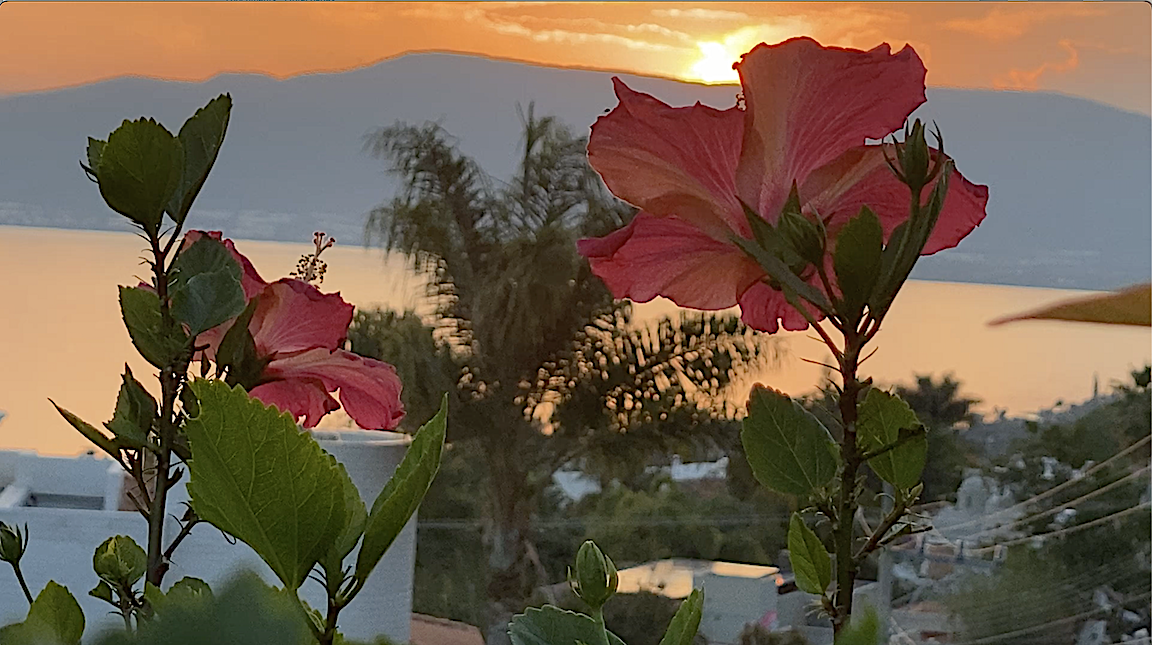
Sunset Hibiscus, FOTD Nov 1, 2023

For Cee’s FOTD

Innocents in Mexico, Chapter 22

Santa Clara del Cobra Hand-Raised Pots

Innocents in Mexico

Chapter 22

As much fun as we’d had in San Miguel, it felt good to be off on another adventure and to have the means of our own locomotion again.  Bearcat, surprisingly, did not scoot back to his former position under the air mattress, but perched atop it and even occasionally hopped gracefully into my lap in the passenger seat, gazing out in wonder at the scenery whizzing by more quickly when viewed through the side window and more comprehendingly out of the front.

In true Bob fashion, we dallied little in our 3-hour trip from San Miguel to Patzcuaro. We Whizzed by Morelia. Whichever town we decided to settle in, it would be close enough so we could always easily return to see it at a later time.  We were hoping to accomplish this trip in  four days at most, and if we found an area we were more interested in than San Miguel, we could return to pick up the books and tools and remaining clothes we’d left in San Miguel and return to look for a possible rental. 

We found a lovely old hotel in the heart of Patzcuaro to serve as our base during our  initial exploration.  The town was authentic with few modern buildings or businesses to dispel the illusion that we had gone back in time. The art and the people were wonderful and the lake was a definite plus point in Bob’s mind, but it quickly occurred to us that in terms of terrain, this was not so different from the mountainous redwood forest that we’d lived in in Boulder Creek. We spent the day investigating the wonders of the town, had our first taste of atole—a delicious drink made from finely ground cooked masa (corn flour) and agreed that although it wasn’t ideal as our next place to live, that this was a place we definitely would came back to for a visit.  We had been told that the area that the monarch butterflies migrated to each year was very close by and it, too, was on our list of future explorations. 

We had heard of some of the artisan villages clustered around Patzcuaro.  Santa Clara del Cobre was a definite hit with Bob, as it was with me. It was a town consisting almost entirely of coppersmiths and the sound of hand-hammering filled the town.  A small-scale silversmith and coppersmith myself, I was amazed at the lack of modern tools—a bellows and coal fire being used in place of acetylene torches to anneal the metal, and three men with heavy metal mallets pounding the huge pot into shape in sequence after another man had moved it with huge tongs from the fire to the anvil. 

With my birthday coming up in a few weeks, Bob succumbed to his usual tactic of finding something he himself loved and when I, too, admired it, diverted me to another room while he bought it for me and secreted it in the nearby van.  In this case it was an amazing very large copper jar which lay horizontally with its opening  on the side.  Then, to be totally fair about the matter, when I found a pot I liked equally well, he encouraged me to buy it. In spite of the fact that he hadn’t been as sneaky as he thought he’d been and I knew perfectly well that he’d bought the other big pot, I played dumb and thus we became the owners of two of Santa Clara’s totally hand-forged pots created before modern intervention arrived with acetylene and propane torches. One can never have enough Santa del Cobre copper, as I have further demonstrated over the past 22 years.

We visited Capula, the town famous for its Catrinas, and managed to depart Catrinaless and also resisted the huge stone sculptures  that line the road leading into  Tzintzuntzan, although I did buy a few straw decorations for my Christmas tree, which I decorated each year with ornaments from every place I’d traveled throughout my life, as well as beloved saved ornaments from the Christmas trees of my youth.

We returned to enjoy music in the plaza across from our hotel which flowed in through the open windows of the restaurant we had chosen, then made an early night of it, packed up the next day and headed for Ajijic. We did not even stop in Uruapan, renowned for Its remarkable large park filled with water features, vowing to visit it during future adventures.

Ajijc is located next to Lake Chapala, the largest lake in Mexico, which is ringed by formerly volcanic mountains.  As we drove toward the city of Chapala, a small sign pointed to a cutoff to Ajijc and we swerved onto it, driving by a veritable mountain of garbage that was the town dump (happily now vanished, after the lease to use the land was withdrawn by the local ejido—the governing body of land held communally by the indigenous population.)

As we came around a bend and down the slope of the mountains that surround Lake Chapala, we suddenly saw the whole of it spread out before us.  Just one volcano, 80 miles away, is still active, and we could see the tip of it peeking over the shoulder of Mount Garcia, the largest and closest mountain in view across the lake. One of the most active volcanoes in North America, it gave off a slight puff of smoke just as we caught our first sight of the lake. “Oh Yeah, Jude!” Bob exclaimed. “I don’t want to move to San Miguel. I want to live here.” Thus it was was that we settled down to supposedly look for a rental in one of the little towns that stretched along the north shore of the lake.

But what Bob actually said as we sat in chairs in the first rental agency we came across was, “We may be looking for a rental, but do you have any houses for sale?”  The rental agent’s eyes lit up as she agreed that yes, she’d be happy to show us both rentals and houses for sale. Although I was still sure I didn’t actually want to buy a house in Mexico, Bob was expressing such joy at the prospect that I went along with him.  It would be fun to view some of the beautiful houses that we had already viewed from the outside in our drives around town.  What was our price limit? Bob gave the price of the first house he’d  found in San Miguel—$80,000.  But somehow, nothing in that price range quite caught our fancy, although we had seen a few rentals that we had liked.  We thanked the rental agent and said we’d be thinking about it, and consoled ourselves with a lovely meal and margaritas in the Ajiic Plaza Jardin Restaurant.  

Then fate intervened as we sat discussing the houses we’d seen and debated the issue of where we’d settle. We had already found a house we liked enough to rent for eighteen months in San Miguel. The fact that we hadn’t found one in our price range in Ajijic, coupled with the fact that I was still adamant that we weren’t buying a second house anywhere, let alone in Mexico, seemed to be directing us toward choosing San Miguel, but Bob convinced me we should spend one more day in Ajjic and environs just driving around looking at houses.  So it was that the next day, early afternoon, we wound up in a fraccionamiento (housing district) in the mountains above the village of San Juan Cosala, a few kilometers west of Ajijic.  The sign said, “Raquet Club,” which sounded to me like the least likely place I’d ever want to live, but as our van climbed the incline toward the top of the lowest mountain, we wove sideways from east to west along streets filled will lovely houses, all different with lush bougainvillea, palm trees, hibiscus and flowering trees of numerous varieties.  It was high above the lake with gorgeous views of the entire lake and Mount Garcia rising above it. 

We drove back and forth for a good 45 minutes before the van came to a screeching halt before the most beautiful house I had ever seen.  It was a pale mottled yellow and white in an L shape with two colossal rust-colored domes covering most of the two wings of the L.  The corners were all rounded without a sharp angle in the entire house.  It stood at the top of a steeply angled lot and the walls around it undulated down the mountainside like a series of falls smoothed out by flowing water.  The entire house looked like it had been sculpted by an artist’s hands.  If Bob were to ever design a house, I thought, it would look like this.

“Let’s see if it’s for sale!” he said.

“There’s no For Sale sign, Bob,” I said.

“I think it’s for sale, he insisted, climbing out of the van. He was now peering through the bars of the doors of an open-sided garage that stood a level above the house spread out below.”Doesn’t that look like a paper with specs on it by the door down there? Call out. See if anyone comes out!”

Embarrassed, I held my tongue, but just then, a man came out of the door. I don’t think he had yet seen us, but Bob seized the initiative and called down to him, asking if the house was for sale. 

“Si,” said the man, coming up to the garage and pressing a button which opened the garage gates.  With the same motion, he reached into a cabinet to withdraw a string of triangular flags similar to those at a used car lot and fastened them to nails at either side of the garage.  “Come in.”

We entered the garage, walked down four steps and into a courtyard of paving stones, then in through sliding glass doors into a large terra-cotta room, the other side of which was all glass sliding doors. Spread out below was a view of the entire lake.

“Oh yeah, Jude! Let’s buy it!!!” were the first words out of Bob’s mouth, and his enthusiasm remained uncurbed as we walked through a kitchen which featured  Yucatan-marble counters and a ceiling covered in tiles. There were two downstairs bedrooms and two bathrooms completely tiled in white marble with the same rose-colored marble tile on the countertops  as that in the kitchen. The brick domes were fabulous—one over the master bedroom and the other over the entire living room/dining room. In the middle of the living room dome was a three-foot wide domed skylight that filled the entire room with light.

Outside the living room was a bamboo-covered terrace with a pool and hot tub filled with naturally heated hot mineral water from the volcano!!!  Small palm trees dotted the yard, along with canna lilies and bougainvillea. Virginia Creepers covered the bamboo roof of the terrace and the large pillars that supported it.

The second floor casita consisted of a large bedroom with its own bathroom, two terraces and the best views of the entire house.

On the sheet of paper Bob had noticed with his keen eye was the price of the house–$180,000 U.S.  It had just been reduced from a price of $220,000. Bob’s face fell. Well over his $80,000 budget.  The gardener, who had been paid to live in this lovely house (albeit without furniture or appliances ) for three years, looked relieved when he saw the likelihood that we were not potential purchasers. Clearly, he had exhausted little effort in trying to sell it, as was evidenced by the absence of signs or flags when we first arrived.

We later discovered that the people who had built our dream house had lived in Guadalajara but she had parents in the Raquet Club and although the younger couple had built the house thinking they’d live there, it was so much more comfortable just visiting her parents on weekends, that they had never moved in. The pool line had a leak they’d been unable to discover, even though they’d dug up half the patio trying to find it and as a result, the pool emptied within hours of being filled. Designed by a very famous architect, Miguel Valverde, who was a personal friend, nonetheless the work of furnishing it and solving its pool problem plus the fact that it was rumored that the lake was fast drying up and would be empty within 5 years had caused them to put the house up for sale and when it did not sell, to reduce the price.

We both loved this house, but we had a house in the states and no immediate prospects for selling it. And so we turned our backs on it, drove back down the mountain and back to our little motel room. Once again, we consoled ourselves with a delicious meal—this time in the garden of the Nueva Posada—the only real hotel in town, although there seemed to be numerous b&b’s and cottage-type accommodations. I settled into my margarita and Bob into his Coke as we surveyed the menu. Once we’d made our choices, we began reviewing our past few days­­—the houses and apartments we’d seen, how much we loved the  lake and, ultimately, “the” house in the Raquet Club. Bob’s dream house, and I had to admit I was very taken with it as well.

We were back-and-forthing it over San Miguel vs. Lake Chapala when an attractive red-haired lady at the next table pulled her chair around a bit to better face us and said, “Excuse me, but I couldn’t help but overhear you. Are you looking for a house here?”

We explained our situation, sharing a bit of personal information about what we were doing here.  What had we done in the states? We were artists and writers. What were we looking for? What was our present house in the States like? Were we presently working with a real estate agent? No, we had been looking but had told her we were suspending our efforts for the time being. We didn’t know what we were going to do.  We needed to be back in the States in two weeks for my mother’s memorial and needed to go back to San Miguel to either pick up our stuff or to sign the lease for an 18-month rental.

Could we spare a few extra days, she asked? We exchanged glances. What did she have in mind? If we could take the time, she would be glad to show us a number of houses she knew we’d love—in every price range from $80,000 up, but first she wanted to do two things.  First, she wanted us to move from our little motel-type accommodation to the Nueva Posada, and secondly, she wanted to introduce us to some people who lived here—artists and writers and musicians that she thought we would have lots in common with. Her name was Lucy and yes, she was a real estate agent. We liked her. We shook hands on it and went with her to the desk to book a room.

For the next three days, Lucy showed us house after house, priced from $80,000 to $500,000 and we loved every one.  She introduced us to her friends—all of whom we felt an affinity with. They told us about the local little theater—founded 36 years ago by the man who played Jimmy Stewart’s younger brother in “It’s a Wonderful Life.”  And about the local writer’s group with a similar long history. She introduced us to the fascinating history of Neil James  and the cultural center that had grown up around a home that she eventually left to become the Lake Chapala Society—a wonderful addition to the community. And it happened.  We felt at home.

And that is why, after a three-night stay in Ajijic, we headed back to San Miguel to pick up the art supplies and books and other belongings we had left there, broke Steve’s heart by telling him that we had decided not to rent his house,  and came back to Ajijic to stow  what worldly goods we had brought to Mexico in the local storage facility as we once again joined Lucy in our quest for our next home.

Author’s note: Phew, I made it!!! I had to entirely write this chapter today and wouldn’t you know it–wifi was out for most of the day. So frustrating. It finally came back on about an hour before midnight so I rushed to finish and post and edit.  If you found lots of mistakes, you probably read before I finished editing as I was determined to get it up before midnight.  Now I need to get tomorrow’s chapter up before midnight tomorrow. What is this penance for, do you suppose??? Keep reading, please. Some big surprises in store. For me, too, as I haven’t written them yet.  

For the last chapter, Chapter 23, go HERE.
Sunset on the Malecon with Zoe

Wherever we go, Zoe attracts admirers. Here are some of her selfies from last week.These little boys followed us for a long time, playing with her as they walked, eventually picking her up for more prolonged play. They were adorable. Her aunties took turns carrying her or walking her on the leash. 

Night Sky Over Lake Chapala, Oct 28, 2021

Click on photos to enlarge.

Monday Night on the Malecon, Oct 18, 2021


Click on photos to enlarge and to read captions.