Tag Archives: writing

Do You Know Someone from Greenland?

400px-Coat_of_arms_of_Greenland.svg

Do You Know Someone from Greenland?

Do you know someone from Greenland? Please write them if you do
and tell them that I need someone from Greenland who will view
my blog for me so I can get it lit up on my map;
for on my statistics page it leaves a shocking gap.
Italy is lit up and the rest of Europe, too.
Mexico and Canada and Poland and Peru.
(But not, I fear, Afghanistan or Chad or Katmandu.)

I have fans in India, in England and in China.
Readers in the States from Oregon to Carolina.
Africa, The Emirates, in Russia and Japan,
and even in Australia, I have one loyal fan.
But no one from that Island has ever viewed my blog.
It seems that my well-oiled machine is missing that one cog.
I know that Greenland’s icy—that it’s Iceland that is green,
and perhaps that oxymoron may make Greenlanders mean.
Yet I’d think in winter, when there is so much snow
the Internet’s the sort of place that they would want to go!!!
My blog may not be noted for being really hot,
and if they want X-Rated, my blog is not the spot.
But if you’ve friends in Greenland, please tell them this for me:
my blog may not be steamy, but it’s guaranteed frost-free!

(And while you are at it, please have them stop by Shawn Bird’s blog at shawnbird.com/blog She’s missing Greenland as well!)

The Prompt: Road Tripping—‘Tis the season for road trips — if time and money were out of the equation, what car-based adventure would you go on? (If you don’t or can’t drive, any land-based journey counts.) . . . I interpreted the prompt loosely this time, more as a road trip of the mind. After almost 18 months of blogging, I keep noticing that very big block of the world called Greenland that still sits blankly staring at me, resisting my blog. When Shawn wrote to me after reading my blog about statistics, (read it here) saying that she was waiting for a viewer from Greenland, I knew that was my cue. So although I doubt anyone from outside has ever taken a road trip there, if you’ve journeyed there by some other means, please drop a clue to any friends you may have who live there to take a mind trip to our blogs and shut us up!!!!

First Friends

DSC07187

The Prompt: Do you — or did you ever — have a Best Friend? Do you believe in the idea of one person whose friendship matters the most? Tell us a story about your BFF (or lack thereof).

First Friends

I am three years old, lying in my Mom’s room taking a nap. I can hear voices in the front room. The world comes slowly back to me as I rouse myself from the deep sleep I swore I didn’t need. I hear my mom’s voice and the voice of a stranger. I slide my legs over the side of the chenille-covered bed, balancing for a moment like a teeter totter before giving in to gravity and letting my feet slide through space to the floor below. I creak open the door, which had been left ajar. My mom’s voice gets louder. I smell coffee brewing and hear the chink of china coffee cups in the living room.

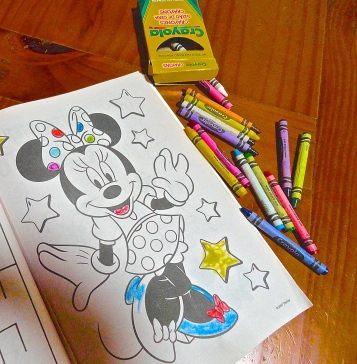
I hear a dull rubbing sound and move toward it—through the kitchen to the dinette, where a very small very skinny girl with brown braids is sitting at the table coloring in one of my coloring books. She is not staying in the lines very well, which is crucial—along with the fact that she is coloring the one last uncolored picture in the book which I’ve been saving for last because it is my favorite and BECAUSE I HAVE IT PLANNED SO THERE IS SOMEWHERE IN THAT PICTURE TO USE EVERY LAST COLOR IN MY BOX OF CRAYOLAS!

I sidle past her, unspeaking, aflame with indignation. Who could have—who would have—given her the authority to color in my book? I stand in the door of the living room. My mom is talking to a mousy gray-haired lady—tall, raw-boned, in a limp gray dress. My mom sees me, and tells me to come over and meet Mrs. Krauss. They are our new neighbors. They are going to live in Aunt Stella and Uncle Werner’s house two houses down. Did I meet their daughter Pressie in the kitchen? She’s just my age and Aunt Stella and Uncle Werner (who are not actually related to us, but just friends of my folks) are her real aunt and uncle.

The gray lady calls Pressie in to meet me. She is quiet and I am quiet. Then we go back to color at the table together. We drink orange juice and eat potato chips. We will be best friends for what seems like a lifetime but what is really only until we approach adolescence. I will have a love-hate relationship with her mother, who will continually set up competitions between Pressie and me to see who will win. She will try to coach Pressie first; but still, I will always win.

Pressie and I will play hollyhock dolls and dress-up. We play, sometimes, with Mary Boone; but her parents are too religious and don’t think we’re nice enough to play with her very much. I want to put on neighborhood plays and circuses, but none of the other kids want to perform. I want to play store and school, but Pressie eventually goes home to help her mother varnish the floors.

Pressie’s house is full of loud brothers and a sulky teenage sister. It is full of high school-aged cousins who tease us unmercifully and old ladies who come to play Scrabble with her mother. It is full of a missionary sister who comes back from South America and married brothers who come from Florida with babies that Pressie and I take charge of.

Pressie’s house is full of slivery floors that are always in the process of being varnished or de-varnished. There is one drawer in the kitchen full of everybody’s toothbrushes, combs, hairpins, hair cream, shampoo tubes, old pennies, crackerjack toys, rubber balls, lint, hairballs, rolled up handkerchiefs and an occasional spoon that falls in from the drain board above it. They have no bathroom—just the kitchen sink and a toilet and shower in the basement, across from the coal bin and the huge coal furnace. Their toilet has a curtain in front of it, but the shower is open to the world.

Sometimes when I am peeing, someone comes down to put coal in the furnace or to throw dirty clothes in the washtub next to the wringer washer. I pull the curtain tight with my arms and pray that they won’t pull it back and discover me, my panties down to the floor, pee dripping down my leg from my hurried spring from the toilet to secure the curtain. To this day, I have dreams about bathrooms that become public thoroughfares the minute I sit down. To this day, I get constipated every time I leave the security of my own locked bathroom.

Pressie babysits with the minister’s kids for money. I go along for free. She spanks them a lot and yells a lot. I think I can’t wait until I’m old enough to have kids so I can yell at them, but when Pressie is gone and the minister’s wife asks me to babysit, I don’t yell at them.

At Christmas I can’t wait to have Pressie come see my gifts: a Cinderella watch, a doll, a wastebasket painted like a little girl’s face, complete with yarn braids, books and toilet water from aunts, a toy plastic silverware set from my sister, stationery from my other aunt, playing cards, sewing cards, paint by numbers, a new dress. I run over through the snow to Pressie’s house to see her presents: a new pair of pajamas, a coloring book and new crayons, barrettes and a comb. In her family, they draw names. Quickly we run to my house, but she doesn’t pay much attention to my presents. She is funny sometimes, kind of crabby. The more excited I get, the more withdrawn she gets.

Later, I want to make snow angels in the yard and feed leftover cornmeal muffins to the chickadees, but Pressie wants to go home. Pressie always wants to go home. What she does there, I don’t know. She doesn’t like to read. None of us will have television for another five years. She doesn’t much like games or cards. I don’t know what Pressie does when she isn’t with me.

When she is with me, we take baths together and sing the theme music from “Back to the Bible Broadcast,” washing our sins away in the bathtub. We play ranch house in our basement. We pull the army cot against the wall and put old chairs on either side of it for end tables. We upend an old box in front of it for a coffee table. My grandma’s peeling ochre-painted rocking chair faces the army cot couch. We sneak into the hired man’s room and steal his Pall Mall cigarettes and sit talking and smoking. We rip the filters off first, which is what we think you’re supposed to do.

Pressie will always stay longer if we smoke. I blow out on the cigarette, but Pressie inhales. We smoke a whole pack over a few weeks’ time and then go searching for more. When the hired man starts hiding his cigarettes, we discover his hiding place and learn to take no more than four at a time so he doesn’t miss them. When he has a carton, we take a pack and hide it under the mattress on the army cot. My mother wonders where all the filters are coming from that she sweeps from the basement floor, but never guesses our secret.

Pressie spends more time with me than before, drops by almost every morning and always wants to go to the basement to play and smoke. Then the hired man finds another room and moves out and when Mrs. Church’s granddaughters come to visit, I will want to play with them but Pressie won’t. Then we will pair off—Pressie with Sue Anne, the girly one, me with Kate, the boyish one. We have a little war—mainly instigated by the sisters.

When the new farm agent moves in with two daughters—one a year younger than Pressie and me, the other a year younger than my sister Addie—I want to ask the girl our age to play with us, but Pressie won’t. I have a slumber party for everyone—all the girls we know. I invite the new girl, whose name is Molly, but no one talks to her much. She is shy and doesn’t push herself on us. No one else ever wants to include her. I go play with her anyway and spend the night at her house. Her mother is nervous, her dad cocky. Her older sister laughs nervously under her breath a lot, as does her mother.

Many years later, by the time we are in high school, everyone has accepted them. By then, all of those girls have parties where I’m not invited. They are always a little reserved when I come up to speak to them. Maybe they’re always reserved. How would I know how they are when I’m not around? Later, they all got to be pretty good friends. But in the beginning, I was everyone’s first friend.


Pressed for Words

lifelessons-stats

Pressed for Words

9:22 on a Thursday night,
keeping my MacBook screen in sight.
I agree, it’s superficial.
I should do something beneficial;
but instead, I sit and count
as my blog views slowly mount.

Today, so far, one hundred four.
(Yesterday’s count and then one more.)
With some hours left , I do not know
how much higher it might go.

Yesterday I took great care
to write an essay on my hair.
(About my hair, I should explain,
to write “on” hair would be a pain,
for in the shower or under rain,
my words would go right down the drain!)

Judy, stop!!! Get back on track!
(I’m turning into such a hack.)
Today I sluffed off all day long—
just posted Leon Redbone’s song.
Yet here I am at 10:03
with three more viewers viewing me.
Two more hours and then no more
to tally up this blog day’s score.
Already, though, its clear to me
what the lesson learned must be.

It’s clear this truth I must compute.
My viewers like me better mute!!!

“Adult”ery


JudycurlsJudycurls - Version 2

Unfortunate hairstyles of the past


“Adult”ery

I don’t remember, as a child, ever really thinking about what it would be like to be an adult in terms of where I would live or what I would choose as a profession. I do remember, however, two things I worried about.

First of all, I worried about what instrument I would play in the school band. I had two sisters, one eleven years older and the other four years older, who both played saxophone. As a matter of fact, there being 7 years difference in their ages, they both played the same saxophone! When I entered the sixth grade and was old enough to play in the starter band, I knew two things. #1: I had to play in the band because both of them had done so. #2: I had to find a way to be unique in doing exactly what they had done, and so I had to find a different instrument. This resolve was strengthened by the fact that my sister Patti was still using the “family saxophone.” As long as I was being different, I decided to stretch my uniqueness as far as it would go. No one in either the starter or the regular band had ever played a flute. It was exotic and not very heavy to carry. I would play a flute!!! Or rather, I would attempt to play a flute.

I faked it for two years, blowing energetically into the little hole as we sat in the band loft at games or marched along behind the regular band, practicing for parades or football games; but I never really developed much of a tone and my memory of which note was which was limited. It was really easy, though, to carry that little case about as large as a large pencil case the two blocks to the auditorium where our band practice occurred. My band instructor could not afford to be picky as there were only 200 students in the entire school system—grade school and high school combined—so every warm body available was required to flesh out the physical body of the band. If a few were miming, so be it. As long as they could stay in step for the marching band and didn’t play any really loud false notes, who would ever know?

When my sister left for college, she left the sax behind; and when I headed out for my first band practice as a high school freshman, I left that dread flute behind as I took sax in hand to continue the family tradition. I was not a whole lot better at it, but found something held between the lips and teeth was a lot easier than something held sideways and blown across and although the sax was heavier, it was held in a much more sustainable position than the flute, which was an exercise in arm isometrics as I held it aloft!!

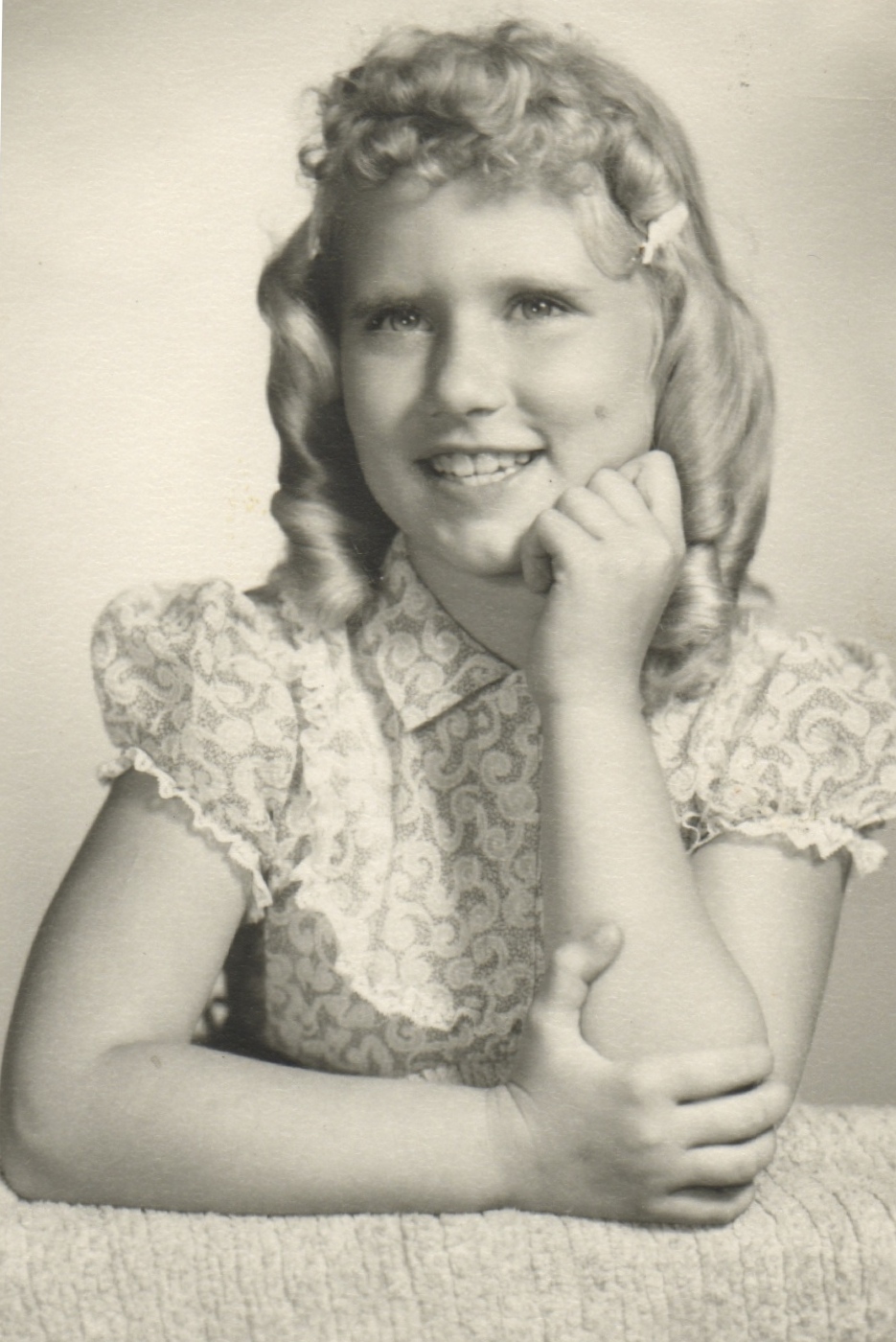
The second worry I had about growing up was how I would wear my hair. I would lie awake nights worrying about what hairstyle I would adopt when I could no longer sport the sausage curls my mother formed around her finger each morning. Shirley Temple, who had already grown to adulthood, needed to be replaced! My hair was too long, however, to duplicate Shirley’s bouncy little curls. It hung in fat tubes down beside my cheeks, offsetting my tight little bangs curled up each night in pink rubber curlers. For some reason, both my mom and I thought this made me look real good, and I am not exaggerating when I admit that there were nights when I’d lie in bed, tears streaming down my cheeks, worrying about what I would do when I grew up and could no longer wear curls!!

So now you know why I dropped the saxophone as soon as I graduated high school and why I had to move to Mexico to escape the shame of all those years when I allowed my mother to shape my esthetic sense of hair. I haven’t owned a curler of any type for 20 years. That saxophone was handed on to the next generation of my family and its mouthpiece, at least, met its demise when it snapped in two as my niece tried to grip it with the fourth pair of teeth in three decades. With a new mouthpiece, it survived four more years—hopefully this time with someone with more talent than I. I know not where it ended up. Probably in some second hand store or donated to some child who couldn’t afford an instrument. I hope it wound up with some talented individual who could restore its pride in itself.

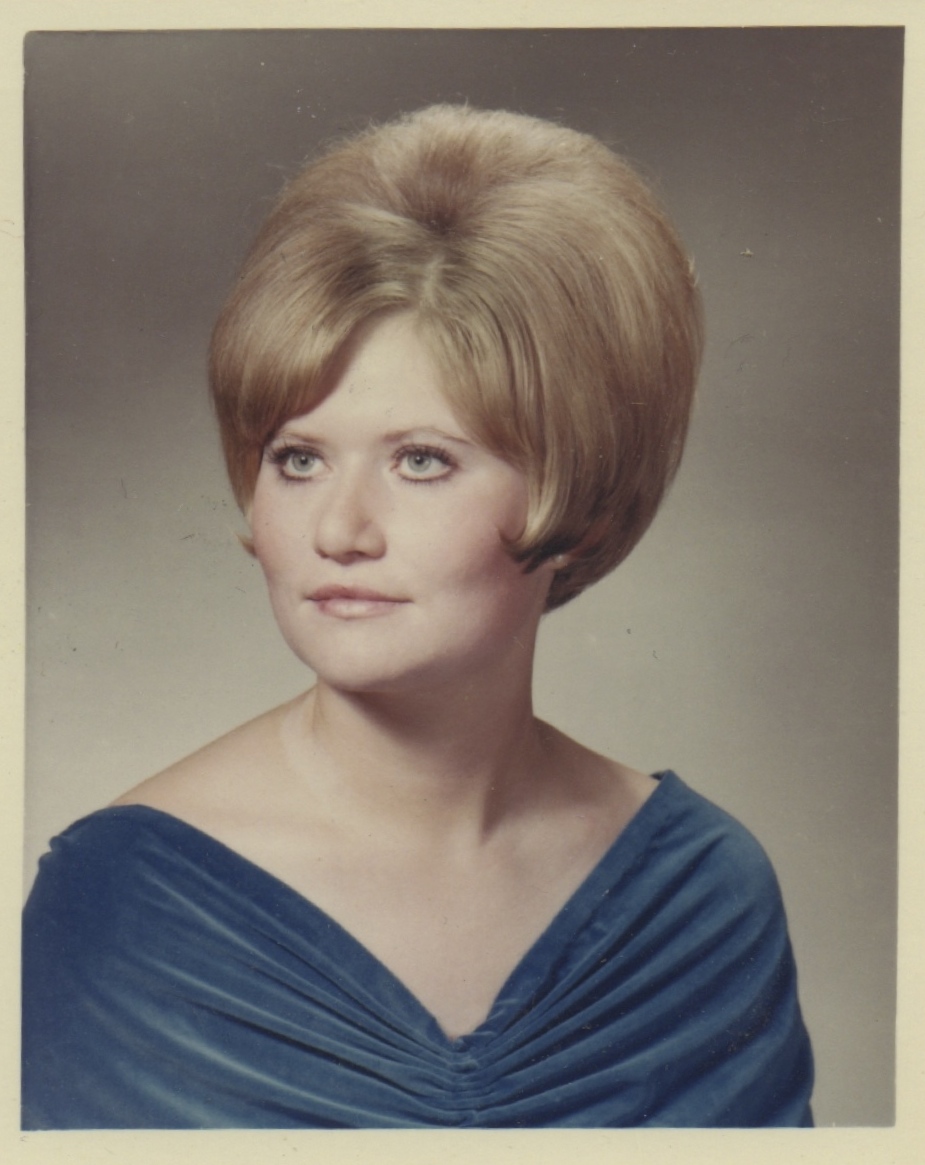
Now that I have been an adult for many many years, I have conquered most of its demands. I have found many hairstyles, only a few of them more ridiculous than sausage curls (see my college picture above as an illustration of this fact) and attempted only one additional instrument, the guitar. Having played only solo or in duet with a college friend who tried to mold me into Joan Baez but failed, I did learn about seven chords and learned to adapt a whole succession of seventies songs to fit into those seven chords. I played for sing-alongs with the kids I counseled at summer camp and for groups of little neighbors around the world, who would come to my house on Saturday mornings to sing silly songs. And I have that guitar to this day. But I haven’t played it for years and harbor no illusions about my prowess. It is there for visiting friends who want to play for me and as a big, cumbersome, hard-to-store reminder that I can choose my own failures as surely as my own successes.

I am an adult like other adults—growing more childish year-by-year, but in my regression toward soft food and adult diapers, I will never sink so low as to repeat some mistakes of my youth. Never ever more sausage curls or flutes held aloft like punishment. And never again will I try to be different just to be different. “The Far Side” has shown that this is nothing that really needs to be aimed for. We all grow odd enough just following the path of nature, thereby furnishing the humor for all the generations that follow us.

The Prompt: As a kid, you must have imagined what it was like to be an adult. Now that you’re a grownup (or becoming one), how far off was your idea of adult life?

P.S. Thirty years after high school, when I was doing an art show in Oregon, a man walked by my display and then did an about-face and came back and said, “You’re Judy Dykstra, aren’t you?”  I admitted the fact and asked him how he knew me.  He said he was 5 years behind me in school in the small South Dakota town where I grew up.  He was a country boy and since we’d never been in school together, I didn’t recognize him but did recognize the family name.

“How in the world did you even know what I looked like, let alone recognize me thirty years later?” I asked.

“Well, a bunch of us used to collect in the the school library and look at old annuals,” he said.  “I recognize you from your high school picture.”  Suddenly, it all came clear.

“You used to look at them to laugh at all the funny hairstyles, didn’t you?”   Sheepishly, he laughed and admitted it.  I had hit the nail (or the girl?) right on the head!!!!

Hail, Hail

                                                                        Hail, Hail 

My farmer/rancher father’s boots grew older with him, their wrinkles—like the back of his neck—born of weathering: rain, snow, mud and hot Dakota sun. They were so much a part of him that when he died, they were all my pre-teen nephew asked for, and he wore them out the rest of the way, until the soles peeled back and the leather with patina already long worn off, began to crack along the wrinkles and peel off.

Those boots reflected my father’s life, where things wore out. His clothes, his favorite chair—none were replaced for aesthetics or style alone—this practicality motivated neither by penury nor cheapness, but by growing up in a house where “making do” was a necessity.

But as in most things, there was one defining vain compulsion in my father’s life that broke him free from his mold. He loved new cars, as much for the pleasure of making the deal as for the smell of new leather and metal. The car dealers learned to call him when they got a car fully loaded, the way he liked it: automatic windows, power steering, power brakes, seats that tilted and slid back and forth and up and down by the touch of a switch. Whatever automatic feature was new that year, my father was up for it—big cars with fins, when they were in style, of every color.

The car salesmen would wait until the wheat crop had been harvested and then make the call, driving the car for sixty miles over the prairie to bring it to him for his perusal, like a new bride brought to a shah. They knew him well, and so when the bargaining began, they would accept his peccadillos. It was not the price he quibbled over, but rather the trade-in. “Well, I’ve got a combine that I need to trade in.” Once, three horses. And they learned this joy of trading was often what sealed the deal.

Later, when my sister married, her husband claimed my dad traded in his cars whenever they needed washing, but this was not true. Three years was a car’s usual shelf life, before he’d hand it down to whichever daughter of driving age needed a car the most. Packards and Cadillacs and Pontiacs were his choices of brands. For some reason, he reviled Fords. So that July of my thirteenth year, when the salesman brought the bright green Oldsmobile for my dad to view, we were sure this was the car he would turn down. My mother was not sure about the color and my dad was not sure about buying an Oldsmobile. He had no real reason. It was just a brand he’d never considered before, but it had all the bells and whistles. I think it was the first year that cruise control was offered, so it possessed that allure of new technology. And so it was that the car made it past any first inhibitions on both my mother’s and father’s parts and when the salesman drove away, it was in our “old” Cadillac and the shining green Oldsmobile became the new resident of our garage.

My oldest sister was married and gone, my middle sister seventeen—a year past legal driving age. Summer camp in the Black Hills was nearly 200 miles away, but over easily-navigated straight roads through bare prairie, the wheat having been cut early that year. So it was that my mom, worn pliable from 20 years of driving daughters hundreds of miles to doctor appointments and eye appointments and ball games and church rallies and singing contests and summer camps, decided my sister could drive me to camp that year.

My sister Patti and her best friend Patty Peck piled into the bench front seat. My best friend and I piled into the back. The trunk was full of two weeks worth of camping clothes. The pleasures of riding in a brand new car, just one week removed from its purchase, equaled the thrill of being off on our own. We rolled down the windows, stuck out our arms and let the hot July air stream through our fingers, stopped at Wall Drug for milkshakes, sang at the top of our lungs, and when our bare legs started sticking to the vinyl seats, closed the windows and enjoyed the air conditioning.

Three hours later, the black outlines of the hills that were our destination grew close enough to define the ponderosa pines that gave them their name. We cruised past Rockerville Ghost Town—a tourist trap where my oldest sister had worked a few years before—and turned off into Coon Hollow. My sister steered the car carefully over the dirt roads, fearing chipped paint or a chipped window from the occasional rock in our path. “Take Me Back to the Black Hills” we crooned, as we always did when we approached our favorite vacation spot. We rolled down windows once again to enjoy the scent of ponderosas and to hear the gurgling of the water as it rushed down the small river that paralleled the course of the dirt road that led back to the campsite.

“Black Hills Methodist Camp” read the sign. We stopped to take a picture before veering off onto the divided dirt road, and we had just caught site of the large log cabin that served as the mess hall when the first loud “Whump!” occurred. Then another and another and another. Terrified, my sister steered the car off into the trees as the hail grew larger and larger. We were facing the creek, which had grown wild with the churning of the hailstones hitting the water. They grew rapidly from quarter-sized to golf ball-sized to baseball-sized. The front window began to shatter. When one large hailstone seemed to pierce the roof of the car and land in my lap, I was out of my seat and over the back of the front seat onto the seat between the two Pattys before I could even think about it. As I remember it, I somehow managed this shift in position without ever removing my seat belt, but this, perhaps, is an exaggeration that occurred more in memory than in actuality. My friend, still in the back seat, held up the white ceiling light cover that had popped off when a huge hailstone had hit directly on top of it—showing that the rooftop was still unbreached

The entire hailstorm probably occurred over no more than a ten-minute period, but at the end of it, the stream in front of us was completely white with floating hailstones and the ground was covered. We climbed from the car, pushing through the hailstones in a shuffling motion to avoid slipping and falling on the huge balls of ice. The front windshield was completed marbled, every inch of our shining new car dimpled with deep depressions that equaled our own depression over what was going to happen when our mom and dad saw their brand new car! We were teenagers all and accustomed to that guilt that arose from a whole string of iniquities: dropping our mom’s favorite crystal bowl, staying out an hour past curfew, eating the last piece of pie. My sister backed the car out of the little turnoff she’d turned into hoping for some scant shelter from the hail and drove me and my friend the rest of the way to the registration in the mess hall, then she and her friend drove away. On the way home, they encountered a plague of grasshoppers that coated the windshield and they had to use bottles of Squirt to dissolve them from where they had become embedded into the marbled windshield; so this stickiness, dried in puddles on the hood of the car, added to the total devastation that greeted my dad’s eyes when his new “baby” was returned to him.

The feared recriminations never occurred. “Accidents happen. It wasn’t your fault,” said my dad. “I never really liked that color of green anyway,” said my mom. When my folks came to pick me up at camp, it was in a brand new rose-colored Pontiac Bonneville with a cream-colored top—the most beautiful car we ever owned. We met with no disasters on the way home, and four years later, it was the car I drove off to college six hundred miles away. My parents’ newest brand new car was a beige Buick that possessed none of the charm of the car now relegated to me, but did possess several new electronic features that I’m sure, for my dad, compensated completely.

The Prompt: You’re at the beach with some friends and/or family, enjoying the sun, nibbling on some watermelon. All of a sudden, within seconds, the weather shifts and hail starts descending form the sky. Write a post about what happens next.

Popsicles and Tuberoses

Unknown

Popsicles and Tuberoses

A fresh whiff of jasmine on the evening breeze
sends me off in paroxysms—sneeze on sneeze on sneeze.
Lilacs give me headaches, tuberoses make me ill.
Whenever dates wear aftershave, I have to take a pill.

Pinesol makes me nauseous. I’d rather smell the dirt!
And please do not use fabric softener on my favorite shirt.
I can’t believe so many folks enjoy a scented candle,
for they’re another stinky thing I simply cannot handle.

When friends bring friends to visit me, they eschew scented lotions
and tell their friends to do the same, ‘cause I have these strange notions.
What I like to smell is dill, and soil soaked by rain.
The kind of things I like to smell I’m hard-pressed to explain.

Who likes the scent of curry or cabbage in the hall?
But I admit, I like them! They don’t bother me at all.
I love the smell of Popsicles—my favorite is cherry.
It’s floral scents that I abhor, so weddings make me wary.

I hug the bride and kiss the groom, contribute to her trousseau.
But I must always hold my nose and hurry as I do so.
Orange blossoms are the worst, along with the carnation.
Even roses, I admit, are an abomination!

I really do like flowers, but only how they look.
My favorite kinds of odors are kinds that you can cook!
Chocolate cake or popcorn and hot dogs on the grill
are smells that inspire ecstasy—that certain little thrill.

Vanilla poured in pudding, bananas mashed for bread—
swirl around my nostrils and end up in my head.
Such romantic odors. What stories they do tell
of culinary orgasms and itchings they will quell.

So if you want to pleasure me, please, for heaven’s sake,
leave the flowers at the shop and simply bring me cake!

Daily Prompt: Nosey Delights—From the yeasty warmth of freshly baked bread to the clean, summery haze of lavender flowers, we all have favorite smells we find particularly comforting. What’s yours?

(For the end to this story, go to: https://grieflessons.wordpress.com/2014/08/15/you-dont-send-me-flowers-anymore/

No Fear

No Fear

We know within our hearts that personality
often cancels out what we can clearly see.
We all have known the men who, homely to the eye,
still have personalities sweet as cherry pie,
who win the ladies with their charm and humor that is wry,
causing them to line up for chances with this guy.

And the girl who’s plain until she starts to talk—
her face just so enlivened, you have to stand and gawk.
Made lovely by expression, intelligence and wit,
“beautiful” and “lovely” become the words that fit
when trying to describe this attractive little lass
who simply doesn’t bother with a looking glass.

Both have learned to conquer all their crippling fear—
to find the other side of doubt and kick it in the rear.
To face the world on their own terms and face it unafraid.
To take their rightful placement at the front of the parade.
But though we see what they have done, we do not always take
the road that for another seems to be a piece of cake.

You may find this poem to be most adolescent,
yet the feelings of our past most usually are present
throughout our lifetimes, though we seem to hide what we must feel,
leaving it to novelists and poets to reveal
the truths of all our agonies, the facts of all our fears—
all those things we’ve meant to face but yet hold in arrears.

I long ago discovered that writing must be true.
The only worthwhile topics are the things that bother you.
The lacks you find in others and the lacks within yourself
are what divide the poems in hand from poems on the shelf.
And so I must admit that fear’s my greatest hidden vice.
And since we all could do with taking our own sage advice:

I’ll say that with no fear, I would burn candles at both ends—
be as free with lovers as I am with friends.
I would have burned fingers, but an unbound heart.
All those lovely men, disregarded from the start
because I was too zaftig or not smart enough?
I’d face them nose-to-nose, and then I would call their bluff.

Today’s Prompt: Fearless Fantasies—How would your life be different if you were incapable of feeling fear? Would your life be better or worse than it is now?

BLOG HOP

I am so honored that I was asked to participate in this blog hop by Linda Crosfield, a poet whose work I admire greatly. Please see her blog to learn more about her and to read her wonderful poetry at Purple Mountain Poetry.

I met Linda in March in a writing group in La Manzanilla, Mexico—a beach community that most of us in the group visit for a month or two each year. It was a wonderful experience to meet so many excellent writers and I learned from every one. Hopefully, I’ll reconnect with some of them when I go back to the beach for a 2 month stint November-January of this year.

I would also like to introduce two excellent writers who are new acquaintances I’ve met through their blogs. Although their work presents opposite ends of the writing spectrum, they are similar in that neither takes the easy way out. I laud each of them because they both take such care in presenting original ideas and imagery. Please read their blogs to see what I mean.

Laura MacDonald has always dabbled in writing of many sorts. She is a very occasional contributor to the Bard Brawl blog (reviewing film adaptations of Shakespeare plays) and writes sketch comedy and wordy rants at Notes on a Napkin: What were they thinking? (though, much like herself, it was largely inactive throughout her pregnancy). She is currently channeling the ecstasy and delirium of motherhood into her poetry at Purple Toothed Grin and is pretty much making sleeplessness her bitch(/muse).

Robert Okaji lives in Texas with his wife and two dogs. He holds a degree in history but serves as a business officer in higher education and has at various times worked in a library, owned a bookstore and even sold cheese for a living. Much to his surprise and delight, three of his poems were featured in Boston Review’s National Poetry Month Celebration this past April. His work has also appeared in such publications as Clade Song, Prime Number Magazine, Middle Grey, Otoliths, Vayavya, Extract(s) and Lightning’d Press, among others. You may read his work at O at the Edges.

These are the questions I was asked to answer and that I hope Robert and Laura will each be answering on their own blogs.

What am I working on?

For the past two months, I’ve been posting a poem a day on my blog, following the prompts given by NaPoWriMo and WordPress Daily Post. I remember when I did NaPoWriMo last year that it seemed impossible that I’d make it through the month without quitting, but I loved it and missed it when it was over; so this year I decided to just keep going. I like having an excuse to make writing a priority each day and then wonder why I need an excuse. Sometimes I think I should be working on more serious work, but I love doing the blog and love writing the silly poems the most. Life is too short to do what you “think” you should do rather than what you want to do—especially at this stage of life.

How does my work differ from others of its genre?

Well, not many people have a daily blog that is 99 percent poetry, with most of it rhymed and metered. There is just something about having to write to a pattern that takes me to a different part of my brain. I never really know what the next line is going to be until I write it and I am continually surprised that it actually (for the most part) works out and comes to a conclusion. I never plan in advance. That takes away all the fun. Guess that is why I’ve never written (completed) a novel, although I’ve started a dozen or so.

Why do I write what I do?

I mainly write about things that I am still sorting out in my head. I discovered a long time ago that I don’t think unless I am writing or talking. A student once told me that my tongue sometimes got ahead of my brain and I realized that was true, and that wasn’t a bad thing (unless it was used for evil!) I try to slow down and think first when I’m mad, but just give my writing and my tongue free rein otherwise. It calls for understanding friends. (And kind of silly ones.) Why not just say what you think when you write? It’s safe because at this point, only you can see it lying there (actually, telling the truth there) on the page. You can always tone it down in the edit.

How does my writing practice work?

I love the computer, because it is the only way I can write fast enough to keep up with my thoughts. I write on the computer, always. (Well, almost always. At the beach, I carry a small notebook and pen in my pocket. I once tried a little digital recorder, but it doesn’t work for me. I don’t talk from the same part of the brain I write from.) I remember my first Brother electric typewriter that had a one-line memory. It was paradise, but really slowed me down as it was necessary to edit as I went. I love the freedom of the freight train mode of just writing as fast as possible without consciously thinking of what I am writing. The subconscious is a very interesting place to write from. It’s where we teach ourselves.

Find me online at grieflessons.wordpress.com or on Amazon here and here. (for some reason they can’t seem to get all my books in one location on Amazon.)

Ocean Rental

DSC09359

Ocean Rental

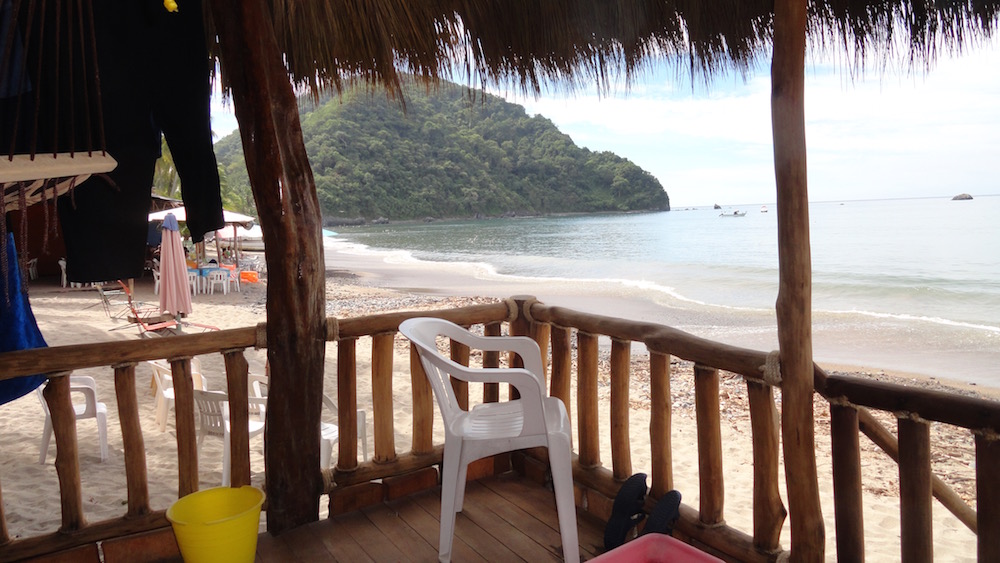
Her towel is spread out on the beach, the cat is on the stoop.
The housewife sips her coffee while her husband sips his soup.
There are advantages to houses built upon the sand.
You do not have to leave your porch to get expertly tanned.
You dine on tuna every day that never has been canned.
When fishermen jerk in their fish and they happen to land
upon your porch, you eat them either cooked or sushi-raw.
The fisherman cannot complain, you see it is the law.
And that is how you know what hubby shoves into his face
is probably not vichyssoise, but rather bouillabaisse

The Prompt: An Odd Trio—Today, you can write about whatever you what — but your post must include, in whatever role you see fit, a cat, a bowl of soup, and a beach towel.

Dreaming A Path

Dreaming A Path

Dream, Fri. Oct 18, 2013

We were at a booth in a café. It was a huge room with booths on every side and each booth had a clock, or at least I thought they did. I don’t think I ever looked. Our alarm started going off and there was no way to turn it off. It was by me and I tried and tried but couldn’t get it off. I said I was just going to unplug it, but Patti said perhaps it was timed with all the other clocks at tables and then it wouldn’t match. I said couldn’t they just reset it when we left? Someone agreed, but still we didn’t unplug it and it went on and on and on. Very annoying. Our booth came equipped with a little dog. It was tiny and light with long very curly white hair that was in loose corkscrew very long ringlets. It was so adorable and affectionate. I held it most of the time. It had legs like wires that went straight down..very skinny…and it jumped a lot. When the waitress came, we told her about the alarm and she said yes, she’d noticed that it was going off…but she didn’t do anything about it. We told her how cute the little dog was and she said yes…but then it seemed like it was the little dog who had the alarm that was going off. We ordered and afterwards I was wanting a dessert but thought I shouldn’t order one. Patti was to my right and I suddenly realized she was eating a very rich chocolate dessert—a sort of fudge flan or very moist slippery cake that was hot with a hot fudge sauce over it. She offered me a taste. It was a very small rectangle…not very big…but I tasted it and immediately said I’d have one, too. It was incredible. Still, the alarm went off. It was driving me crazy! Then I woke up and realized it was my own bedside alarm. I reached up with my eyes still closed and tried to turn it off, but couldn’t find the control. Finally I picked it up, opened my eyes and found the control. It was 8:10. The alarm had been going off for 10 minutes!!!!

My interpretation:

I found this dream in a folder on my computer. I have no memory at all of having dreamed it, and perhaps that distance makes it easier for me to interpret it. In a few weeks, I turn 67. For the past year, I’ve thought repeatedly about death and the fact that if I’m lucky, I probably have only 30 years left. For some reason, that awareness is very stressful. I feel a need to finish everything I’ve started and never completed. Earlier, that consisted of a lot of sorting, construction of storage spaces and weeding out of the contents of my house. That effort is ongoing. What also happened, however, is that I have an incredible drive to get everything published that has been lying around in file cabinets for many many years as well as a need to write new work and somehow disseminate it. My blog is part of that effort, as are my efforts to get all my books on Amazon and Kindle.

Seeing this dream as if for the first time, I clearly see that theme of time running out coupled by a sense of alarm that I need to do something about it. The little dog shows the attractive quality (adorable and affectionate) of finally dealing with all these loose ends—(note all his corkscrew hairs). Those wiry little legs that kept him always active certainly reflect the urgency I’ve been feeling to write write write.

One aspect of this awareness in my real life for a time consisted of my fear that I will stop breathing. This often gets me up gasping at night to run outside to try to breathe. For some reason I haven’t had any of these panic attacks since I started writing every morning. What I interpreted as a growing fear of death and a dread of ceasing to exist was perhaps a fear of not living and creating while I am alive.

I think the interplay between my sister Patti and me in the dream reflects a number of things. One is a difference in our approaches to life. I think in a way, she is more of a rule-follower and since she was my immediate pattern for most of my earlier life, I think a part of me feels this same need, but this is coupled with an equal and stronger need to create my own path in a direction unique from my two older and very competent sisters and to break a few rules to do so. At a very early age, much as I admired and imitated my sisters, I felt the need to prove myself. To find something to know that they didn’t already know. I found this route when I started venturing out at an early age to find new ground where they had not gone before me. It led me first into the homes of friends and strangers where I saw life being acted out in a manner entirely different from my own home. The road led further—to summer camp where I was a stranger to all and vice versa. I loved being the stranger. In choosing a college, I fell back on the reliability and comfort of attending the same school my sister had attended, but in my Jr. year I took my first big leap—a trip around the world on World Campus Afloat. That early adventure in seeing dozens of new and strange cultures set my life path. I’ve been traveling ever since and have been living in Mexico for the past 13 years.

I believe this dream depicts the sense of urgency I’ve had my entire life to “do” something with experience. My art and writing allow me to turn off the alarm for the hours in which I practice them. That small dessert might symbolize the rewards of doing what I need to do to do so.

P.S. An interesting insight I have had just as I started to post this: (And, interestingly enough, wordpress will not accept my blog entry. Perhaps it is insisting I add this P.S. before it does so.) I just got back to Mexico from a visit to the states wherein I visited my oldest sister Betty who is now in the depths of the world of Alzheimer’s. While I was there, she seemed increasingly distressed by the fact that she can no longer communicate, but one day as we were sitting in the living room portion of her small apartment in a managed care Alzheimer’s wing, she motioned to the middle of the floor and said, “Look a that cute little white thing there—that fluffy little white dog!” This was the first incidence that I know of of her actually hallucinating visually, and for some reason it popped into my mind in relation to the little dog in my dream. All of these images—of our dreams as well as our daily life—remind us to live while we can and to do what is most important to us. In my case as well as my sister’s—to communicate. Too late for her, although she continues to try. Not too late for me.

P.S.S.  By the way, the instant I completed the above P.S., the wordpress page that had continued to not allow me to post this blog entry flashed the message:  What do you want to post?  Text? Picture?  I chose text and and you have just read it.

The prompt: Freudian Flips. Do you remember a recent dream you had? Or an older one that stayed vivid in your mind? Today, you’re your own Freud: Tell us the dream, then interpret it for us! Feel free to be as serious or humorous as you see fit, or to invent a dream if you can’t remember a real one.

Note in response to this prompt: (When I think of dreams, I think of Jung, not Freud, and he continues to influence my thoughts and actions much more than Freud ever did.)