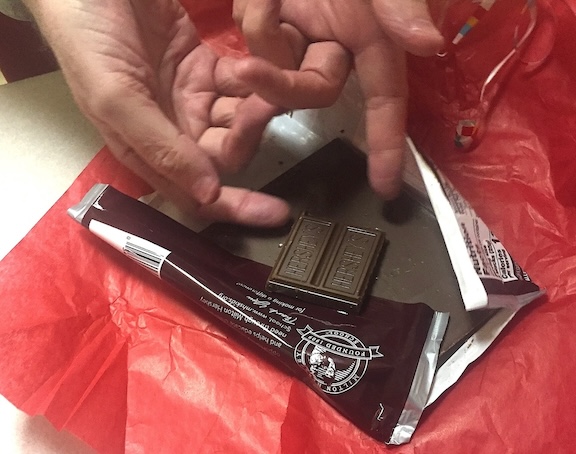
Photo by Ryan O’Niel on Unsplash. Used with permission
Stickler
The banker, the doctor, the rabbi, the priest used to jam back in high school and never ceased. They’ve been meeting on Saturday nights all their lives leaving their girlfriends and bishops and wives to drink beer and rap and have deep discussion about riffs and choruses, notes and percussion. The priest is the drummer. He wields a wild stick. The rabbi’s a string guy. The cello’s his schtick. The banker plays sax and the doctor’s on keys, but they’re all pretty good at shooting the breeze.
It’s as hot as a sauna and still they play on. All through the night and into the dawn. the priest squeegees his glasses off with his left thumb while his right is engaged in beating the drum. He’s a stickler for rhythm, enthralled with the beat. He stirs a small zephyr while stomping his feet. When they’ll stop playing is anyone’s guess. It’s obvious they overlook my duress. They’ve had a good jam. A most excellent session, but the priest better scoot or he’ll miss my confession!
After so many years, seeing it again on the screen,
I took a picture of your name.
Not written by your hand,
it had a strangeness––
featureless, revealing nothing.
It had no voice,
no breath.
Out there sharing itself with the world,
it has formed a wall around
that intimacy it birthed when you took my hand in yours,
using your name to pull me closer,
powerless against its strength on your tongue.
Everyone wanted to share a part of what made you you,
but I only wanted to be with you, back when,
scrawled in your careless hand,
you were written on my soul.
Wanting to be perfect for you,
remembering that tattoo you traced across my back.
Your name and mine.
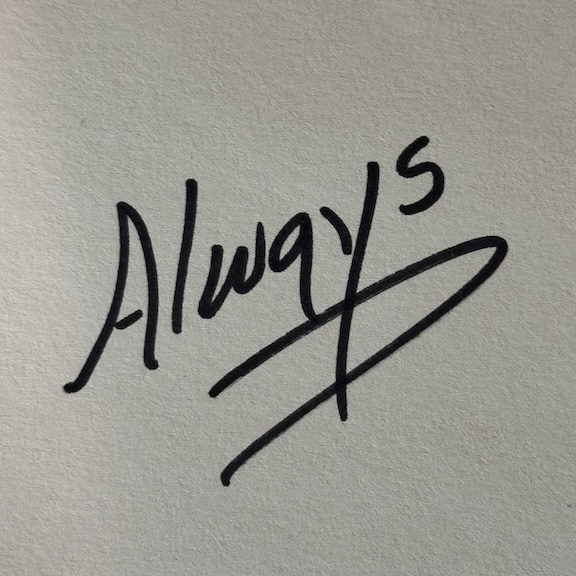
“Always,” you wrote.
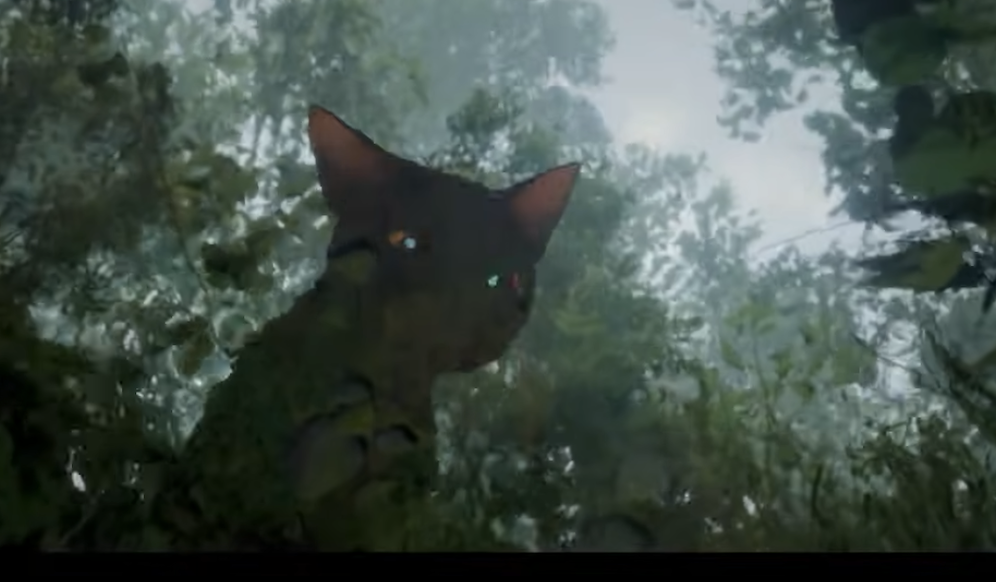
If you have not yet seen the movie Flow, move heaven and earth to see it. It is spellbinding. If you have a cat, you will be especially impressed with how perfectly the main character is illustrated. And, that said, we will have much to talk about afterwards.
What we feasted on
in those first stages of internet romance—
when nine hours was too short a conversation—was words.
We passed on to the next stage of computer dating:
our first dinner date.
He watched on his desktop computer as I prepared a salad.
This was a long and lengthy process
I recorded as closely as was possible,
using the camera from my laptop.
A prisoner of his large unmovable console computer, I watched his empty desk chair
as he repaired to the kitchen to prepare his meal, hearing sound effects but little else.
When he returned to the living room, he laid his meal in front of his computer.
I had yet to see it as I, in turn, placed my salad in front of me and took my first bite,
watching closely my technique according to my Skype image.
I chewed politely and then smiled,
revealing the lack of lettuce shards on my front teeth.
I looked up. He was watching me as lovingly as usual.
Now, it was his turn.
What are you eating? I asked. Ham, he said.
He lifted a huge hunk on his fork, taking a dainty bite
and chewing happily.
What else? I asked. Just ham, he answered.
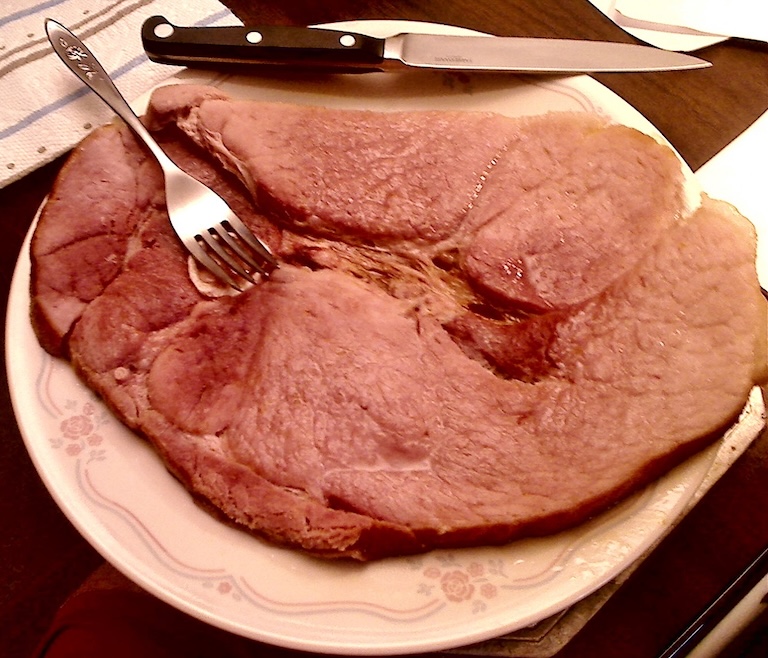
And so he demolished the entire pound of thick ham steak,
now and then washing it down with a healthy swig of rum and Coke.
Rum and Coke.
It had been one of our bonding experiences
to find that the drink of choice for each
was Bacardi Rum with caffeine-free Diet Coke.
How could this not be a romance made in heaven?
Culinary compatibility from 2,000 miles away
seemed to be less of a problem than it would be months later,
when we first made physical contact.
But, there was a resolution. He started munching on carrots and I had no objection to ham.
We discovered a mutual mania for potato chips, and true romance bloomed
when I found the full bar of Hershey’s chocolate atop his refrigerator.
Who says we need to concentrate on our differences?
For dVerse Poets we were to post a poem about internet romance in honor of Valentines Day
I am so sad to say that Andrea is removing her WordPress blog. Because she has published several wonderful interviews and reviews of my work on her blog, I want to replicate them on my blog before she vanishes from WP.
I will miss seeing Andrea’s blogs, but she tells me she has another blog on Medium. Please check it out!
I had the pleasure of reading the manuscript of this book before its publication in 2023, and I recently reread it so I could review it with a fresh impression. If anything, I liked this book even more on second reading.
I’ve loved Judy’s poems ever since I stumbled on her blog 10 years ago (where she posts a new poem or two every day). The China Bulldog, subtitled And Other Tales of a Small-Town Girl, contains poems and essays about her childhood in rural South Dakota. It’s illustrated with vintage photos of her family. I’m close to Judy in age, so the photos trigger memories of my own small-town childhood, with similar architecture, furniture, clothing, hairstyles, toys, etc., even though I grew up on the other side of the country, in New Jersey.
The story called “Five Gifts for my Sister” gave me one of those flashbacks, when Judy mentions giving her sister a box of “old aluminum tinsel.” The tinsel of my childhood was actually lead foil. Its weight made it hang straight down, unlike the modern plastic tinsel. And the correct procedure Judy described for placing it on the tree reminded me so of my mother’s admonitions—evenly spaced, “draped on the ends of branches so it hung just to the top of the next branch without lapping over,” and never just thrown on the tree—horrors!
The essay “Hail, Hail” is about the family getting a shiny new green Oldsmobile, and Judy’s mother deciding to allow 17-year-old sister Patty drive Judy to summer camp, 200 miles away. Just before arriving at the camp, they were caught in a severe hailstorm that “marbled” the car’s windshield and cratered every inch of the new car’s surface. Now, if that had happened to me, I would have been terrified to drive it back home, suspecting that when my parents saw it, I would somehow be blamed. But throughout the book, Judy reveals her parents’ characters by their words and actions. About the damaged car, Dad said, “Accidents happen. It wasn’t your fault.” Mom said, “I never really liked that color of green anyway.” I’m guessing insurance paid for a replacement, because Judy’s parents picked her up in a brand-new rose-colored Pontiac Bonneville.
My favorite story in the whole book is “Zippy,” about their pet raccoon. Yes. Hysterical.
Who we are in our adulthood is significantly influenced by our upbringing and where we were raised. Judy Dykstra-Brown does a wonderful job of portraying her early life on the prairie. I was transported by her vivid descriptions and reminiscences. This book is definitely worth reading. And rereading.
If you like this post, please spread the joy! Share on all your social media.
When I saw the prompt words, I knew it would be topical
to talk about a climate that was anything but tropical.
Truly, in the past I have trudged through sludge and snow,
my socks sodden and water-soaked by the fire’s glow.
Despite those still-clear memories, I have some reservations––
a few inner thoughts about those former titillations
felt while swooping down a ski hill, zooming up the rise
of the hill that rose again at the old hill’s demise.
For sure, snow is a despot. It chills and then it freezes,
leaving souvenirs of grippe, sniffles, coughs and sneezes.
But oh what memories we might have, in fact I’m sure we will
of strapping on those sticks just meant for zooming down the hill,
and even though we started at various reckless paces,
somehow, some (and I was one) landed on our faces.
The prompt words for The Sunday Whirl Wordle 693 are: past climate water trudge sludge sodden despite despot rise demise few inner
Maya Miller of the New York Times reported today that the congressional phone system has been jammed with tens of millions of calls from outraged constituents contacting their representatives to demand that they stand against President Donald Trump and his sidekick Elon Musk as they unilaterally dismantle the United States government and gain access to Americans’ private information. The Senate phone system usually gets about 40 calls a minute; now it is up to 1,600.
On Wednesday, Nicole Lafond of Talking Points Memo reported that Senate Republicans were not especially concerned about Musk and his Department of Government Efficiency team rampaging through the federal government, figuring that Musk won’t last long and that the courts will eventually stop him. Today, Musk posted on X: “CFPB RIP,” with a tombstone emoji. The Consumer Financial Protection Bureau has recovered more than $17 billion for consumers from fraudulent or predatory practices since it began in 2011.
Trump seems willing to let Musk continue to run amok through the government while he becomes a figurehead. Today he posted on his social media site that he has fired the chair and members of the board of trustees of the Kennedy Center, saying they “do not share our Vision for a Golden Age in Arts and Culture.” He promised to announce a new board, “with an amazing Chairman, DONALD J. TRUMP!” “For the Kennedy Center, THE BEST IS YET TO COME!” he wrote.
U.S. District Judge Carl J. Nichols, who was appointed by Trump in 2019, is less impressed with the direction of the Trump administration. Today, he blocked it from placing more than 2,000 employees of the United States Agency for International Development (USAID) on paid leave. Trump and his allies have claimed—without evidence—that USAID is corrupt, but Steven Lee Myers and Stuart A. Thompson of the New York Times reported today that the disinformation making those claims on social media posts, for example, comes from Russia.
Senator Angus King (I-ME) took his Republican colleagues to task yesterday for their willingness to overlook the Trump administration’s attack on the U.S. Constitution. King took the floor as the Senate was considering the confirmation of Christian Nationalist Russell Vought as director of the Office of Management and Budget. Vought, a key author of Project 2025, believes the powers of the president should be virtually unchecked.
King reminded his colleagues that they had taken an oath to “support and defend the Constitution of the United States against all enemies foreign and domestic” and noted that the Framers recognized there could be domestic enemies to the Constitution. “Our oath was not to the Republican Party, not to the Democratic Party, not to Joe Biden, not to Donald Trump,” King said, “but…to defend the Constitution.”
“And…right now—literally at this moment—that Constitution is under the most direct and consequential assault in our nation’s history,” King said. “An assault not on a particular provision but on the essential structure of the document itself.”
Why do we have a Constitution, King asked. He read the Preamble and said: “There it is. There’s the list—ensure domestic tranquility, provide for the common defense, ensure the blessings of liberty to ourselves and our posterity.” But, he pointed out, there is a paradox: the essence of a government is to give it power, but that power can be abused to hurt the very citizens who granted it. “Who will guard the guardians?” King asked.
The Framers were “deep students of history and…human nature. And they had just won a lengthy and brutal war against the abuses inherent in concentrated governmental power,” King said. “The universal principle of human nature they understood was this: power corrupts, and absolute power corrupts absolutely.”
How did the Framers answer the question of who will guard the guardians? King explained that they built into our system regular elections to return the control of the government to the people on a regular basis. They also deliberately divided power between the different branches and levels of government.
“This is important,” King said. “The cumbersomeness, the slowness, the clumsiness is built into our system. The framers were so fearful of concentrated power that they designed a system that would be hard to operate. And the heart of it was the separation of power between various parts of the government. The whole idea, the whole idea was that no part of the government, no one person, no one institution had or could ever have a monopoly on power.”
“Why? Because it’s dangerous. History and human nature tells us that. This division of power, as annoying and inefficient as it can be,… is an essential feature of the system, not a bug. It’s an essential, basic feature of the system, designed to protect our freedoms.”
The system of government “contrasts with the normal structure of a private business, where authority is purposefully concentrated, allowing swift and sometimes arbitrary action. But a private business does not have the army, and the President of the United States is not the CEO of America.”
In the government, “[p]ower is shared, principally between the president and this body, this Congress, both houses…. [T]his herky-jerkiness…this unwieldy structure is the whole idea,… designed to protect us from the…inevitable abuse of an authoritarian state.”
Vought, King said, is “one of the ringleaders of the assault on our Constitution. He believes in a presidency of virtually unlimited powers.” He “espouses the discredited and illegal theory that the president has the power to selectively impound funds appropriated by Congress, thereby rendering the famous power of the purse a nullity.” King said he was “really worried about…the structural implications for our freedom and government of what’s happening here…. Project 2025 is nothing less than a blueprint for the shredding of the Constitution and the transition of our country to authoritarian rule. He’s the last person who should be put in the job at the heart of the operation of our government.”
“[T]his isn’t about politics. This isn’t about policy. This isn’t about Republican versus Democrat. This is about tampering with the structure of our government, which will ultimately undermine its ability to protect the freedom of our citizens. If our defense of the Constitution is gone, there’s nothing left to us.”
King asked his Republican colleagues to “say no to the undermining and destruction of our constitutional system.” “[A]re there no red lines?” he asked them. “Are there no limits?”
King looked at USAID and said: “The Constitution does not give to the President or his designee the power to extinguish a statutorily established agency. I can think of no greater violation of the strictures of the Constitution or usurpation of the power of this body. None. I can think of none. Shouldn’t this be a red line?”
Trump’s “executive order freezing funding…selectively, for programs the administration doesn’t like or understand” is, King said, “a fundamental violation of the whole idea of the Constitution, the separation of powers.” King said his “office is hearing calls every day, we can hardly handle the volume. This again, to underline, is a frontal assault of our power, your power, the power to decide where public funds should be spent. Isn’t this an obvious red line? Isn’t this an obvious limit?”
King turned to “the power seemingly assumed by DOGE to burrow into the Treasury’s payment system” as well as the Centers for Medicare and Medicaid Services, with “zero oversight.” “Do these people have clearance?” King, who sits on the Senate Intelligence Committee asked. “Are the doors closed? Are they going to leave open doors into these? What are the opportunities for our adversaries to hack into the systems?… Remember, there’s no transparency or oversight. Access to social security numbers seem to be in the mix. All the government’s personnel files, personal financial data, potentially everyone’s tax returns and medical records. That can’t be good…. That’s data that should be protected with the highest level of security and consideration of Americans’ privacy. And we don’t know who these people are. We don’t know what they’re taking out with them. We don’t know whether they’re walking out with laptops or thumb drives. We don’t know whether they’re leaving back doors into the system. There is literally no oversight. The government of the United States is not a private company. It is fundamentally at odds with how this system is supposed to work.”
“Shouldn’t this be an easy red line?” he asked.
“[W]e’re experiencing in real time exactly what the framers most feared. When you clear away the smoke, clear away the DOGE, the executive orders, foreign policy pronouncements, more fundamentally what’s happening is the shredding of the constitutional structure itself. And we have a profound responsibility…to stop it.”
King’s appeal to principle and the U.S. Constitution did not convince his Republican colleagues, who confirmed Vought.
But today, Illinois governor J.B. Pritzker took a different approach, trolling Trump’s claim that the Gulf of Mexico would now be called “the Gulf of America.” Standing behind a lectern and flanked by flags of the United States and Illinois, Pritzker solemnly declared he was about to make an important announcement.
“The world’s finest geographers, experts who study the Earth’s natural environment, have concluded a decades-long council and determined that a Great Lake deserves to be named after a great state. So today, I’m issuing a proclamation declaring that hereinafter Lake Michigan shall be known as Lake Illinois. The proclamation has been forwarded to Google to ensure the world’s maps reflect this momentous change. In addition, the recent announcement that to protect the homeland, the United States will be purchasing Greenland, Illinois will now be annexing Green Bay to protect itself against enemies foreign and domestic. I’ve also instructed my team to work diligently to prepare for an important announcement next week regarding the Mississippi River. God bless America, and Bear Down [a reference to the Chicago Bears football team].”
Sadly, Andrea is suspending her WP blog but may still be found at her blog on Medium. Since she has done two wonderful interviews with me in a addition to a book review of my book The China Bulldog, I want to preserve those blogs here. For Part I of this interview, Go HERE
An Interview with Judy Dykstra-Brown, Teacher, Artist, Poet, Part II
I’ve been following Judy Dykstra-Brown’s lifelessons blog for more than five years, and I have found her to be incredibly creative and funny and intellectually stimulating. I’m so pleased that she agreed to be interviewed for ARHtistic License.
ARHtistic License: In 2001 you made the decision to move from California to Mexico. Why there?
Judy Dykstra-Brown: Many years before, I had met a man in China who told me that I should be living in San Miguel, Mexico. He had been there and knew lots about it and we had talked many times as we were travelling together. I kept this in the back of my mind as a place it would be good to retire to once I’d traveled to more far-flung places. My husband was 16 years older than me and we operated on a frantic pace, driving all over the U.S. to do shows and putting in long days at home creating. His sculptures got bigger and bigger—some of them weighing over a ton, and our setup for our shows was 12 hours long, our teardown 4 hours. We were always the first ones at shows for setup and the last ones there for teardown. I could tell Bob was wearing out and had tried for a few years to convince him to retire, but he was convinced we would starve if we didn’t do shows. I, on the other hand, knew that every penny we made ended up being spent on new tools, supplies and art studios. (We had 7 on our property, with Bob building a new one every two years, not to mention buying or building new tools for the new mediums he ventured into, pulling me along after him. So, I finally said I was moving to Mexico for a year and he could move down to the first level of the house where my jewelry studio was and rent out the top story and send me half the money. In the end, he came with me, protesting all the way. The first week, driving down and driving around San Miguel, he hated it. By the eighth day, he was proposing we buy a house there! This was after he was offered a job teaching sculpture at a new art center in a hacienda outside the town. So, that was our plan until after 8 weeks in San Miguel, we took a little side trip to Ajijic and Bob fell in love with it.
Retablo by Judy Dykstra-Brown
AL: Unfortunately, Bob was unable to move to Mexico with you, because he passed away suddenly. Your book Lessons from a Grief Diary, which you co-wrote with Dr. Anthony Moriarity, details your journey through your husband’s cancer diagnosis, death, and its aftermath. It draws from your journaling during that time, with additional insights from Moriarity, a clinical psychologist. What made you decide to share your pain? What was it like to have a co-author?
JD-B: After 8 years mourning my husband, I ventured out into the world via Match.com but after a number of months, realized I was not going to find a match there, so switched to OkCupid. It was a very different site back then and drew many creative people. It has since been purchased by Match.Com and so has dropped all the features I loved, but the real point is that this marked a change in me and I actually met a number of very interesting men, some of whom ended up coming down to Mexico so we could meet in person. It was at this point that I gave a talk for a local lecture series that talked about my process of grief recovery. Tony, who was in the states at the time, did not hear the speech, but he heard about it and asked me if I could send him a transcript. I did, and it was he who convinced me I needed to write a book about it and asked if he could write alternating chapters.
The co-authoring worked out very well. I handed chapters over to Tony as I wrote them, he wrote his replies and I edited them. He had about every book on the grieving process ever written and so we compiled an annotated reading list at the end of the book that in itself is a valuable resource.
Bob Brown, Judy’s husband of fifteen years, in front of a gallery showing his work
Lamp by Bob Brown. Judy describes the lamp: “I looked everywhere for a photo of my favorite lamp, but I don’t think one exists, so I shot one of it in my house. It’s not well-staged, but I just wanted you to see this lamp. Bob went through many phases, as did I. I liked this one best. They got weirder and weirder. This lamp was all Bob’s baby. The only thing I did was to make the paper and use it to create a cocoon for the spiral element. The ball on the spiral cord and the palm leaf bird are not part of the lamp. Someone hung the ball on the lamp for fun last Xmas and I never took it down. The bird is hanging from the curtain rod. The horsehair is part of the lamp, however. When they trim the tails of the horses in Bali, they keep the hair and weave it into strings. We brought some home with us. A string of it forms a necklace on the lamp as well. The huge head is one Bob carved in Bali, which is a story of its own.”
AL: When you started your blogin 2013, your initial intention was to help people through grief, but your focus soon changed to sharing your life, and encouraging people through your life lessons. There’s a lot of positivity and humor on your blog, especially in some of your poems. You have over 6,000 followers. What do you hope readers will take away from your blog?
JD-B: I hope it makes them laugh and think and take risks and realize that even if the way we experience life changes as we age, an excitement with life need not wane. Even limited to your own house and yard, nature and just the fact we exist with all our complicated inner workings is such a miracle that even the observing of it can be enough. Having a way in which to express this amazement is a huge help as well, be it art, writing, music, dance, or even volunteering, interacting with animals or thinking about your long incredible life.
Retablo by Judy Dykstra-Brown
AL: You are one of my very favorite poets. I can’t tell you how many times I’ve been delighted by a turn of phrase or an unexpected twist in your poems. Your meter and rhymes are impeccable, and the words flow like music. Where did you learn to write poetry like that? When did you start? Who are your influences, your favorite poets?
JD-B: When she was young, my mother kept a rhymed journal. We absolutely loved having her read it to us. Everything was perfectly rhymed and metered and hilarious. When my mom passed away, I asked my sister, who lived in the same town where my mom had lived, to send it to me and she told me that my mother had decided it was silly and burned it years ago. I was so disappointed. She also wrote humorous plays for her women’s club to perform at state conventions. My friends and I performed one of them for a talent show once.
Well, long story short, whenever someone in my family deserved teasing, she and I would sit down and write a rhymed poem about them. Some appreciated it and others didn’t, but we certainly enjoyed writing them. I think as a result of this that an ear and eye for rhythm and rhyme just grew up with me. By the time I got to college, where I took every creative writing and journalism course that was offered, rhymed poetry was not in “style,” so I wrote mainly short stories. Later, I studied screen writing which wasn’t my bag and substituted a poetry class and joined a writer’s workshop in Hollywood. Everything that had drained my soul in the TV world was healed when I started writing (still unrhymed) poetry, and with one 5-year hiatus (which is another story that I’ll tell if another question leads up to it) I’ve been writing poetry ever since.
I started writing rhymed and metered poetry on my blog when I started following word prompts on WordPress. I’ve been thinking (and even occasionally dreaming) in rhyme ever since. Sometimes I wake up in the middle of writing a poem in my sleep, grab my computer from the bookcase headboard of my bed, jot down as much of it as I can remember, and go on following where it leads me. I think the reason why I prefer to write in rhyme is that it limits my choices and makes it easier not to “block.” I write one line, then run through the alphabet to find every word that rhymes with the last word I’ve written, pick one and make a sentence that leads up to it. It is a game that creates an end product that is as much a surprise to me as I hope it is to the reader. I absolutely love the project. Poet friends have told me it is keeping me from writing more serious work, but I notice most of them are not writing much at all. I write one or two poems a day and have for the past 7 years. I love waking up in the morning and doing so. Can’t wait to feed the dogs and cats and then jump back into bed to write. I sleep with my computer plugged in on the headboard of my bed. It is the last thing I do before I fall asleep and first thing (after feeding the animals) I do in the morning. I have quit all activities that occur before 2 pm in the afternoon to devote myself to writing in the morning.
Retablo by Judy Dykstra-Brown
AL: You’ve authored one book of poetry for adults. Any chance another poem collection will be coming out? (Please, please, please.)
I actually have poems selected for several books, but I keep putting off doing the final formatting. I think the first one will be poems about family and growing up in the same town I was living in in Prairie Moths, my first book of poetry.
I also have two autobiographical books that have been finished for years—I just can’t make myself do the final edit and I hate the business part of trying to find an agent or publisher. I will probably self-publish them—if I ever get around to it. I have another book project that involves my humorous poems about aging, but it is a book with a twist, and I’m not telling what that twist is!
[Note from Andrea: All you agents and publishers out there, here’s your chance to snag a great client!]
Retablo by Judy Dykstra-Brown
AL: You’ve written several books for children. Are they all in verse?
JD-B: Yes. My illustrator just finished the illustrations for a third one. The illustrations are sitting to my left waiting to be scanned and formatted. I just keep putting it off.
AL: You collaborate with illustrator Isidro Xilonzochitl. How did you meet? Why did you decide to work with him? Describe your process as a team.
JD-B: When I moved to Mexico 19 years ago, I had thought I was moving here with my husband. Unfortunately, two days before we were to move down to the house we’d bought here, we went to our doctor’s office to get the results of physicals we’d had the week before and discovered my husband had pancreatic cancer. He lived for 3 weeks. And so, when I actually moved down to Mexico two months later, I was moving alone to a place where I knew no one except for my real estate agent! Since I was interested in art, I started making the rounds of galleries and one of the first artists whose work I was attracted to was Isidro. I bought several of his paintings and through him I met a number of young Mexican artists who formed a group called ARCOC. I was adopted as their sole female comrade and we put on several art shows, art experiences for kids and art contests for kids. When I started my poetry reading series, it was in a coffee shop Isidro and his partner at that time opened up on the ground floor of his studio. We’ve been friends ever since.
I actually wrote most of the children’s books years before but had done nothing with them. I asked if he’d be interested in illustrating them and he said yes. His partner at the time, Kristina, had grown up in the states and so she translated them to him for illustration purposes. I set up the books, minus illustrations, and the two of them collaborated over how he would illustrate them—with hilarious results, I think.
Retablo by Judy Dykstra-Brown
AL:Which poetry journals did you edit? What did you look for in poetry submissions?
JD-B: I ran a reading series at a local coffee shop here in San Juan Cosala, Mexico, for two years. I also edited an anthology of writing by high school students when I was a teacher in Cheyenne, Wyoming after coming home from Africa. It was entitled The Spiral Notebook. In L.A. I was one of the editors of The Sculpture Garden Review, which was not, despite its title, an art journal but a poetry journal. I also ran a reading series at the art center in the San Lorenzo Valley near Santa Cruz, CA. Recently, that entire valley was evacuated due to fires and at least one of my friends lost his house, others won’t be able to go back for a year until water and electricity is restored. So sad.
The ten women in a women’s writing group I started here in Mexico also published an anthology entitled Agave Marias, stories and poems about crossing borders and breaking boundaries. That anthology is available on Amazon, as are all of my books. Oh. An interesting sidelight of Prairie Moths was that some years after I published it, I got an email from a man in Oregon who said, “I am the youngest boy in your pictures of your grandparents standing in front of their homestead with their daughter and her 8 sons.” He was a cousin, at least 20 years older than me, that I had only met once when he passed with his family through South Dakota on their way back to Utah, where they lived. I believe I was 10 or 11 then. We started up a correspondence after his first email to me and he invited my sisters and me to come to their family reunion and we all went. I came from Mexico, one sister from Wyoming and another from Minnesota. It was fabulous. Only two of the first cousins were still alive, but there were at least a hundred people there who were their descendants. Since then one of the first cousins and one of the first cousins once removed has passed away, but I’m still in touch with the one who wrote to me, who is now in his nineties.
What I look for in poetry is originality, word choice, and heart. Although I presently write mostly rhymed and metered poetry, I mainly do so because somehow the prompts force me to. I don’t know why. It is also a sort of game I play to keep my mind working. I used to do crossword puzzles. Now I do metered rhyme. I really do think as we grow older that it is vital to exercise our minds.
Retablo by Judy Dykstra-Brown
AL: What advice would you give to a beginning poet?
JD-B: I think many beginning poets think that poems should rhyme but with almost no exceptions, I encourage them not to try to rhyme. The thing we need to learn to do is to follow where our mind leads us—to write without editing and without stopping—just to write what comes and to edit later. Then, to edit remorselessly. It is important to get to that place in ourselves that we wouldn’t necessarily get to through reason or careful plotting.
AL: Can you define retablo for us? When did you start making them? How did you begin?
JD-B: The retablo is a frame or shelf enclosing decorated panels or revered objects above and behind an altar in a church. In Mexico, it is a box which contains a figure, photo or painting of the Virgin Mary, Christ or some other saint and sometimes little votive offerings or objects. Most homes have at least one. I took the idea but it quickly evolved into themes that were not religious. I tended to work around a certain theme. One year it was saints, another it was famous artists, another Mexican legends, traditions or places I visited. I have created one for each family member or friend who died. I’ve even done one on the Coronavirus.
Covid-19 Retablo by Judy Dykstra-Brown. For more photos and information about this piece, check out this article on her blog.
AL: Any more funny stories you can tell us about your work? (See Tuesday’s post for the previous ones.)
JD-B: When I was in Peru, I bought a few small oil-on-canvas paintings of saints and the Virgin Mary, thinking I would turn them into retablos. I worked for a long time on one of the Virgin, adding first tiny beautifully crafted wooden musical instruments. I didn’t know why but then I started adding little books and pages of poems taken from a miniature book of poetry, pen nibs and other objects associated with music and poetry. When it was finished, Isidro’s cousin Eduardo was at my house for some reason and he saw the retablo and said, “Huh. Santa Cecilia!” I said no, it was the Virgin and he said, no that it was definitely Santa Cecilia. After he left I consulted Google and sure enough, it was Santa Cecilia, patron saint of poets and musicians! She had somehow attracted to herself the exact appropriate symbols.
Santa Cecilia retablo by Judy Dykstra-Brown
To close this interview, I am adding links to a few more of Judy Dykstra-Brown’s poems (and photographs):
Reblogged this on lifelessons – a blog by Judy Dykstra-Brown and commented:
In case you aren’t already following her blog, here is Andrea Huelsenbeck’s second (and last) installment of her interview with me regarding both my art and writing and that of my husband, Bob. Bob’s work as well as my work before coming to Mexico 19 years ago was covered in Installment 1. This installment covers my present work.
What an interesting and informative interview! Sometimes you follow a blogger, but don’t have the time to go back and read all they wrote from the beginning of time…I’ve been following Judy’s blog for a few months now and enjoying it, but appreciate the background and insight that is added here.
Thank you for introducing me to Judy Dykstra-Brown. I hopped over here to see what you were up to for the poetry challenge and was surprised by the scope and depth of this interview. Interestingly, Allen and I lived in San Miguel de Allende for several months back in the 1970s, so her comments about life there brought back many memories. And your poetry is lovely here. Write on!
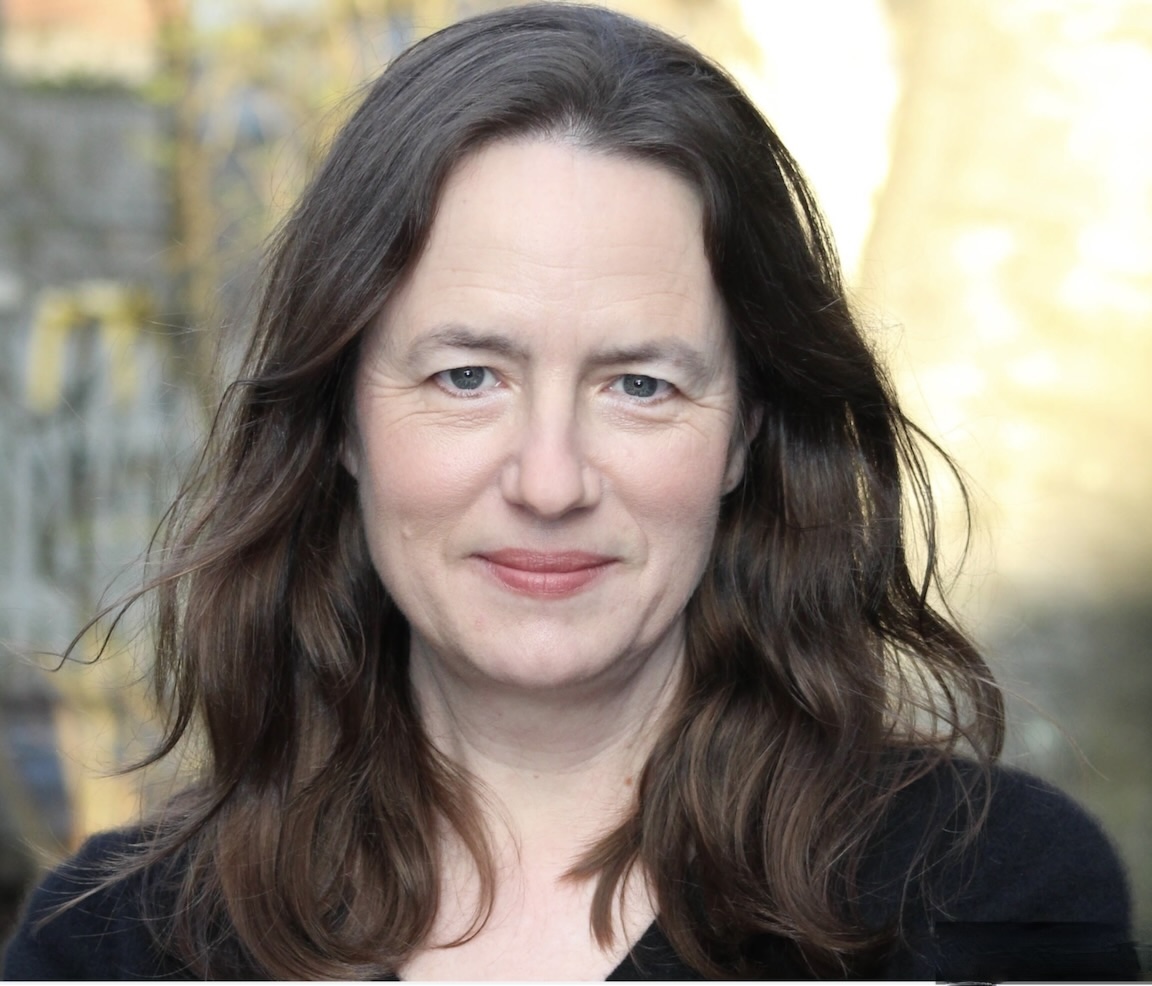
 Photo by Ryan O’Niel on Unsplash. Used with permission








 Retablo by Judy Dykstra-Brown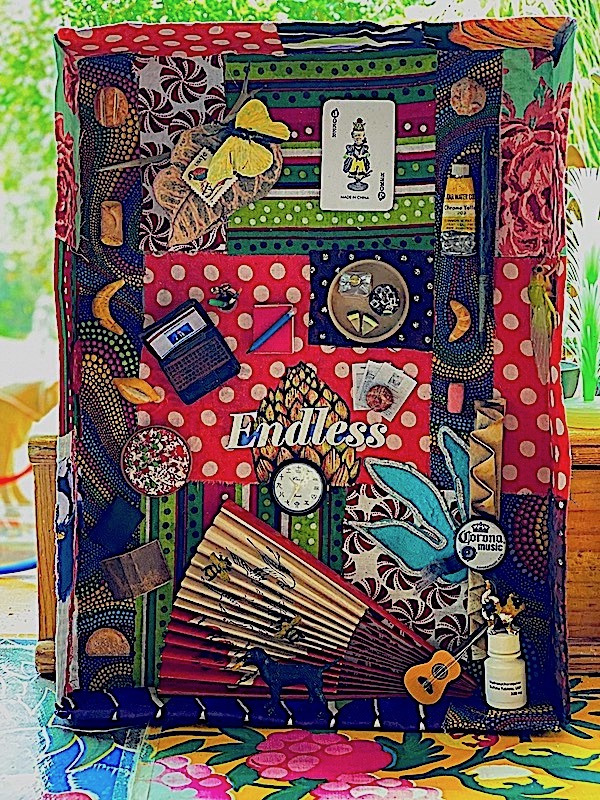


 lifelessons - a blog by Judy Dykstra-Brown
Very interest interview! Thank you for the discovery of this talented lady!
Liked by you and 1 other person
Reblogged this on lifelessons – a blog by Judy Dykstra-Brown and commented:
In case you aren’t already following her blog, here is Andrea Huelsenbeck’s second (and last) installment of her interview with me regarding both my art and writing and that of my husband, Bob. Bob’s work as well as my work before coming to Mexico 19 years ago was covered in Installment 1. This installment covers my present work.
Liked by 2 people
What an interesting and informative interview! Sometimes you follow a blogger, but don’t have the time to go back and read all they wrote from the beginning of time…I’ve been following Judy’s blog for a few months now and enjoying it, but appreciate the background and insight that is added here.
Liked by you and 1 other person
I’m a huge fan of Judy’s writing, a very talented and interesting woman, thanks for sharing!
Liked by you and 1 other person
Thank you for introducing me to Judy Dykstra-Brown. I hopped over here to see what you were up to for the poetry challenge and was surprised by the scope and depth of this interview. Interestingly, Allen and I lived in San Miguel de Allende for several months back in the 1970s, so her comments about life there brought back many memories. And your poetry is lovely here. Write on!
Liked by 1 person
Thanks so much, Beth. You’ll love Judy’s blog. She posts a poem every day and they are wonderful.
Liked by 1 person
Judy is a fascinating, multitalented person, and your interview showcased her very well.
Liked by you and 1 other person