Using 2/3 of your screen
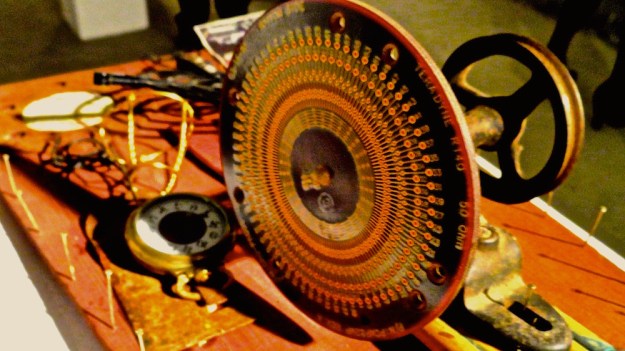
Time’s Fool
I’ve labored now for many years trying to make time stop,
thinking if it just would pause, that I could cross its top
and go into the future or go into the past––
passing back and forwards over timelines that are vast.
For years I used up all my time thinking about this.
I never had a child or even a first kiss.
I thought if I made time my slave, then I’d have time to do
all those wished for “one day” things I’d added to the queue:
dating, travel, games of chance, gardening and cooking––
all the things that others do while I have just been looking
for the perfect formula to take me back in time.
(Or traveling to the future would be equally sublime.)
But, for my whole life, you see, I’ve been no place but here,
fiddling with gadgets and sitting on my rear.
In trying to trick time I fear that I’ve tricked only me,
for life itself is time travel, and the cost is free!
I do not mind the cash I’ve spent. I don’t regret the cost.
The only thing that I regret is all the time I’ve lost!
Pick Your Gadget: time machines, anywhere doors, and invisibility helmets. You can only have one. Which of these do you choose, and why? https://dailypost.wordpress.com/prompts/pick-your-gadget/

I think the morning glory is the hardest of all flowers to capture. Perhaps it is because it doesn’t have much dimension from it’s most interesting angle. I’ve photographed dozens, but this is the first one I’ve even considered using.
http://ceenphotography.com/2015/12/09/flower-of-the-day-december-9-2015-columbine/
Metal/Wood
This prompt reminds me of the old game paper/scissors/stone. Scissors cut paper, paper covers stone, stone breaks Scissors.
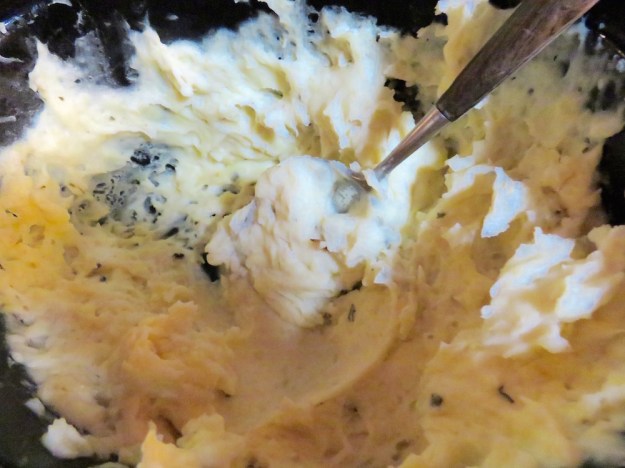
I inadvertently left the above picture out of my Thanksgiving post, and now I’m glad I did. I love the movement and texture in the potatoes, and the spoon–with the stainless bowl and stem and the wooden handle––is my favorite. It belongs to a set Bob brought into our marriage. Most of the pieces have been broken or lost, but these big serving spoons come in handy every time company comes!

 This large wooden heart shown in the Maestros del Arte Feria is covered in metal milagros.

This life-sized hand also covered in milagros came home with me!
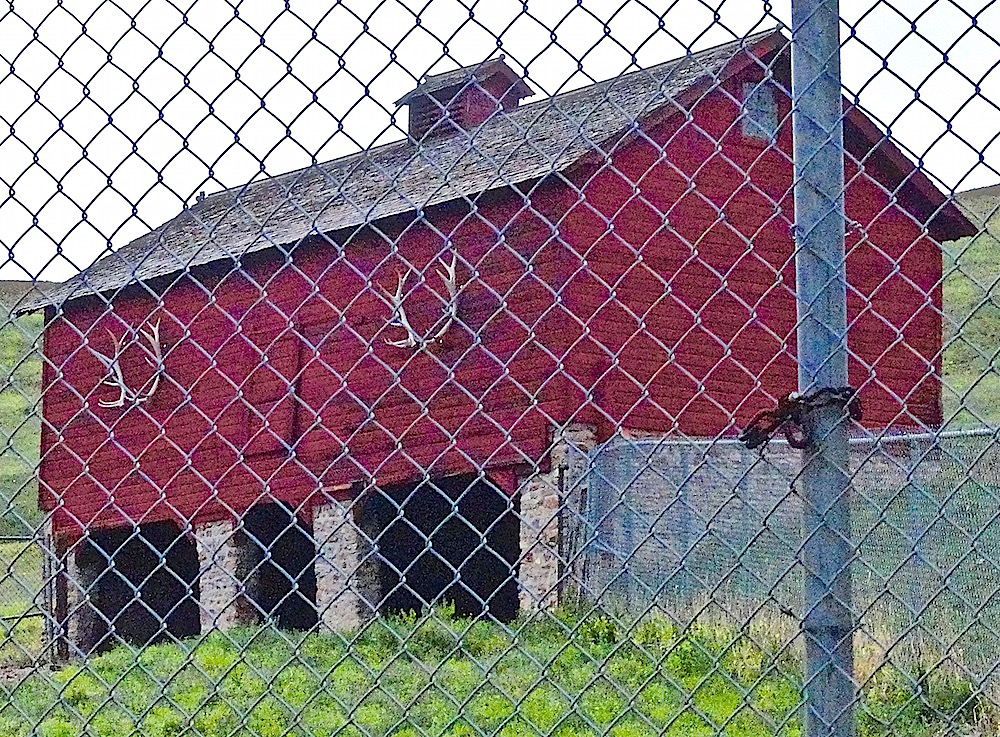
The wooden barn is to protect the buffalo in a park in Sheridan, Wyoming from harsh Wyoming winters. The metal mesh fence is to protect park visitors from the buffalo!

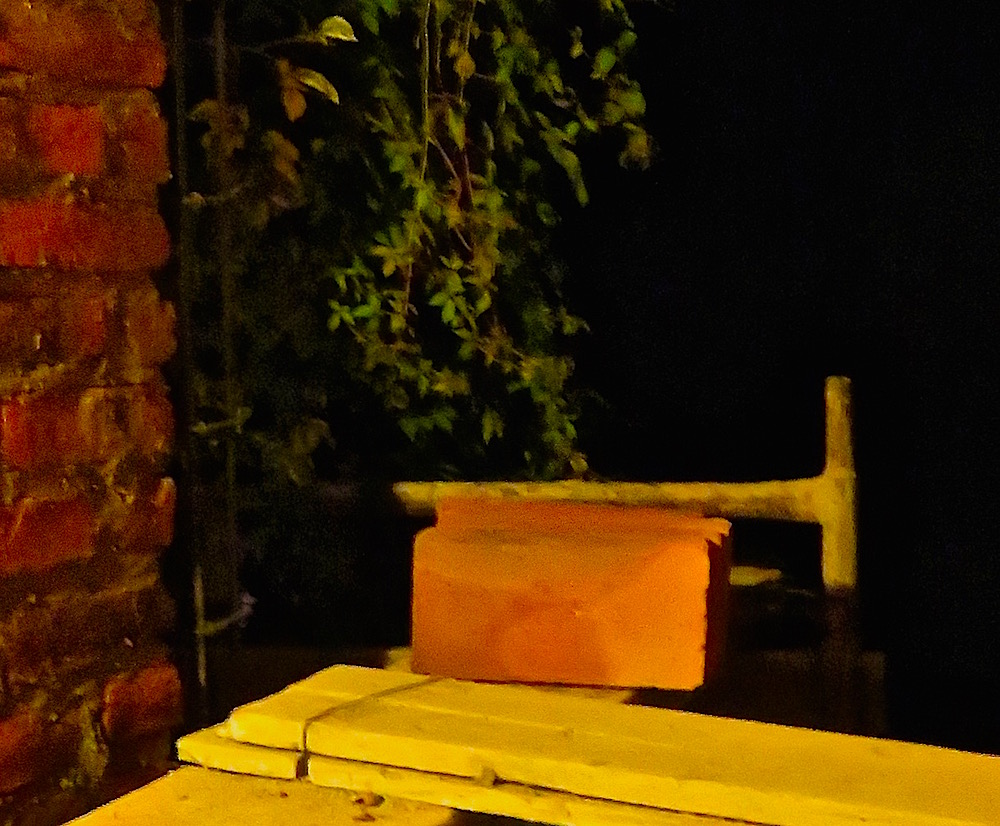
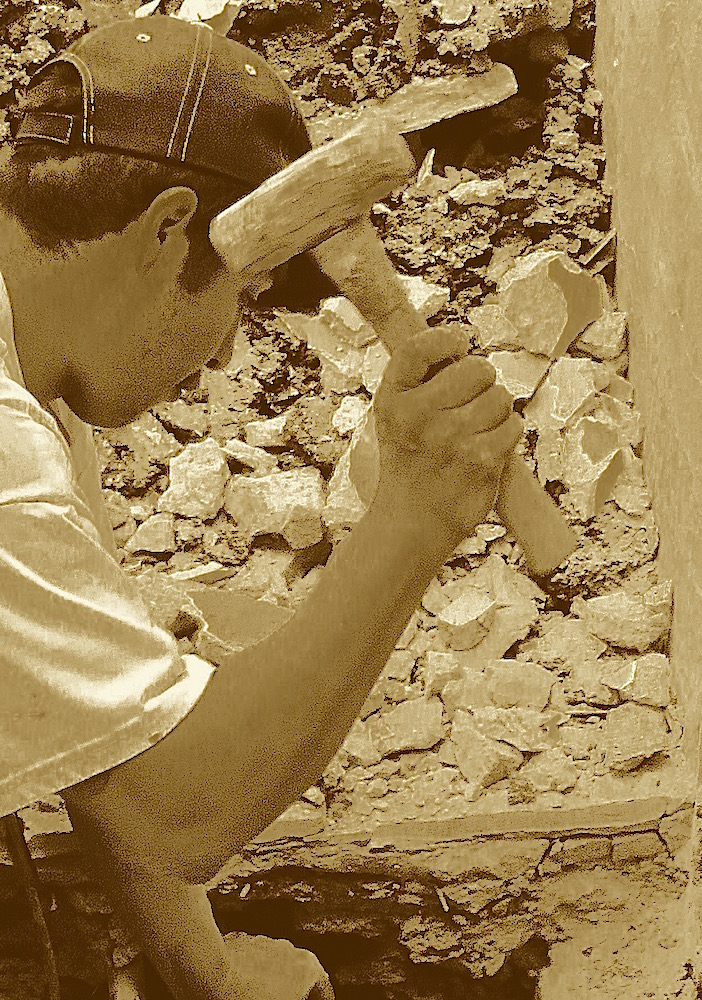 The wood married to metal of the scaffold is echoed in the wooden handle and iron head of the hammer.
http://ceenphotography.com/2015/12/08/cees-fun-foto-challenge-metal-and-wood/
Since opposites attract, I’m linking my Salt posting to this Sugary prompt as well!
Worth its Salt
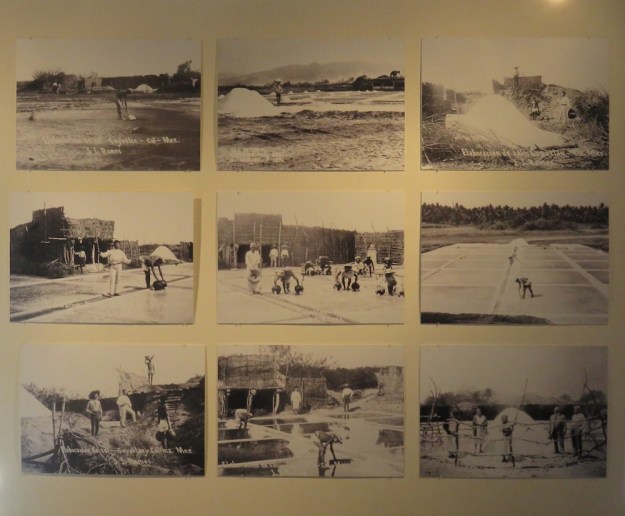
One of the first sights we saw when we drove into Cuyutlan for our writers’ retreat was a sign that said, “Salt Museum.” I determined then and there that I had to see it before we left, and we did so on the way out of town three days later. Here are some pictures I took.


The bones are of a whale that washed ashore some years ago. The lovely edifice is, of course, the exotic museum itself. The little creatures are carved from coconuts by locals. I resisted purchasing one.
Other pictures are of various steps in the salt collection process. The building is probably one of the weathered wooden storage sheds that warehoused the salt waiting to be shipped via rail. Cuyutlan was one of the major salt suppliers for the Guanajuato silver mines and I have read that the area is still a major producer of sea salt.
HERE is a link to Maria Holm’s photos and stories of the Mariager Salt Center, that prompted me to make this posting.
Here’s the Sugar prompt as well.
https://dailypost.wordpress.com/prompts/pour-some-sugar-on-me/
In Cold Blood
I’m sure that the horrible, violent and senseless murders described in Truman Capote’s book In Cold Blood captured the imaginations of most of us in the U.S. Unaccustomed to such vivid descriptions of such violent acts, what small town family did not start locking their doors at night?
The slaughter of the rural farm family occurred on Saturday night, November 14, 1959; and although Capote’s book was not published until 1966, the press made much of it at the time it happened and I was well aware of most of the details of the murder of the father, wife and teen-aged children—a boy and a girl––as well as the capture of the two men who had murdered them. I was especially affected by the sad detail of the discovery of the girl’s Sunday School money tucked into her shoe in the closet. Whether she heard the men breaking in and hid the money so it would not be found or whether she placed it there so she wouldn’t forget, the detail has the same poignancy
After the murder, as I lay in bed at night––especially on summer nights when I found it even harder to surrender to sleep than during blustery cold nights in the winter––I often thought to get up and check the doors again: the front door, the door to the garage, the door from the garage to the mud room, the door to the basement and the back door off the pantry that led to the back porch. All had push-locks accessed by a key from the other side.
On one night in particular, that summer that I turned 13, I lay awake listening to the night sounds that streamed in through my screened window. My window adjoined the front door stoop and it suddenly occurred to me that anyone could slice the screen and easily enter. I got up from bed to close the window and open the air conditioning vent in the floor under it. While I was up, I decided to check all the doors again. All were securely locked except for the lock to the back “porch” which was really just a platform four or five feet wide with a hand railing that ran the entire length of the house from the back garage entry to the pantry/kitchen area.
The pantry held a sink for my dad to wash up in when he came in from the ranch, and since we rarely locked our house, many times he would just walk along this platform/porch and enter the house from the back where he pulled off his boots and emptied his cuffs off the back porch so he wouldn’t track wheat chaff or mud or other souvenirs of his day’s work through the house. Then he’d wash his hands and neck and face in “his” special sink and make his way to his rocking chair in the living room, where he’d spend the rest of the day resting until supper and reading before bed.
This platform/porch was actually quite a distance above the ground because our lot was on a small hill that sloped from front to back and right to left. This enabled the windows in the basement to be above ground level, whereas there were no windows at all in the front of the basement. On this particular night, I stepped out onto this roofless sideless porch platform. I could see the big dipper and part of the little dipper and the thousands of other stars in the summer sky, but I didn’t know the names of any of the other constellations.
I could smell the newly cut grass that my mother had mowed in the early evening of that day, after the sun had gone low in the sky. I remembered when I was little how my dad was less tired by the time he got home and so he’d mow the huge lawn around the old house. My mom would come after him with the lawn sweeper that collected the grass cuttings in a huge canvas cube open at the top to dump the grass into a huge pile by the gravel road where we kids would build nests and play bird. I was the baby bird fed imaginary worms or, if we’d had the right dinner, sauceless spaghetti, by my older sister.
By my teen years, however, my dad would be too tired when he got home from a day that started at 5 or 6 in the morning and often didn’t end until 8 or 9 at night if they were cutting wheat. His life was a hard one and I often wondered if he resented coming home to daughters reading on their beds or talking on the phone to friends.
Did it seem unfair to him that he worked so hard to support daughters and a wife who had such a life of ease? Although I had not yet started to really write, except for a diary I once kept for a few months or assignments for school, I did have an active imagination; and from a very early age, I had concocted elaborate stories all involving imaginary selves of the future.
Now on this night, I wondered why that door that I had checked before coming to bed to read was now open! Who and why would anyone open a locked door? As I lay thinking, I heard the door to my parents’ bedroom farther down the hall open. I could hear my father’s heavy barefoot tread turning not to his right—to the bathroom between their room and my sister’s––but instead to the left. Down the long hall to my room, the entrance hall, the kitchen, the mudroom and the back porch. I could hear the door opening and a few minutes’ delay before he padded down the hall again and closed his door.
Chill. I felt it zoom down my spine, hit my tailbone and ricochet back up to my brain where it froze the back of my head. I waited. For five minutes, and ten. Barely breathing. I cracked my door and when I could again hear my father’s loud snores, I sneaked back out to the door to the back porch, which was once again unlocked. As quietly as possible, I pushed the button lock in, then returned to bed where I remained vigilantly awake for the rest of the night. Twice more, my father got up to unlock the door. Twice more, I got up to relock it.
During all those long hours before dawn, I imagined the scenario. My father, formerly my protector, allowance provider and generous benefactor to the pleasures of my life—turned in my mind into plotter. He, too, had read all of the coverage of the Kansas murders, and it had given him ideas. He had hired a man to sneak in, to bind him up and leave him helpless and then to kill us all. He wanted to be free. He was tired of his idle daughters, tired of his wife.
My father had, previous to this, gone through one of his week long silent periods where we knew he was upset about something—cattle prices, the threat of hail before harvest, my mother or us. We never knew what caused these silent periods where he would speak to none of us and sometimes even move to the basement to sleep. They never lasted over a week and afterwards he would be our same joking, generous, hard-working dad. But during those times, we tiptoed. We tried to cajole and charm, but it didn’t work. If we asked if he wanted his head rubbed, we were met with a curt sideways bob of the head or a “Not tonight!”
This was unheard of at other times, when we’d ask for money for a new dress or the show and he’d answer with, “Ya. Rub Pa’s head!” We’d do so, and then the wallet would come out. Not that we didn’t rub his head gratis as well. It just got to be a joke—this returning of favor for favor. Then he’d hand us his wallet and put his hand over his eyes, like he didn’t want to see what we’d take. We’d always show him, though. Was this okay? It always was.
At times other than his silent periods, he was our loving dad. Proud of us. Funny around guests, and talkative, but when home alone with us, usually tired––sleeping or reading one of the piles of magazines and books that lay on the long coffee table beside his chair. I mention the silent periods as an explanation of why I might even in my most fertile imagination conceive of an idea that my dad would be capable of planning to “off” his entire family.
But, imagine it I did. I became the protector of our family that summer, lying awake for as long as I could to listen for my father’s footsteps down the hall. And this was not the only night that he got up once or twice to unlock that back door. I never said a word to my mother or sister. I perhaps told my best friend, thinking if my protective efforts failed, at least one person could point the way to insuring the perpetrator of my demise came to justice.
In later years, I forgot about that terrifying summer and went back to loving and admiring my dad almost as much as before, but by then there was a difference. Whether it was caused by radical ideas picked up in my sixties college life and my need to define myself as more modern than my parents—who were themselves quite liberal––or a vestige of that summer of distrust, I’ll never know.
By the time my dad died eleven years later, they’d sold the house in town and moved to a smaller house they built a mile out of town. It was to escape town taxes, my dad always said, but I’ve always thought that for him it was a return to his early homestead days in another house with nothing in view but prairie grasses and a big weathered barn. This new “country” house built by my parents after I left high school was closer to town than the homestead of my grandparents, but was within sight of the big red barn of a farm he’d bought years ago for a hired man and his family to live in and afterwards rented out. The barn sat squarely between my parents’ new modern modular and the old farmhouse. There was a small lake nearby with otters and where the wild geese landed overnight in their migrations.
It was one summer night when I was home from college for vacation that my dad got up from where he’d been sleeping in his chair and walked through the hall and kitchen and out the back door of the house.
“Where do you think he’s going?” I asked my mother.
“Oh, he likes to go out to sniff the night air and have a pee in the dark,” she said with a chuckle. “He loved to pee off the back porch of the house in town at night, even though it was so much farther away than the bathroom. I never could convince him not to do it. I worried that the neighbors would see him. But I think he thought it saved water, or perhaps it just reminded him of his youth—peeing out the back door of the house into the night air.”
This post was written in response to Elyse’s scary babysitting piece which you can read here: http://fiftyfourandahalf.com/2012/08/01/all-the-cool-kids-are-doing-it/
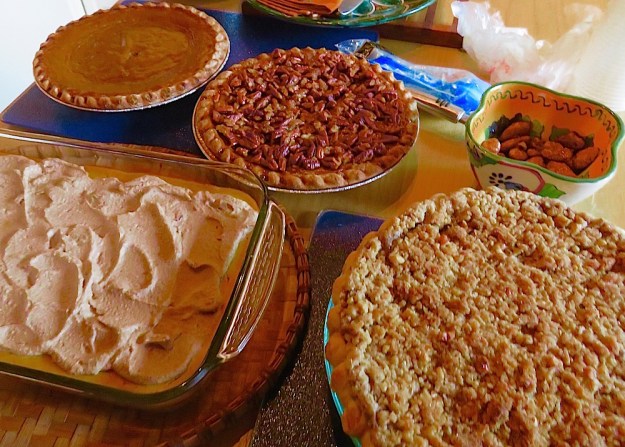
Sugar, Sugar––You and Me
Hey, Sugar Sugar, you’re the one for me.
I enjoy each calorie.
Smooth or frozen with chocolate on top,
washed down with a glass of pop.
Pile on the sprinkles and roll in nuts.
You’re the best, no ands or buts.
My little Sugar is smooth and dreamy.
My little Sugar chewy, creamy.
Shortbread, brownies, chocolate chip––
in my coffee, I like to dip.
But cheesecake, pie––other forms of sin––
I put on the table and dive right in.
Swim to the middle with my teeth,
see what there can be beneath
the icing or cream or chocolate sauce.
When dessert arrives, Sugar’s the boss.
Hey Sugar, Sugar, you’re the one
in snow or rain or blistering sun.
I don’t care if you’re hot or cold.
Baked Alaska is great, I’m told,
but I also like a big old cone
just piled with ice cream, all alone.
Don’t touch my Sugar, don’t you dare!!!
When it comes to Sugar, I don’t share!!!
https://dailypost.wordpress.com/prompts/pour-some-sugar-on-me/
 At the Crossroads
I am drawn
toward a horizon
not as flat as the others.
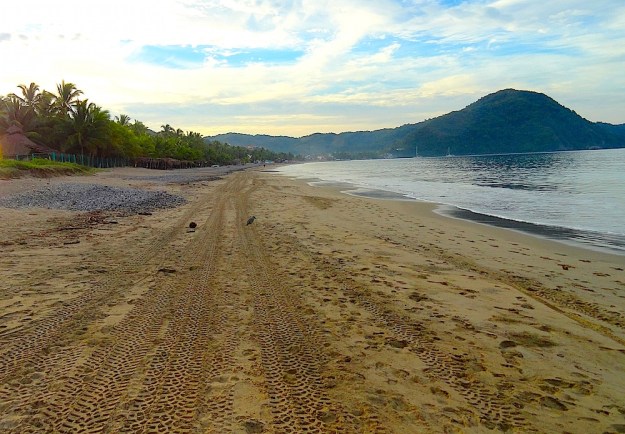
Palm trees stir
in the ocean’s breath.
A yellow dog
churns down this road,
but I do not follow.
That other road?
Spires of a city
pulse with light
and an imagined music
blows in on the wings of notes
that swim through heat currents in the air.
Not that road, at least not yet,
the music tells me.
What the third road leads to is invisible
behind a denser curtain of air
blistering with possibility.
Like fingers motioning me forward,
flapping like drapes in the sky––
beckoning.
Come here. Here. Here.
Spinning to look behind me,
then in a circle to see where I am,
“Is this place enough?” I wonder.
It is a place known and comfortable.
It has the right chair and a fridge well stocked with food––
familiar objects of my choosing.
Can “here” be a course chosen?
Can we draw new roads through where we are?
Everything is present everywhere, I once said,
and a trusted friend agreed;
but truths of the past are not always complete truths.
We add on to truth like sand castles,
building new towers,
crumbling others in our haste
to make bigger, better.
Truth changes like the sea.
In its entirety, it is the truth;
in each part, part of the truth.
It is a creative endeavor,
this life of each of us––
choosing the parts of truth
to call our own.
https://dailypost.wordpress.com/prompts/sorry-im-busy/
The Prompt: Tell us about a time you should have stopped and helped someone but didn’t.
 Accident
When I rise at seven to let her out,
she’s in a hurry, without a doubt,
for I see only a streaking blur––
a tip of tail and whirr of fur.
As she rushes out to pee,
the shame is not on her, but me.
I heard her bark an hour ago,
but it was only seven and so
I thought I’d just go back to sleep
and she made no further peep.
Now I see the pile upon the floor
just inside the open door
held as long as she was able,
then hidden underneath the table.
Not the first time in twelve years
that she’s caught me in arrears
in opening doors to let her out,
yet it is true without a doubt
that she has never erred before
and made a mess upon the floor.
I know that she is feeling shame,
even though she’s not to blame.
For once she is not under feet
as I prepare something to eat;
and when I call, she does not come.
She’s in the garden, feeling glum.
She feels she’s done a shameful act
devoid of training, breeding, tact.
She does not know that I’m the one
standing here with smoking gun.
Every bit of blame is mine,
for Frida’s former record is fine.
For twelve long years, she never peed
upon the roof in time of need
even when we didn’t know
she was locked up there and so
there is no need to hang her head
in shame of what she’s done, and dread
of being scolded or being blamed.
I am the one who should be shamed!
 lifelessons - a blog by Judy Dykstra-Brown