Category Archives: Beauty

Wooden Heart

Wooden Heart

He handed it to me without ceremony—a small leather bag, awl-punched and stitched together by hand. Its flap was held together by a clasp made from a two fishing line sinkers and a piece of woven wax linen. I unwound the wax linen and found inside a tiny wooden heart with his initials on one side, mine on the other. A small hole in the heart had a braided cord of wax linen strung through that was attached to the bag so that the heart could not be lost. He had woven more waxed linen into a neck cord. I was 39 years old when he gave me that incredible thing I never thought I would receive: his heart—as much of it as he could give. Continue reading

one-word-photo-challenge-clear

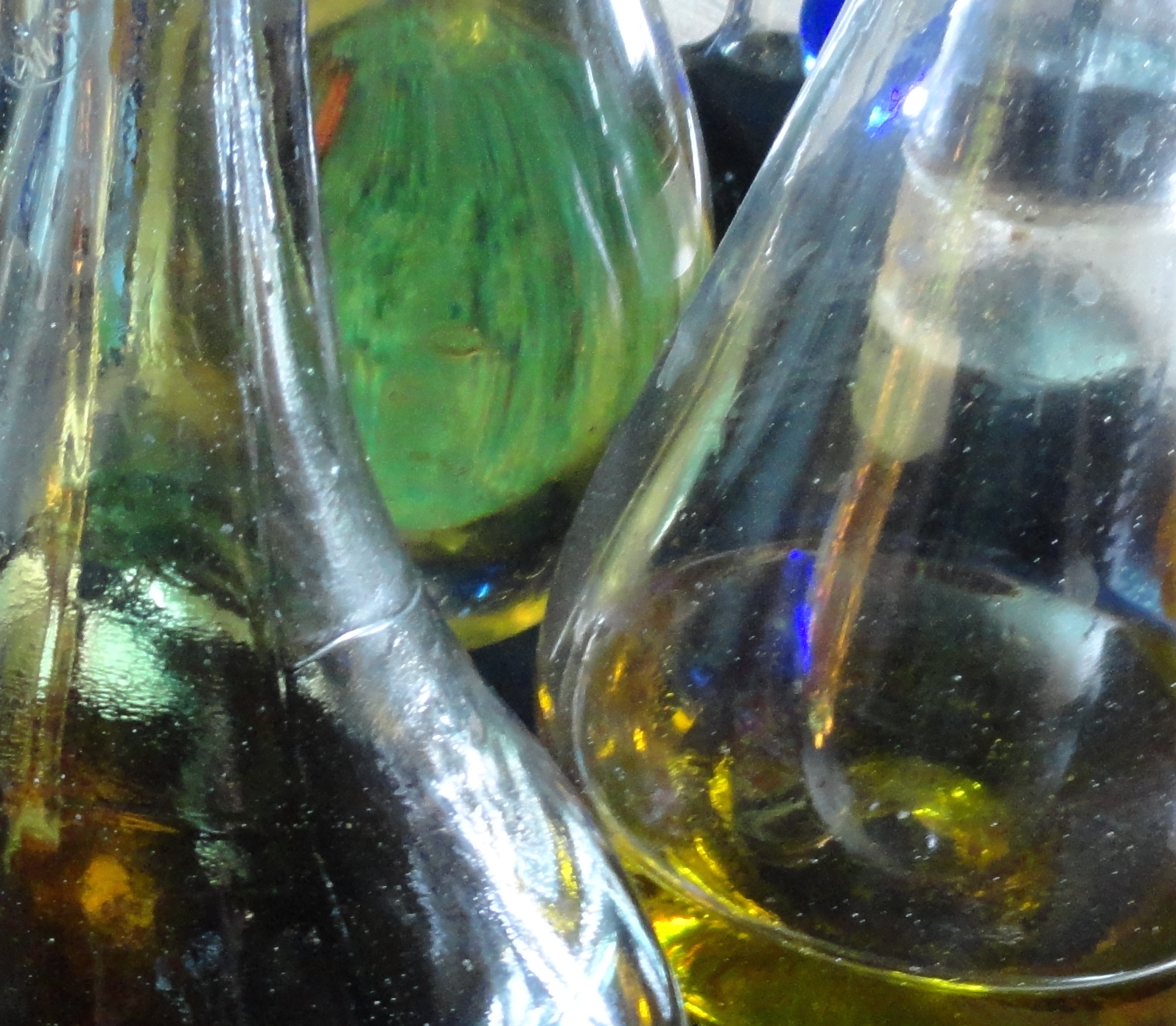
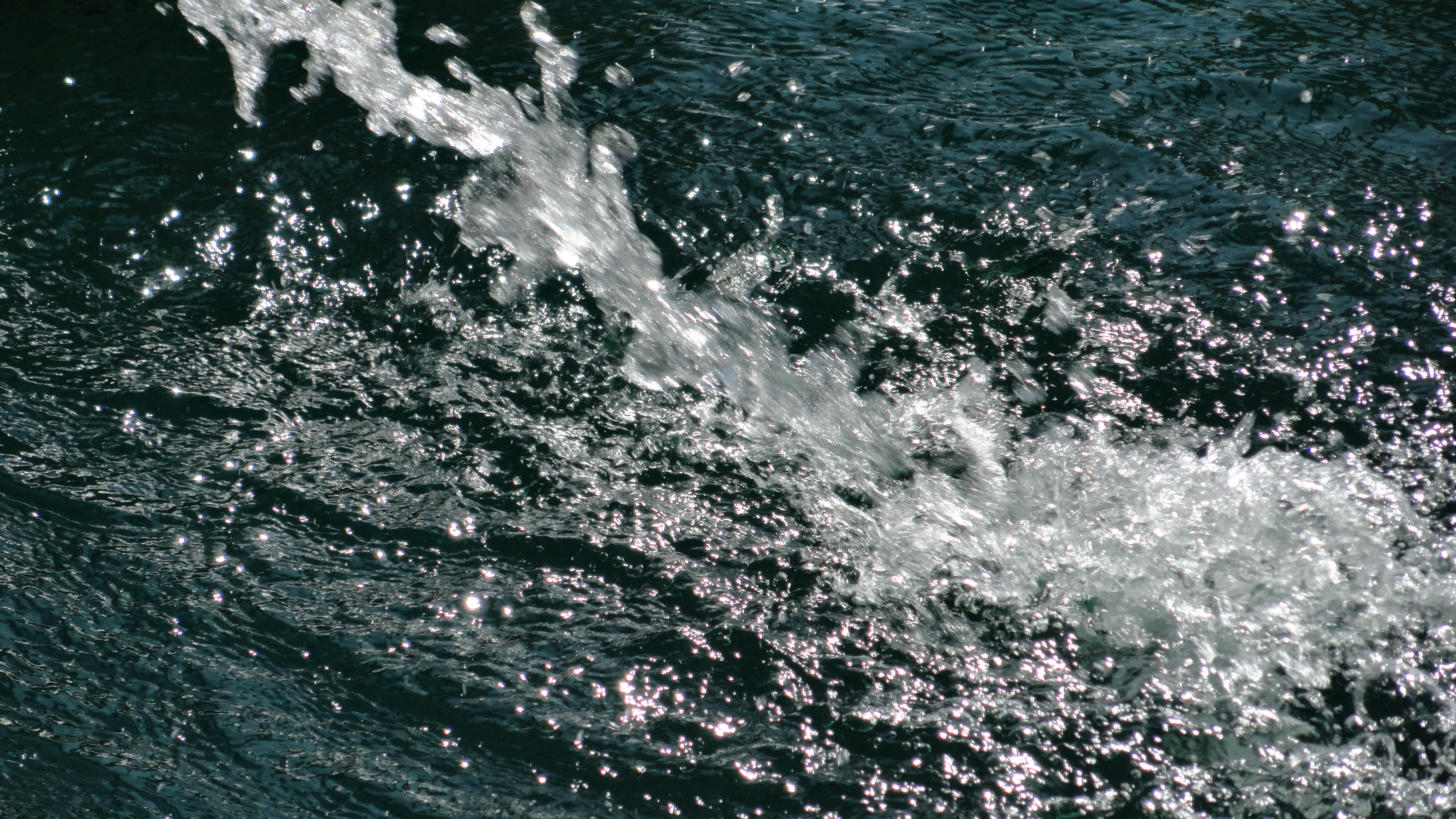
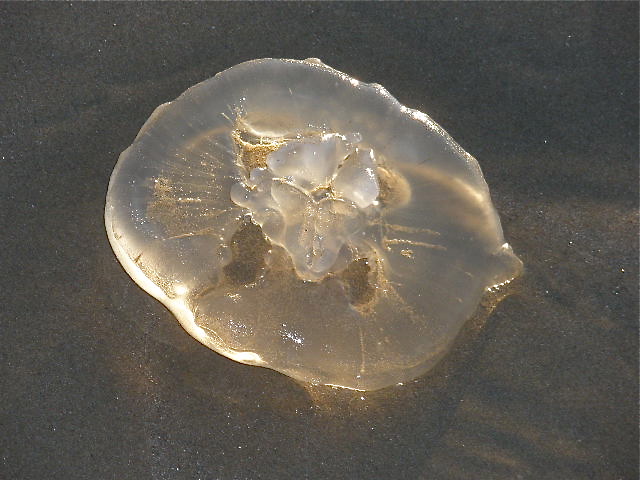
I posted two of these recently in the WordPress Weekly Challenge: Refraction, so I apologize to those of you  who have already seen them.  On the other hand, I’ve looked at the below picture of the jellyfish a hundred times and never get tired of seeing it; and they are so perfect for this challenge that I just have to use them again.

One Word Photo Challenge: Clear

OLYMPUS DIGITAL CAMERADSC00439 DSC07957 DSC08566  DSC08595 for more photos, go here: http://jennifernicholewells.com/2014/11/04/one-word-photo-challenge-clear/

Mirror Fearer

The Prompt: The Mirror Crack’d—You wake up one morning to a world without mirrors. How does your life — from your everyday routines to your perception of yourself — change?

 
Mirror Fearer

Every time I walk past it, I look into the glass
and notice how my hair looks and then survey my ass.
I cannot help but look at it, every time I pass—
criticizing how I look, both fuzziness and mass.
And in my deepest feelings, despite my brains and sass,
I can’t avoid this feeling that men must find me crass.
And so I guess I really feel that it would be a gas
if you took away the mirrors from this self-critiquing lass!

D-Picted (X-Rated)

                                                                               D-Picted (X-Rated)

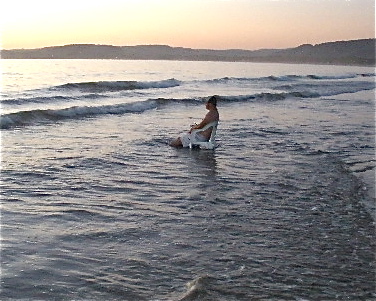
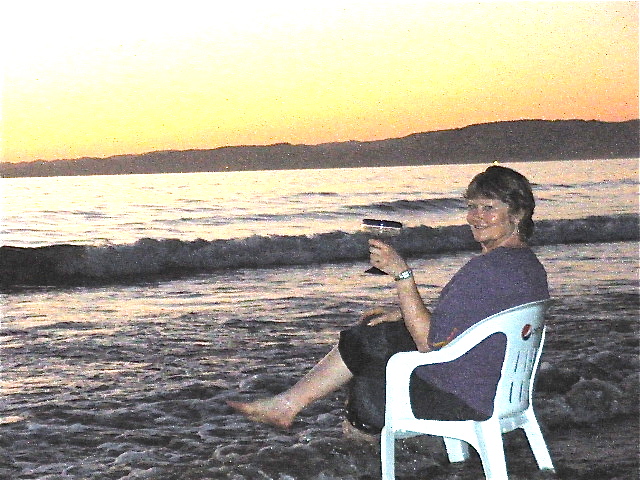
I was taking my daily sunset walk on the beach at La Manzanilla, Mexico when I came upon this idyllic scene. He was sipping a margarita and staring out to sea as the water ebbed and flowed—never reaching higher than his chair bottom. Of course, I had to comment.

OLYMPUS DIGITAL CAMERA

“Is the view good enough for you?” I queried, with a noticeable lack of originality.

“Do you want to see for yourself?” he asked. He quickly rose from his chair and motioned for me to take his place, taking my camera from my hand as he handed me his Margarita.

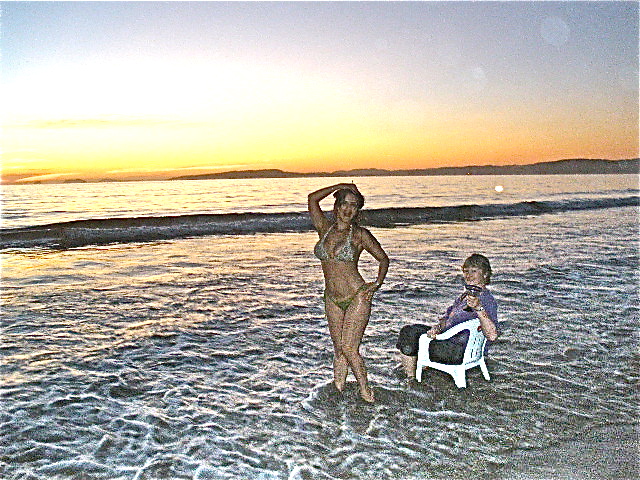
OLYMPUS DIGITAL CAMERA

He told me to look his way as he turned the tide by taking a picture of me, and so I didn’t see at first a part of the landscape obvious in this next picture.

OLYMPUS DIGITAL CAMERA

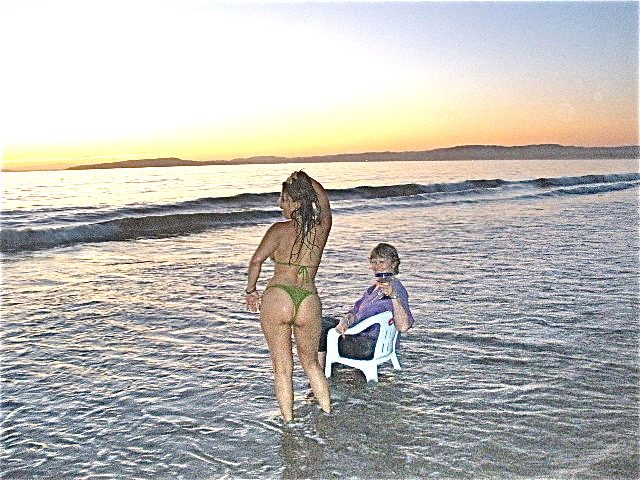
But as often happens in an evening tide, that object quickly washed ashore to enter my picture,

OLYMPUS DIGITAL CAMERA

and quickly dominate it.

OLYMPUS DIGITAL CAMERA

The End

(I promise.  This was not a staged incident.  It happened exactly as I describe it with no prompting by me.  I love getting out in the world.  No imagined story ever duplicates what happens in real life!!)

The Prompt: Edge of the Frame—We often capture strangers in photos we take in public. Open your photo library, and stop at the first picture that features a person you don’t know. Now tell the story of that person.

Special Note to viewers of my blog:  Please also see the next posting “Sur-Prize” to enter a contest celebrating my 10,000th viewing.

“Adult”ery


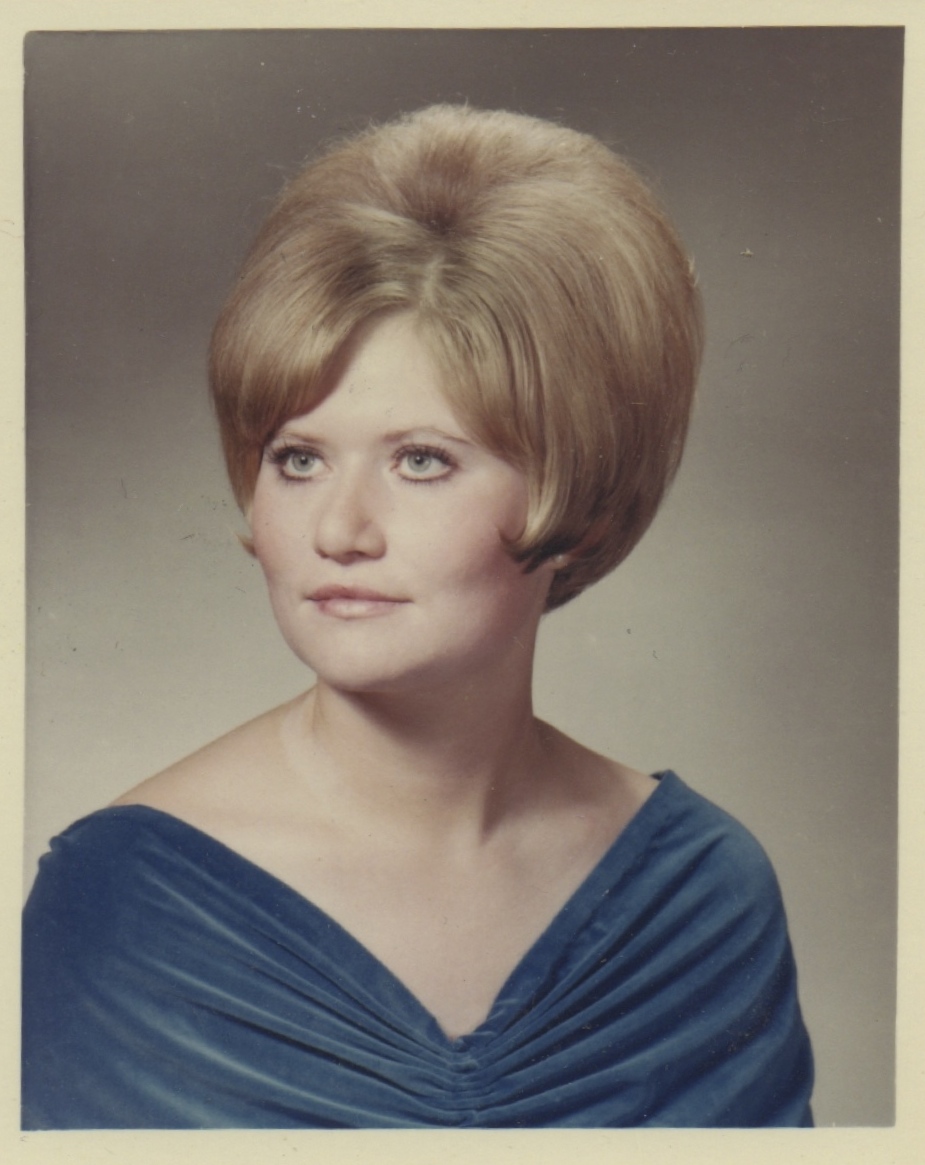
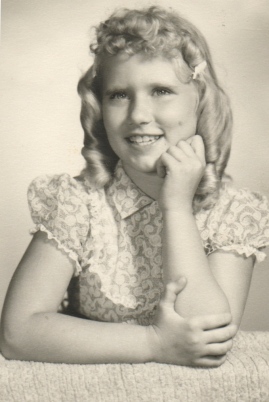
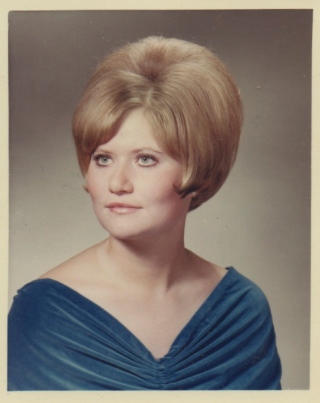
JudycurlsJudycurls - Version 2

Unfortunate hairstyles of the past


“Adult”ery

I don’t remember, as a child, ever really thinking about what it would be like to be an adult in terms of where I would live or what I would choose as a profession. I do remember, however, two things I worried about.

First of all, I worried about what instrument I would play in the school band. I had two sisters, one eleven years older and the other four years older, who both played saxophone. As a matter of fact, there being 7 years difference in their ages, they both played the same saxophone! When I entered the sixth grade and was old enough to play in the starter band, I knew two things. #1: I had to play in the band because both of them had done so. #2: I had to find a way to be unique in doing exactly what they had done, and so I had to find a different instrument. This resolve was strengthened by the fact that my sister Patti was still using the “family saxophone.” As long as I was being different, I decided to stretch my uniqueness as far as it would go. No one in either the starter or the regular band had ever played a flute. It was exotic and not very heavy to carry. I would play a flute!!! Or rather, I would attempt to play a flute.

I faked it for two years, blowing energetically into the little hole as we sat in the band loft at games or marched along behind the regular band, practicing for parades or football games; but I never really developed much of a tone and my memory of which note was which was limited. It was really easy, though, to carry that little case about as large as a large pencil case the two blocks to the auditorium where our band practice occurred. My band instructor could not afford to be picky as there were only 200 students in the entire school system—grade school and high school combined—so every warm body available was required to flesh out the physical body of the band. If a few were miming, so be it. As long as they could stay in step for the marching band and didn’t play any really loud false notes, who would ever know?

When my sister left for college, she left the sax behind; and when I headed out for my first band practice as a high school freshman, I left that dread flute behind as I took sax in hand to continue the family tradition. I was not a whole lot better at it, but found something held between the lips and teeth was a lot easier than something held sideways and blown across and although the sax was heavier, it was held in a much more sustainable position than the flute, which was an exercise in arm isometrics as I held it aloft!!

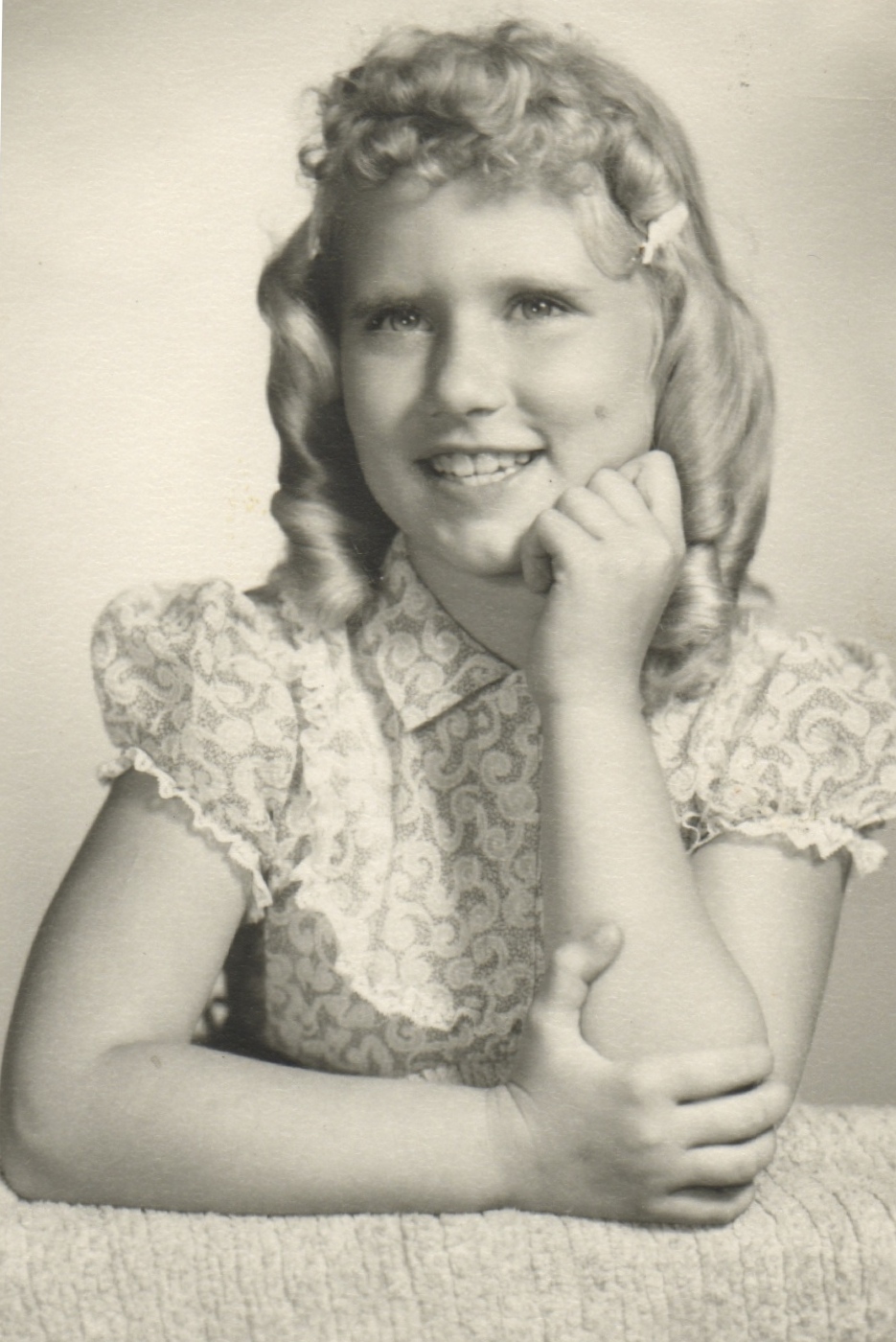
The second worry I had about growing up was how I would wear my hair. I would lie awake nights worrying about what hairstyle I would adopt when I could no longer sport the sausage curls my mother formed around her finger each morning. Shirley Temple, who had already grown to adulthood, needed to be replaced! My hair was too long, however, to duplicate Shirley’s bouncy little curls. It hung in fat tubes down beside my cheeks, offsetting my tight little bangs curled up each night in pink rubber curlers. For some reason, both my mom and I thought this made me look real good, and I am not exaggerating when I admit that there were nights when I’d lie in bed, tears streaming down my cheeks, worrying about what I would do when I grew up and could no longer wear curls!!

So now you know why I dropped the saxophone as soon as I graduated high school and why I had to move to Mexico to escape the shame of all those years when I allowed my mother to shape my esthetic sense of hair. I haven’t owned a curler of any type for 20 years. That saxophone was handed on to the next generation of my family and its mouthpiece, at least, met its demise when it snapped in two as my niece tried to grip it with the fourth pair of teeth in three decades. With a new mouthpiece, it survived four more years—hopefully this time with someone with more talent than I. I know not where it ended up. Probably in some second hand store or donated to some child who couldn’t afford an instrument. I hope it wound up with some talented individual who could restore its pride in itself.

Now that I have been an adult for many many years, I have conquered most of its demands. I have found many hairstyles, only a few of them more ridiculous than sausage curls (see my college picture above as an illustration of this fact) and attempted only one additional instrument, the guitar. Having played only solo or in duet with a college friend who tried to mold me into Joan Baez but failed, I did learn about seven chords and learned to adapt a whole succession of seventies songs to fit into those seven chords. I played for sing-alongs with the kids I counseled at summer camp and for groups of little neighbors around the world, who would come to my house on Saturday mornings to sing silly songs. And I have that guitar to this day. But I haven’t played it for years and harbor no illusions about my prowess. It is there for visiting friends who want to play for me and as a big, cumbersome, hard-to-store reminder that I can choose my own failures as surely as my own successes.

I am an adult like other adults—growing more childish year-by-year, but in my regression toward soft food and adult diapers, I will never sink so low as to repeat some mistakes of my youth. Never ever more sausage curls or flutes held aloft like punishment. And never again will I try to be different just to be different. “The Far Side” has shown that this is nothing that really needs to be aimed for. We all grow odd enough just following the path of nature, thereby furnishing the humor for all the generations that follow us.

The Prompt: As a kid, you must have imagined what it was like to be an adult. Now that you’re a grownup (or becoming one), how far off was your idea of adult life?

P.S. Thirty years after high school, when I was doing an art show in Oregon, a man walked by my display and then did an about-face and came back and said, “You’re Judy Dykstra, aren’t you?”  I admitted the fact and asked him how he knew me.  He said he was 5 years behind me in school in the small South Dakota town where I grew up.  He was a country boy and since we’d never been in school together, I didn’t recognize him but did recognize the family name.

“How in the world did you even know what I looked like, let alone recognize me thirty years later?” I asked.

“Well, a bunch of us used to collect in the the school library and look at old annuals,” he said.  “I recognize you from your high school picture.”  Suddenly, it all came clear.

“You used to look at them to laugh at all the funny hairstyles, didn’t you?”   Sheepishly, he laughed and admitted it.  I had hit the nail (or the girl?) right on the head!!!!
No Fear

No Fear

We know within our hearts that personality
often cancels out what we can clearly see.
We all have known the men who, homely to the eye,
still have personalities sweet as cherry pie,
who win the ladies with their charm and humor that is wry,
causing them to line up for chances with this guy.

And the girl who’s plain until she starts to talk—
her face just so enlivened, you have to stand and gawk.
Made lovely by expression, intelligence and wit,
“beautiful” and “lovely” become the words that fit
when trying to describe this attractive little lass
who simply doesn’t bother with a looking glass.

Both have learned to conquer all their crippling fear—
to find the other side of doubt and kick it in the rear.
To face the world on their own terms and face it unafraid.
To take their rightful placement at the front of the parade.
But though we see what they have done, we do not always take
the road that for another seems to be a piece of cake.

You may find this poem to be most adolescent,
yet the feelings of our past most usually are present
throughout our lifetimes, though we seem to hide what we must feel,
leaving it to novelists and poets to reveal
the truths of all our agonies, the facts of all our fears—
all those things we’ve meant to face but yet hold in arrears.

I long ago discovered that writing must be true.
The only worthwhile topics are the things that bother you.
The lacks you find in others and the lacks within yourself
are what divide the poems in hand from poems on the shelf.
And so I must admit that fear’s my greatest hidden vice.
And since we all could do with taking our own sage advice:

I’ll say that with no fear, I would burn candles at both ends—
be as free with lovers as I am with friends.
I would have burned fingers, but an unbound heart.
All those lovely men, disregarded from the start
because I was too zaftig or not smart enough?
I’d face them nose-to-nose, and then I would call their bluff.

Today’s Prompt: Fearless Fantasies—How would your life be different if you were incapable of feeling fear? Would your life be better or worse than it is now?

The Daily Post: Duck for Cover

The prompt: Binding judgment. Does it ever make sense to judge a book by its cover—literally or metaphorically? Tell us about a time you did and whether that was a good decision or not.


Duck for Cover

Life’s a library where we choose
book after book to read and muse
on the truth of each, or how it serves
to amuse us or to calm our nerves.
It starts with storybooks in our youth.
Cinderella’s lovely, her kin uncouth.

The pretty sister we all adore.
The others? Rotten to the core.
We judge by beauty evermore.

As teenagers, our thoughts are filled
with thoughts of hair, complexion, build—
the ways we rank and choose our friends.
For some, this method never ends.
We judge the world by what we see.
At court, the prettiest are set free.

Our dates determined by their cars,
Our peanut butters by their jars,
Our candidates are movie stars.

World is illusion, say the seers,
the thinkers and philosophers.
We cannot know reality
by going just by what we see.
Yet time and time again, we choose
our futures based upon our views.

The “curb appeal” that meets our eye
determines which house we will buy.
The crust is how we choose the pie.

Ted Bundy had a handsome face
that drew young ladies to his embrace.
An arm sling or perhaps a crutch
brought them into his murderous clutch.
His handsomeness served to distract
till he’d performed his heinous act.

His cover perfect, his act most skilled,
he killed and killed and killed and killed—
lives ruined and ended as he willed.

Crack the book and look inside.
Talk before you choose your bride.
Drive the car before you buy.
Sip the wine and taste the pie.
See what’s inside if you are able.
Don’t go by face or box or label.

Though beauty dulled is less sublime,
scrub the tarnish from the dime.
Looking deeper takes more time.

Don’t choose the cover of a book.
Instead, take care to have a look.
One page nor twenty will not do.
You have the whole book left to view.
Avoid appearances and preening.
Look for truth and look for meaning.

George Eliot coined the adage first.
If for truth you have a thirst,
judging by the cover’s worst.


NaPoWriMo Day 29: Chew the Train

Chew the Train

A metaphor is a freight train
that gets us within 30 miles
of our final destination,
but we still have to catch a taxi to get all the way there.
And a simile is just a metaphor whose brakes have failed.
If we know that peanut butter
is like a circus on a tired tongue,
does it bring us any closer to the smell of peanut butter?
Elephants and sawdust
and sequined camisoles flavored
with the sweat of 100 performances?
Is that what peanut butter smells like?
Does it taste like candy apples
and too-bitter mustard
on stale buns
and hot dogs turned too long
upon the rollers of their grill?
Does peanut butter feel
like the unoiled bump of the Ferris wheel?
Does it sound like a calliope
or look like an ice cream cone?
Peanut butter is peanut butter.
I rest my case.

So how am I going to write a poem
without metaphors and similes?
How can I write verse
while telling the pure unadulterated truth?
How can I make you taste a poem
that is only itself?

How can I be Janis Joplin
when I’ve been taught to be Joni Mitchell?
A Rose is a Rose is a Rose,
said Gertrude Stein,
predating my insight
by a generation or two.
But this isn’t Paris,
and folks in Mexico
want a dollop of figurative language
in their poetry.

So let me say
that my mind is a busy beaver,
trying to fulfill this impossible task
of twenty little things.
I’m expected to imagine
how peanut butter sounds.
The sucking gumbo sound
of South Dakota mud
or thick mucus of a cold?
Anything but appetizing.
Ay, Caramba! you might say,
but if you were Australian,
you would say, “Don’t come the raw prawn on me, mate,”
and you would mean
“Don’t try to pull the wool over my eyes,”
or “Don’t try to con me, man.”

So let me just say that peanut butter is made
by grinding peanuts so finely
that all the oil comes out
and it acquires the consistency of butter.
It isn’t like butter
nor is it butter.
It acquires the consistency of butter.
This is literal fact.
But to know the taste of peanut butter,
you will need to spread a bit upon a cracker
and have a taste, or grab a finger full.
What you will taste will be peanut butter.
The truth of it. Its reality.

And only then will I tell you
that literal truth doesn’t always tell
the whole truth.

My friend says
it is the peyote leached into the soil
the corn grows from
that gives Mexicans
such a remarkable sense of color.
The bright pigments of imagination
flood his canvasses.
His peyote dreams leak out into the real world
and wed it to create one world.
“Peyote dream” becomes its opposite—
a freight train taking us into the universal truth.
A larger reality.
This stalk of corn, this deer,
this head of amaranth,
all beckon, “Climb aboard.”

So when you bite into a taco
or tamale, when the round taste of corn
meets your tongue, and pleasure tries to flow
like a lumpy river down your throat,
look up at the poet standing in the shadows.
She’ll call herself Remi if you ask,
but do not ask. Instead, look deeper
into the shadows she wears around her like a cloak
and see that it is light that creates shadow.
See the many colors that create the black.
Follow where the corn beckons you to go––
into the other world of poetry and paint
and dance and music. Hot jazz with a mariachi beat.
Chew that train that takes you deeper. Hop aboard
the tamale express and you will ride into your
new life. It will be like your old life magnified
and lit by multicolored lights and the songs of merry-go-rounds
and when you bite into your taco, it will taste
like cotton candy and a snow cone
and your whole life afterwards will be a train that takes you nowhere
except back into yourself—a Ferris wheel
spinning you up to your heights and down again, with every turn,
the gears creaking “Que le vaya bien.”
I hope it goes well with you
and that you see the light
within the shadow
and the colors
in the corn.

glass-gem-corn-2-460

Today’s prompt is called the “Twenty Little Poetry Projects,” and was originally developed by Jim Simmerman. Here are the twenty little projects themselves — the challenge is to use them all in one poem:

1. Begin the poem with a metaphor.
2. Say something specific but utterly preposterous.
3. Use at least one image for each of the five senses, either in succession or scattered randomly throughout the poem.
4. Use one example of synesthesia (mixing the senses).
5. Use the proper name of a person and the proper name of a place.
6. Contradict something you said earlier in the poem.
7. Change direction or digress from the last thing you said.
8. Use a word (slang?) you’ve never seen in a poem.
9. Use an example of false cause-effect logic.
10. Use a piece of talk you’ve actually heard (preferably in dialect and/or which you don’t understand).
11. Create a metaphor using the following construction: “The (adjective) (concrete noun) of (abstract noun) . . .”
12. Use an image in such a way as to reverse its usual associative qualities.
13. Make the persona or character in the poem do something he or she could not do in “real life.”
14. Refer to yourself by nickname and in the third person.
15. Write in the future tense, such that part of the poem seems to be a prediction.
16. Modify a noun with an unlikely adjective.
17. Make a declarative assertion that sounds convincing but that finally makes no sense.
18. Use a phrase from a language other than English.
19. Make a non-human object say or do something human (personification).
20. Close the poem with a vivid image that makes no statement, but that “echoes” an image from earlier in the poem.


NaPoWriMo Day 26: Pied Beauty II

Pied Beauty II

Thanks be to Sara Lee for appled things—
For pies, for apple fritters and for thin-rolled strudel crust;
For pastries of the fruit of Eve and sauce it swims within;
Fresh-cooked in ovens, how their sweet juice sings;
The sugar clotted and pierced— place it on plate we must;
And all taste, for how can tackling it be such a sin?

All things made of flour and Crisco and of apples sweet;
(How can they by nutritionists be so sorely cussed
With words professing they won’t make us thin?)
With their tart flavor are sure our lips to meet;
And meet again.

—Judy Dykstra-Brown

Our prompt today was to write a curtal sonnet in the style of Gerard Manley Hopkins’ famous poem “Pied Beauty”. This form consists of a first stanza of six lines followed by a second stanza of five, closing with a half-line. The rhyme scheme is abcabc defdf. I chose to make it a parody of Pied Beauty as well.

And now, the original:

Pied Beauty

Glory be to God for dappled things –
For skies of couple-colour as a brinded cow;
For rose-moles all in stipple upon trout that swim;
Fresh-firecoal chestnut-falls; finches’ wings;
Landscape plotted and pieced – fold, fallow, and plough;
And áll trádes, their gear and tackle and trim.

All things counter, original, spare, strange;
Whatever is fickle, freckled (who knows how?)
With swift, slow; sweet, sour; adazzle, dim;
He fathers-forth whose beauty is past change:
Praise him.

–Gerard Manley Hopkins


NaPoWriMo Day 15: Lunar Eclipse

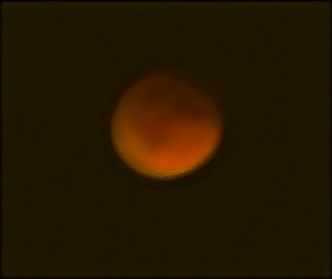
Image

Lunar Eclipse

Last night I rose to watch the full eclipse––
a blood orange moon, full in the dark night sky,
around it, scattered stars and tall palm tips.

It was as though in this world, only I
watched the last fingernail of glowing moon,
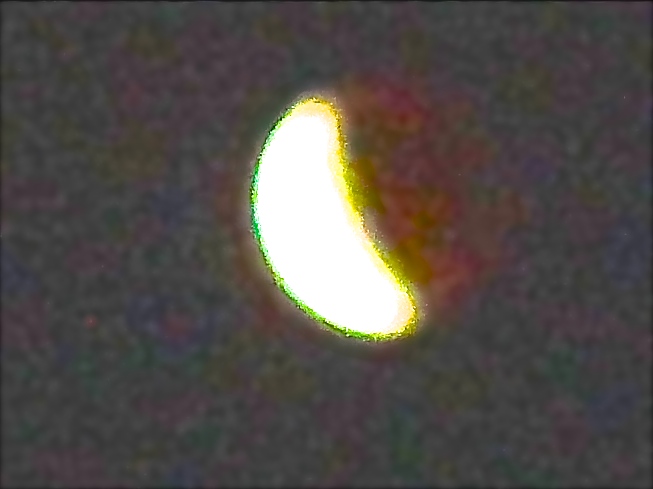
chewed at by shadow, slowly wane and die.

And then the night birds with their lonely croon
gave timbre to this darkened night soon joined
by lonely burro, braying for the moon

as though they mourned for vision now purloined
or simply sang for joy of adding to
the beauty of this dark moon newly coined.

Then once again the moon’s edge came to view.
Earth moved aside in favor of the sun
and for an hour, I watched as moonlight grew.

Then sought my bed, the pageant not yet done,
as light increased and shadow slowly waned.
Inevitably, once more light had won.

The ending known, no mystery remained.

Image

Our prompt today was to write a poem in terza rima, a form invented by Dante and used in The Divine Comedy. It consists of three-line stanzas, with a “chained” rhyme scheme. The first stanza is ABA, the second is BCB, the third is CDC, and so on. No particular meter is necessary, but English poets have tended to default to iambic pentameter. One common way of ending a terza rima poem is with a single line standing on its own, rhyming with the middle line of the preceding three-line stanza.

See more blood moon photos here: https://judydykstrabrown.com/2015/09/27/eclipse-of-the-blood-moon-over-mexico/