Category Archives: Poem

Double Betrayal


Double Betrayal

Her thoughts in parting were most candid,
her emotions, clearly branded
on her face. They reprimanded
him for how he cruelly stranded
her within their love affair—
how he left her standing there
alone, heartbroken, vulnerable.
How he’d burst her true love’s bubble.
Thus was her earlier promise broken
before a single word was spoken
when she met them, face to face,
engaged in intimate embrace—
that one who was to be her mister
with her faithless younger sister.


The prompt today is candid.

Near Horizons

Near Horizons

You have your own horizon, and my dear, I have mine;
but whatever journeys we take towards our decline,
no matter how we see our end—that final box of pine—
I do not want my journey to be a narrow line.
There are so many hills to climb before that last recline.
A few surprises would be good. Adventures would be fine.
I have a few more lives to live before that number nine!
And when it comes––that time when I must meet with the divine,
it will do no good to fight it—to struggle or to whine.

I hope that it comes quickly as I lie supine.

The prompt today is horizon.

In the Blood (Entertainment?)

In the Blood!!!

Don’t you just love football—the running and the tackling?
The sounds of hamstrings pulling and the crunch of femurs crackling?
We sit up in the bleachers eating hot dogs, drinking beer,
comfortably viewing blood sport—the kind we hold so dear.

Aren’t dogfights lovely–the growling and the whining?
Too bad they aren’t more elite, so we could watch while dining.
So amusing watching canines being dished their due.
Dying is so entertaining when it isn’t you!

Better still are bullfights, though they’re few and far between.
The bull so lithe and dangerous, the matador so lean.
The best part of the sport is that the dying is so slow.
I feel its thrill suffuse me from my head down to my toe.

We adore big game hunting in such exotic lands–
our chance to prove our manliness with our own two hands–
handing over money to those trackers in the know
who guarantee an easy kill with rifle or with bow.

Easy on the hunter, but not the animal,
for just because he’s hit the prey’s not guaranteed to fall.
We get more for our money if he’s hard to track,
and war games are more pleasant when one’s foe doesn’t shoot back!

All these minor titillations just a prelude to
the main event and the most major way of counting coup.
Once all the good old boys are finding life is just a bore,
they round up all the younger men and send them off to war.

See how the valiant struggle, see their stripes and purple hearts–
apt pay for missing arms and legs and other blown off parts.
Lucky to be home at last and lucky to be living–
the products of that blood sport that just somehow keeps on giving

Repost of a poem from 3 1/2  years ago.  Crocodile photo new!  More to follow. The prompt today is entertain.

An Evocation

(Enlarge all photos by clicking on any photo.)

An Evocation

Your life catches in its static house.
Nothing but the lightest footfall betrays its presence.
The door to escape, the ocean’s edge,
tempts you to leave yourself and enter.
This echo of the ocean is the dove in you
that carries the message that you want to fly.

Motionless dove, I want to flush you
to the crack of sunrise—to its flower.
Forget your lone compulsions.
Leave your comfort.
Desert the logic that has frozen you.

If you could let this sick time pass,
you might grow less diverted as your distance from it grows.
Time’s ricochet might drive you to the canyon’s rim,
revealing to you that you no longer fear the fall.

The stress of guilt slows down and if you choose to let it, lags behind.
You will pass and repass it on your round journey,
until its memories finally fall away.

Time will devour your guilt, no matter how grand its scale,
revoke its sentence and set the guilty free.


This poem, much edited since I first wrote it five years ago, is a “distilled poem.” The distilled poem can have any  line length or meter, rhymed or unrhymed. The only “rule” is that each stanza must have one less line than the stanza before it.  If you want to play along, send me a link to your poem.

The prompt word today is evoke.

for the dVerse Poets Pub

My Brilliant Career in Film and TV

031

My Brilliant Career: How I Found My Proper Place in Film and TV

I got bitten by the film bug when I lived in L.A.
and did some sort of movie work most every single day.
On Mondays, Wednesdays, Fridays, I always had a class.
The U.C.L.A. campus is where they came to pass.
I studied film production and took screenwriting, too,
but my class in documentaries was where I scored a coup.
We made a documentary.  In fact, I helped with two,
but I knew by the end of them I hadn’t found my place.
I simply didn’t have the balls to run the movie race.

Then I studied acting at an actor’s studio.
I really did the best at this, but still, it was “no go.”
When it came to trying out for parts, I didn’t have the nerve.
Once again my movie plans took another swerve.
I worked as an apprentice at a Hollywood agency.
From all the other candidates, they selected me.
They had me reading novels and sitting in on sessions;
and this was more exciting than my former classroom lessons.
I met some famous actors and tried to be real cool,
and writing out readers reports was easier than school,
but still I knew that in my heart it just wasn’t for me.
After all this time, I didn’t know who I should be.

I’d been in California for three years by then;
and although I hadn’t found my place, still I had the yen.
But I’d run out of money. It was time to find employment
that would involve a paycheck and not just my enjoyment!
I’d heard of a position where I thought that I could cope
as publicity assistant for none other than Bob Hope!
So I wound up in production: typing, phoning, organizing.
The  people in my Rolodex were frankly quite surprising.
I set up radio interviews with the famous Bob.
To read the National Enquirer was required in this job!
I went to filmings of the shows, sent out his Christmas gifts,
ran back and forth to N.B.C. and soothed some office rifts.

But all-in-all though it was fun to be there on the fringe,
to be completely honest, I was not a vital hinge.
And so when I was married, we decided to move north.
I left my life in filmdom and boldly sallied forth,
moving up to Santa Cruz to live by doing art—
never really finishing what I had tried to start.
I had adventures plenty and saw much of the scene
and I enjoy remembering everywhere I’ve been;
but all-in-all, the truth is that there’s one place I’m most groovy.
When it comes to all the skills that go into a movie,
the only place that doesn’t make me sort of tense
Is center row and half way back, in the audience!


When I originally wrote this piece three years ago,  the prompt was: “The Show Must Go On–If you were involved in making a film, would you want to be the director, producer or lead actor?  You cannot be the writer,” but the prompt today that also fit it was simply the word  brilliant.

The Willow Cutters

The Willow Cutters.

They gather in circles as the day ends.
Men sit in one circle, closer to the lake.
Women, still standing, cluster laughing around a ribald tale.
They’ve been cutting old willow, then burning it for weeks to clear the mud flats.
Now new willow, red-veined with opalescent skin, springs up from the graves of the old.
The teeth of slender leaves cup up to catch the far-off whirr of rain bugs in the hills.
Every night louder, their repetitious whirr is as annoying
a
s the temperature, which  grows hotter every day.

The birds all seek their evening perches—
night heron on the fence post in the water,
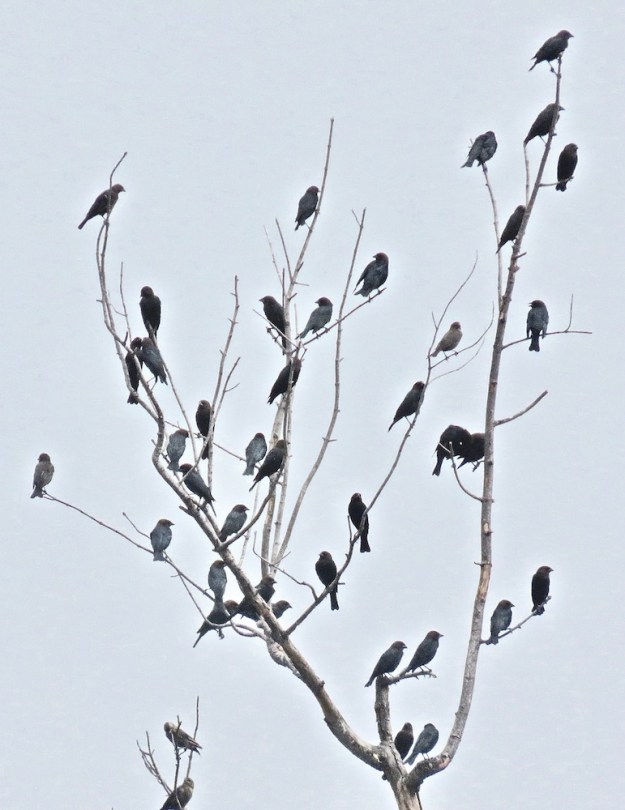
blackbirds in orderly evening strings,
swallows in frenzied swooping snarls.
A young girl lies on her back in the short cool grass
that in the past few weeks has sprung from the cracked mud.
With her baby in arms, she rolls over to face the red sun and in her journey,
sees the ones from her pueblo who burn off last year’s growth.

Sees also t
he gringa who cuts the tender willow.
She is an interloper who watches birds, and as she watches,
is watched—the bright colors of her clothes drawing eyes.
She is the one for whom being a foreigner isn’t enough—
an ibis among herons, a cuckoo among blackbirds,
Now and then, all flock here.

As mother with child  stands to go,
the willow cutter, too, straightens her back
and trudges heavy, arms filled with willow,
toward her car far up the beach.
As  sun like a cauldron  steams into the hill,
horses stream smoothly back to claim their turf,
and the other willow cutters circle longer, telling stories, moving slow.
Children run races with the night as sure as new willows
grow stubbornly from the ground of parents
uprooted, but victorious.


This is a poem written the year I moved to Lake Chapala, sixteen years ago.  Every day for two years, I walked on land that had formerly been lake. There were acres of willow that I later learned townspeople were hired to clear before Semana Santa, when hordes of tourists from Guadalajara always descended.  I was there to cut willow to make lamps. When the lake came up to its former banks a few years later, all of those willows, that grew back yearly, were destroyed.  Only their bones now stick up when the lake recedes a bit again every year.  They make perfect roosting places for birds. I rarely walk on the lakeside anymore. The lake has remained high enough so all of my former walking places are under water.  Instead, I stay home and write poems and post blogs. As usual, click on any photo to enlarge all.

Leap Year

IMG_5805

Leap Year

This year, indivisible by four,
is nonetheless a leap year.
As friends fall away from my life
like leaves losing hold,
I make adjustments,
searching for a direction
other than down,
spread my wings,
letting that stubborn wind
that blows me
determine my direction.


A quadrille for dVerse Poets. The prompt is “leap.”

Almost Holy

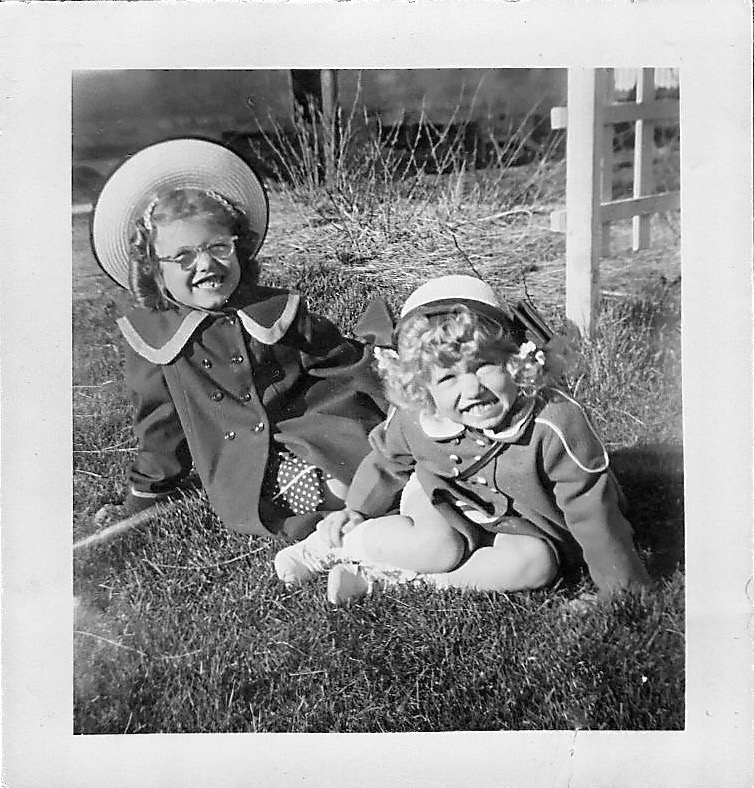
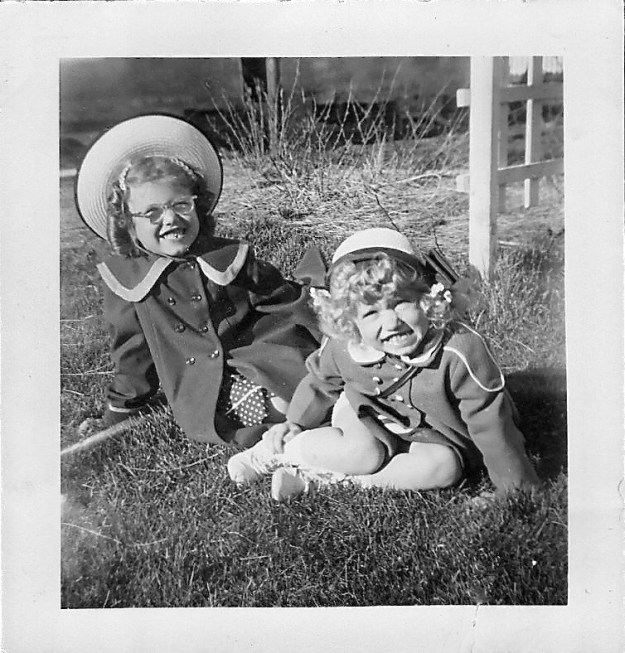
My sister Patti and I, all dressed up for church and told to smile, no doubt! Photo by sister Betty 


Almost Holy

I always wanted a set of those panties that had a day of the week embroidered on each one, but I grew up in an era when kids didn’t ask for things.  I know my mom would have bought them for me if she’d known, or my grandma would have ceased her endless activity of sewing sequins on felt butterflies or crocheting the edges of pillow shams long enough to embroider the days of the week onto the baggy white nylon panties jumbled into my underwear drawer. I never asked, though.  Never told.

So it was that on Sunday I’d arise and put on the same old underpants, cotton dress with ruffle, white socks, patent leather shoes. I’d take a little purse no bigger than the makeup case in the suitcase-sized purse I now carry. Into it I’d drop a quarter my dad had given me for the collection, a hanky and the lemon drop my mother always put inside just in case of a cough. I never coughed, but always ate the lemon drop, sucking on it during Sunday School and sometimes asking for another from the larger supply in her purse during church.

Why my mom never sang in the choir I don’t know.  She had a fine true voice.  Both of my older sisters did and so did I, once I was in high school.  I remember when I was little watching the choir in their fine robes that looked like they were graduating every Sunday.  They sat facing us, in three rows to the preacher’s left, as though checking up on us to make sure we didn’t misbehave or yawn or chew gum.  In addition to lemon drops, my mother always carried Wrigley’s Spearmint Gum in her purse.  Sometimes the gum was a bit red  from the rouge she always had on her fingertips on days she applied makeup. It seemed to me like the rouge flavored the gum a bit.  It tasted of clove and flowers.

“Just hold it in your mouth,” my mother instructed, my sister and me; and if we chewed, she would take it away from us. “Just chew it enough to make it soft and then hold it in your mouth.”  This was an almost impossible challenge for a child and actually even for a teenager.  By then, we’d learned to crack the gum and to blow bubbles even when it wasn’t bubble gum.  That fine pop and final sigh of air as the bubble broke–so satisfying. The threat and memory of everything we could be doing with that gum resided in each small wad of it held in our cheeks as we sat lined up like finely dressed chipmunks listening to the minister drone on.

Hymns were like the commercial breaks on television–a chance to move around a bit and look at something other than the preacher–to ponder the curious lyrics such as, “Lettuce gather at the river,” “Bringing in the sheets” and “Let me to his bosom fly.”  (Just what was a bosom fly and what had lettuce and collecting sheets from the clothesline to do with religion? Once again, we didn’t ask.)

Then we’d sit down again for the Apostle’s Creed or a prayer or benediction or the interminable expanse of the sermon–half an hour with no break.  I’d listen to the drone of the flies buzzing in circles at the window, or the sound of cars passing in the summer, when the front and back doors were left open to encourage  breeze where no breeze existed.

Now and then a curious dog would wander in and be ushered out by the man who stood at the door to hand out church programs.  Everyone would hear the scramble of dog toenails on the wooden aisle and turn to watch and laugh.  Even the minister would laugh and say say something like, “All of God’s creatures seek to commune with him upon occasion.”  Then everyone would laugh softly again before he turned his attention back to telling us what was wrong with us and how to remedy it.

That afternoon, Lynnie Brost and I were going to play dress up and have a tea party under the cherry trees and bury a treasure there.  We’d already assembled it: my mom’s old ruby necklace, a handful of her mom’s red plastic cancer badges shaped like little swords with a pin at the back to put on your collar to show you’d given to the campaign,  my crushed penny from the train track, her miniature woven basket from South America that her missionary sister had brought her, a tattered love comic purloined from her older sister. (We’d “read” it first–which at our age meant looking at the pictures.)

I fell asleep thinking of what else we could add to our cache, to be dug up again in ten years or for as long later as we could stand to put off exhuming it. I leaned against my mother as I slept, and if she noticed, she did nothing to awaken me.  She shook me a bit, gently, as the congregation stood after the sermon, singing “Onward Christian Soldiers” as the minister marched down the aisle, smiling and greeting parishioners and the choir followed him, as though they were being let out early for good behavior.  At the door, we greeted the preacher again, standing in line to shake hands and be blessed, then ticked off his mental list of who had been among the faithful on this fine summer day when they could have been out mowing the grass or rolling in the piles of grass emptied from the clipping bag.

Then we drove the block home, for no one ever walked in a small town.  Well done rump roast for dinner, as we called the noon meal. Mashed potatoes, brown gravy, canned string beans, a salad with homemade Russian dressing and ice cream or jelly roll for dessert.  All afternoon to play. Another small town South Dakota Sunday of an endless progression strung out from birth to age eighteen, when I departed for college and the rest of my Agnostic life.


This is an essay from almost 5 years ago. Hopefully, you’ve either not been reading my blog for that long or you’ve forgotten it and it will read like new, as it did for me. I missed the boat when it came to religion, but it wasn’t for lack of experience. The prompt today is almost.
Adventures with Animals in my Careless Youth

img021 2

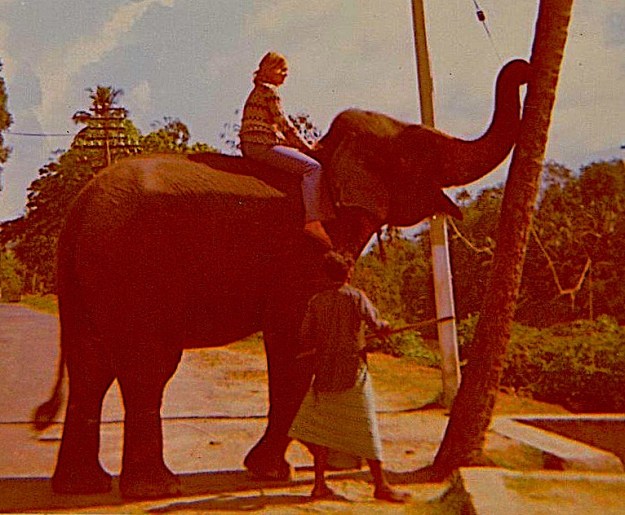
“No, no, no,” I said, “I can’t”
ride upon that elephant.
The creature lowered to one knee,
leg bent to make a step for me,
and seconds later, I was in air.
Was it courage or a dare?

Each  leg gripped on a massive shoulder,
balanced on that giant boulder
of a back, somewhat nonplussed
as his handler swore and  cussed
to not take down that massive tree
so long as he was bearing me!

Whereupon, once told “You can’t,”
this timber-working elephant
turned to descend the river bank.
I gave the rope a mighty yank.
(That was all I had to hold
as this leviathan grew bold,

intent on giving me a bath.)
His trainer ran to bar his path
and none to soon, in my opinion,
relieved this mammoth of his minion.
Soon after we had said adieu,
I faced adventures that were new.

It’s hard to see what I had there
around my neck, beneath my hair.
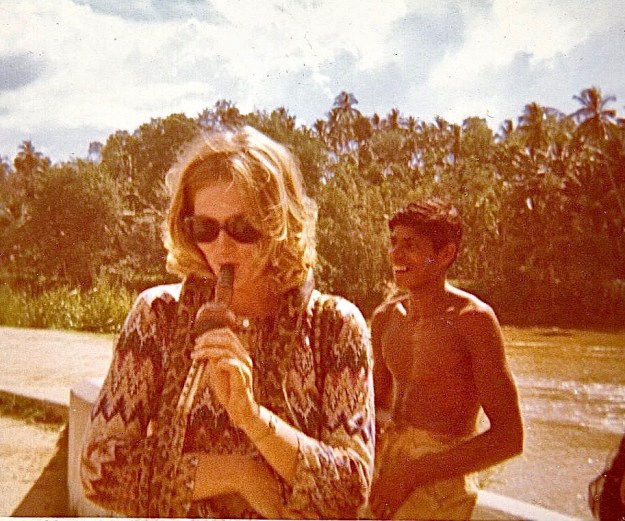
That snake wrapped loosely around me
hung writhing down below my knee.
I blew the pungi, hoping harm
would be abated by its charm.

What possessed me, I don’t know,
to agree to this viper show.
I wasn’t squeezed, I wasn’t bitten.
The snake was docile as a kitten.
I was a foolish girl back then.
What wild adventures way back when.

img019

I’m pretty sure this is a python around my neck. I don’t think I would have been foolish enough to drape myself in a cobra, still, his owner had a pungi, which is what snake charmers use, usually to “charm” vipers or cobras. (Actually, it is the motion of the instrument, not its sound that weaves the spell.) I had on a top that was perfect camouflage  for the reptile. Both of these photos were taken in Sri Lanka in 1973.

Torn Love

Torn Love

Still standing close,
each on our own side of this terrible rending,
how can we see things so differently?
This little flap of skin
you keep pulling open
wants to close.

This is how cancers start—
this worrying and worrying of an old injury.
My darling. Leave it alone
and let us heal.
This is only a biopsy
of our changed love affair.

If it is cut out of us,
it will be by your decision;
and no number of late-night arguments
will ever change that fact.
What you need to remember
the next morning,
you will remember.

If it were up to me,
we would still be friends,
but if you need an enemy
to console you in your actions,
I guess I must be that too.
I always was a figment
of your imagination.
Believe that
if it makes this easier for you.

II

Cicatrix

I know better than you
what lies buried under
my healed-over self.

The raised part of me
grown to protect the wound
creates this distance
that I once warned you of.

I need to thicken that part of me
where part of you remains,
and if for this time you gasp for air,
it is my thick skin growing over you,
like an orb spider winding you in my web

until you become
the one in me hidden so deep
that even you
believe you’ve disappeared.


Yes, another reprint of a poem from over four years ago. The prompt today was torn.